
Coconut Milk, Coconut Cream and Coconut Drink: How to Tell Them Apart
Compare coconut milk, coconut cream and coconut drink by fat, ingredients and texture. Learn how to mix a separated can and rescue a thin sauce.

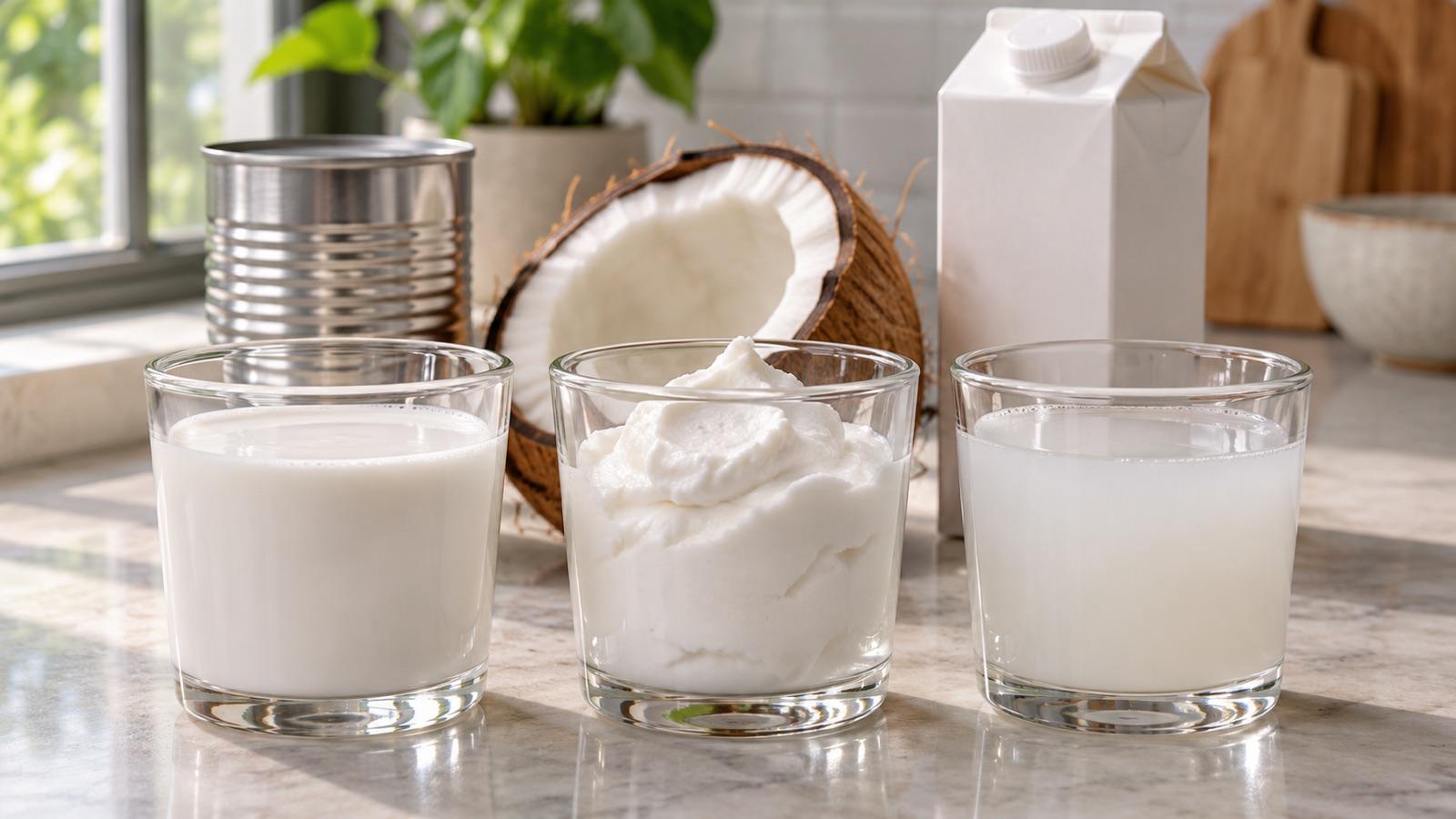
Choose cooking coconut milk for a savoury sauce, plain coconut cream for a fuller texture and coconut drink to pour into a glass. Their names and white colour make them easy to confuse. Check the product name, the units in the nutrition table and the ingredients before opening. Once open, check whether the contents are evenly mixed before measuring.
What does the fat content tell you?
Codex CXS 240-2003 sets minimum fat by weight at 5% for light coconut milk, 10% for coconut milk and 20% for coconut cream within its scope. These are minimums for product categories. The standard also considers non-fat solids and excludes sweetened or flavoured coconut milk and cream. A single fat figure is therefore only part of the comparison.
As one shelf example, a coconut drink can list 1.2 g fat per 100 ml. A cream label might give the figure per 100 g. A millilitre measures volume and a gram measures weight, so compare figures directly only when they have the same basis. Otherwise read them alongside the name and intended use.
Source: Codex CXS 240-2003 · Alpro
How to read the ingredients list
Find the product name on the front, then check the back for water, coconut ingredients, added sugars and flavourings. A coconut drink may contain coconut milk as one ingredient, while the finished drink remains much thinner than cooking coconut milk. Tins and cartons are packaging choices and can hold different formulations.
For a savoury curry, look for plain coconut milk or plain coconut cream. On English labels, “cream of coconut” can mean a sweetened cocktail ingredient. Check whether the list contains syrup or sugar before buying it for a savoury sauce. For coffee, consider how the product’s sweetness and flavour will taste once diluted in the cup.
Source: Coco López
What to do with a separated can
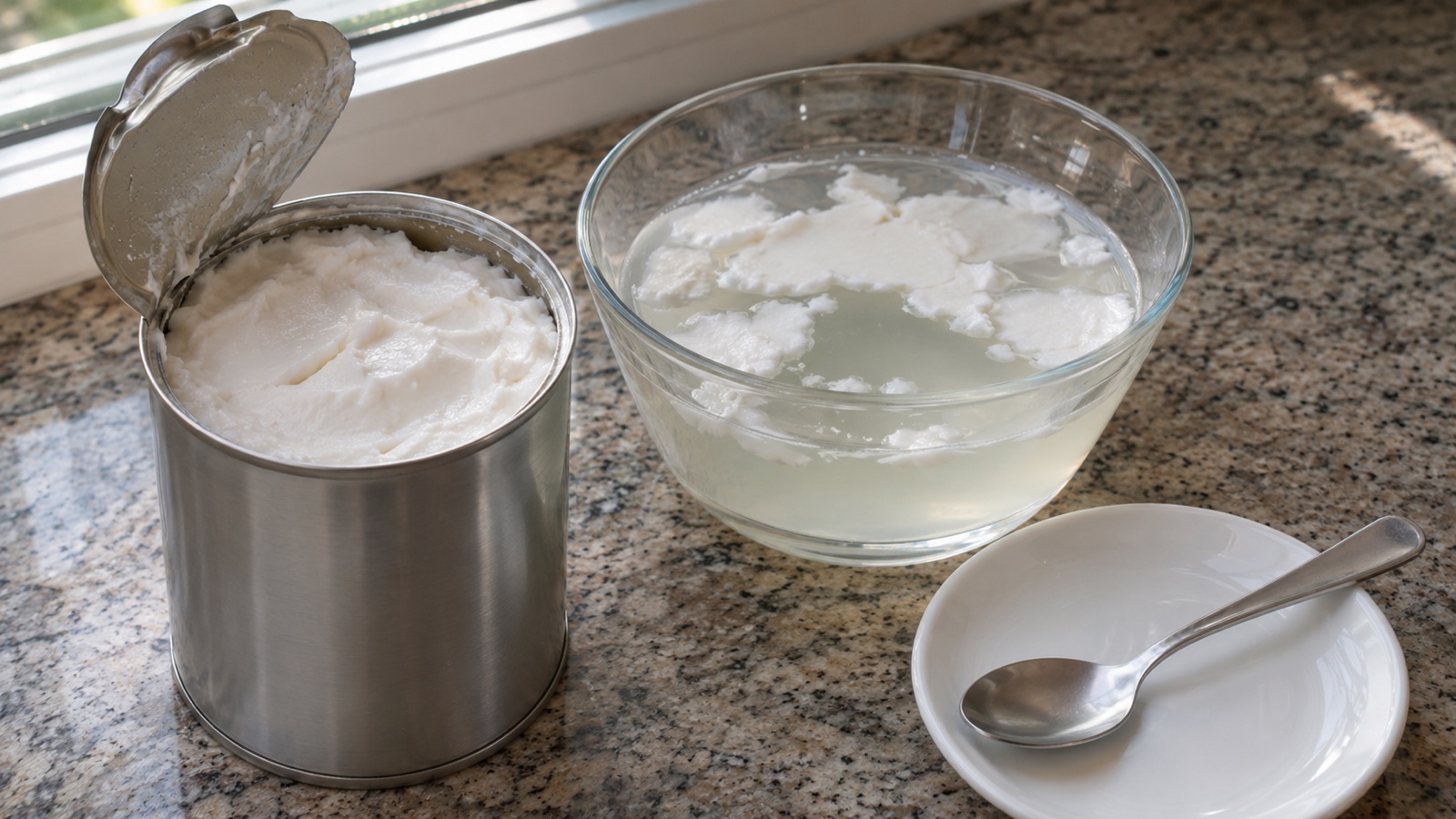
Coconut milk contains droplets of oil dispersed in water. The fat-rich portion can rise as it stands, leaving a thick white layer above a more fluid one. The upper layer may feel firmer when cold. Homogenisation and stabilisers can change how visible this separation becomes.
When a recipe calls for the whole product, empty both layers into a bowl and whisk until even. If firm pieces resist mixing, briefly set the bowl in a larger bowl of warm water and whisk again. Measure afterwards. A spoonful from the top alone can deliver more fat than the same amount taken from the mixed contents. The photograph illustrates how the layers can look.
Source: Tetra Pak Coconut Handbook
A small test for sauce, dessert and drinks
Put 30 ml of each product at the same temperature in separate bowls. Dip the same spoon into each, cleaning it in between. Compare the film on the back and the speed at which each flows when you tilt its bowl. Fat is one clue, while temperature, solids and thickeners also affect the result. Treat this as a cooking comparison.
For a vegetable curry, begin with cooking coconut milk and see how it coats the vegetables. For a fuller spooned topping, chill a little plain coconut cream and check the texture first. For coffee, use a few sips to test the drink before pouring it into the whole cup. This helps you judge texture and taste separately. For a pan comparison, divide a plain vegetable sauce into equal small portions. Add cooking coconut milk to one and the same amount of plain cream to the other. Warm over the same heat just until combined and compare the two spoon coatings at the same temperature. Season your preferred portion last so the effects of the coconut product and the seasoning are easier to distinguish.
How to fix the sauce after a swap
If coconut drink made a sauce watery, taste it first. Long reduction also concentrates salt and seasoning. When they are already strong, stir in plain cream a little at a time. If you only have the sauce, reduce it gently in an uncovered pan, tasting periodically. Check again once a thin film covers the back of a spoon.
If cream made the sauce too thick, add a little water or unsalted vegetable stock that suits the dish. Stir and check after each addition. If oil rises to the surface, lower the heat and stir. Record the product and the added liquid so you can adjust at the start next time.
İyi Bir Yemek
Food Researcher & Writer
Reader Comments & Contributions
Be the first to share your thoughts on this post