
Natural vs. Dutch-Process Cocoa: What’s the Difference?
Read cocoa labels, choose the right powder for baking soda or baking powder, and compare two cocoas in a cup and a small batch of muffins.

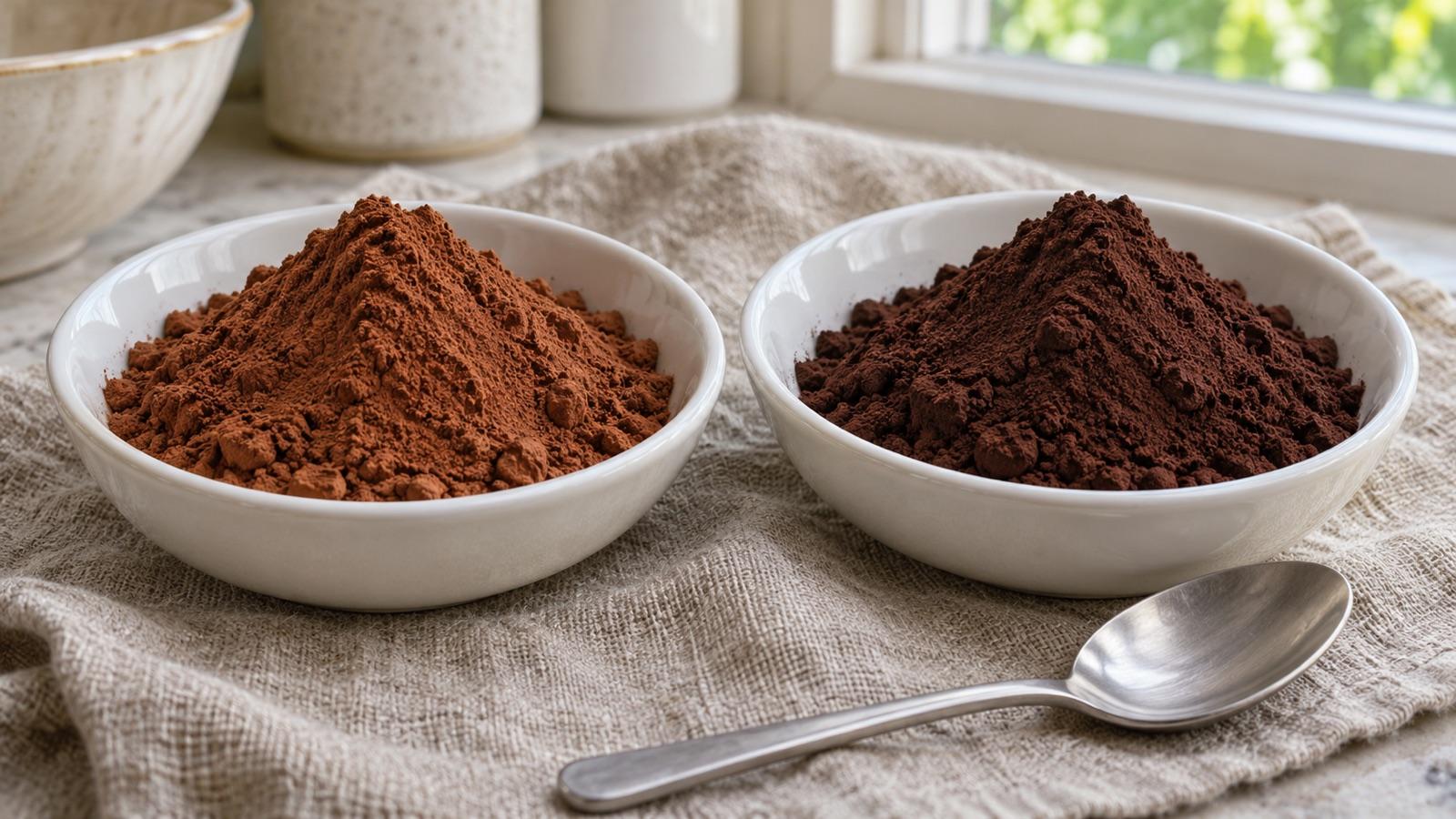
Natural cocoa is more acidic. Dutch-process cocoa has been treated with an alkali to reduce its acidity. That matters most when cocoa supplies the acid that reacts with baking soda to lift a batter. If a recipe specifies a type, use it for the first batch. Hot cocoa and most recipes leavened only with baking powder give you more room to choose by color and taste. Here’s how to read the label, identify the leavener and compare the two powders without risking a whole batch.
What should you look for on the label?
First check that you’re buying cocoa powder. A drink mix containing sugar and milk powder won’t replace pure cocoa gram for gram. Look for “Dutch process,” “alkalized” or “processed with alkali” on the front or in the ingredient list. An alkalizing ingredient such as potassium carbonate can be another clue. “Unsweetened” doesn’t identify the process: both natural and Dutch-process cocoa can be sold without added sugar.
Natural cocoa often looks lighter brown, while Dutch-process cocoa tends to be darker or more reddish. The beans, roasting and degree of treatment also affect the shade. The word “dark” and a picture on the box can’t establish the type. Some brands blend both types. If the package is ambiguous, look up the product on the manufacturer’s website, especially when shopping for a recipe that relies on baking soda alone.
Cocoa powder versus hot chocolate mix · Guittard
Why does baking soda or baking powder change the choice?
Baking soda reacts with acid to produce gas. If it’s the only leavener and there’s no separate acid such as yogurt or vinegar, keep the natural cocoa. Using Dutch-process cocoa changes the acid balance and may leave the bake flatter or give it a soapy taste. When the recipe uses both baking powder and soda or includes a separate acid, the effect depends on the formula; a spoonful of yogurt doesn’t guarantee the same result.
Baking powder already contains an acid component. If it’s the only leavener, you can try the other cocoa at the same weight in a small batch when you don’t have the type specified. Expect a possible shift in color and flavor; texture may change too. Instead of guessing how much vinegar would balance the baking soda, choose a recipe written for the cocoa you have. Change one variable at a time when comparing.
Compare taste and color in two cups
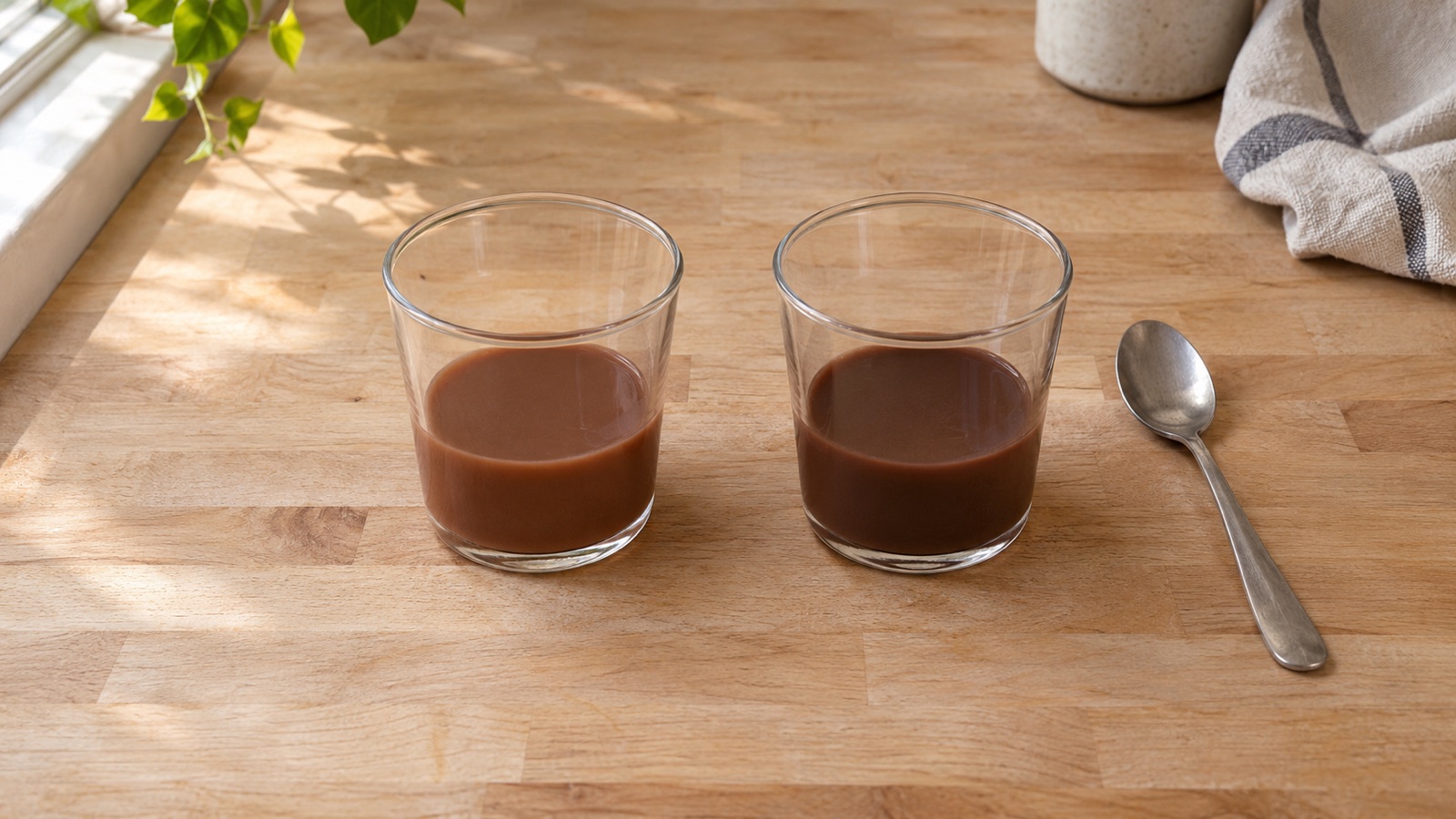
Mark two identical small cups. Put 5 g of natural cocoa in one and 5 g of Dutch-process cocoa in the other. Add a total of 60 ml of water at the same temperature to each: mash the powder with a little water into a smooth paste, then stir in the remainder the same way. Set the cups side by side in the same light. The photo shows the setup; your samples may look different. Let them cool to a comfortable drinking temperature before sipping.
Note color, aroma and aftertaste separately. A darker cup doesn’t necessarily taste more chocolatey. If both unsweetened samples taste harsh, add the same amount of sugar to each and compare again. The exercise tells you about those specific products; cocoa butter content and roasting can also affect the results. Liking one powder in a drink doesn’t establish how it will work with baking soda in a cake.
What should you measure in a small bake?
Pick a familiar cocoa muffin recipe that uses only baking powder. Divide the dry ingredients, except the cocoa, equally by weight into two bowls, and divide the wet ingredients separately. Add the appropriate weight of natural cocoa to one dry bowl and the same weight of Dutch-process cocoa to the other. Mix both for a similar length of time. Fill identical wells equally in the same tin and record their positions. Follow the recipe’s temperature and doneness cues; a darker sample isn’t necessarily ready sooner.
Once the muffins cool, cut them down the middle. Compare height and air pockets first, then crumb color and flavor. If one sample sat in a hot spot, don’t draw a firm conclusion from one pair. Swap positions next time. This shows which cocoa you prefer in that recipe; it doesn’t validate the substitution in a formula leavened only with baking soda. Don’t taste raw batter. Compare the samples after baking.
Fix three common mistakes
If the edges of a dark cake dry out, check baking time and pan size before using color to judge doneness. For clumps, sift cocoa with the dry ingredients next time, or add liquid gradually if the recipe calls for mixing cocoa with liquid first. If a baking-soda cake made with Dutch-process cocoa comes out low and tastes soapy, go back to the cocoa and leavener specified. Extra baking soda can push the balance further off.
If you’ll buy only one package, think about what you make most. If your favorite baking-soda cake gets its acid from cocoa, natural is the better starting point. For drinks, frosting or baking-powder cakes, start with the flavor you prefer. If you keep both, mark each jar with the type. It saves guessing from the color and changing two ingredients at once.
İyi Bir Yemek
Food Researcher & Writer
Reader Comments & Contributions
Be the first to share your thoughts on this post