
Immersion or Countertop Blender? Soups, Sauces and Cold Drinks
Choose between a stick blender and a jug blender for soups, sauces and cold drinks. Learn to control texture, filling and splashes.

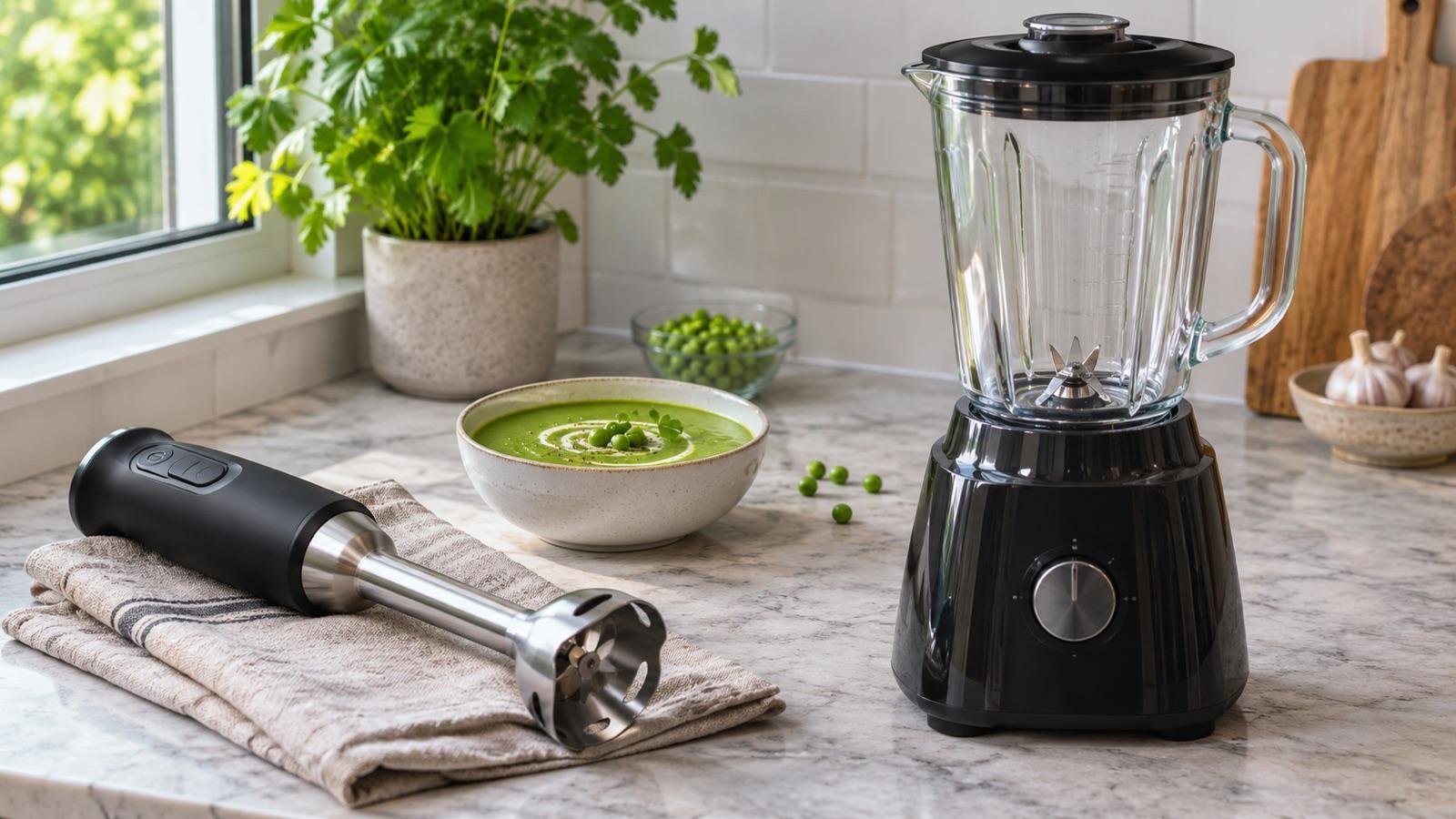
Use an immersion blender for tender vegetables in the pot or for soup you want to leave partly chunky. A countertop blender is handy when a sufficiently large cold mixture needs to circulate past the blades, as it does in a fruit drink. Check the manual before blending anything hot. The approved jar, fill limit and lid arrangement depend on the model. Avoid blending boiling liquids in either appliance.
Choose by the texture you want
A stick blender processes food close to its blade guard. Moving the head around a pot lets you control which areas get puréed. For pea soup, set aside a ladleful of peas, blend the rest and stir those peas back in. A wide pot may be too shallow for a few spoonfuls of sauce. Use a narrow, tall, stable vessel that comfortably fits the head.
The blade sits at the bottom of a countertop jug. As long as the mixture returns to it, the contents get processed repeatedly. For a cold yogurt and fruit drink, follow the manual's loading order for liquids and soft foods. Add frozen fruit or ice only if the appliance can handle it. A small serving in a big jug may fail to cover the blade. Check the recommended minimum fill.
Work in the pot with a stick blender
Cook vegetables until the edge of a spoon can crush them. Take the pot off the heat and set it on a level, sturdy, heat-resistant surface. Start once bubbling has stopped and the manual allows hot mixtures. Leave space above the liquid so it can rise as you move the head. Keep a cord away from hot burners.
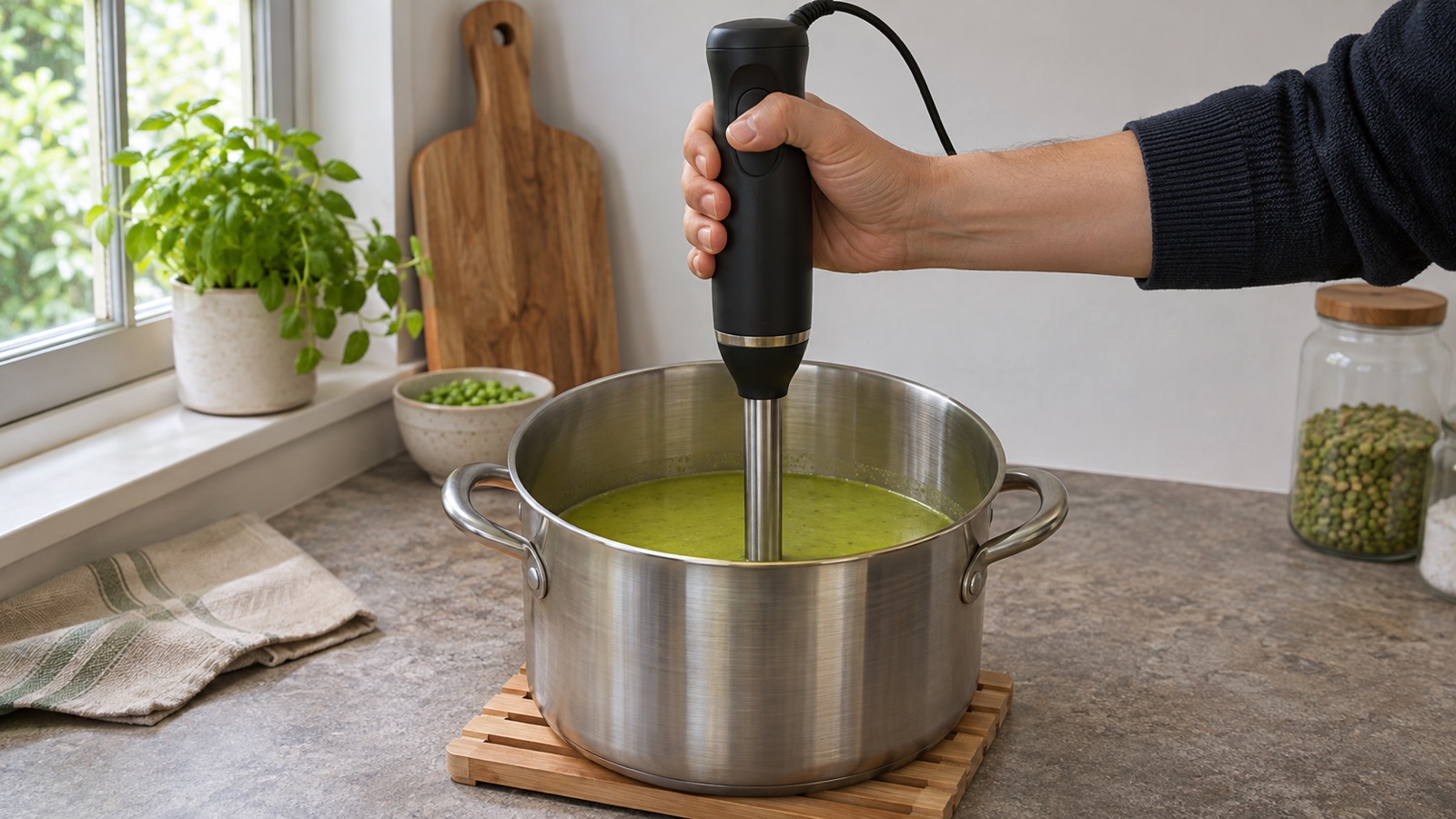
With the motor off, lower the blade guard under the surface. Keep the motor housing dry and follow the immersion limit in the manual. Start at low speed and move the head slowly to another spot. Release the switch and wait for the blade to stop before lifting it out. The photo shows the starting position with the guard below the surface and the motor above the rim.
Handle hot and cold mixtures differently in a jug
Hot liquid releases steam. An unsuitable container can allow pressure to build or liquid to splash. Use a jug explicitly approved for hot food and follow its lid instructions. Do not apply the cold fill mark to hot liquids. If hot food is prohibited or you lack the approved jug, use an allowed method for that step. Keep hot soup out of a sealed personal blending cup.
Liquid in a cold fruit drink helps pieces reach the blade. Follow the loading sequence for your model. Many full-size jugs take liquid first and frozen pieces later. Secure the jug and lid. If circulation stops, switch off and wait for the blade. Unplug before putting a spoon into the open jug. Add a little of the recipe's liquid if needed, refit the lid and restart.
Adjust the texture in stages
For a thick soup with chunks, reserve a ladleful of vegetables before blending. Check the purée in short bursts and stir the vegetables back in. If it falls off the spoon more slowly than you want, add the recipe's water or stock a little at a time. Stir and check after each addition. Adding a large volume at the start makes a thin soup harder to correct.
For a cold cooked pepper sauce, cut the ingredients into small pieces first. For a tiny portion, a narrow cup that lets the sauce cover a stick blender head works well. Use the jug's recommended fill range for a larger batch. If little flecks of skin remain, try a fine-mesh sieve before extending the blend. Leave some sauce unstrained and compare the textures with a spoon.
Test the pepper sauce in two small portions. Put a spoonful on each of two plates. Leave one alone and stir half a teaspoon of the recipe liquid into the other. Tilt the plates at the same angle. The thinner sample may drizzle more easily, while the thicker one may spread better on a sandwich. This comparison helps you decide how much liquid to use before thinning the entire batch.
Fix splashes and stalled circulation, then clean
If a stick blender splashes, stop and check how full the vessel is and whether the guard stays submerged. A tall, narrow vessel or smaller batches can help. A spinning blade under stationary ingredients may have an air pocket around it. Stop, unplug and reposition the food. Return to the container and settings approved for your model. Stop the motor if it is struggling.
Unplug before cleaning, or disable a cordless model as its manual directs. Wash detachable heads and jugs as the manufacturer specifies. Check which parts can go in the dishwasher. Keep the motor out of water and avoid touching the blades. Let the washed parts dry before putting them away.
Before increasing the speed, inspect any pieces left in the soup. If they are too firm to crush with a spoon, cook the vegetables a little longer. If the soft pieces simply collected in one corner, take the pot off the heat and move the blender head to that spot. You can work on those pieces without blending the whole pot again.
İyi Bir Yemek
Food Researcher & Writer
Reader Comments & Contributions
Be the first to share your thoughts on this post