
Fine-Mesh Sieve or Colander? When to Use Each
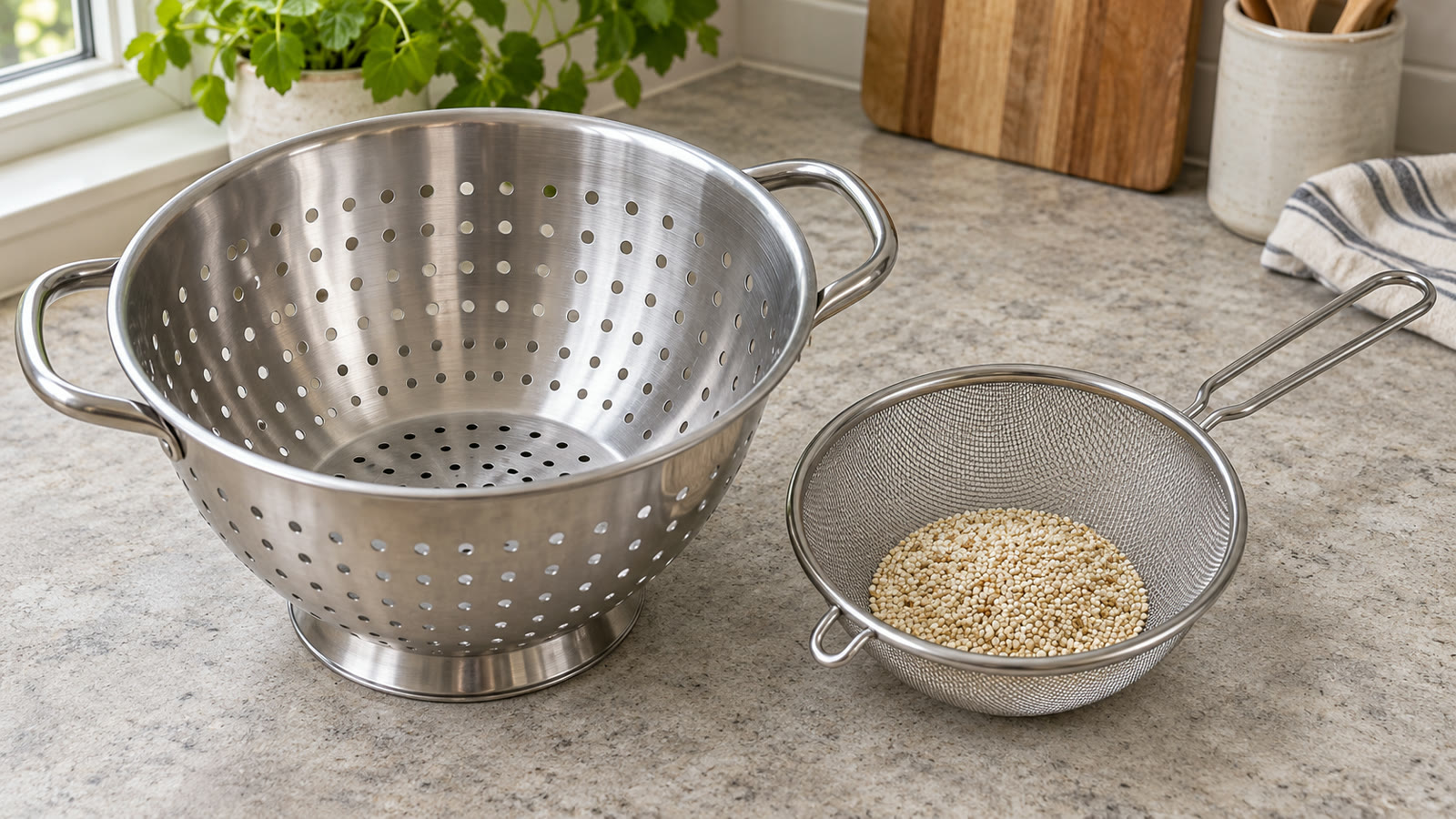
Use a colander for a pot of pasta and a fine-mesh sieve for quinoa. Choose by the size of the food and how much you need to drain at once.

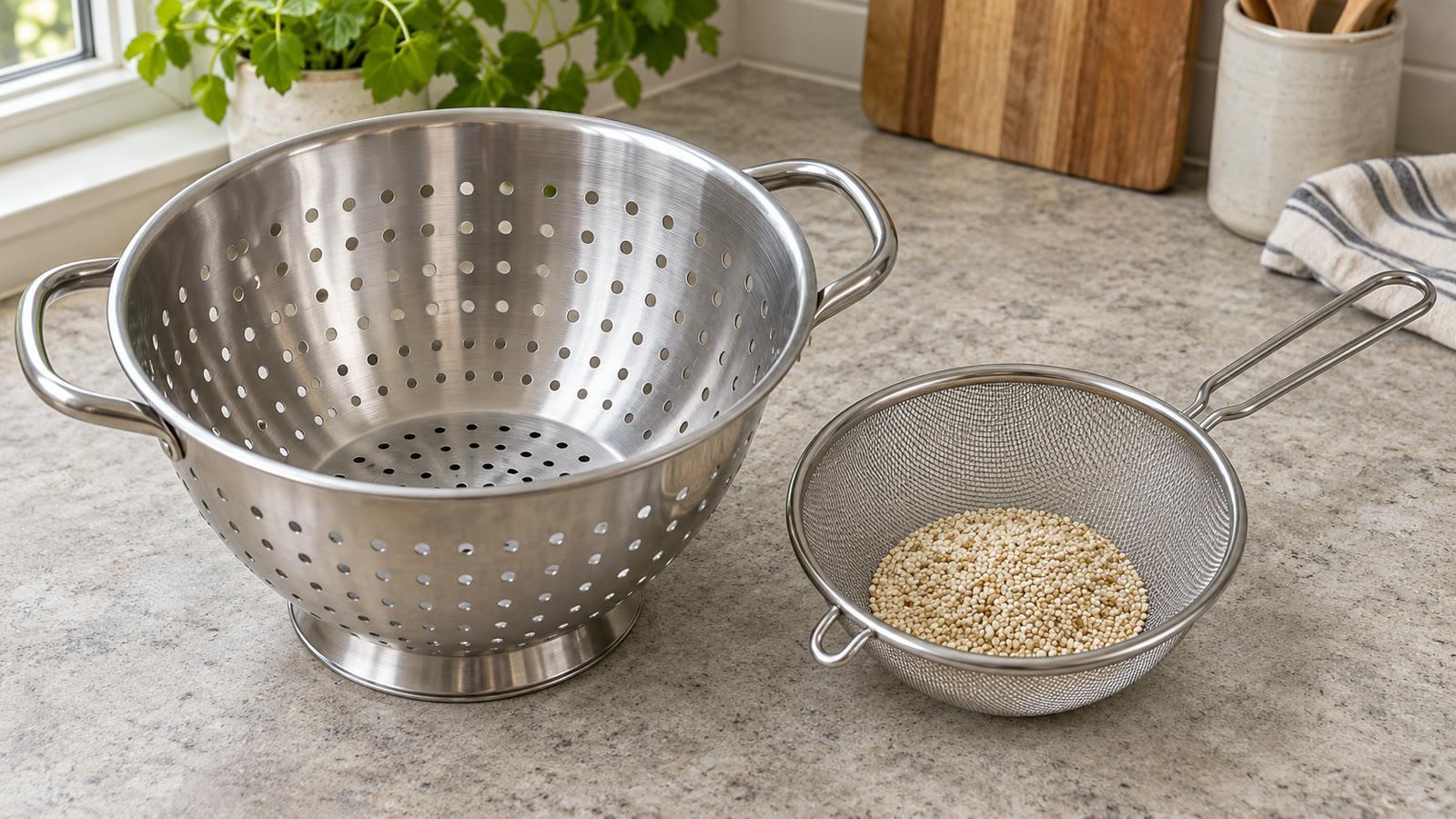
Reach for a roomy, footed colander to drain a pot of pasta. Use a fine-mesh sieve to rinse little grains like quinoa. The size of the food tells you how small the openings need to be. The amount tells you how big the basket needs to be.
What is a colander good for?
A colander has room for a pot of pasta, and water escapes quickly through the larger holes. Sit it securely in an empty sink before draining. If you want starchy water for your sauce, scoop out a ladleful before tipping the pasta in.
How do you use a fine-mesh sieve?
Drop in a few dry quinoa grains and see whether they pass through. If the mesh holds them, add the rest and stir them gently under cold running water. Move the grains away from the rim so they all get rinsed. Let the excess water drip away before adding the quinoa to the pan.
Common questions
Can you drain pasta in a fine-mesh sieve?
Yes, for a small portion. Work in batches if the sieve is small. A roomy colander is easier to handle when you need to drain a full pot in one go.
How do you clean fine mesh?
Rinse the sieve from the outside while the grains are still damp. Loosen anything stuck in the mesh with a soft brush and let the sieve dry before putting it away.
Once you’ve rinsed the quinoa, try it in this Inca salad with corn and beans.
For the quinoa example, see Ohio State University Extension’s guide to cooking quinoa.
İyi Bir Yemek
Food Researcher & Writer
Reader Comments & Contributions
Be the first to share your thoughts on this post