
Enameled vs. Bare Cast Iron Skillets: Choosing and Care
Compare enameled and bare cast iron for the way you cook. Learn how to preheat, clean and dry each skillet and when to wipe on a thin film of oil.

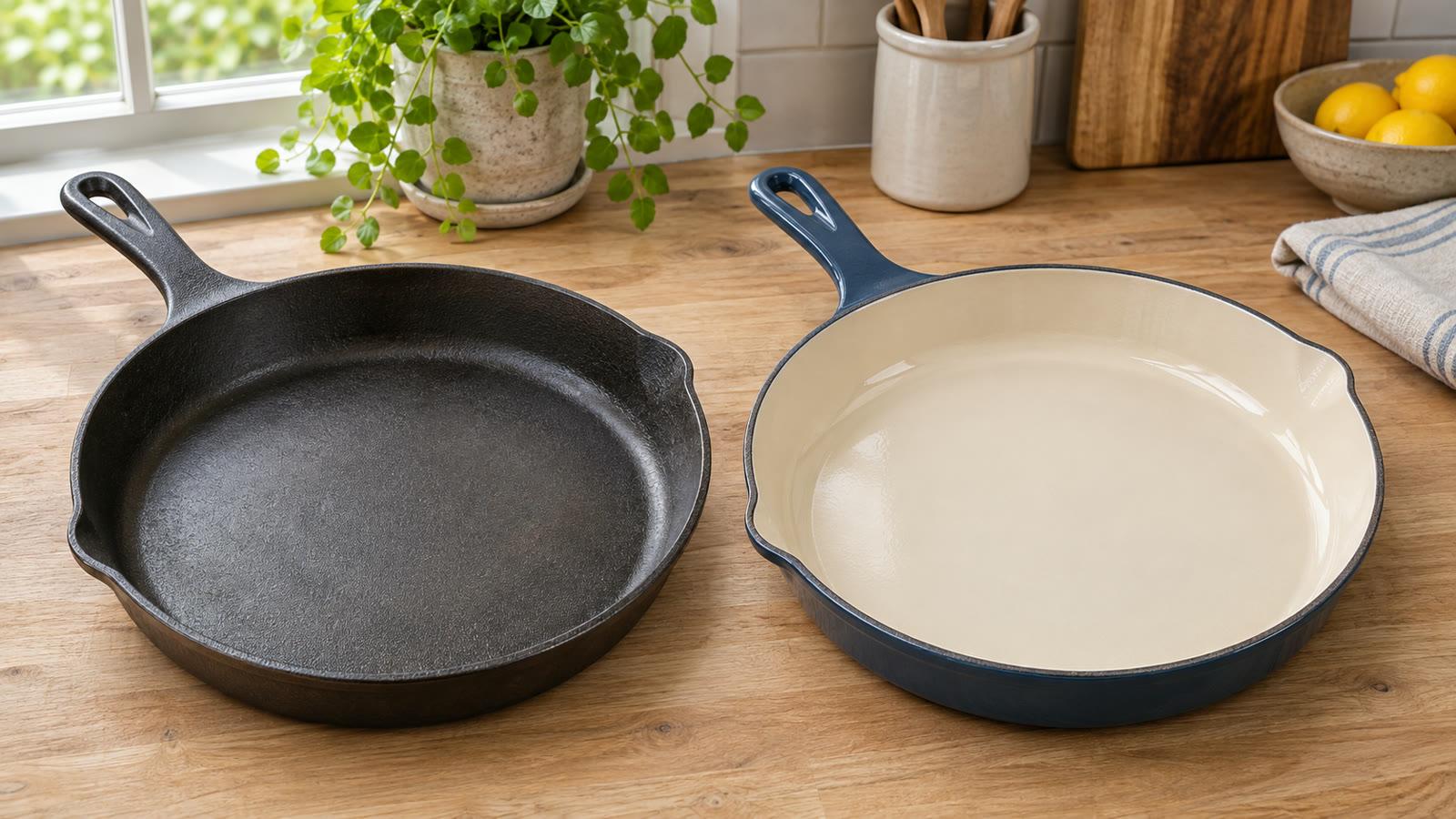
Choose enameled cast iron if you often make tomato sauces or prefer to finish washing without oiling the pan. Bare cast iron suits jobs such as browning potatoes and mushrooms if you can dry it promptly after washing. Both hold heat well. The difference that matters at home is the surface that touches the food and what it needs after dinner. If a label simply says “cast iron,” check what coats the inside.
Check the cooking surface and your stove
Enamel is a glassy finish bonded to the iron. It can be light and glossy or black and matte, so color alone won't tell you which pan you have. Check before trying to bake oil onto a black surface. Bare cast iron is protected by a thin layer of oil bonded to the metal by heat. A factory-seasoned skillet may need only the maker’s quick first-use cleaning. Look for the interior finish as well as any claim that the pan comes pre-seasoned.
The diameter across the rim may be larger than the base that actually sits on the burner. For induction, compare the pan's compatibility and base size with the hob manual. Try lifting the empty pan to see how the weight feels on your wrist. A helper handle matters more once the skillet is full. For oven use, look up the limits for the pan, lid and any handle sleeve separately. If you want to compare the oven setting with the actual temperature, see where to put an oven thermometer.
Preheat for the surface and the food
Pick a burner close to the size of the pan's base. Start on low or medium heat and give it time instead of blasting the center. For dry preheating on enamel, follow your model's directions. Lodge's enamel care guide, for instance, recommends gradually preheating its enameled cookware with oil on the stovetop rather than heating it empty. If the oil starts smoking, take the pan off the burner and lower the heat before adding food. Start the next batch at a gentler setting.
For browned mushrooms, pat the surface dry and arrange them in a single layer. A heap cools the pan and lets released water collect, so working in two batches gives you more control. Reach for enamel when simmering a tomato sauce for a long time. Prolonged acid contact can wear down the seasoning on bare cast iron. A squeeze of lemon at the end of the mushrooms and a long tomato simmer are different jobs. Factor in the condition of the seasoning and your pan's instructions.
Clean enamel without scratching it
Let the skillet cool until you can handle it comfortably. Use warm water, mild dish soap and a soft sponge instead of putting a hot pan in cold water. Loosen stuck sauce with warm soapy water before attempting to lift it. Use wood or silicone tools while cooking to help protect the finish. Consult the model's instructions for dishwasher use and stubborn residue. Le Creuset use and care provides product-specific cleaning and care guidance.
If tomato leaves a mark on light enamel, start with a soft sponge. A flat stain is different from an area that has lifted or chipped away. If the cooking surface has chipped, stop using the skillet and ask the manufacturer about it. Dry the inside, rim and base before putting it away. If another heavy pan has to sit inside it, use a soft separator to keep the other pan's base from rubbing the cooking surface.
Wash, dry and lightly oil bare cast iron
Wash the cooled pan with warm water and a soft brush, using a little mild dish soap if needed. Lodge's bare cast iron cleaning guide suggests a nylon brush or pan scraper for stuck bits. Avoid leaving the skillet soaking in the sink. Towel it dry. If moisture remains around the rim or handle, finish drying it briefly over low heat, then take it off the stove and let it cool enough to handle.
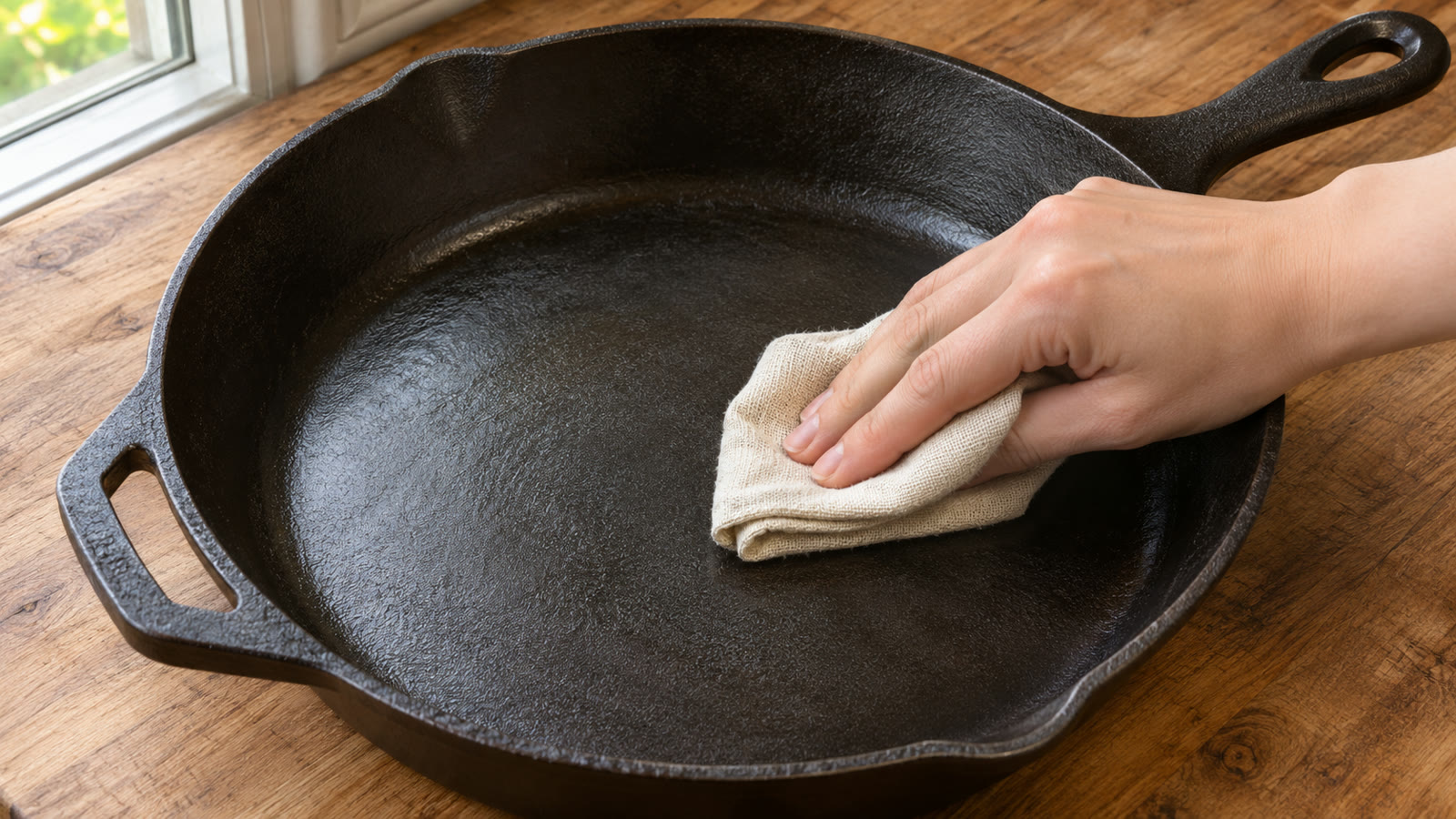
Rub a few drops of cooking oil over the dry interior. Wipe away the excess with a clean, lint-free cloth until you see a faint sheen like the one in the photo. Keep wiping if you can see drops or streaks. This after-washing step is separate from baking on a new layer of seasoning. If you find rust or patches of exposed metal, check Lodge's seasoning guide and the instructions for your own pan for how to clean and reseason it.
Let your kitchen habits decide
If you're buying just one skillet, think through the meals you made last week. Saucy vegetables and eggs in tomato sauce are a case for enamel and its simpler cleanup after acidic dishes. If mushrooms, potatoes and oven-baked cornbread are in regular rotation, bare cast iron can handle all three. If your pans often sit wet on the counter, count upkeep as part of the choice. Skip a wider pan if you can't lift it full and its base doesn't fit your burner.
Food can stick to either surface. If the potatoes stick again, lower the heat a notch, let the pan warm gradually, use a thin film of oil and wait for the edges to brown before turning. If the surface feels tacky afterwards, clean it using the method for that finish. Wipe off excess oil on bare cast iron. Enamel doesn't need an oil layer for maintenance. Change one setting at a time on the next cook so you can tell what helped.
İyi Bir Yemek
Food Researcher & Writer
Reader Comments & Contributions
Be the first to share your thoughts on this post