
How to Spot and Prevent Freezer Burn
Tell dry freezer-burn patches from surface frost and pack meat, vegetables and soup in practical portions that help protect texture and flavor.

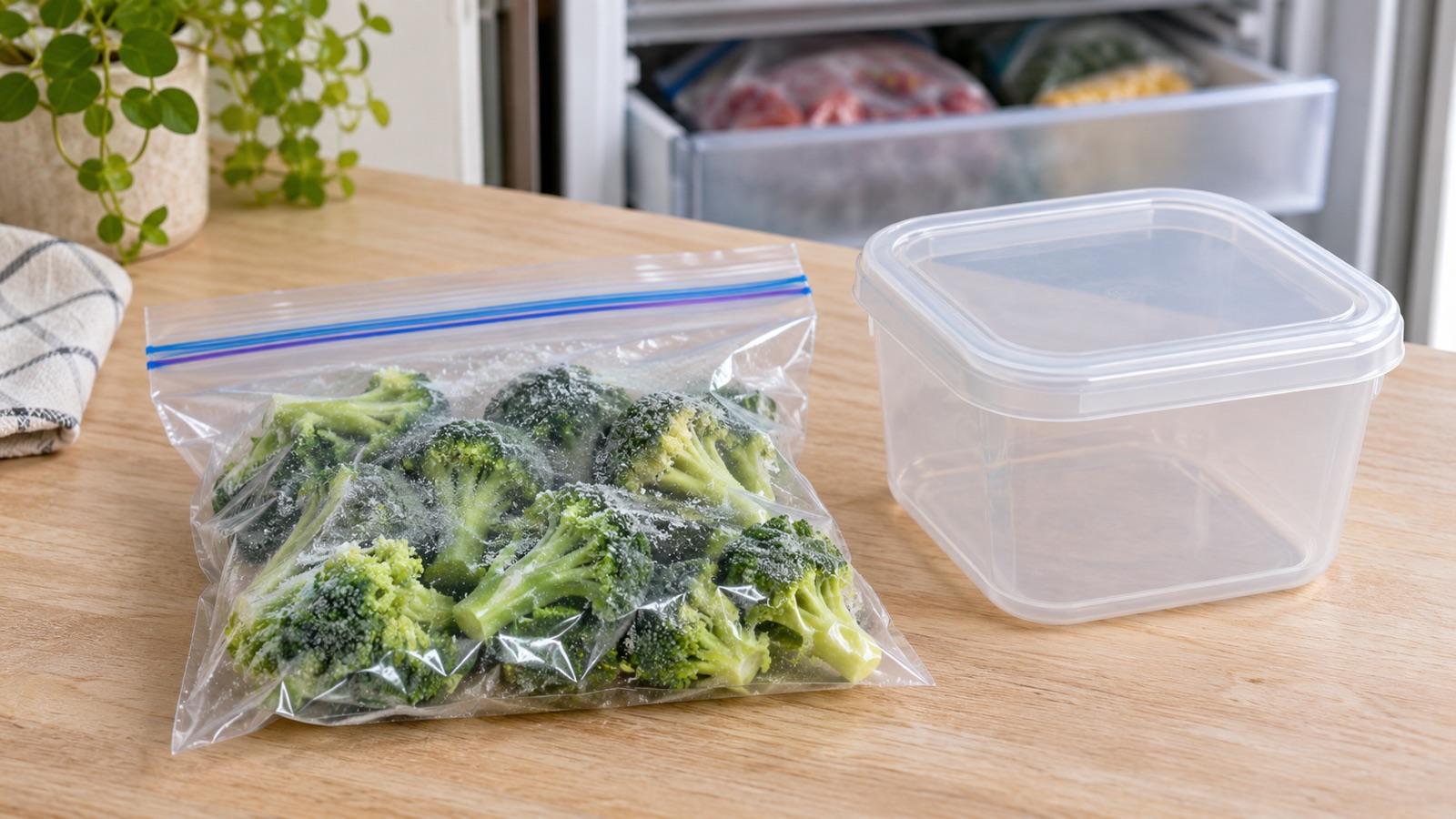
Freezer burn is a dry, tough area on the surface of frozen food. It can look like a grayish-brown patch on meat or a pale hard edge on bread. Pressing excess air out and sealing the package tightly helps prevent it. Freezer burn on properly stored food affects quality. If a power outage or thawing may have occurred, use the food’s temperature and storage history to decide what to keep. FDA · Frozen food quality and safety
Tell a dry patch from surface frost
Look closely at the affected area when you open the package. With freezer burn, the discolored dry patch is part of the food. A pale matte corner on a frozen steak is in the meat itself. Frost consists of small crystals sitting on top of the food or inside its packaging. Once they melt, the surface beneath may still look normal and feel supple. Both signs can occur in one package. A few crystals alone give you no reason to cut away sound food.
Ice on the food’s surface can turn directly into water vapor. When wrapping fits loosely or offers a weak barrier to air and vapor, the surface loses moisture. An exposed corner of a loosely wrapped slice may dry sooner than a protected part. If you find a dry area, pay particular attention to how the packaging sits against that edge on your next batch.
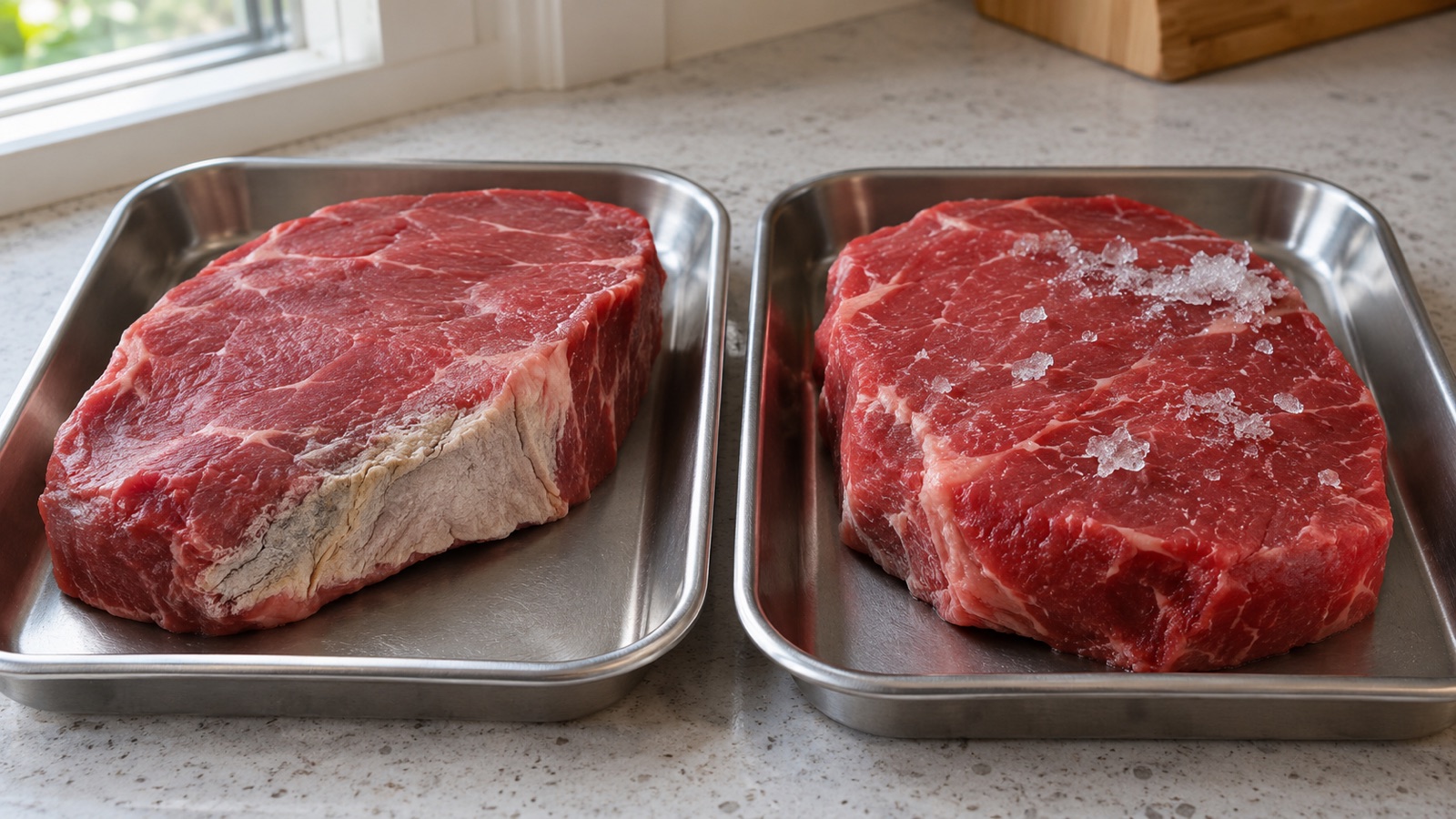
The illustration shows the two surface appearances side by side.
Choose packaging for the food
Put a flat item such as a steak or bread slice in a heavy freezer bag. Press both sides of the bag toward the food to push air out of the opening. Close the zipper from end to end. Choose a sturdy freezer container for a bone-in cut that could puncture a bag. For longer storage, you can add a freezer-grade outer layer over thin supermarket meat wrapping. Mark the package as raw or cooked.
Spread a single meal’s vegetables in a flat layer in a bag that fits. Wipe the zipper channel dry if there is frost, water or a small piece of food in it. Pack liquids such as soup in freezer-safe containers with tight lids. Follow the container guidance for expansion space. A small container for half a ladle of soup leaves less unnecessary air than a large one while still allowing the liquid to expand. NCHFP · Packaging and labeling food for freezing
Plan portions and labels before freezing
Divide a loaf into packs of two slices, for example. You can take out a portion for breakfast and keep the others sealed. Drain blanched, cooled broccoli, divide it into meal-sized portions and lay the bags flat. Divide chilled soup into shallow containers holding as much as you will eat at one meal. For an example of the preparation some vegetables need, see preparing cauliflower for freezing.
Write the food name, packing date and amount on each package. Leave space between newly added packages for cold air to circulate, then stack them once frozen. Use a freezer thermometer to check that it is at −18 °C or colder. Bring older packs to the front of the drawer so you can reach them when you put new food away.
Decide what to do with a damaged package
If the food was properly frozen and kept cold, you can remove a small dry patch. Thaw meat in the refrigerator, trim the dry edge and cook the rest as appropriate for that cut. With bread, cut off a tough corner and toast the rest of the slice. Damage over a larger area can noticeably affect texture and flavor. Thaw raw meat in a container that catches drips and keep it away from ready-to-eat food.
Discard frozen meat if it spent 2 hours or longer above 4 °C during an outage, according to FDA guidance. If that temperature limit was not exceeded for that long and the package still has ice crystals or the meat is at 4 °C or colder, the FDA says you can refreeze or cook it. Check individual packages with a food thermometer. When the temperature history is unclear, a dry patch, smell or taste cannot establish safety. FDA · Food safety during power outages
Find the weak point if it happens again
If the burn repeatedly forms near the opening, run your finger along the entire zipper. Look for a puncture from a sharp bone or piece of frozen food if the damage is concentrated in one spot. A dry band just under the lid can point to an oversized container. Use a smaller one, wipe the rim and seat the lid fully. Keep expansion room in a container of soup.
If packages near the door or front of the drawer suffer more often, check that the door closes completely, clear crumbs from the seal and confirm the temperature with a thermometer. To use even well-sealed packages while their quality is good, buy quantities that fit your weekly meal plan. Make a separate dinner portion on packing day if you usually open a large bag to cook for one. Turn the filled bag over on the counter and inspect the seams and corners. Flatten bags that will share a drawer. Once they have hardened, you can file them side by side and face the labels outward so you can read them without pulling each bag out.
İyi Bir Yemek
Food Researcher & Writer
Reader Comments & Contributions
Be the first to share your thoughts on this post