
How to Store Cauliflower in the Fridge or Freezer
Keep whole or cut cauliflower in the fridge, or freeze it after a 3-minute blanch and an ice bath. Learn which method suits your meal.

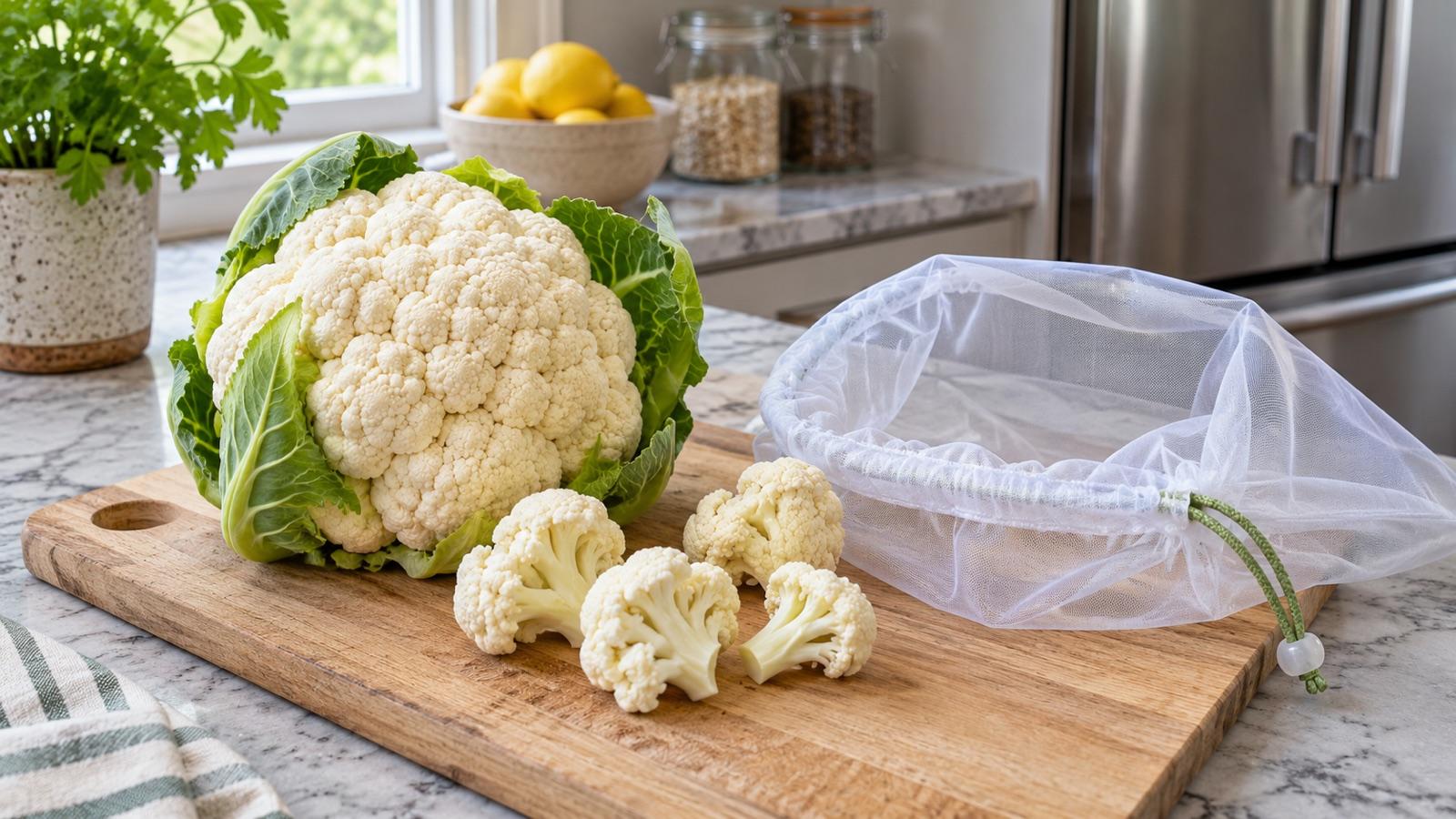
Refrigerate cauliflower if you’ll use it soon. For cooking later, blanch the florets briefly and freeze them. Storing the whole head without washing first keeps water from sitting between the florets until you cut them. For the freezer, make even pieces, boil them briefly and plunge them straight into ice water. Choose the method by when you plan to cook and how you want the finished cauliflower to feel.
Refrigerate the whole head
Look for a firm head with tight florets. If it’s wet from rain or a shop misting system, pat it dry with a clean towel and put it in the crisper in a loosely closed produce bag. The bag limits drying and the gap lets condensation escape. If water collects underneath, swap the bag and dry the cauliflower. Wash it when you’re ready to cut it.
Keep the refrigerator at or below 4°C (40°F). The Wyoming Department of Health’s chart gives 3–5 days in the fridge. Condition at purchase and earlier storage affect that window. Open the bag after a few days and check the head. Discard it if it’s slimy, smells distinctly unpleasant or has visible mould. FDA refrigerator and freezer temperatures Wyoming Department of Health storage chart
Portion cut florets for your meals
Rinse under running water before cutting. Skip the soap. On a clean board, use a clean knife to trim the outside leaves and tough stem end. Break the florets apart or cut through their stems. Let water trapped between them drain in a colander and blot with a clean towel. Refrigerate pieces for that evening in a clean container. Check the cut faces if you prepped ahead. If dinner plans change, freeze the florets while they are still sound. FDA guide to washing produce
You can cut different parts of one head to suit two meals. Refrigerate larger florets for tomorrow’s roasting tray. For the freezer, cut the remainder into pieces about 2.5 cm (1 inch) across and keep them similar in size. Water circulates around small, even pieces and the next step is easier to time.
Blanch for three minutes and cool in ice water
Blanching helps stop enzyme activity that can change flavour and texture during storage. For cauliflower, the NCHFP calls for 4 teaspoons of salt per 3.8 L (1 US gallon) of water and a 3-minute water blanch for florets about 2.5 cm across. Use that volume for about 450 g (1 lb) of florets. Drop them into boiling water and start the timer as soon as it boils again. Use a smaller batch next time if the boil takes more than a minute to return. NCHFP cauliflower freezing instructions
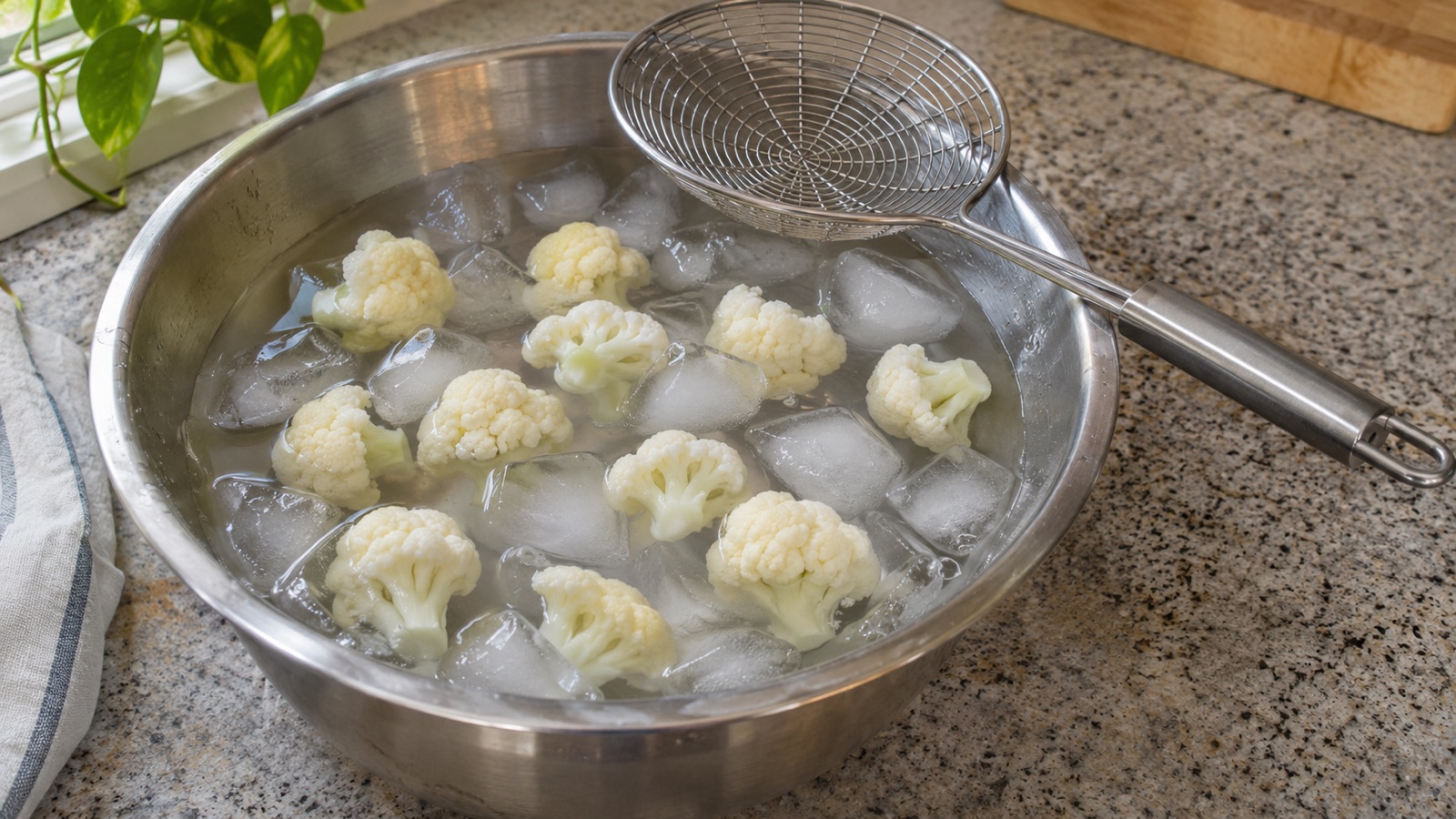
Set out a bowl of ice water first. When the timer goes, lift out the florets with a skimmer, plunge them straight in and cool for about 3 minutes. Replenish the ice when the water warms between batches. Drain the cold florets and blot with a clean towel. Leaving them hot allows cooking to continue. Packing them wet leaves more ice on the surface. NCHFP blanching and cooling steps
Pack in meal-sized portions
Divide the cauliflower into the amounts you normally cook. For example, set aside 300 g for soup and label the bag with the weight and date. Press the air out of a freezer bag, seal and freeze at or below −18°C (0°F). Lay several new bags flat first, then stack once frozen.
If you want to take a handful at a time from one large bag, freeze the drained florets in a single layer on a tray and then transfer them to a bag. For a whole bag that goes into one meal, packing portions directly is simpler. For loose florets, keep the pieces from touching on the tray.
Keep older bags at the front of the freezer drawer. If the recipe needs half a bag, take out the portion you need, then reseal and return the rest promptly. If ice builds up around the opening, check the seal and look for a tear. If the florets froze in a block, make smaller packs next time. For soup in particular, measuring portions in advance makes it easier to keep the intended amount of liquid.
Use frozen florets where they suit the dish
For soup or stew, put the florets straight into the pot. The frozen vegetables can cool the bubbling liquid. Once it returns to a simmer, start checking for doneness. The florets have already had a brief blanch, so check them individually rather than relying on a recipe’s time for fresh cauliflower. A fork should go easily through the thickest piece for soup.
For browned, dry edges in the oven, refrigerated fresh cauliflower is a better starting point. If roasting frozen florets, spread them out and allow the released water time to evaporate before they brown. A softer texture suits a mash or soup. See the guide to cauliflower soup texture for ways to use the florets. Next time you buy a head, keep the roasting portion fresh and pack the soup portion for the freezer.
İyi Bir Yemek
Food Researcher & Writer
Reader Comments & Contributions
Be the first to share your thoughts on this post