
Why Does Red Cabbage Change Colour When Cooked?
See why lemon and vinegar turn red cabbage pink, compare three samples of cooking water, and decide when to add acid to your dish.

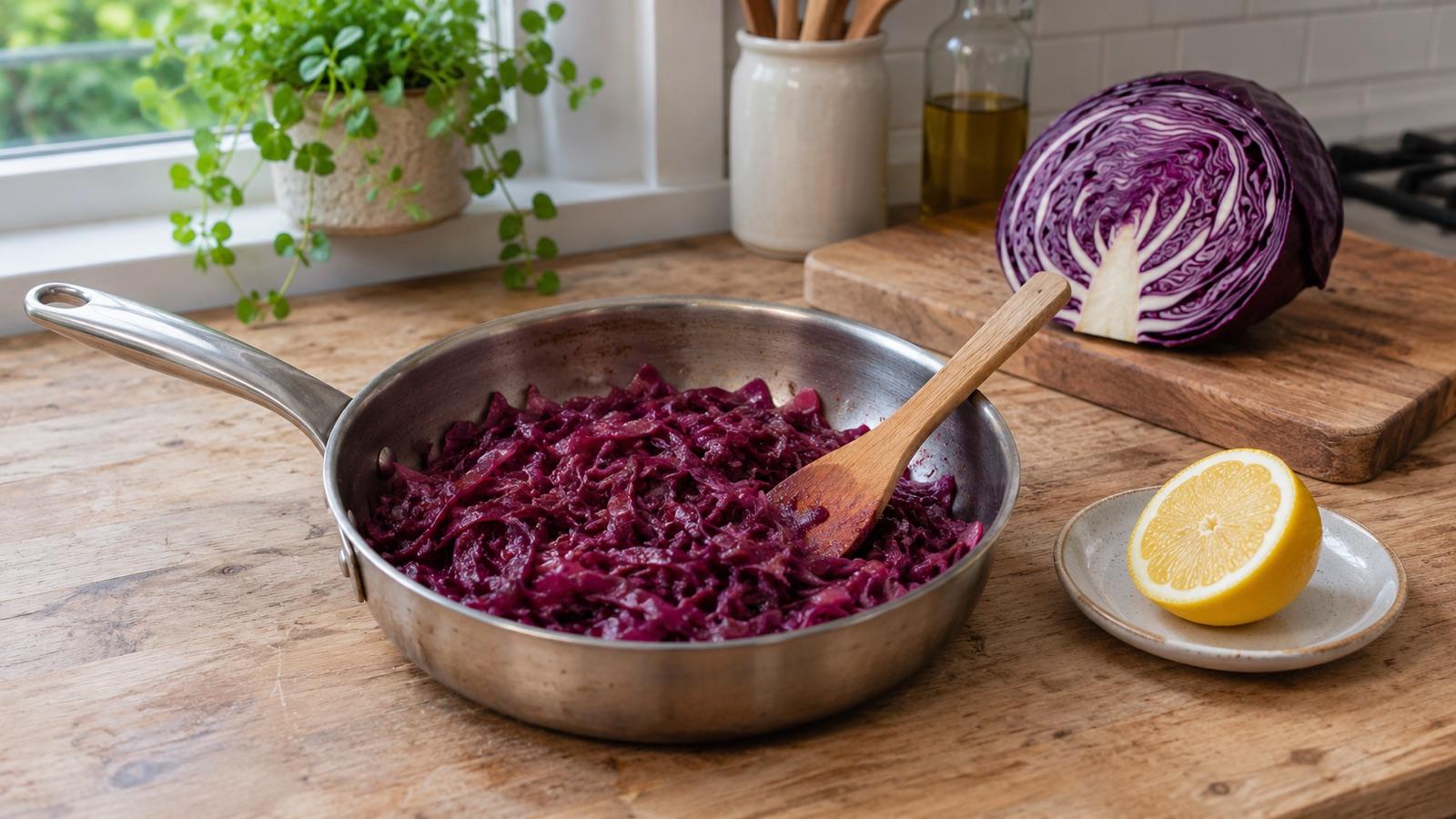
Red cabbage changes colour as its anthocyanin pigments move into the cooking water and respond to acidity. Lemon juice or vinegar can shift the same cabbage towards red or pink. Water without added acid may stay purple or look bluish. The amount of water, cooking time and cabbage itself also affect how intense the colour looks. Start with a comparison of the cooking liquid, then decide which flavour and texture you want in the pan.
Where does the purple come from?
The stains on a knife and board after cutting cabbage show how readily colour can leave the leaf. Some anthocyanins dissolve into the hot cooking water. As acidity changes, the pigments take different molecular forms and absorb visible light differently. A sample with lemon can therefore look different even if it has the same amount of cabbage pigment. Leaves that look paler after losing some colour to the water can sit in the same pan as a cooking liquid that has turned pink.
Ahmadiani and colleagues found that the cabbage varieties they examined could differ in pigment profile depending on the variety and harvest stage. They also observed different colours in acidic and near-neutral solutions. The colour range in your kitchen may differ with another head or another supply of drinking water. Water alkalinity in particular can affect how much change the same amount of lemon produces. Look for the direction of the shift when comparing samples.
Neda Ahmadiani, Ohio State University (2015)
Compare lemon and vinegar in three glasses
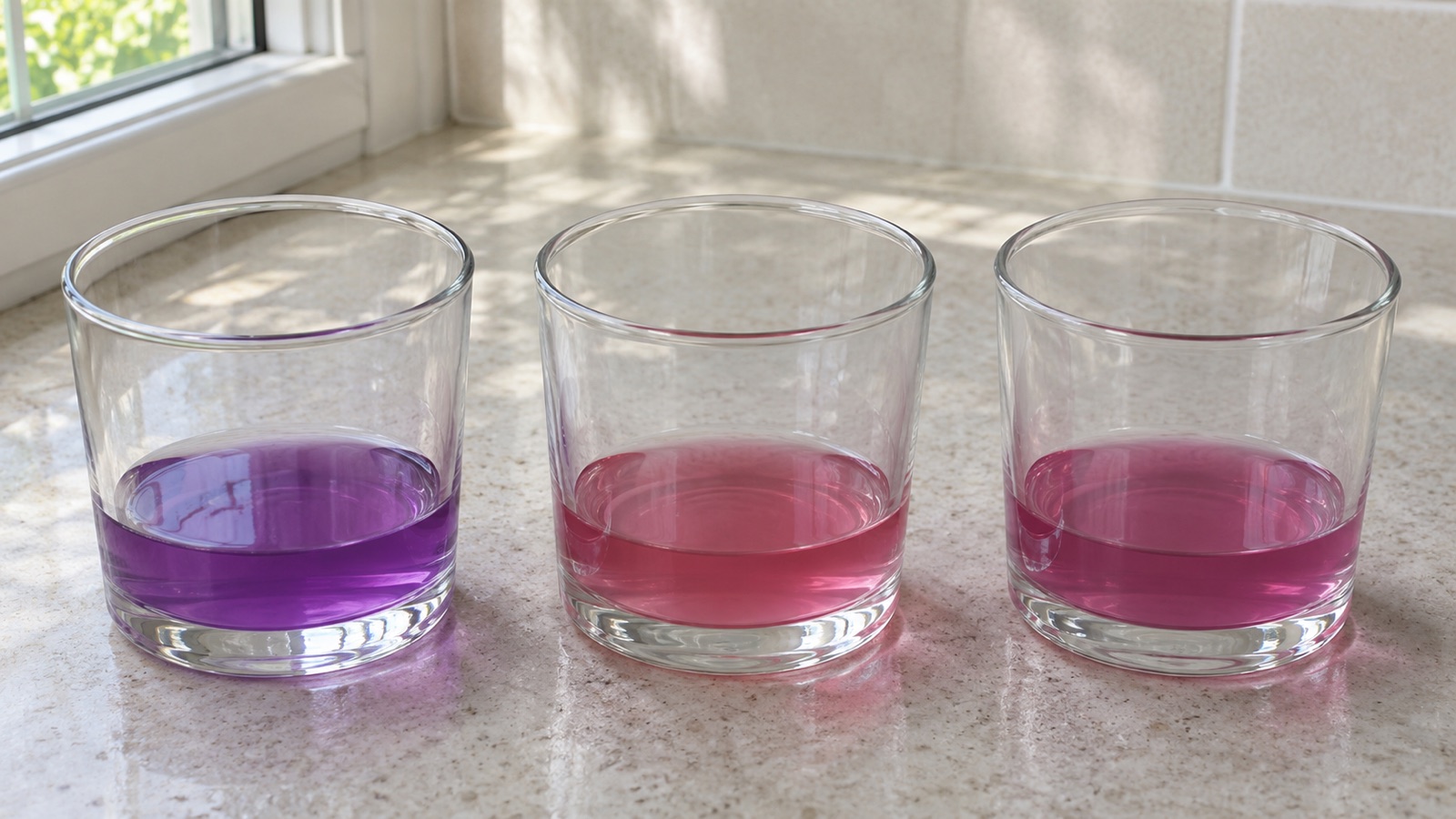
Finely slice 60 g from one head of red cabbage. Simmer gently in a small pan with 180 ml of water for 5 minutes. Strain the liquid and let it cool until warm before pouring it into glasses. Put 30 ml of cooking water into each of 3 identical clear glasses. Add 2 ml of water to the left glass, 2 ml of strained lemon juice to the middle glass and 2 ml of clear table vinegar to the right. Stir with separate spoons. The added water in the first glass keeps the final volumes equal.
View the glasses in daylight against a white plate. The first may stay purple or take on a bluish cast. The lemon and vinegar samples may move towards red and look very similar to each other. Look from the same height in each case. A deeper glassful of the same liquid looks darker than a shallow sample. The comparison shows the liquid colour. To judge the cabbage texture separately, lift a strip out of the pan and bite into it.
Stoddard & McIndoe, Journal of Chemical Education (2013)
What do water and cooking time change?
When you boil cabbage in plenty of water and drain it, you pour away some of the colour with the liquid. With less water, the released pigment spreads through a smaller volume. For a side dish, start with just enough water to wet the base of the pan and cover it. Check the base occasionally. If the pan starts to dry out, add water a little at a time. Soup naturally uses more liquid. In that case, the colour spreads through the broth and becomes part of its appearance.
Time on the heat affects both how much pigment comes out and what happens to it afterwards. A study on heated red cabbage pigments found that some changes in colour can be reversed and that degradation can cause lasting colour loss. Lemon can therefore turn the remaining pigment pink in a dish that faded during a long boil, although the original intensity may be gone. Cutting the cabbage evenly and removing it from the heat once it reaches the texture you want keeps cooking time under control.
Julie-Anne Fenger, INRAE · Dyes and Pigments (2020)
When should you add acid?
For a sauté with browned edges and a little bite, spread the cabbage in a wide pan. Turn it occasionally and taste the thickest strip. When the texture is right, take the pan off the heat. Put a spoonful of cabbage on a white plate and mix in a few drops of lemon. If you like both the colour and the flavour, add the lemon gradually to the whole pan. Testing the small portion first helps you avoid oversouring the dish while adjusting the colour.
In a slow-braised side dish with apple, vinegar can go into the cooking liquid. Apple also contributes flavour and acidity, so taste a piece of cabbage together with apple before adjusting the seasoning. Lemon brings a citrus aroma, while vinegar can taste sharper or fruitier, depending on the type. Clear vinegar keeps its own tint out of the glass comparison. In the pan, use cider vinegar if you want its aroma with the apple.
Braised red cabbage with apple
What if it looks pale or blue, or tastes too sour?
If the cabbage looks blue but tastes just right, serve it that way. To shift it towards pink, test a few drops of lemon on a small portion first. If you already added too much and the dish is overly sour, fold in some cooked cabbage without added acid if you have any. That spreads the acidity through a larger portion without making the side watery. When tasting, take some liquid and a piece of leaf together.
Can you measure exact pH by the cabbage colour? The kitchen comparison shows the direction of change when acid is added. The variety, pigment concentration and lighting can all make the same colour appear under different conditions. For a fair comparison next time, take equal volumes from one pan and always leave one glass without added acid. Stop cooking and adjusting the seasoning when the texture and tartness suit the dish.
İyi Bir Yemek
Food Researcher & Writer
Reader Comments & Contributions
Be the first to share your thoughts on this post