
Why Do Chickpeas and Dried Beans Stay Hard?
Find out how older beans, hard water and early additions of tomato or lemon can delay softening, and learn to check whether the centres are tender.

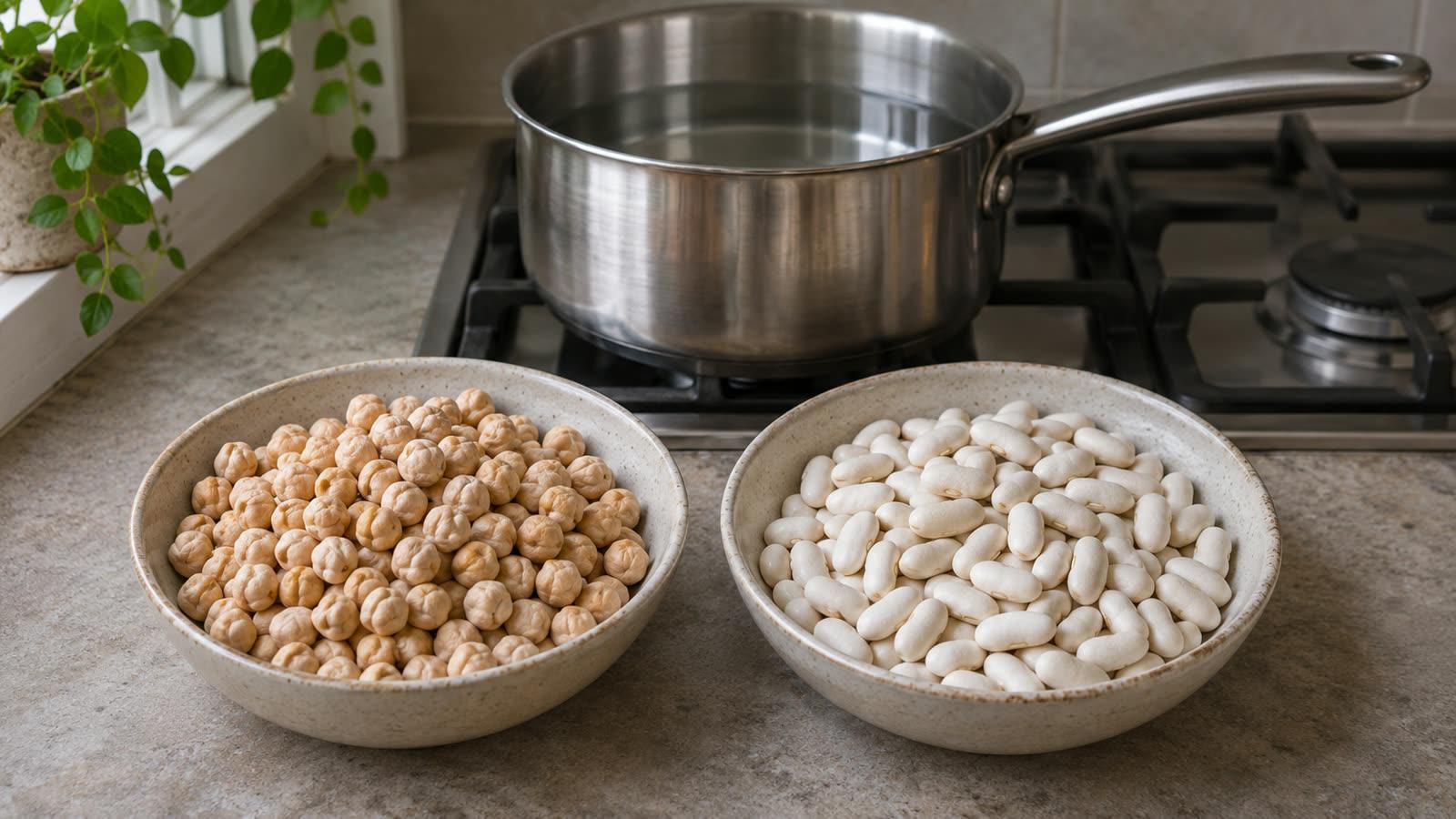
If chickpeas or dried beans stay hard after a long time on the stove, check three things first: how long the bag has been open, how mineral-rich your water is and when tomato paste, tomatoes, lemon or vinegar went into the pot. Next time, soak the pulses from a single bag, cook them in fresh low-mineral drinking water and add acidic ingredients once the pulses are tender. This gives you a more consistent starting point and makes it easier to work out which part of the process is causing trouble.
Start with one batch and soak it
Pulses that have been sitting around for a long time or stored poorly can soften more slowly than those from a fresh bag. If you top up a jar with a second batch, you may get different textures in the same handful. Use one variety from a single bag for your trial. Pick out stones and damaged pulses and rinse the rest. Choose a container with room for them to swell and add enough drinking water to cover them by several centimetres. Refrigerate overnight, about 8–12 hours. Discard the soak water and rinse the pulses. Soaking makes cooking easier. Swelling tells you the pulses absorbed water. A swollen chickpea still needs to be cooked. If several batches from the same jar cook unevenly, start with a fresh bag.
Tell hard water apart from acid added too soon
Minerals in hard water, including calcium, can slow the softening of the pulses as they cook. Limescale in a kettle is one clue. To check, take two small portions from the same bag and soak and cook them separately. Use tap water for both stages in one batch and low-mineral drinking water for the other. Keep the pot sizes, water volumes and heat as similar as possible. Leave tomatoes and vinegar out of both pots so the water is the variable you change. If the pulses in tap water take noticeably longer, try low-mineral water for the next pot. If the problem only occurs in a tomato stew, try softening the beans in plain water before combining them with the sauce. The same logic applies when you add lemon dressing after cooking chickpeas for salad. A little table salt behaves differently from a large amount of lemon juice. Salt alone is a poor diagnosis.
For the water comparison, start timing when each pot reaches a boil. Use separate utensils so you do not transfer water between pots. Test several beans at the same point and judge the batch by more than the first tender one. If both pots take about the same time, use the same water with a fresh bag next time. Changing one thing at a time makes the result easier to interpret.
Boil and check the centre of the bean
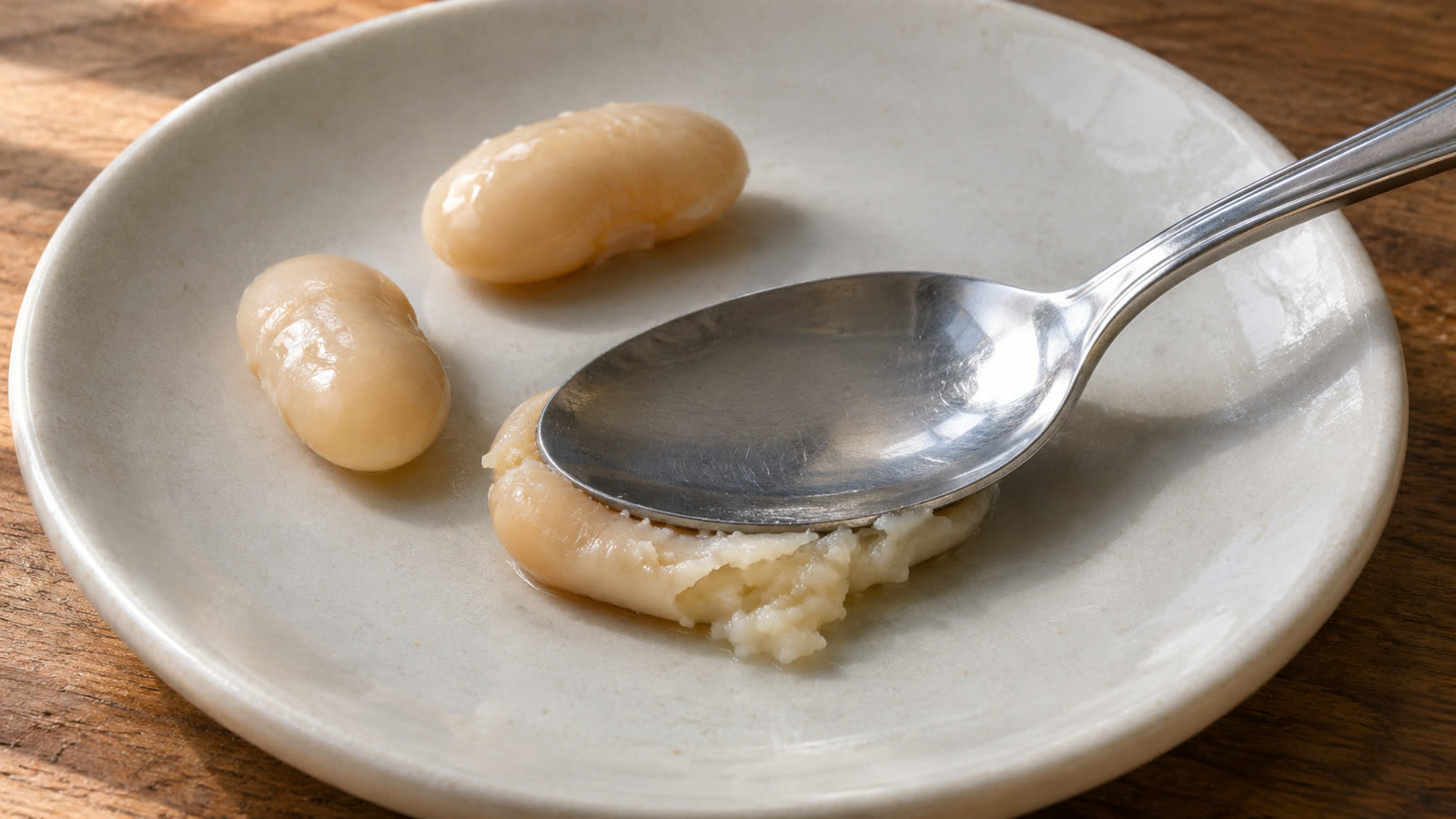
To reduce lectins, EFSA recommends soaking dried pulses for 6–12 hours, changing the water and boiling them in fresh water for at least 30 minutes at 100 °C. Do not put raw red kidney beans directly into a slow cooker. After the initial boil, keep cooking until the pulses are tender. If the water level drops, add enough hot water to cover them. Let a few beans cool briefly on a plate, then press them with a fork or spoon. A hard, chalky centre needs more cooking. For salad, aim for a soft centre and largely intact skins. For hummus, the chickpeas should mash easily. Test for texture after the required boil.
Use the symptoms to choose the next step
If the whole pot is hard, check whether the water came to a proper boil and the pulses stayed covered. If they are getting softer, cook a little longer and check a few more. If some have fallen apart while others remain rock-hard, you may be dealing with different sizes, varieties or ages in the pot. Try a single batch next time. If tomato paste went in early, extra cooking in the sauce offers no guarantee. The sauce can also thicken and catch on the bottom. If the dish allows, lift out the pulses and try cooking them in plain low-mineral water. If dinner is imminent, make a fresh sauce and use drained, precooked canned beans instead. A fresh batch is often a better starting point for the next attempt.
Make the sauce separately and record what worked
For a tomato-based dish such as restaurant-style beans with beef, prepare the onion and tomato paste in another pan while the beans cook. Test a few beans with a fork. Once the centres are soft, drain them, stir them into the sauce and cook briefly to bring the flavours together. For a purée, wait until several chickpeas crush easily. For a salad, extra cooking may cause the skins to fall apart. Write down the name on the bag and when you opened it, the water you used, the length of the soak and when a fork first went through easily. Those notes give you a starting point when cooking from the same bag again. Check afresh when you switch varieties or batches.
Sources
EFSA · Lectins in food · FDA · Bad Bug Book · Colorado State University Extension · Cooking with Dry Beans and Other Pulses · NDSU Extension · All About Beans
İyi Bir Yemek
Food Researcher & Writer
Reader Comments & Contributions
Be the first to share your thoughts on this post