
How to Use a Salad Spinner for Lettuce and Arugula
Learn how to spin lettuce and arugula without bruising them, when to empty the bowl and what to look for in a salad spinner.

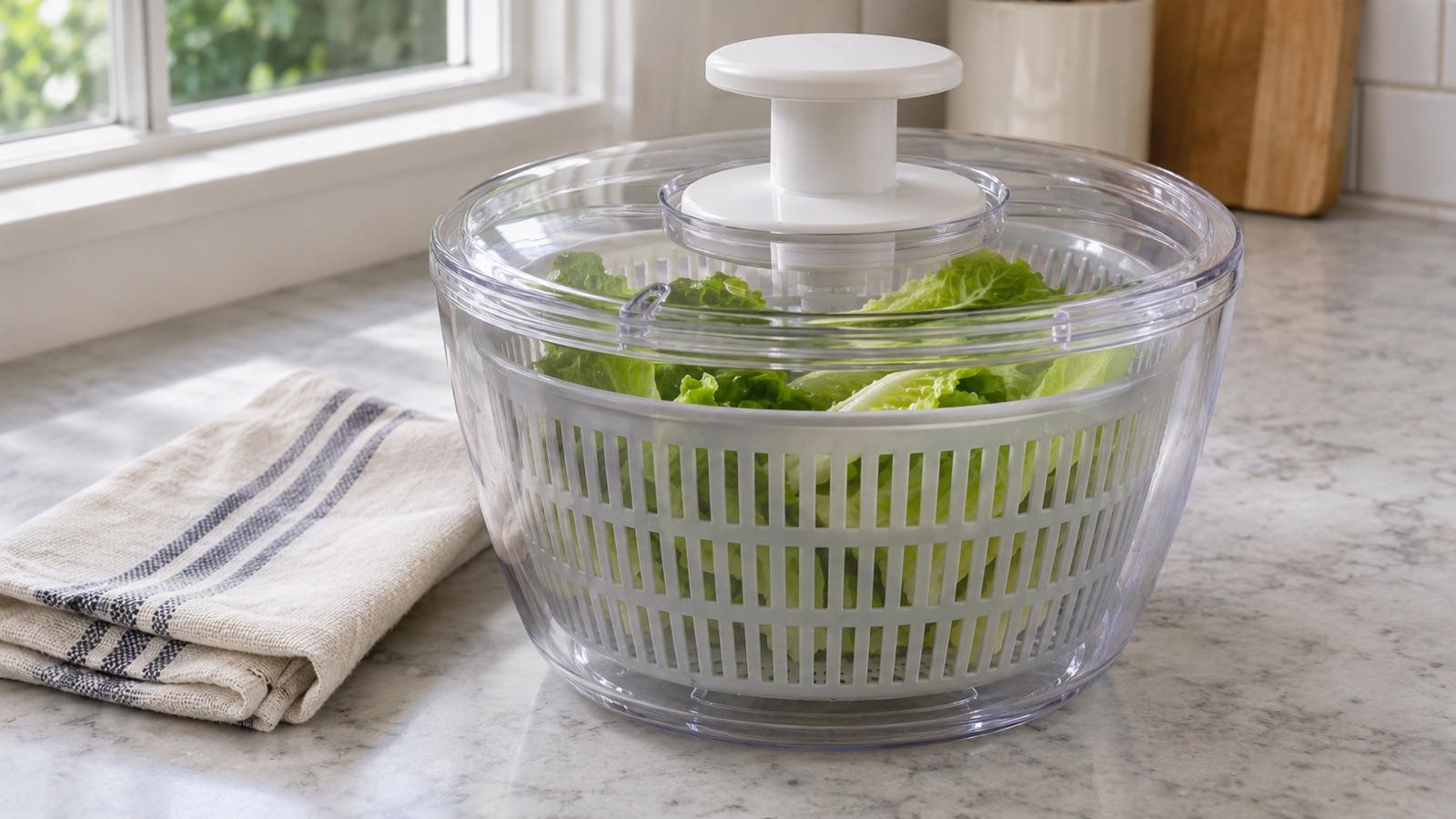
Put washed greens loosely in the perforated basket, close the lid and spin. Then pour the collected water out of the outer bowl. If water keeps pooling under your salad, smaller batches will usually do more than faster spinning. A clean kitchen towel works for a few leaves. Whether you are choosing a spinner or using one, the goal is to remove droplets without packing the leaves down.
What the basket and bowl do
The lid drives the inner basket. As the basket speeds up, water moves outward from the leaves, goes through the holes and collects in the stationary outer bowl. Lifting the basket separates the greens from the water. In a colander, gravity does most of the work. Droplets can stay around thick lettuce ribs or in curled leaves. The difference shows up when you dress a salad. With wet leaves, some dressing mixes with the water and runs to the bottom of the bowl. The aim is to reduce visible drops while keeping the leaves crisp. A small, tender arugula leaf and a thick piece of lettuce need different handling.
Prepare the greens before filling the basket
Start with clean hands, a clean counter and a clean basket and bowl. If you have prepared raw meat in the same area, keep the greens away from any surface that has not been cleaned. Separate the lettuce leaves and rinse them under potable running water, paying attention to grit near the base of the ribs. Divide arugula into small, loose handfuls so the water can reach between the leaves. Keep soap and dish detergent off the greens. Packaged greens marked as prewashed and ready to eat can be used straight from the package. See FDA for this distinction and guidance on rinsing. Tear broad leaves into large pieces if they do not fit. Let the leaves drain briefly before spinning so the bowl does not fill with unnecessary water on the first pass.
Spin small batches and empty the bowl
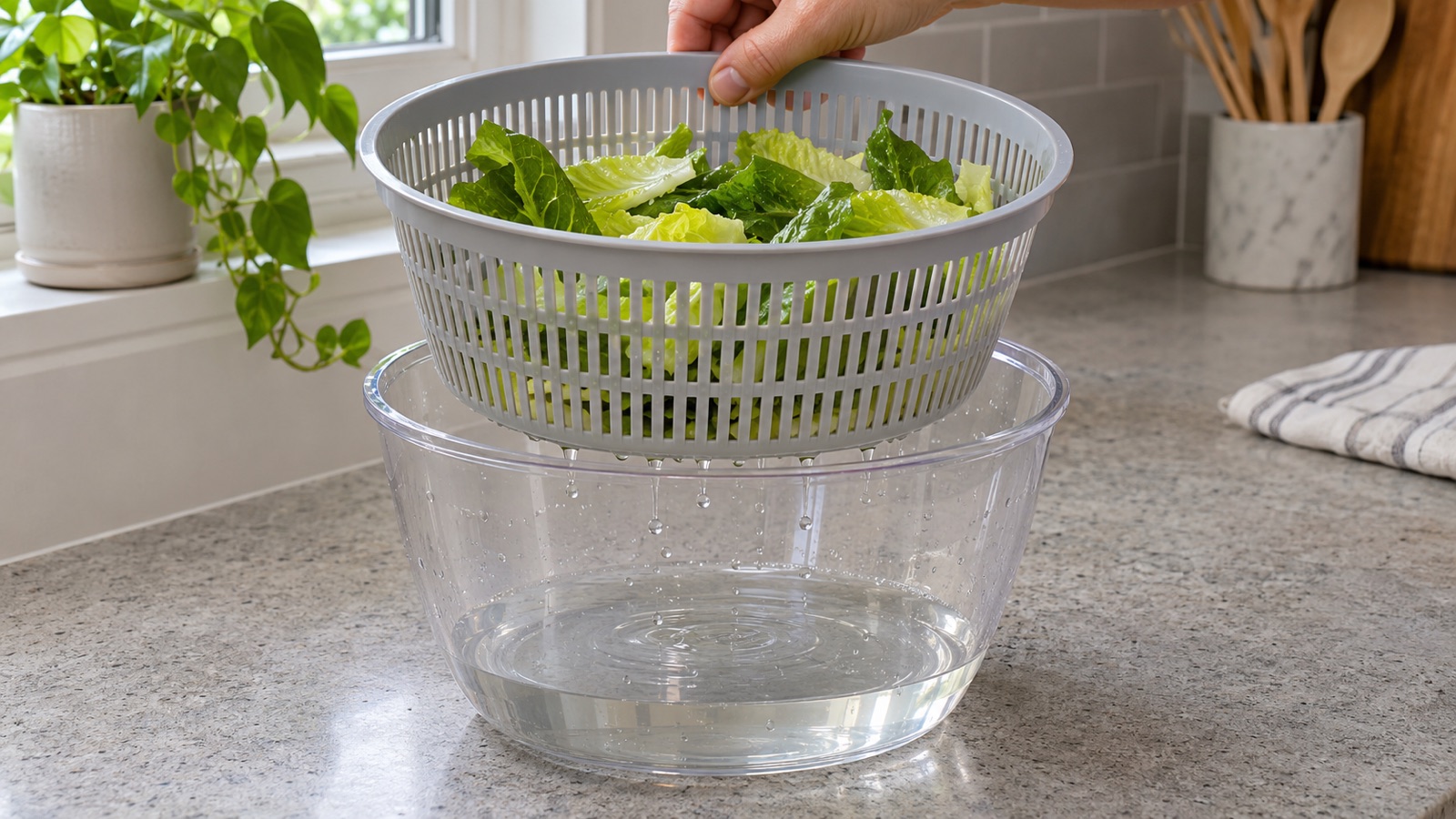
Set the spinner on a flat, dry counter. Seat the perforated basket and add the leaves without pressing them down. If the lid is hard to close, take out some greens. Fit the lid and spin in a short burst. Once the basket stops, open the lid and lift out the basket. As the photo shows, the water stays in the outer bowl. Pour it away, put the basket back and lift an upper leaf to check underneath. If there are droplets in the lower layer, loosen the greens and give them another short spin. Leaving the collected water in the bowl can keep the underside of the basket wet. If leaves are tearing, use less force and make the batch smaller. Check where the water is collecting before spinning for longer.
For a quick capacity check, jiggle the basket gently before closing it. If the leaves move independently, there is room for water to escape. If they move as one lump, split the batch. A dry-looking top tells you little about the bottom. If the greens collect on one side and the spinner wobbles, wait for the basket to stop before opening, then redistribute the leaves around the basket.
Adapt the method to lettuce, arugula and small portions
Thick iceberg ribs can trap water. Leave the large pieces loose in the basket and check the inner side of the rib after the first spin. Start arugula with a short, gentle spin and loosen any clump in the middle by hand. For just a few sandwich leaves, lay the drained leaves in one layer on a clean towel and gently blot them with another clean towel. That is less work for a small serving than setting up and washing the spinner. For a whole bowl of arugula, you can use this method just before dressing the arugula salad with beets and goat cheese. Spin the leaves separately from ingredients that release water, such as chopped tomatoes. Add those to the salad bowl separately and dress the salad close to serving.
Use a dry bowl before you add the dressing. Lift the basket out first so you do not tilt the outer bowl and pour the collected water back over the greens. You can transfer tender leaves by loose handfuls to avoid piling them up. For a couple of stray drops, touch the corner of a clean towel to the fold of a leaf instead of spinning again. A dry bowl is especially noticeable when serving with a thin dressing. The Utah State University Extension guide also mentions using a spinner for leafy greens.
What to look for when buying and cleaning
Judge capacity by how much fits loosely in the basket. The outer bowl's volume tells you less about a usable batch. A small basket with a lid that comes apart easily may suit a one-person kitchen. A broad basket reduces the number of batches in a busy kitchen, but check the lid height against your cupboard space. A pump lets you press down with one hand. A crank may require you to steady the bowl with the other hand as you turn. Check both styles for a lid that seats snugly and a base that does not rock. When finished, separate the basket and bowl, remove bits from the holes and wash them. Open the lid and let the pieces air-dry. Check your model’s manual before taking the lid apart or putting parts in the dishwasher. If an empty basket drags, reseat it before adding leaves.
İyi Bir Yemek
Food Researcher & Writer
Reader Comments & Contributions
Be the first to share your thoughts on this post