
How to Store Whole Lemons, Cut Lemons and Lemon Juice
Keep whole and cut lemons fresh in the fridge and freeze lemon juice in measured portions you can use straight from the freezer.

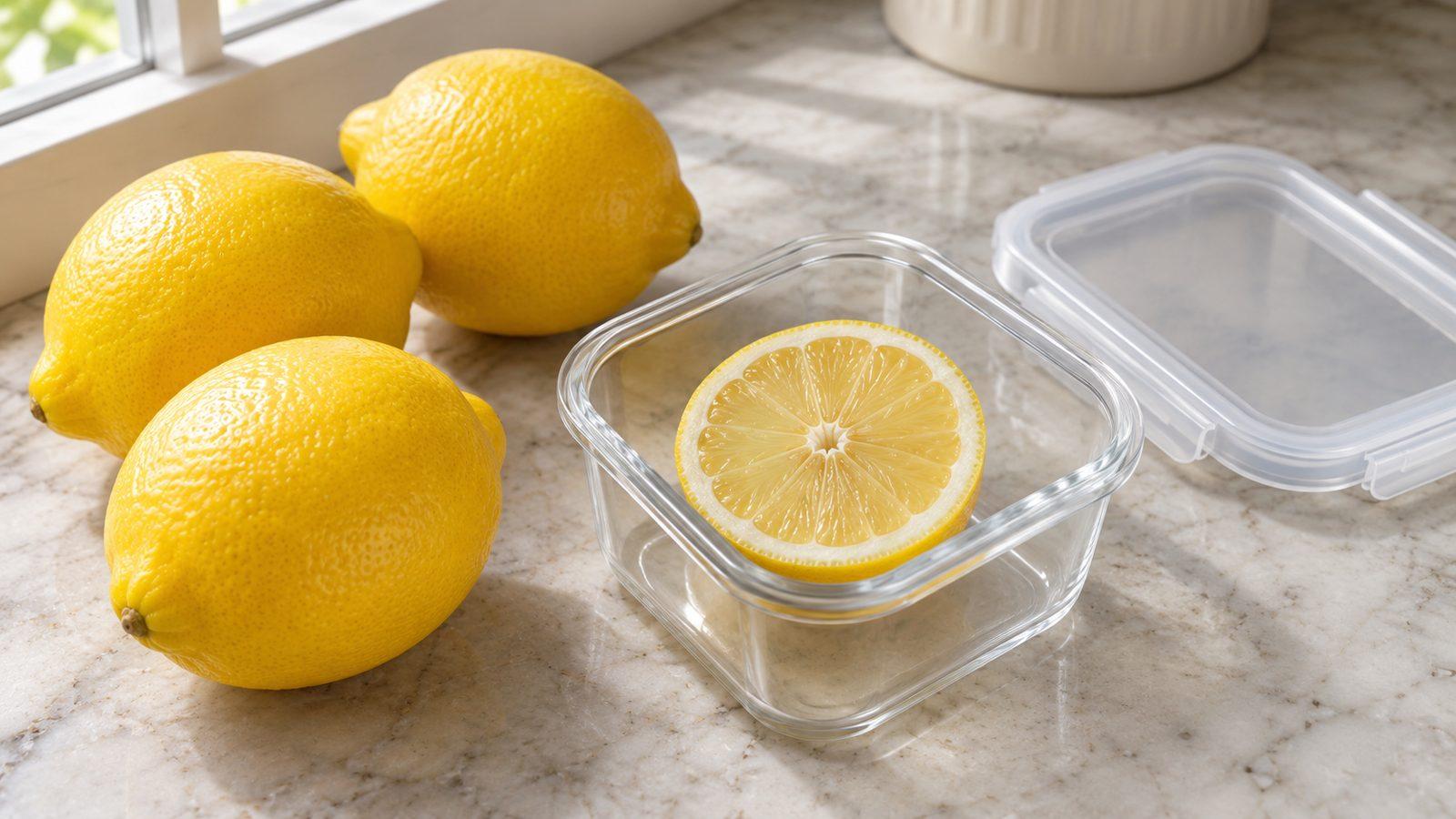
Keep whole lemons in a cool spot out of direct sun if you will use them in the next few days. For longer storage, bag them dry and refrigerate them. Put a cut lemon in a clean, lidded container and chill it promptly. Freeze any juice you are unlikely to use soon in small, measured portions. Choose the method according to what you want the lemon to do in your next meal.
Keep whole lemons cool and dry
Check the fruit as you unpack your groceries. Set aside firm, unbruised lemons that feel heavy for their size. Juice a sound lemon whose skin is beginning to wrinkle before using the firmer ones. If the lemons arrived damp, dry their surfaces before closing the bag. If droplets collect inside later, inspect the lemons and move them to a dry bag. Waiting until you are ready to use whole lemons before washing them makes this easier.
The counter is handy for a few lemons destined for tea or dinner that day. Next to the stove or in a sunny window, they dry out faster. If you need lemons next week too, place the bag in the crisper drawer. Refrigeration and the bag slow moisture loss and hardening. The fruit’s starting condition and the refrigerator affect how long it keeps, so treat storage estimates as a guide to quality. See Utah State University Extension for advice on whole and cut lemons.
Cover the cut surface of a lemon half
Rinse the lemon under running water and dry it before cutting. Use a clean knife and board. Put the leftover half in a small, clean container with a lid that closes securely. The container limits the airflow that dries the exposed flesh and keeps it from touching other foods. Refrigerate slices in a covered container too. Since slicing exposes more flesh, cut only what you need for the meal.
Put the leftover half away as soon as you finish using it. Refrigerate it promptly at 4 °C or colder and use it soon. Keep cut fruit where juices from raw meat cannot drip onto it. U.S. Food and Drug Administration explains washing, chilling and preventing cross-contamination when handling fresh produce. Place the container where you will see it first. It will be easier to remember the half when you dress a salad or finish a bowl of soup the next day.
Freeze the juice in recipe-sized portions
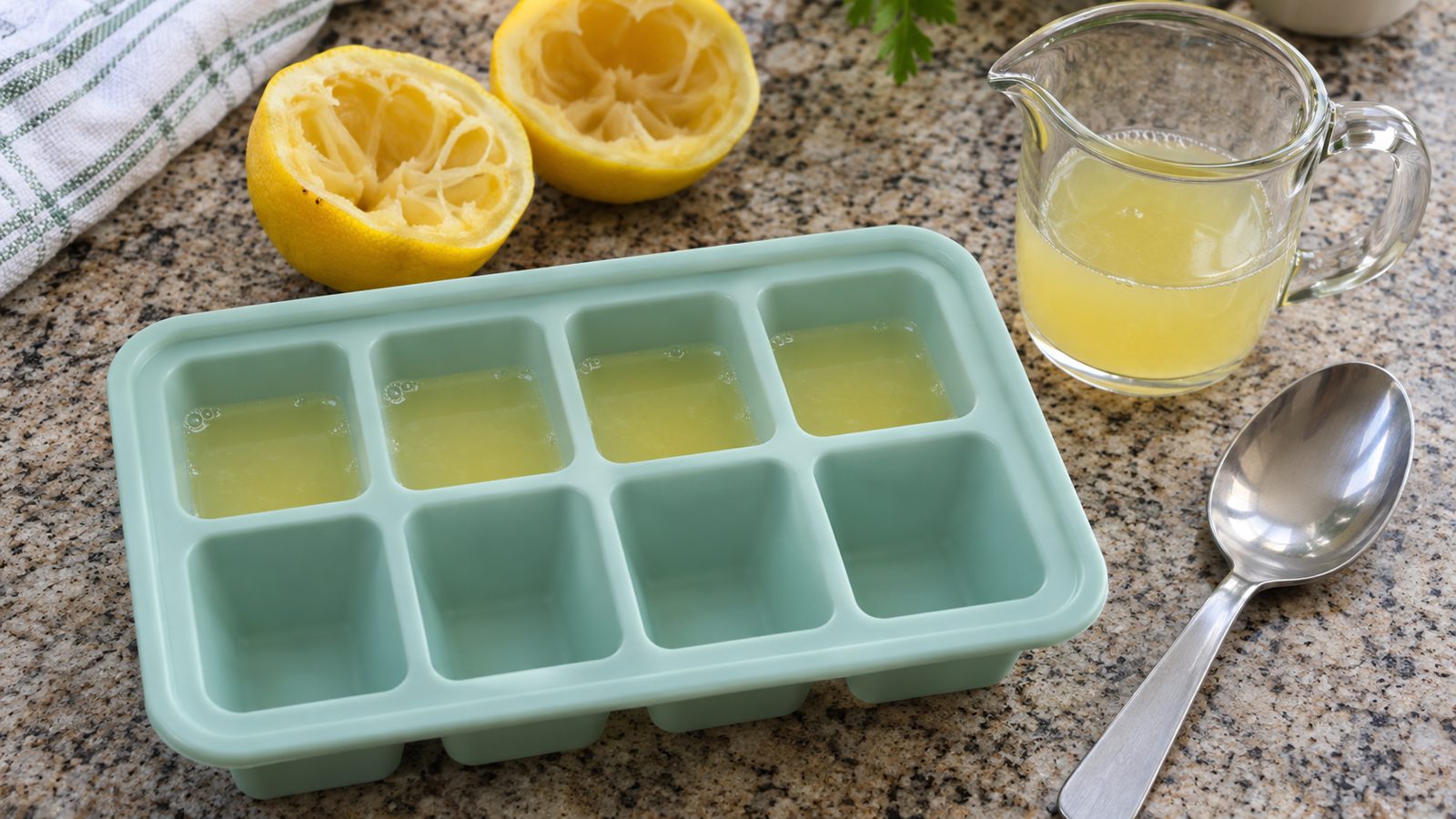
Squeeze the clean lemons, strain out the seeds and measure the juice into a clean ice tray. Try one tablespoon, about 15 ml, per well. A small dressing might take one cube and a larger recipe several. Leave space at the top of each well. Once the cubes are completely solid, transfer them to a sealed freezer bag. Write the date and the amount in each cube on the bag.
If you share the tray with other kitchen tasks, check its capacity with water first. Instead of filling deep wells to the top, use the same spoon to add an equal amount to each. Labeling each bag tells you how many cubes to take even if you use different trays. A lemon cube in a drink adds more acidity as it melts. Start with a little, stir, taste and add another if needed. When liquid quantities matter in a batter, thaw the juice and measure it again.
For salad dressing, thaw the cubes you need in a covered container in the refrigerator, then add the oil and seasonings. For soup, drop a cube directly into the hot pot. For example, thaw the juice for roasted celeriac with lemon tahini sauce while you gather the other sauce ingredients. A large block of frozen juice is awkward to divide, so choose portion sizes that match the meals you make. National Center for Home Food Preservation notes that citrus juice can be frozen without adding sugar.
Store zest and juice separately
If you want the zest too, rinse and dry the lemon and grate it while the fruit is still whole. Use a fine grater and take only the yellow outer layer. Turn the lemon as soon as you see white pith, which can make the grated mixture more bitter. Once you have squeezed the lemon, the collapsed, wet peel is harder to hold.
Divide the zest into small portions and put them in closed freezer containers. University of California Agriculture and Natural Resources describes freezing citrus zest in small containers. Label zest and juice separately. For a cake, you may want the aroma of zest alone. A salad dressing usually needs the acidity of the juice. Keeping them separate lets you add either or both without changing how much liquid goes into the recipe.
Tell drying apart from spoilage
A slightly wrinkled lemon that is otherwise sound and still juicy inside is a good candidate for squeezing. Discard a lemon that is moldy, leaking or slimy. If the cut surface of a refrigerated half has dried slightly, squeezing it may be more practical than serving it as neat slices. Check the cut lemons first when you tidy the fridge.
Make three small decisions for the week. Save whole lemons if you want tidy, firm slices for drinks. Move the covered half to the front if you are cooking tomorrow. If you have a surplus, use the sound fruit to make portions of juice and zest. Small, dated portions are easier to find and use than a bulky container. When a dish is nearly ready, you can take out just the amount you need.
İyi Bir Yemek
Food Researcher & Writer
Reader Comments & Contributions
Be the first to share your thoughts on this post