
How Do Cornstarch and Potato Starch Thicken Sauce?
Make a cold slurry, compare cornstarch and potato starch in equal amounts of stock, and fix a lumpy, overly thick or thinning sauce.

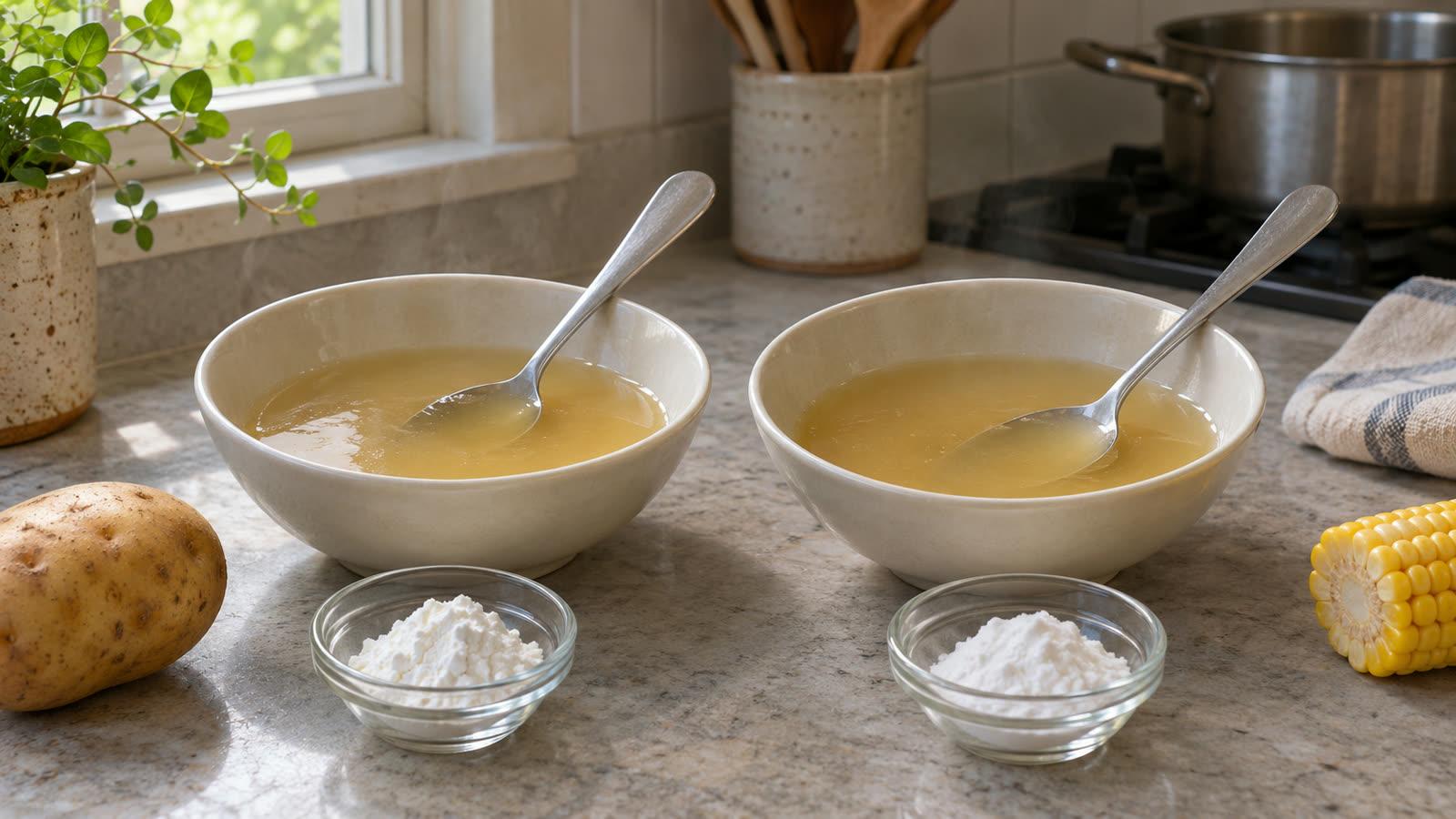
Disperse either starch in cold liquid before stirring it into hot sauce. Potato starch can thicken sooner and more strongly, making it a useful starting point for a light vegetable sauce you will finish quickly. Cornstarch works well in a stock-based sauce that can briefly come to a gentle simmer. Judge the coating on the back of a spoon at serving temperature. Aim for a sauce that can coat the spoon and still pour onto a plate.
What changes as starch heats?
Heat and water make starch granules swell. Starch molecules released into the liquid, together with the swollen granules, slow its flow. This process is called gelatinization. In comparable mixtures in laboratory studies, plain potato starch began to thicken at a lower temperature than ordinary cornstarch and reached a higher peak viscosity. With continued heating and stirring, potato starch also showed a larger drop from that peak in those tests.
The liquid matters in your kitchen. Stock, milk and sweetened fruit juice have different compositions. Acid can also weaken the thickening effect. Avoid a universal conversion ratio for clarity or body. Check that the package contains pure starch. Corn flour in the sense of ground whole corn, potato flour and prepared sauce thickeners differ in composition and may behave differently at the same weight.
Kaur et al. · Lewandowicz et al.
How to stir a cold slurry into a sauce
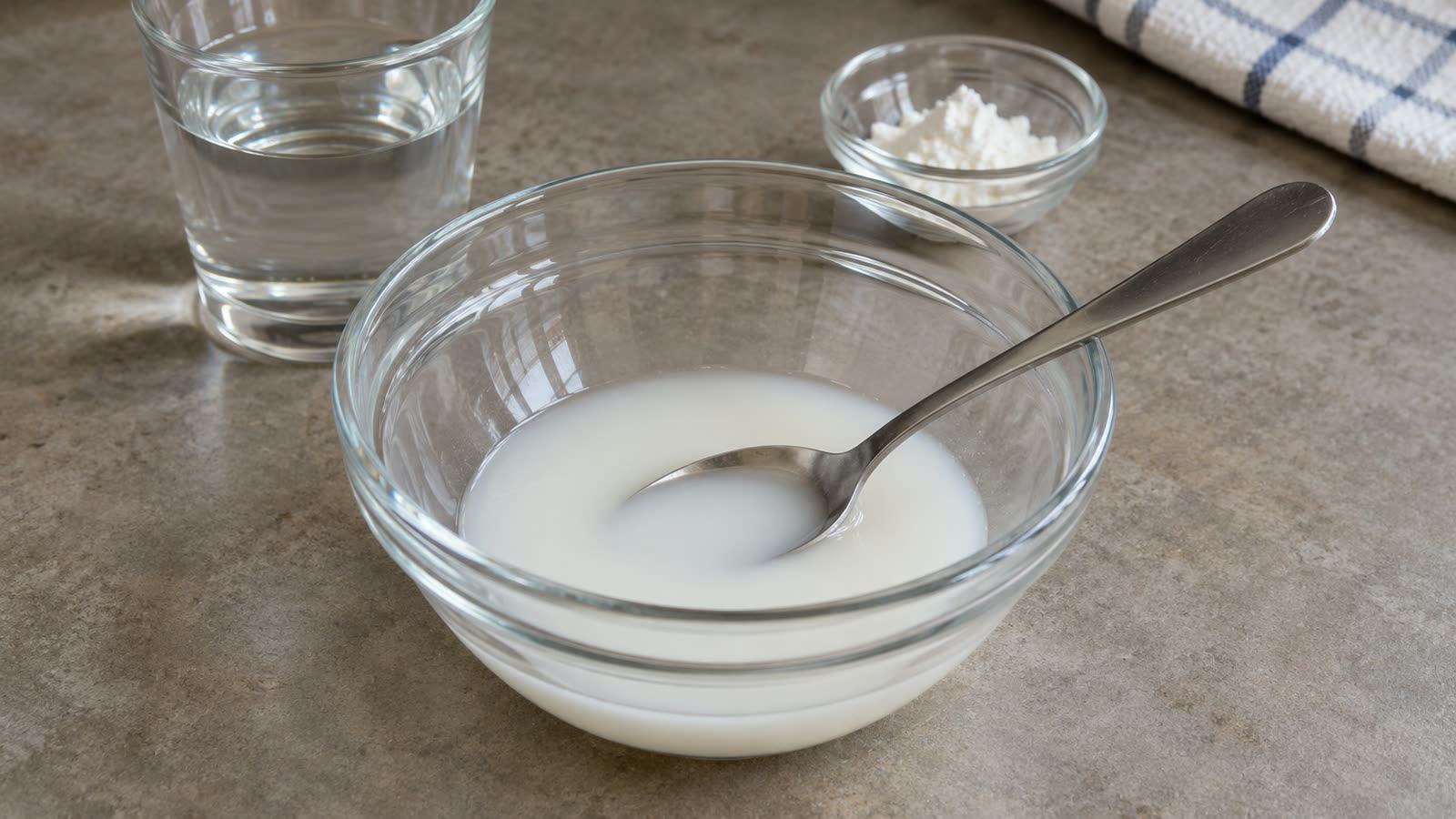
Weigh the starch in a small bowl. Add cold water or cold liquid reserved from the sauce and stir until smooth and pourable. If the bowl has been standing, stir again right before pouring to lift the starch from the bottom. Dry powder can swell immediately on the outside when it hits hot sauce and trap a dry centre. Dispersing the particles in cold liquid first helps prevent those lumps.
Control the heat while the sauce is hot. Pour in the slurry in a thin stream and sweep a spoon around the bottom and edges of the pan. You can start with only part of the slurry and check the consistency. Let cornstarch sauce bubble gently and briefly while stirring. Take potato starch sauce off the heat once it reaches the texture you want. A hard boil or prolonged, vigorous whisking can thin it again, especially with potato starch.
A small side-by-side comparison
Measure 150 ml of the same meat or vegetable stock into each of two containers. Reserve 20 ml from each and mix 3 g cornstarch into one cold portion and 3 g potato starch into the other. Heat the remaining stock in similar small saucepans at the same burner setting. Add each slurry to its own pan. Heat the cornstarch sample to the first gentle bubbles and stir briefly. Remove the potato starch sample from the heat when it visibly thickens.
Spoon out a sample of each and compare them at the same temperature. Look at the coating on the back of the spoon, how quickly a drop falls from the edge and how the sauce spreads on a plate. The potato starch sample may cling sooner. These quantities give you a starting point for comparison. Use less starch next time for a lighter sauce. Changing the starch dose alone makes the difference easier to interpret. If cooking the samples in succession, bring the burner and pan back to the same starting conditions before the second batch. Comparing a hot sample with a cooled one confounds the effects of starch and cooling. Use the same spoon size and similar plates. You can then repeat the comparison with the liquid from the sauce you plan to make.
Which starch fits the sauce?
For a vegetable stock sauce to pour straight over roasted vegetables, add potato starch at the end. Get the stock and seasoning where you want them first. Once the starch thickens the liquid, take it off the heat straight away. For a thin coating, pause and check before using all the slurry. Even a small addition makes a noticeable difference in a small pan.
If you are loosening browned bits with stock to make a pan sauce, add cornstarch after the liquid has reduced to the flavour you want. There is no need for a long reduction once the starch goes in. For a sauce finished with lemon or vinegar, add the acid gradually at the end if the recipe allows, then check the texture again. For a sauce that will sit before serving, cool a spoonful to serving temperature to judge how it will look on the plate.
How to fix a lumpy, thick or thinning sauce
If lumps appear, turn off the heat first. Lift out large lumps with a fine sieve. Pressing them through can release their dry centres back into the sauce. If the result is too thin, make a little fresh slurry, add it and reheat. If the sauce is too thick, stir in small amounts of the same stock to preserve its flavour. Check the spoon after each addition.
If the sauce thins as it sits on the burner, stop prolonged boiling and vigorous stirring. Check a small sample at serving temperature before adding more starch. If it is still thin, add a little fresh slurry and cut the heat once it thickens. A sauce that thickens as it cools may change again when reheated. Judge a cold sauce from a cooled sample. Gelatin sets mixtures as they cool and calls for different amounts and preparation.
İyi Bir Yemek
Food Researcher & Writer
Reader Comments & Contributions
Be the first to share your thoughts on this post