
How to Store and Freeze Opened Tomato Paste
Learn when to chill opened tomato paste, how to freeze it by the spoonful and how to add the frozen portions to soup or pasta sauce.

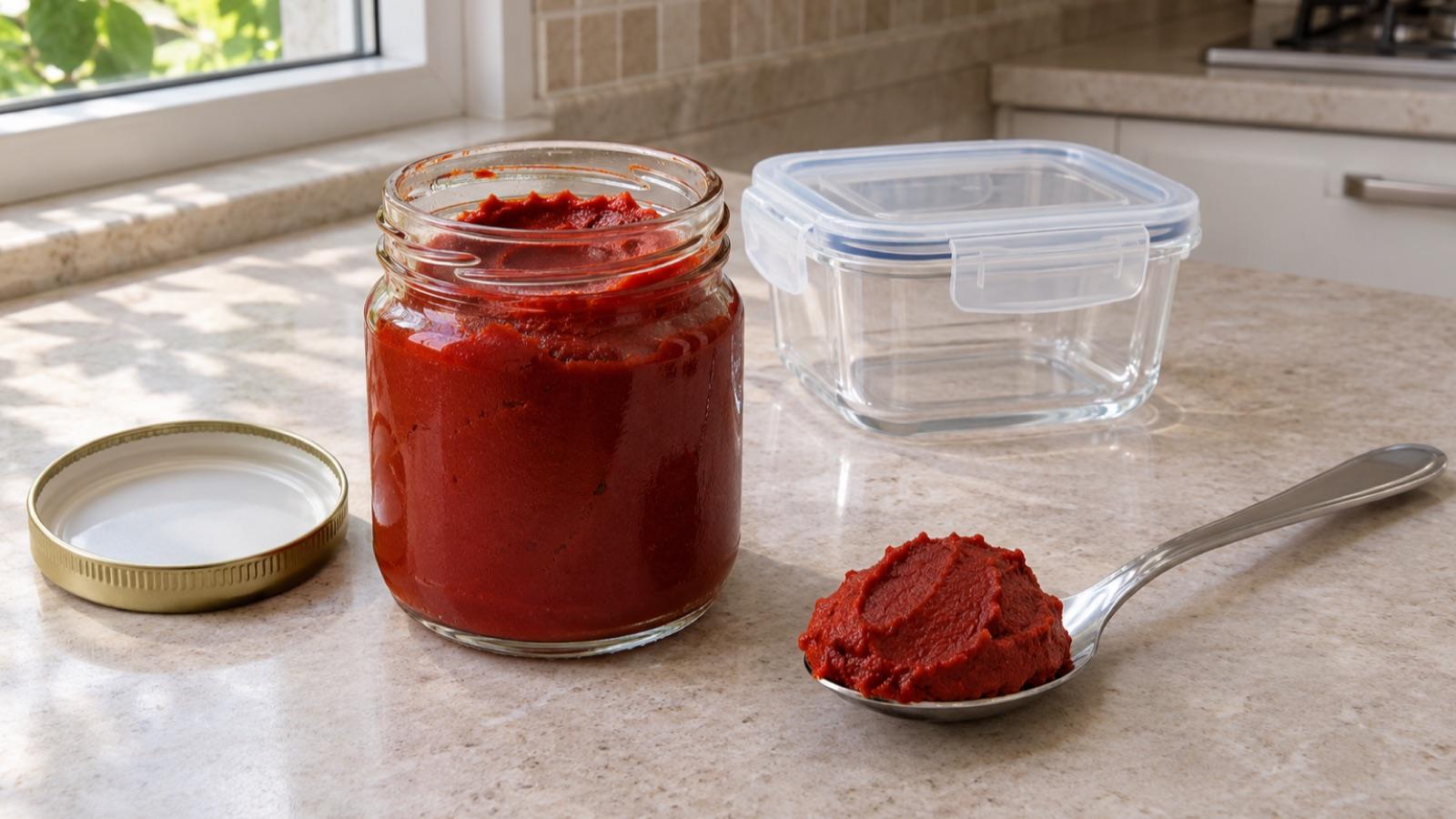
Refrigerate opened commercial tomato paste right away. Freeze any paste you will not use within the time stated on the label, dividing it into small portions while it is still fresh. Base that decision on what your next few meals call for. This guide is for store-bought tomato paste; preparing shelf-stable preserves at home is a separate subject.
How much should stay in the refrigerator?
Read the label for instructions on how to store the opened product and when to use it. Keep the refrigerator at 4 °C or colder and the freezer at −18 °C or colder. Write the opening date on the lid or storage container. If you are planning soup tomorrow and pasta the day after, set aside the paste those two meals need. If plans tend to change, freeze the surplus right away instead of trying to remember the jar on the last day.
You can transfer paste left in a metal can to a clean, covered food container to protect flavor and quality. If you bought it in a jar with a lid, use a clean spoon to scoop it out and close the lid tightly. Refrigerated storage times vary by product and package; general advice for canned goods does not replace the directions on a tube, jar or different product. Keep sauce and other ingredients off the spoon you dip into the container.
How to freeze recipe-sized portions
Think about the recipes you use most: 1 teaspoon for a small sauce or 1 tablespoon for a larger pot is a good starting point. If you freeze different sizes, put them in separate containers. Use level spoonfuls for these examples so that the amount is repeatable. If your recipes use grams, weigh the paste and write the weight of each portion on the label.
Measure a portion into each well of a clean, freezer-safe silicone tray. Press it gently with the back of the spoon, wipe the rim and put the covered tray on a level shelf. Once the portions are solid, pop them out and move them to a freezer bag or tightly closing freezer container. Press excess air out of the bag, then add the name, portion size and freezing date. A flat baking sheet under the tray makes it easier to carry without spilling.
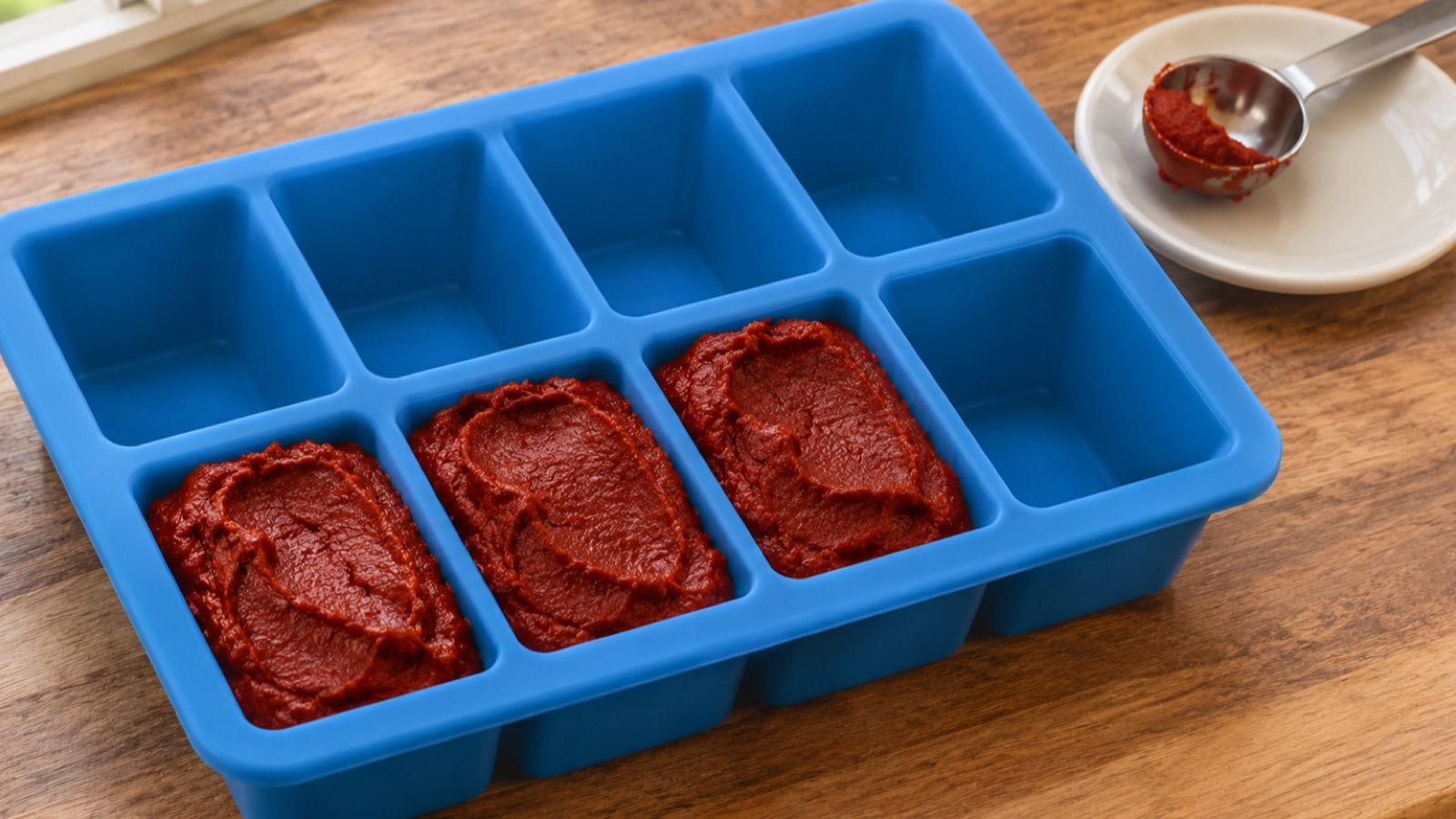
If you use more than one product, label the type as well as the portion size, for example “double concentrate” or “salt added.” Two pastes can give different intensity or saltiness at the same volume. For a sauce you usually make with a particular brand, thaw only part of the recipe amount when using a different paste. Taste once the sauce liquid is in and add the rest if needed, before trying to correct the finished dish with more salt or water. If the paste has added salt, wait until it is fully incorporated before seasoning the sauce.
University of Illinois Extension
What if you do not have a tray with wells?
Measure small mounds onto a flat baking sheet lined with parchment, leaving space between them. Cover to protect the paste, freeze, then lift the solid portions off the paper and pack them. This works when you have just a few spoonfuls and a baking sheet already at hand. If the mounds touch before freezing, they will be harder to separate later.
A single small freezer container is fine if you plan to use all the paste in one recipe. If you cook with little amounts at a time, individual portions are easier; avoid trying to split a frozen block with a knife. Take out only what you need and put the rest back in the freezer promptly. Write “tomato paste” on the bag so that similarly colored foods do not get mixed up.
How to add frozen tomato paste to soup or sauce
In a soup or stew you can drop a portion straight into the hot liquid. Try 1 teaspoon in a small pot of vegetable soup, stir and taste once the paste has dissolved. If you add more while the first piece is still intact, it is easy to overshoot. Using it straight from the freezer saves time when the paste only has to disperse through liquid.
If you start a pasta sauce by frying the paste with onions, thaw the portion in a small covered container in the refrigerator. You can then spread it thinly in the pan so it heats evenly as you stir. For a small sauce, try 1 tablespoon and add the recipe liquid once the raw paste smell softens. Do not drop a frozen piece into hot oil: surface ice or water can cause splattering. Use the thawed portion promptly without leaving it on the counter.
Which mistakes shorten its useful life?
Common mistakes include forgetting the opening date, dipping a used spoon in the jar and freezing the entire remainder in one block. Next time you shop, buy a package that fits how much you normally use. If you use a little at a time, a tube with clear storage instructions may be handy. If you buy a large can, set out your portion containers before opening it so that putting the rest away does not slip your mind after dinner.
Freezing does not make badly stored or spoiled paste safe. If you see mold, discard the whole portion or container rather than scraping the surface. Do not taste suspect paste to judge it or rely on a layer of oil to store it at room temperature. Good packaging helps preserve freezer quality; color, smell or appearance alone cannot verify the storage history. Dated portions tell you which package to use first and how much you are adding.
İyi Bir Yemek
Food Researcher & Writer
Reader Comments & Contributions
Be the first to share your thoughts on this post