
Double Boiler vs. Oven Water Bath
Learn when to melt chocolate over steam and when to bake custard in a water bath, with practical tips on cookware, water level and common mistakes.

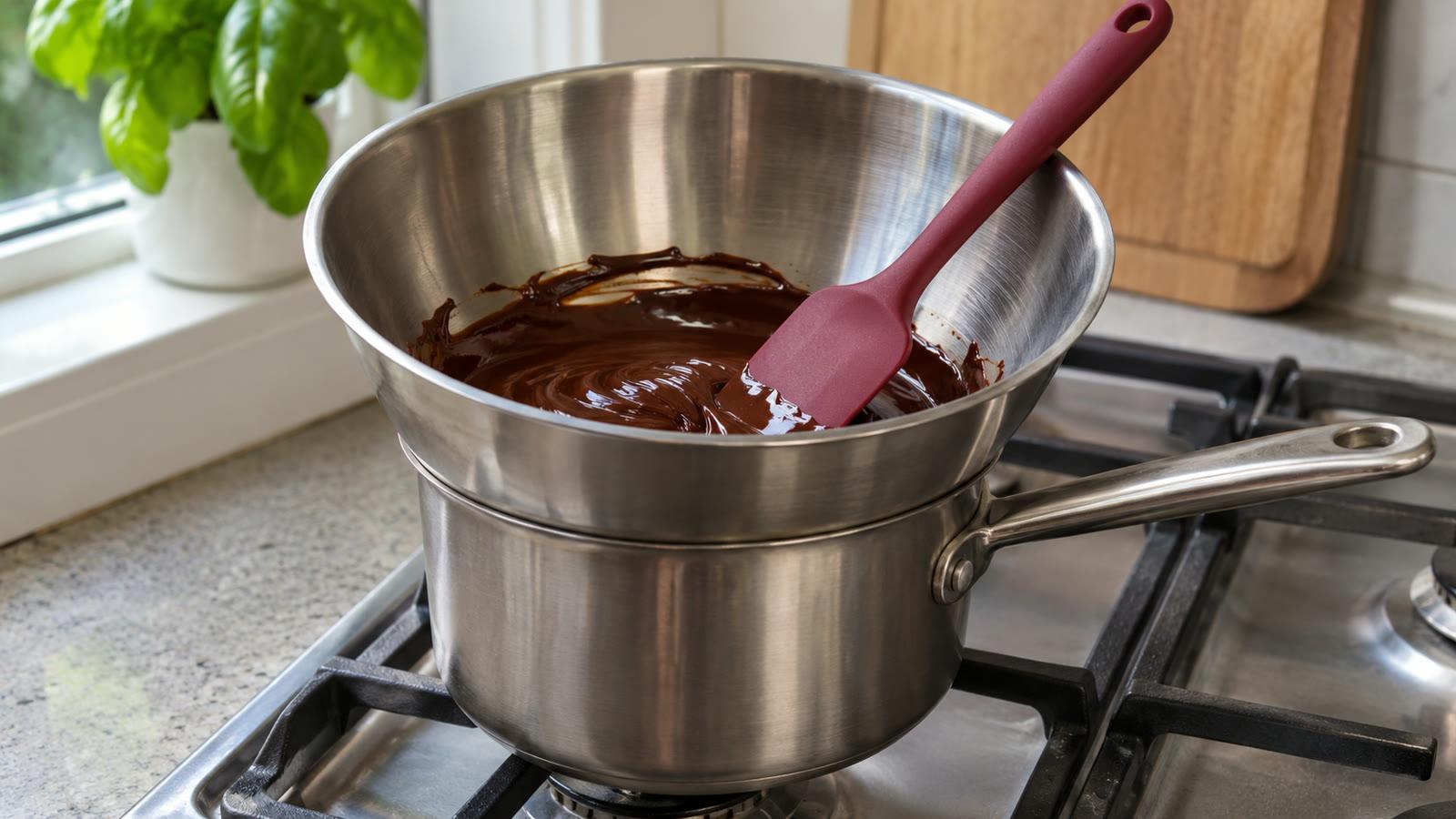
A bain-marie heats food indirectly through water or steam. To melt chocolate in a stovetop double boiler, set a bowl above the water with a gap below it. In an oven water bath, hot water touches the bottom and sides of the baking dish. Look at the recipe to decide which setup you need. Use the upper bowl for a mixture you stir as it melts and the immersed dish for a dessert that needs to set in its own container.
How heat reaches the food
On the stove, steam from the lower saucepan warms the upper bowl. You can lift the bowl off the pot to stop heating and use a spatula to see how the mixture is changing. Check the fit while both vessels are empty and cold. A small bowl can fall in, and a bowl that sits unevenly can shift when you stir.
In the oven, the water comes into contact with the outside of each dish and slows the rate at which the sides heat up compared with direct exposure to dry oven air. The surface is still exposed to the oven air. This arrangement helps an egg custard set in the middle before the edges turn firm. Rouxbe's bain-marie lesson illustrates why both setups can be called a bain-marie.
How to melt chocolate over steam
Chop the chocolate into pieces of similar size. Set a heatproof metal bowl over a saucepan with a little water in it, leaving a gap between the bowl and the water. Check that the inside of the bowl and the spatula are dry before you add the chocolate. Bring the water to a gentle simmer and turn down the heat. A rolling boil makes more steam and splashes, and makes melting harder to control.
Once most of the chocolate has melted, use a dry oven mitt to remove the bowl. Keep your face away from the escaping steam and set the bowl on a dry, heatproof trivet. Stir until the remaining bits melt in the residual heat. A lid can collect condensation that drips into the mixture. A few drops can make plain melted chocolate thick and grainy. King Arthur Baking's chocolate melting trial compares this method with a separate stovetop technique in which the bowl touches the water.
For chocolate that will go into cake batter, a smooth melt is enough at this stage. For glossy molded pieces, the recipe may call for tempering. That involves controlling temperatures as the chocolate cools and is worked. The double boiler provides a way to melt it. Use tempering instructions suited to your chocolate and the finish you want (King Arthur Baking’s tempering guide).
How to set up an oven water bath
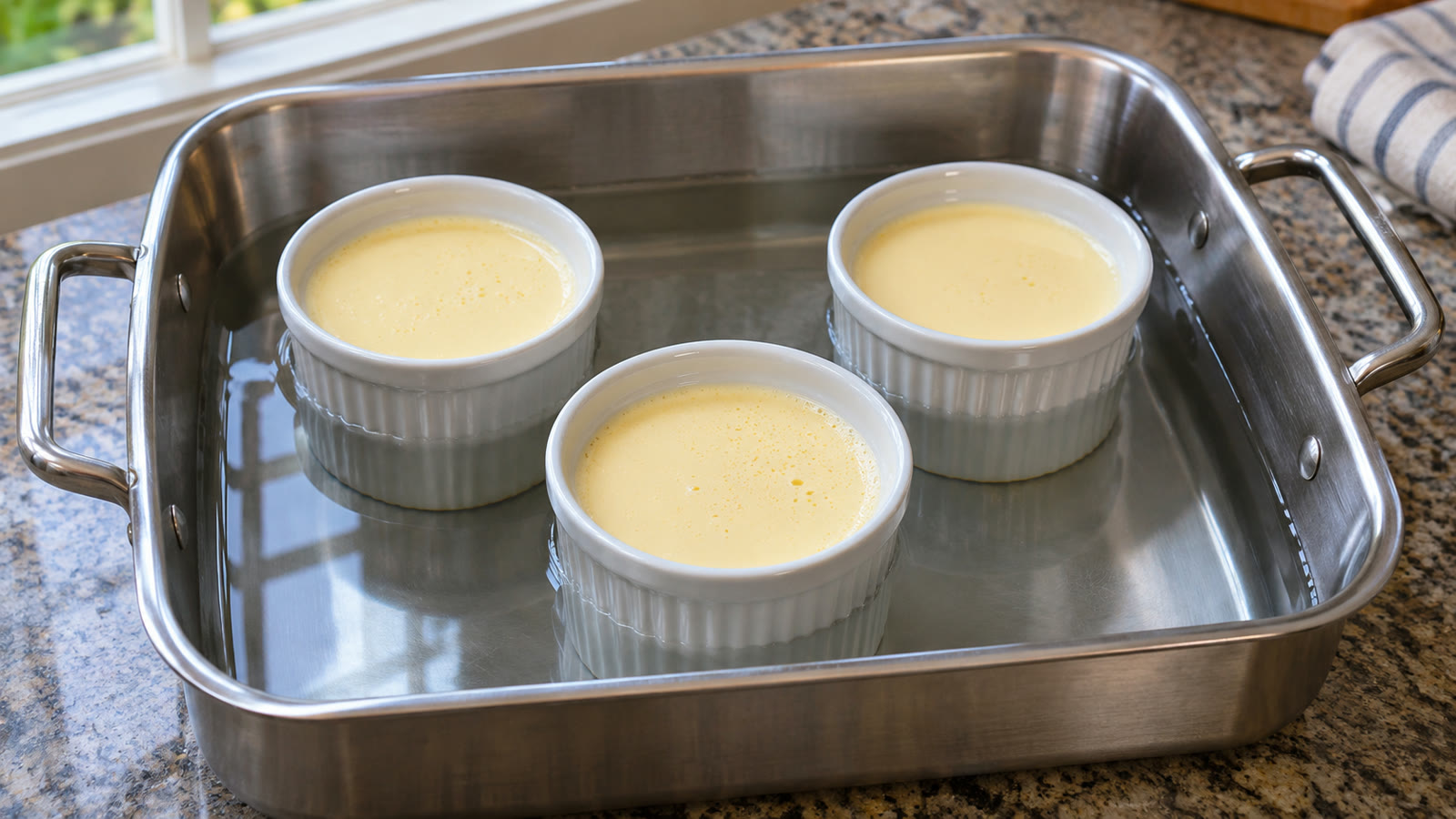
For crème brûlée, arrange small oven-safe ramekins in a sturdy, deep metal roasting pan. Set them flat on the base and leave room for water between them. Divide the custard mixture among the ramekins. With the pan on the oven rack, use a spouted jug to pour hot water slowly into an empty corner. Unless your recipe specifies another level, aim for about halfway up the sides.
Slide the rack in gently to avoid splashing the custard. Use your recipe's baking time and doneness cues. At the end, pull the rack forward only as far as it remains stable and use a suitable gripper to remove the ramekins one at a time. Let the water-filled pan cool in the switched-off oven. For an example to try in your kitchen, see the baking step in our crème brûlée recipe.
If you change dishes, first arrange all the empty ones in the roasting pan. Check that the jug's spout fits between them and decide where to pour. Push the rack in before adding any water and make sure the dishes stay put. This dry run is especially helpful when the pan takes up most of the rack and you have little room to adjust it.
Choosing a dish or cake pan
Shallow, individual ramekins work well for crème brûlée. The outer pan needs sides high enough to hold the water and low enough to reach the ramekins. A flat, stable base helps keep the dishes from tipping while you arrange them. Follow the recipe's dish dimensions if you can. A deeper layer of custard may take longer to heat through.
A deep, one-piece cake pan avoids a seam at the base for water to seep through. With a springform pan, follow the recipe's instructions for keeping water out. You may be able to wrap the pan in a wide, intact sheet of foil that reaches above the water line. In King Arthur Baking's cheesecake trial, a water bath helped limit overbaking and cracking. Follow the recipe you are using, since some cheesecakes are designed for a dry oven.
What to do when things go wrong
If the upper bowl touches the water on the stove, pour some water out or use a shallower bowl. If heavy steam escapes before the chocolate starts to melt, turn down the heat. Switch off the burner before the pot boils dry. If a splash turns the chocolate into a paste, start over with dry equipment for a coating. You can use the batch in a sauce designed to contain liquid, following that recipe's proportions.
If water splashes onto the custard, move the tray less and pour into a gap between the dishes. If the edges set too early, compare the water level, dish depth and oven setting with the recipe before the next batch. A separate pan of water can make the oven more humid. Since the water does not surround the baking dish, the heat reaches it differently from a water bath.
İyi Bir Yemek
Food Researcher & Writer
Reader Comments & Contributions
Be the first to share your thoughts on this post