
What Do the Sides of a Box Grater Do?
Choose a coarse, fine or slicing surface for the texture you want, with practical examples for carrots, cheese, lemon zest and cucumber.

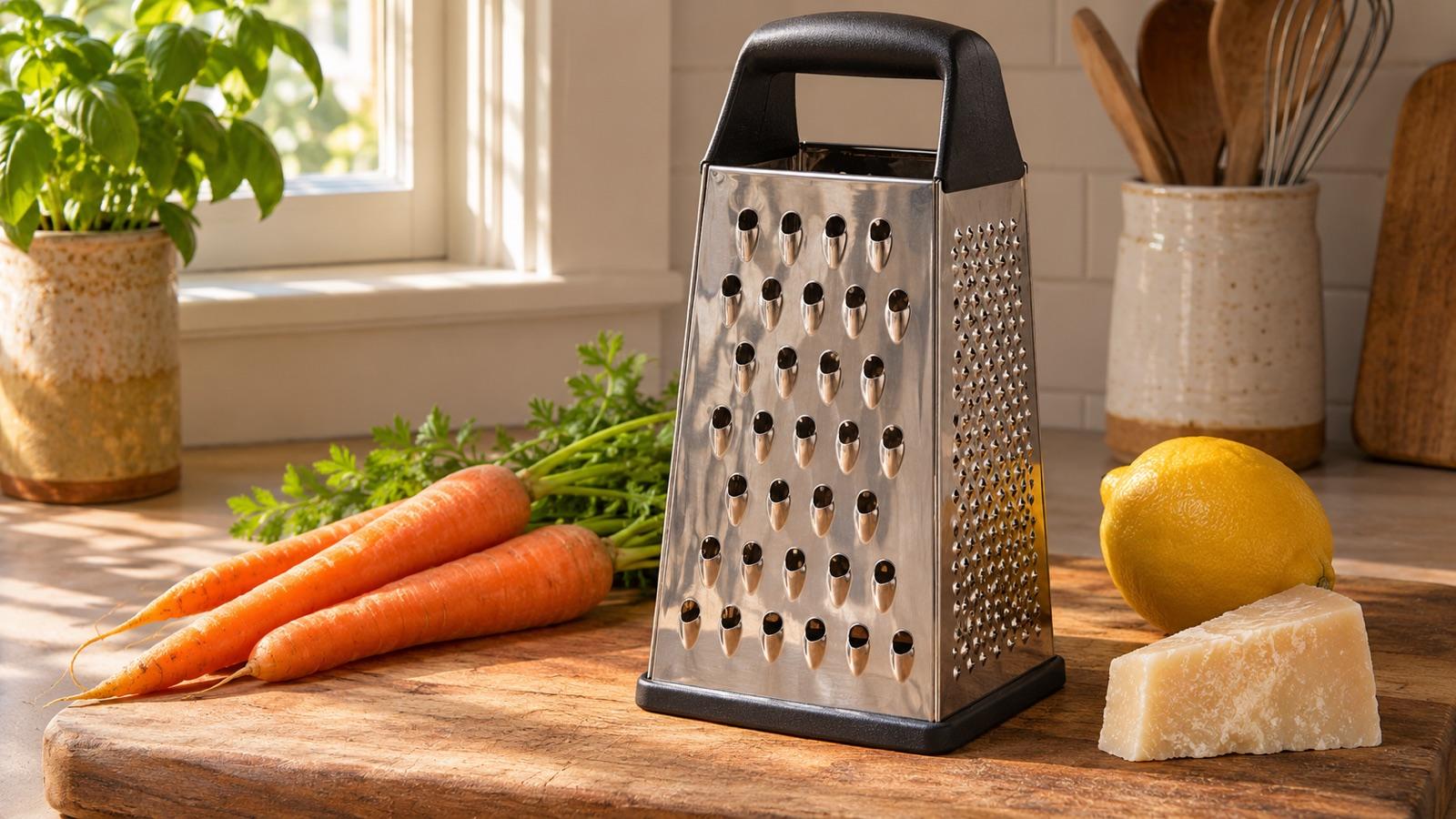
Use the coarse side of a box grater for distinct shreds, a fine side for smaller pieces, and the slicing slot for flat slices. Coarse carrot keeps a noticeable crunch in a salad. Fine carrot is easier to distribute through cake batter, while thin cucumber rounds lie flat inside a sandwich. Start with the shape and texture you want on the plate, then match the cutting surface to that job.
Identify each face by what it cuts
Turn the grater in good light. The coarse side usually has large, raised openings. Smaller holes may make fine threads. Some models have a separate face with outward-pointing, star-shaped teeth. Those teeth can break food down more thoroughly, sometimes turning softer ingredients into a paste. A slicing face has a long slot with a cutting edge beside it. Compare the surfaces described by OXO box grater surfaces and Microplane box grater blades to see how their layouts differ.
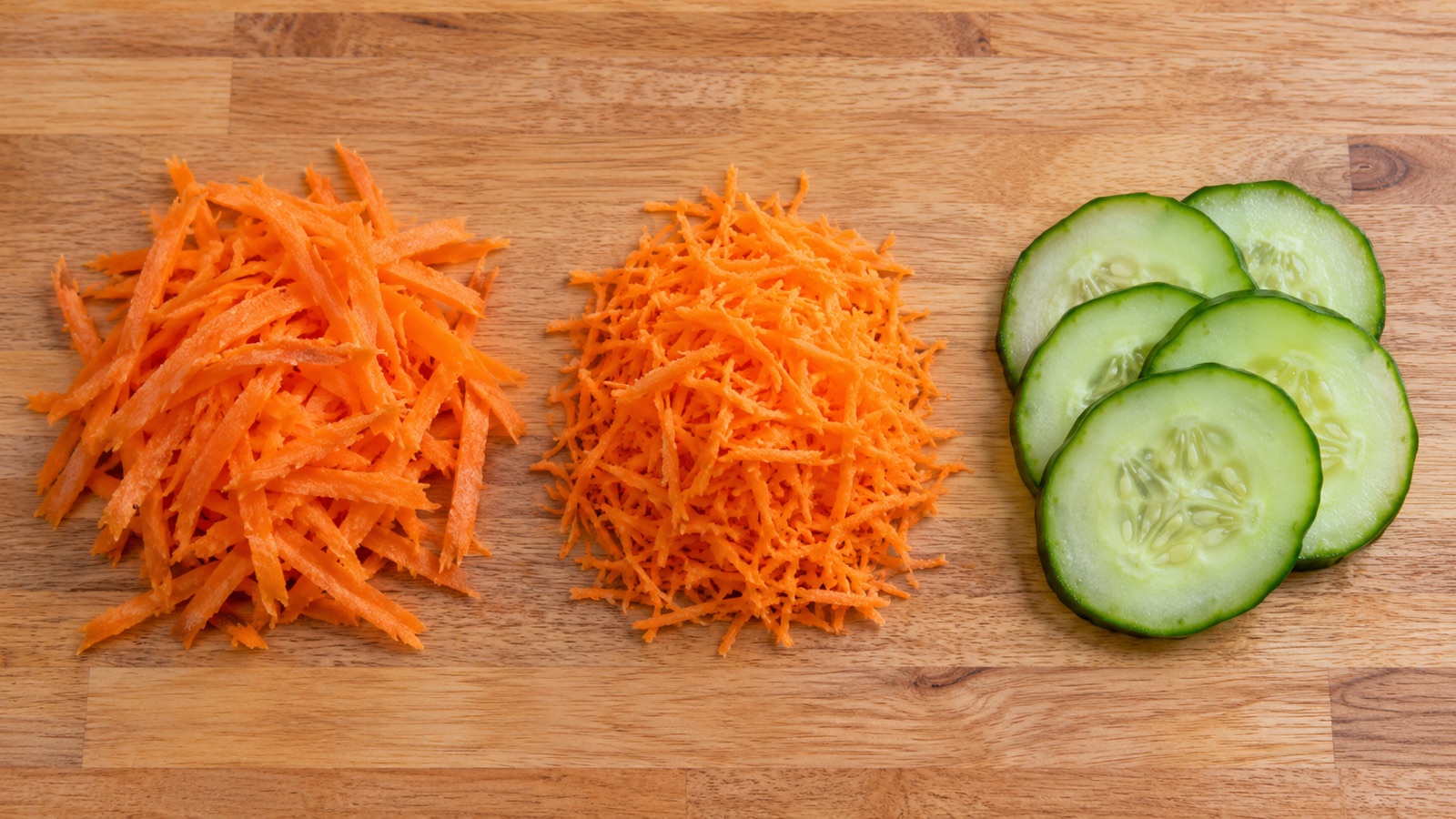
The photo shows coarse and fine shreds of carrot beside cucumber rounds. To see what your grater produces, make a few strokes and lift it to inspect the pieces. Are they separate strands, little flakes or a wet mass? This quick check gives you a chance to switch sides before processing an entire bowl.
Keep texture with the coarse side
Try both cuts on one carrot. Keep the two piles separate, lift a pinch of each with a fork, then toss each with a little dressing. If the fine shreds cling together, see whether you like that texture. Switch to the larger holes for looser strands. With cheese, compare how easily you can scatter the two cuts over a baking dish.
Choose large openings when the pieces should still be visible. Long carrot shreds retain a distinct bite when tossed with dressing. Coarsely grated semi-firm cheese makes strands you can spread over a casserole. Lay the long side of a carrot against the face for longer strands, or grate from the end for shorter ones. The difference matters when you are trying to pick up a salad with a fork or scatter a topping evenly.
In potato fritters, coarser shreds can leave visible edges around the patties. If the recipe asks you to remove excess liquid, squeeze the grated potatoes in a clean cloth. Using coarse shreds in a recipe written for fine ones can change the texture even when the timings stay the same. Thick carrot shreds, for example, will be more noticeable in a cake slice. Check the specified cut before adjusting the flour, sauce or cooking time.
Distinguish fine shreds from a very fine grate
For carrots going into cake batter, try a face that leaves small but separate strands. They are easier to distribute in the mixture. Carrot and walnut cake is one way to put this into practice. Loosen the grated carrot before measuring it, and use a scale when the recipe gives a weight. Packing it into a cup puts more carrot into the same volume.
For a finishing touch of hard cheese or lemon zest, choose a very fine face. Move the lemon as each patch of yellow is removed and stop before the white pith, which can taste bitter. Make a few short strokes of cheese directly over the plate so you can see how much lands. If the fine face makes a mash and you need threads, move up one size.
Slice flat pieces through the slot
For thin cucumber rounds, set the grater on a flat cutting board. Trim the cucumber end to make a level surface, bring it to the slot and make a single test slice. If the result is the wrong thickness, use a knife that gives you the cut you need. A fixed slot cuts according to the blade position and the angle at which you present the food.
Keep the cucumber at the same angle and move it with light pressure. Stop if the grater slips and steady its base. Use a compatible food holder according to the maker’s directions if you have one. When the piece becomes too small to hold securely, finish it with a knife on the board. Switch to a sharp knife if a soft vegetable crushes at the slot.
Fix problems after the first few strokes
If cheese smears across the metal, try it cold and firm, with lighter pressure on larger holes. Stop and empty a clogged grater. Lift the box and gather the shreds from the board. Follow the maker’s care instructions, and use a handled brush to loosen stuck food if washing by hand.
If the result looks wet, check the cut before processing the rest. Flat cucumber slices keep a distinct shape in a salad where crushed pieces would blend in. Coarse carrot gives a raw salad a different bite from fine carrot in cake. Grate a small piece on two faces next time and compare the results side by side.
İyi Bir Yemek
Food Researcher & Writer
Reader Comments & Contributions
Be the first to share your thoughts on this post