
Why Does Honey Crystallize? How to Liquefy It Gently
Learn why honey turns grainy, how to soften crystallized honey in a warm water bath, and how to store the rest of the jar without adding moisture.

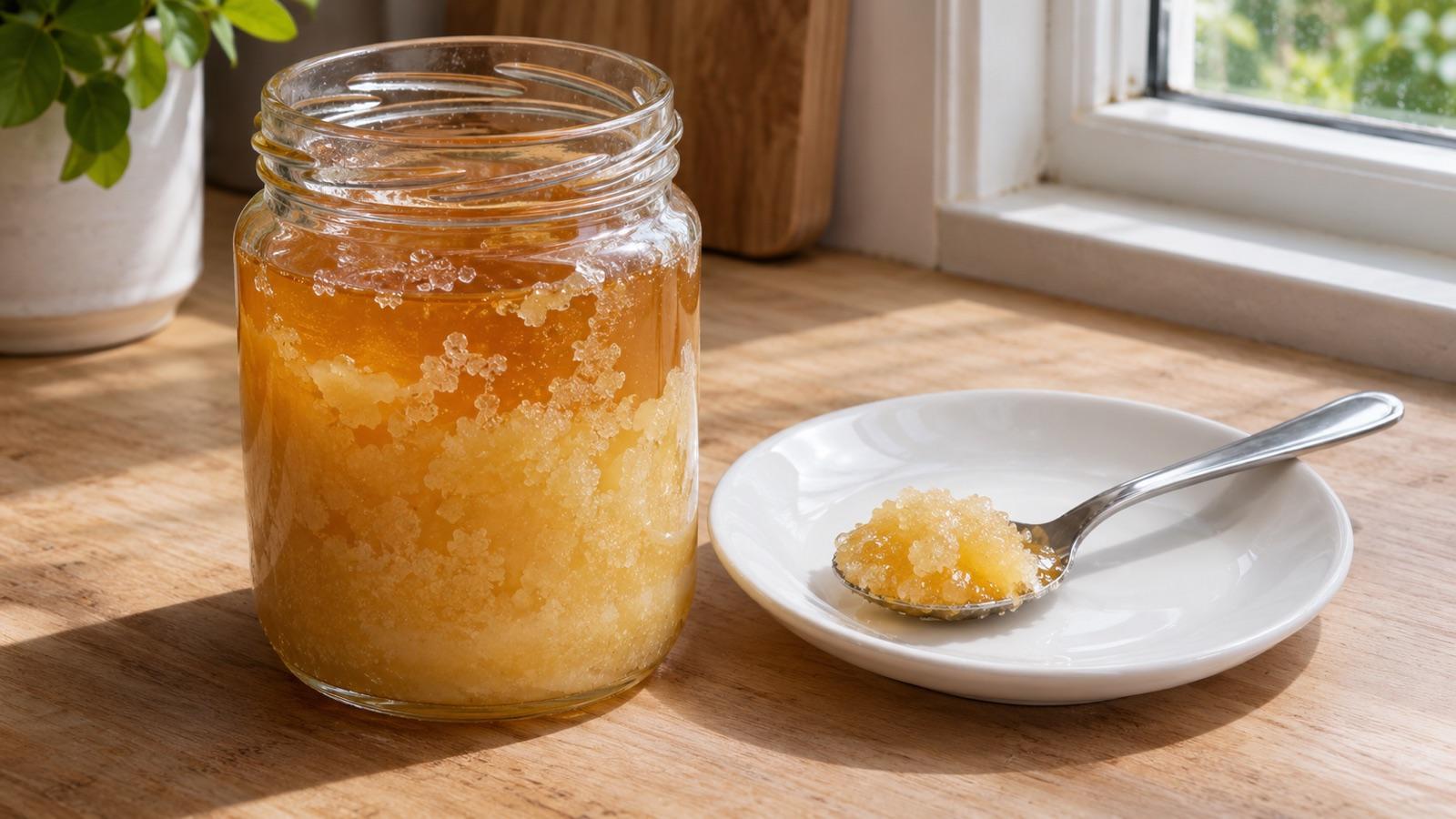
Honey thickens and turns grainy when some of its glucose forms crystals. That change alone does not mean it has spoiled. Leave the crystals in if you want a spread for toast. If you need honey that flows into a thin dressing, soften the amount you need in a glass jar set in warm water. The way you plan to use it determines whether the whole jar needs any attention.
What happens inside the jar?
Glucose and fructose are the main sugars in honey. Some glucose can separate from the liquid as small crystals. As they accumulate, the honey looks less clear, feels gritty on a spoon and flows more slowly. Tiny particles such as pollen can provide surfaces where crystals start growing. You might see grains at the sides or bottom before the texture changes through more of the jar.
The nectar source influences the balance of sugars. Given similar conditions, honey with a relatively high proportion of glucose can crystallize sooner than honey with a larger proportion of fructose. Two jars can therefore change at different rates. In creamed honey, fine crystals are deliberately encouraged to make it spreadable. Appearance alone cannot establish a honey’s origin or purity.
University of Arkansas Extension
When to spread it and when to pour it
Grainy honey holds its shape on toast instead of running off the edges. A spoonful usually dissolves as you stir it into warm tea, so there is no need to warm the jar for either use. If larger crystals would feel gritty in yogurt, set aside a small amount and soften just that portion.
Runny honey is easier to whisk into salad dressing. Use a clean, dry spoon to transfer the amount you need to a small jar, soften it, and whisk it into the vinegar or lemon juice before adding the oil. Keep the recipe liquid in the mixing bowl and avoid adding water to the storage jar to change the texture. The brown sugar storage guide has another example of how the container affects texture.
Check how the honey moves on a spoon. A soft mound will work as a spread. A continuous ribbon will blend more readily into a cold dressing. For a small batch of dressing in particular, it is easier to smooth a firm piece of honey into the acidic ingredient first than to add it with everything at once.
Set up a warm water bath
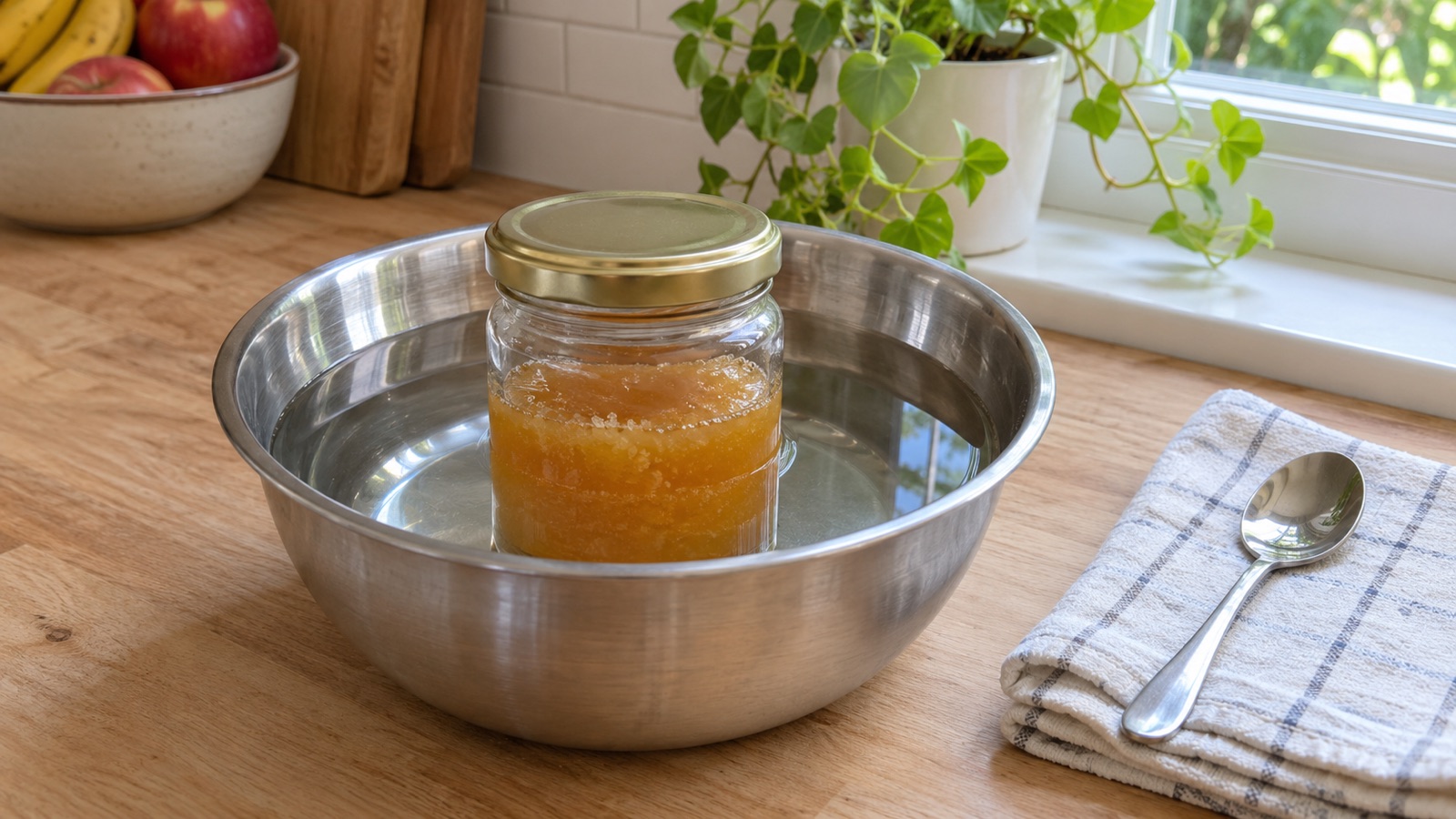
Set a flat-bottomed bowl on the counter. Transfer a small portion of honey to a sound, heat-resistant glass jar and close the lid. Stand the jar in the bowl and pour water at about 38 °C around it. Bring the water up the sides of the jar so it can warm the honey, keeping it below the lid. Leave the bowl off the stove. If the tap water is very hot, let it cool in a separate container and check the temperature first.
After a while, lift out the jar and dry the outside, including the area around the lid. Open it and stir with a clean, dry spoon. If large crystals remain, close the lid and replace the water once it has cooled. Jar size and the amount of crystallization affect the time needed. Stop when the honey is easy to measure and mix for your recipe. It does not have to turn perfectly clear.
Wipe away drops near the lid before opening the jar. This is useful with a narrow jar because water trapped in the screw threads can drip inside as the lid turns. If the honey is very hard, avoid forcing the spoon in at the start. Once the outer layer loosens, stirring helps the remaining crystals warm more evenly.
What if the crystals come back?
Warm water can dissolve existing crystals. The balance of sugars stays the same, so crystals can form again over time. If the neck of a squeeze bottle is blocked, open it and spoon the honey you can reach into a glass jar instead of squeezing harder. For a large solid mass, wait for the outside to soften first. Avoid putting cold glass straight into very hot water, where it could crack.
Boiling water or direct stove heat is unnecessary. Refreshing the warm water lets you stir and judge the texture as you go. If you only need a few spoonfuls, take that amount rather than repeatedly heating the entire jar. Honey thickens as it cools. When you check the texture, remember that a warm spoonful flows more freely than it will later.
Keep the remaining honey dry
Store plain honey in a tightly closed, food-grade container away from sunlight and the heat of the stove. Use a clean, dry spoon each time. Water, fruit juice or fresh herbs change the storage conditions of plain honey. If you want honey with lemon, mix just what you will use for the meal in a separate bowl and keep leftovers out of the original jar.
Graininess alone does not indicate spoilage. A distinctly sour or alcoholic smell and persistent bubbling can be signs of fermentation. A warm bath will not remedy that. Do not give honey to babies under 12 months. This applies to liquid, creamed and crystallized honey. The water bath is only a way of changing the texture.
Oregon State University Extension · USDA APHIS / The BeeMD · WHO
İyi Bir Yemek
Food Researcher & Writer
Reader Comments & Contributions
Be the first to share your thoughts on this post