
How to Store Fresh Button Mushrooms in the Fridge
Keep whole button mushrooms in a vented pack or paper bag. Learn which refrigerator shelf to use, when to rinse mushrooms and what spoilage looks like.

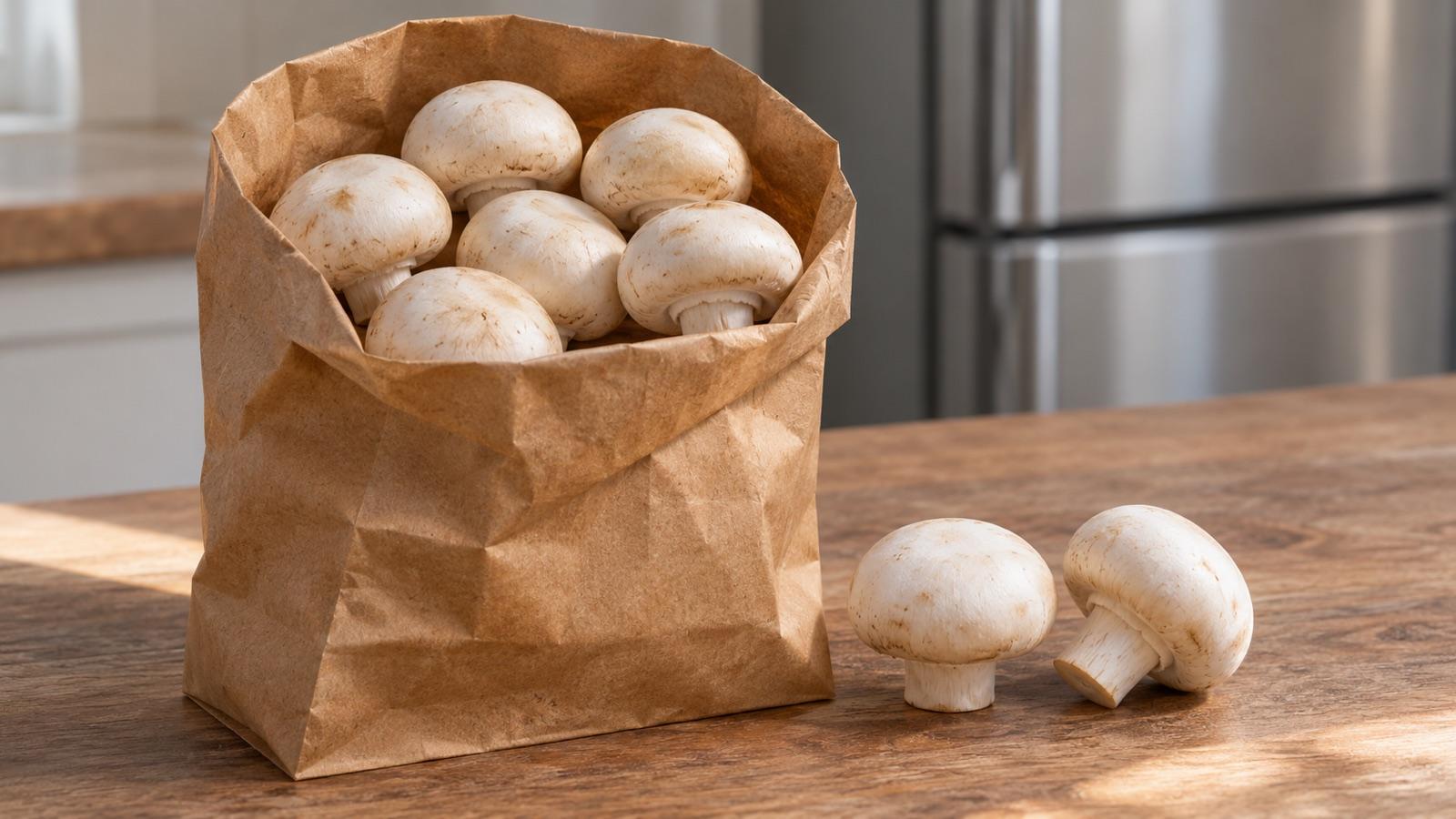
Refrigerate fresh button mushrooms as soon as you get home. If the whole mushrooms came in a vented retail pack, put the pack straight on the shelf. Use a clean paper bag for loose mushrooms or any left in an opened pack. Take out and rinse only what you are about to cook. This method is for whole cultivated white button mushrooms and their brown counterparts, often sold as cremini or chestnut mushrooms. For sliced mushrooms, follow the package’s own storage and after-opening instructions.
Vented package or paper bag?
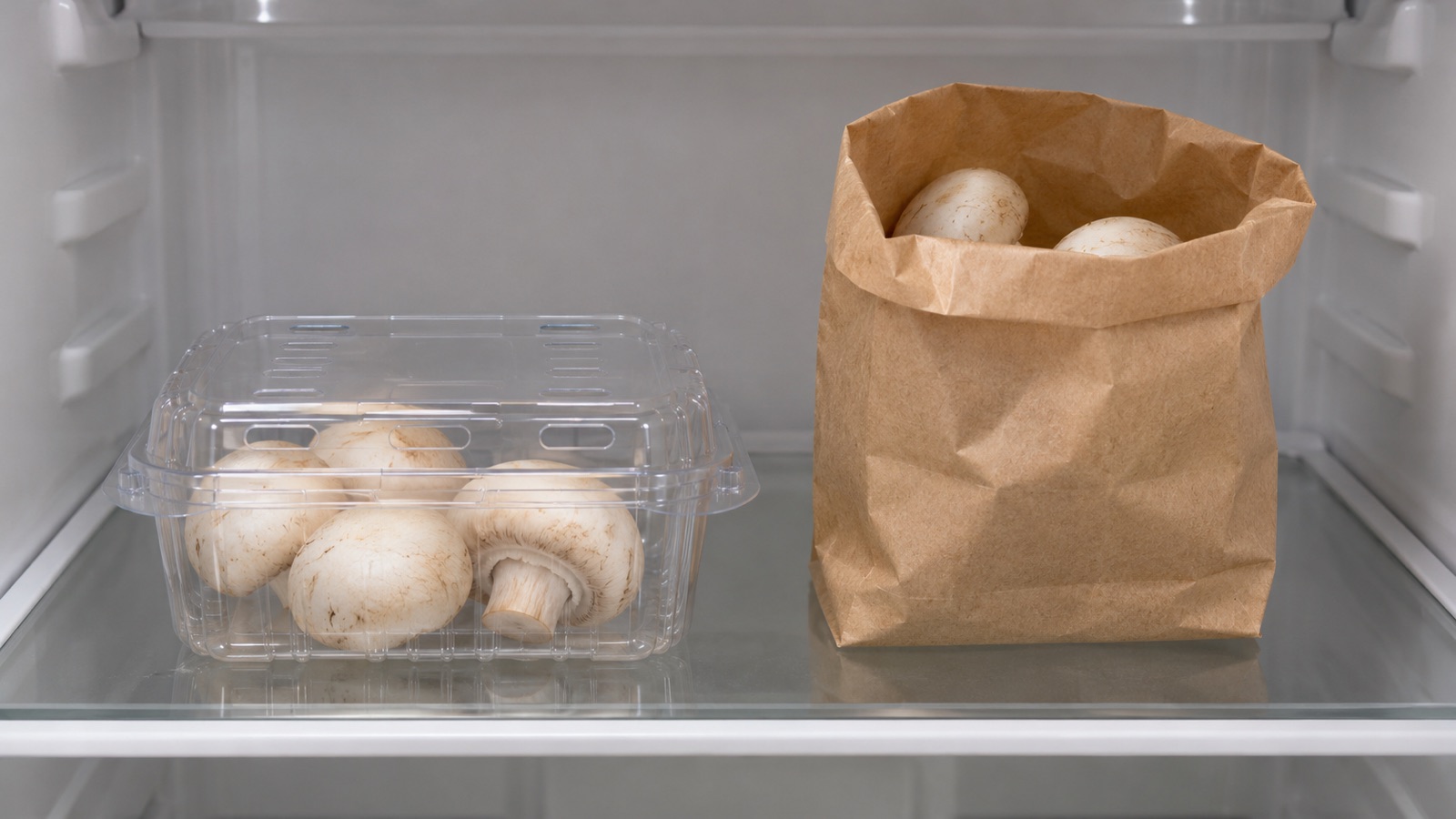
Fresh mushrooms continue to respire after harvest. Moisture can build up in an airtight bag. Paper allows air to move and traps less moisture than a sealed plastic bag. Health Canada’s guide for commercial packers recommends openings in the packaging film to allow air exchange. The distinction is useful in a home kitchen too. A clear plastic tray with vents in its lid works differently from a zip bag sealed tight. Health Canada’s fresh mushroom packaging guidance
If the vented pack is intact, you can keep the whole mushrooms in it. Leave the vents free instead of wrapping the tray in an extra bag. Place loose mushrooms gently in a clean, dry, uncoated paper bag. Fold the top lightly if you like. If the bag is full enough that the caps press against one another, split the mushrooms between two bags. Skip airtight storage tubs and tight layers of plastic wrap for this job. Utah State University Extension’s mushroom guide
Where to put them and how cold to keep them
Put the mushrooms on a clean shelf at 4 °C or below. A refrigerator thermometer on that shelf tells you more about its actual temperature than the setting on the display. If you open the door often, choose an interior shelf over a door compartment. Keep raw meat, poultry and seafood juices from dripping onto the mushrooms. Leakproof containers for raw products on the bottom shelf make it easier to keep them separate. FDA guidance on handling and storing fresh produce
Pick a spot where the bag will stay in sight and you can remember to use it. Keep heavy vegetables and pots off the bag so they do not bruise the caps. Write the purchase date on the paper bag for loose mushrooms. It helps you decide which bag to reach for first. Keep the label on packaged mushrooms and follow any instructions about the date, temperature or storage after opening. If you use a crisper drawer, check its temperature too. Choose a dry shelf with a verified temperature over a drawer that stays damp or collects water. Read the thermometer after the refrigerator has returned to normal use, rather than right after the door has been held open. If the shelf is too warm, move the mushrooms to a shelf you have confirmed is cold enough.
Split one pack between two meals
Say you need 100 g from a 250 g pack for dinner. With clean, dry hands, take out the amount you need. Transfer the remaining 150 g unwashed to a clean paper bag and refrigerate again. For instance, slice some for tonight’s omelet and use the rest for oven-baked mushrooms with cheese tomorrow if they are still in good condition. Schedule both meals sooner while the caps are firm. If the recipe calls for more mushrooms, scale the other ingredients to the amount you have.
With pre-sliced mushrooms, follow the after-opening directions on the pack. A storage estimate for whole mushrooms does not carry over to a sliced product. If dinner plans change, take out what you are actually using rather than emptying the whole pack onto the counter each time. The other mushrooms get handled less and spend less time out of the fridge.
When to rinse and how to dry
With clean hands, take out the mushrooms you need and rinse them under cool running water. Rub off any visible dirt gently with your fingers. Pat the surface dry with a clean towel or paper towel. Leave soap and detergents out of the process. Rinse a few at a time instead of leaving the whole batch in a bowl of water. Put the cleaned mushrooms on a clean plate and wash any board used for raw meat before using it for mushrooms. FDA guidance on handling and storing fresh produce
If the slices still feel wet, pat them dry again before adding them to the pan. This keeps extra water out of the sauté. For cheese-stuffed mushrooms, leave the caps whole. After rinsing and drying, remove the stems and blot the inside of each cap with a paper towel. That lets you use mushrooms from the same pack as slices for one meal and as whole caps for the next.
How long they keep and when to discard them
Utah State University Extension gives about 5 days as an estimate under good conditions. Starting freshness and the refrigerator temperature affect how long they hold up. Use that estimate to plan your shopping. If the pack gives a shorter use period, follow it. When you know the shelf was too warm or you are unsure how the mushrooms were stored, appearance alone cannot establish safety. Utah State University Extension’s mushroom guide
Discard mushrooms with a sticky or slimy surface, mold, rot or a distinctly unpleasant smell. Rinsing, repacking or sautéing cannot rescue spoiled mushrooms. A naturally brown cap on a cremini is different from wet, soft patches that develop later. If you find a crushed mushroom in the bag, check the others as well. Changing a wet bag does not take the place of checking its contents for spoilage. Iowa State University Extension’s mushroom guide
İyi Bir Yemek
Food Researcher & Writer
Reader Comments & Contributions
Be the first to share your thoughts on this post