
How to Choose Apples for Pie, Baked Apples and Purée
Choose apples for a pie that keeps its slices, whole baked apples or a smooth purée. Compare firmness and flavour in the shop and test unfamiliar varieties at home.

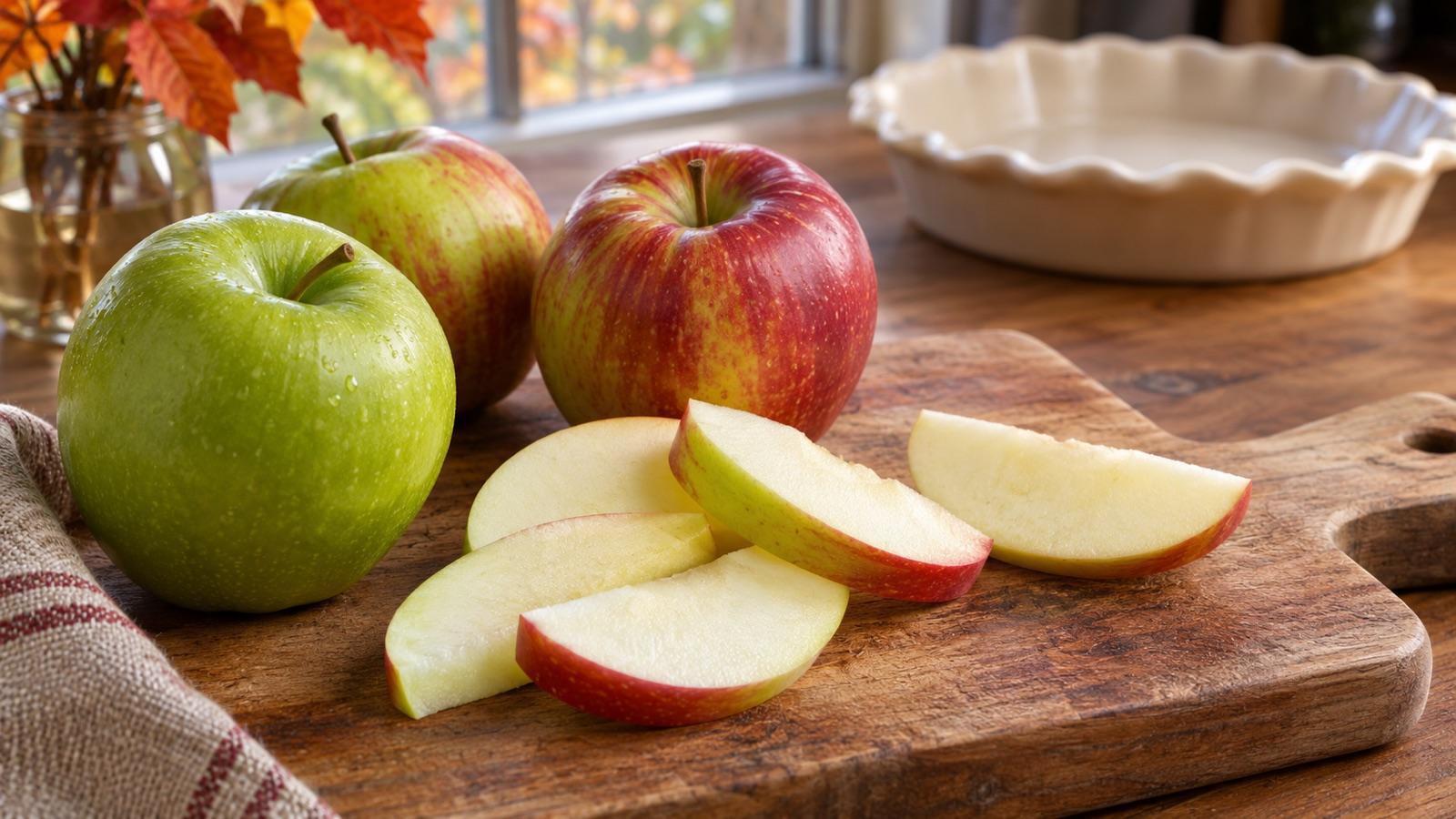
For pie, start with a firm, slightly tart apple that holds its shape when cooked. For whole baked apples, buy fruit of similar size with intact skins. For purée, use apples that mash easily after cooking. Two apples that look equally appealing at the shop can come out of the oven very differently. A variety name helps narrow the choice. When the apples are unlabelled, buy one of each and cook them under the same conditions before committing to a large batch.
Check the condition of the fruit at the shop
Turn the apple in your hand and choose firm fruit without splits, leaking juice or soft bruises. Red, green and yellow skins tell you little on their own about what happens in the oven. If the shelf label only gives a colour, ask the seller for the variety. In a bag, check as many apples as you can see. A sound apple on top does not tell you the condition of the fruit underneath.
If possible, cut and taste one apple. Flesh that crumbles easily is a candidate for purée. A firm bite is a useful starting point for pie. If the apple is distinctly tart, consider pairing it with a sweeter variety before changing the sugar in the recipe. Tasting the raw fruit tells you about sweetness and acidity. A small cooking trial reveals the texture. See the Utah State University Extension guide for advice on skin condition and firmness when shopping.
Balance slice shape and flavour for pie
Granny Smith is an accessible tart option for pie. Honeycrisp is another choice with good structure. Ask Extension recommends apples that keep their shape and suggests combining varieties for contrasting flavour and texture. If you have a tart firm apple and a sweeter firm one, try equal quantities to start. Slice them to the same thickness so one piece is less likely to stay hard while another turns soft.
For a classic apple pie, check the recipe’s slice thickness and fruit quantity first. If you use a scale, see whether the quantity refers to whole or peeled and cored apples. If the slices release a lot of juice when cut, bake a handful in a small dish before guessing how much thickener to add. You can see how much liquid actually collects under the cooked fruit.
Shop separately for whole baked apples and purée
Whole apples of similar size soften in roughly the same time. Braeburn, Fuji and Golden Delicious are examples in the Utah State University Extension baked-apple guide. Choose apples that sit upright. When removing the core, leave the bottom intact to keep the filling inside. The guide’s method leaves the skin on and scores it lightly in several places. Check the largest apple as it bakes. If a knife slides into the flesh easily, the smaller ones are usually ready too.
For purée, look for apples that break down and mash easily. Sound apples that have lost some crispness can work here. Peel them first for a silky result. For a chunkier texture, mash the cooked pieces a few times and stop. Taste after cooking. If the apples are sweet enough, decide how much sugar to add based on the dish and your preference. This advice is for purée served fresh.
Try unfamiliar apples in small baking dishes
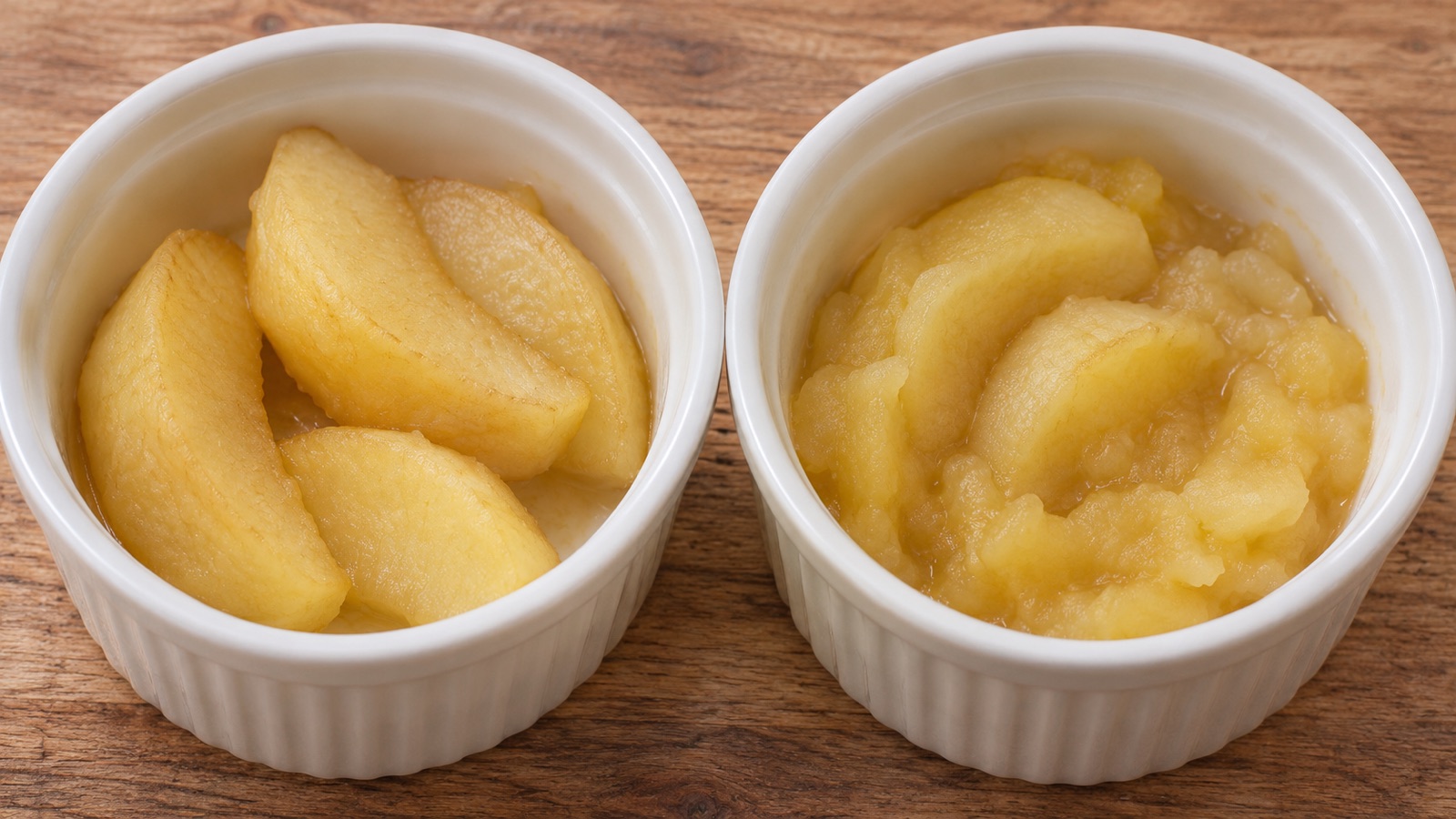
Cut several peeled, cored slices from each of two apples, about 1 cm thick. Place equal numbers in two matching ovenproof dishes in single layers. Add neither sugar nor water. Bake the dishes on the same shelf at 180 °C and check after 15 minutes. If both are hard, try another 5 minutes. Those timings are a starting point for the comparison. A full pie or whole apples will follow their own recipe.
Lift a slice of each with a fork, then press gently. Use the apple that bends and holds together for pie. Use the one that falls apart under light pressure for purée. Compare how much liquid sits in the dishes. If both hold their shape but one is noticeably juicier, try a larger proportion of the drier apple in your next pie and observe the filling. Note which dish contains which variety before baking.
Let the result guide your next shop
If some slices are hard in a baked pie, first check whether you sliced them evenly. For a very firm batch, repeat the test with thinner, even slices. If the filling turns to mash, buy a firmer variety or use more of it in a blend. If only the largest whole apples take longer, buy a more even set next time. Change one thing at a time so you can see what made a difference.
If the apples on offer change through the season, note the variety, seller and intended dish. A note like “pie slices, held on the fork” or “purée, mashed easily” is enough. If the cooked texture was right but the flavour was too sharp, pair the apple next time with a sweeter one that also holds its shape. Judge the cooked fruit against what you want to make as well as tasting it raw. You can also use the trial to decide whether to peel your apples. Cut two equal slices from the same apple, leave the peel on one and compare how the skin feels after cooking.
İyi Bir Yemek
Food Researcher & Writer
Reader Comments & Contributions
Be the first to share your thoughts on this post