
How to Choose Pears and Check Ripeness at the Stem
Check a pear at the stem and learn which texture to buy for eating raw, slicing into salads, baking or making a purée.

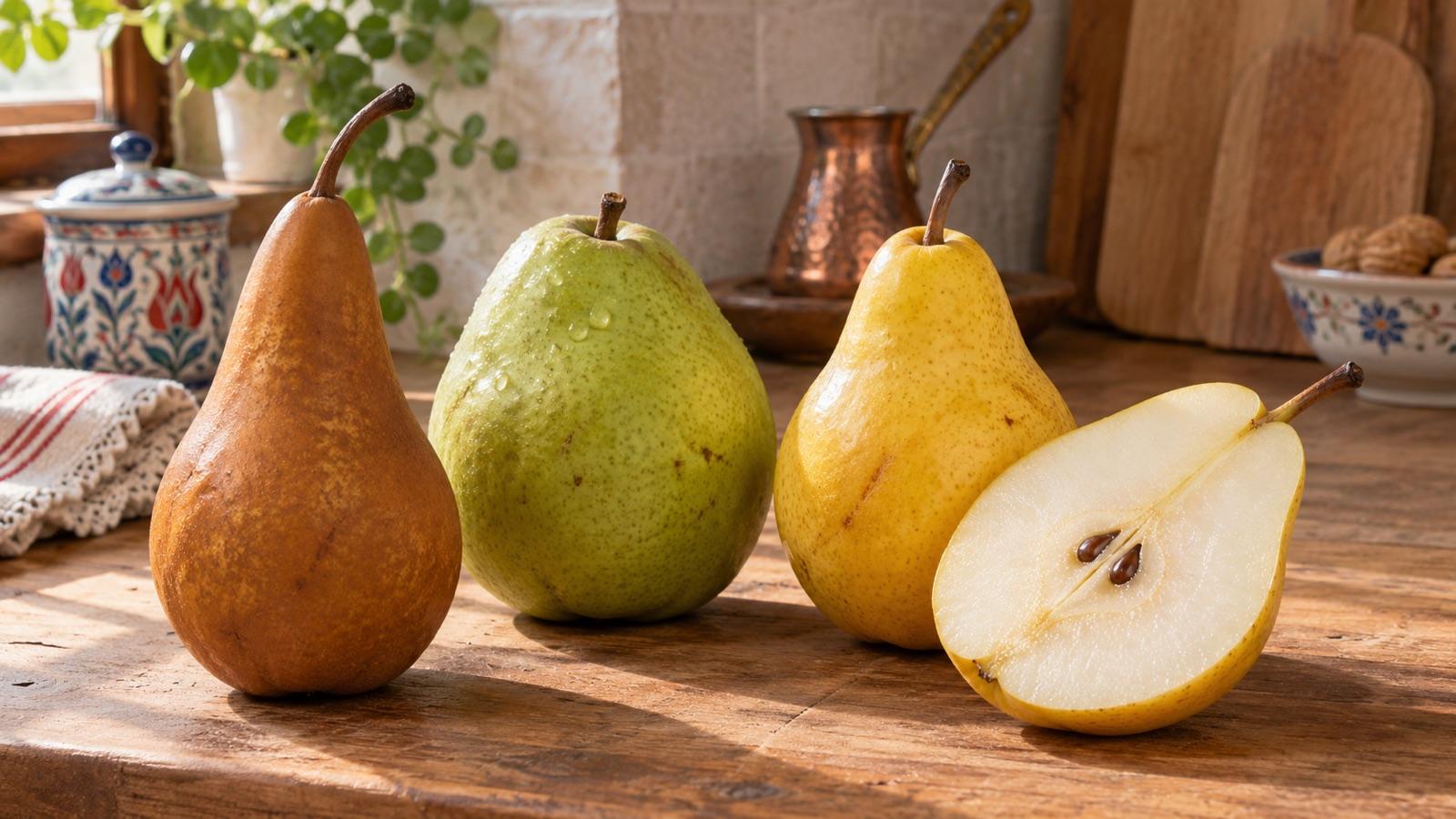
For a European pear you want to eat raw today, press gently just beside the stem with your thumb. A little give usually means it is ready. For slices that should hold together in the oven, pick a pear with a firmer body. Use the variety as a clue, then decide by texture and when you plan to serve it.
Check beside the stem once
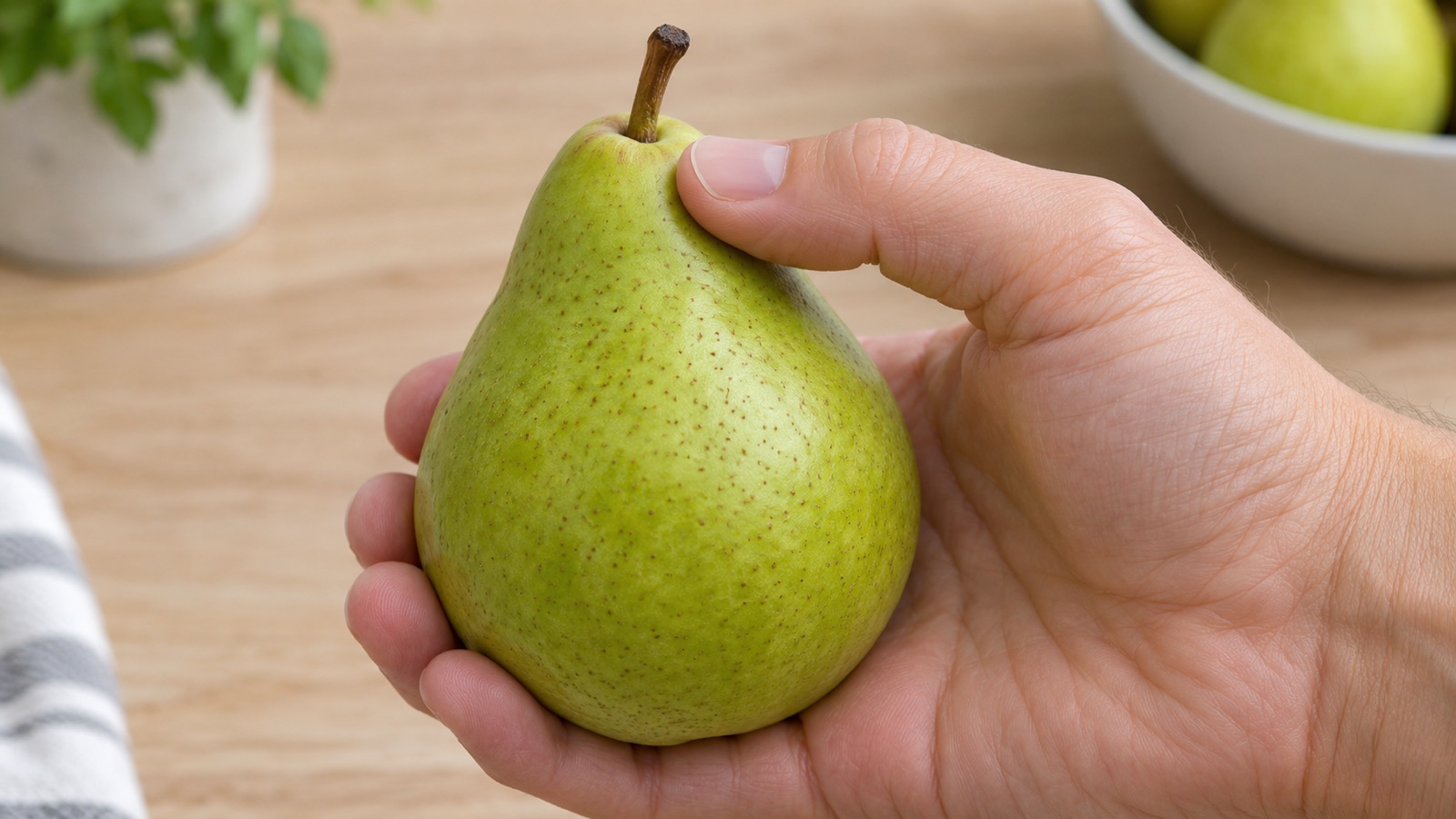
Cradle the pear and touch the narrow area just beside its stem with light pressure. A slight give is enough. Squeezing the whole body can bruise the fruit and obscure the cue. If the neck feels hard, set the pear aside for later. If the body is also very soft, clean slices will be harder to cut.
European pears soften from the inside out. The neck can give while the body still feels firm. A dent from an impact is a misleading place to test. Choose an intact pear and check at the neck. Oregon State University Extension guide to ripening pears explains the signs of ripeness. The examples here concern European pears.
Read colour alongside the variety
Green Bartlett pears, also called Williams, can turn yellow as they ripen. Green Anjou can stay green when ripe. Bosc has a naturally rough brown skin. That colour can cover much of the pear, whereas a bruise tends to leave a local dent. See USA Pears guide to varieties and uses for a comparison of varieties (Bartlett / Williams · Bosc).
If the pear has no label, look for intact skin without splits or sunken spots. For slicing today, choose a little give at the neck. For a later meal, buy firmer fruit and check it regularly at home. Pears in the same bag may soften at different rates.
Choose a texture for salad, baking or purée
For thin salad slices, a pear with a slightly yielding neck and a firm body is a good starting point. It can keep clean edges under the knife and hold together on a fork. A juicier pear is easier to eat whole or serve in thick slices with cheese. Ripe Bartlett is an option when you want plenty of juice.
For baking or poaching, try firmer-fleshed varieties such as Bosc or Anjou. Without a label, choose firm fruit and cut it into pieces of similar thickness. In a cinnamon pear and oat crumble recipe, this helps avoid soft and hard pieces in the same dish. Save very soft, sound fruit for purée or sauce when shape no longer matters.
Shop for the day you will serve the pears
If you want a salad tonight and a baked dessert at the weekend, you can buy fruit at different stages. Take a pear that gives at the neck for the salad and firmer ones for baking. Leave firm pears at room temperature and check them daily. Refrigerate ripe pears to slow further softening. Separate ready fruit so you need not keep pressing it.
If several pears must cook together, compare firmness as well as size. Similar fruit is easier to prepare evenly. With a mixed batch, bake the firmer pears and use the softer ones raw that day or purée them. Carry ripe pears on top of heavier groceries. A sound fruit can develop a dent from the trip home. Set the pears in one layer so their weight does not press on each other. That makes it easier to distinguish a softening neck from a bruise.
Change the plan if the texture surprises you
If a green Anjou gives at the neck, you can use it without waiting for yellow skin. Bosc may give less. Comparing pears of similar firmness is better than pressing harder on one pear. If the neck still feels hard and you want to eat it raw, give it longer at room temperature.
If a cut pear is too soft for salad, mash its sound flesh for purée. If a baked pear is still firm, cook a little longer as the recipe allows and test the thickest piece with a knife tip. Remember the texture that worked when you shop again. With an unfamiliar variety, cut a sample slice and lift it with a fork. If it bends but the edge stays whole, it can work in salad. If it breaks in your hand, use it in something served with a spoon. Remember which dish the variety suited. Keep the firm baking pears separate from the soft fruit you sampled.
İyi Bir Yemek
Food Researcher & Writer
Reader Comments & Contributions
Be the first to share your thoughts on this post