
Fan Oven or Conventional Heat? A Guide to Racks and Trays
Choose fan or conventional heat for cakes, cookies and vegetables. Set the racks, check automatic temperature conversion and judge when each tray is done.

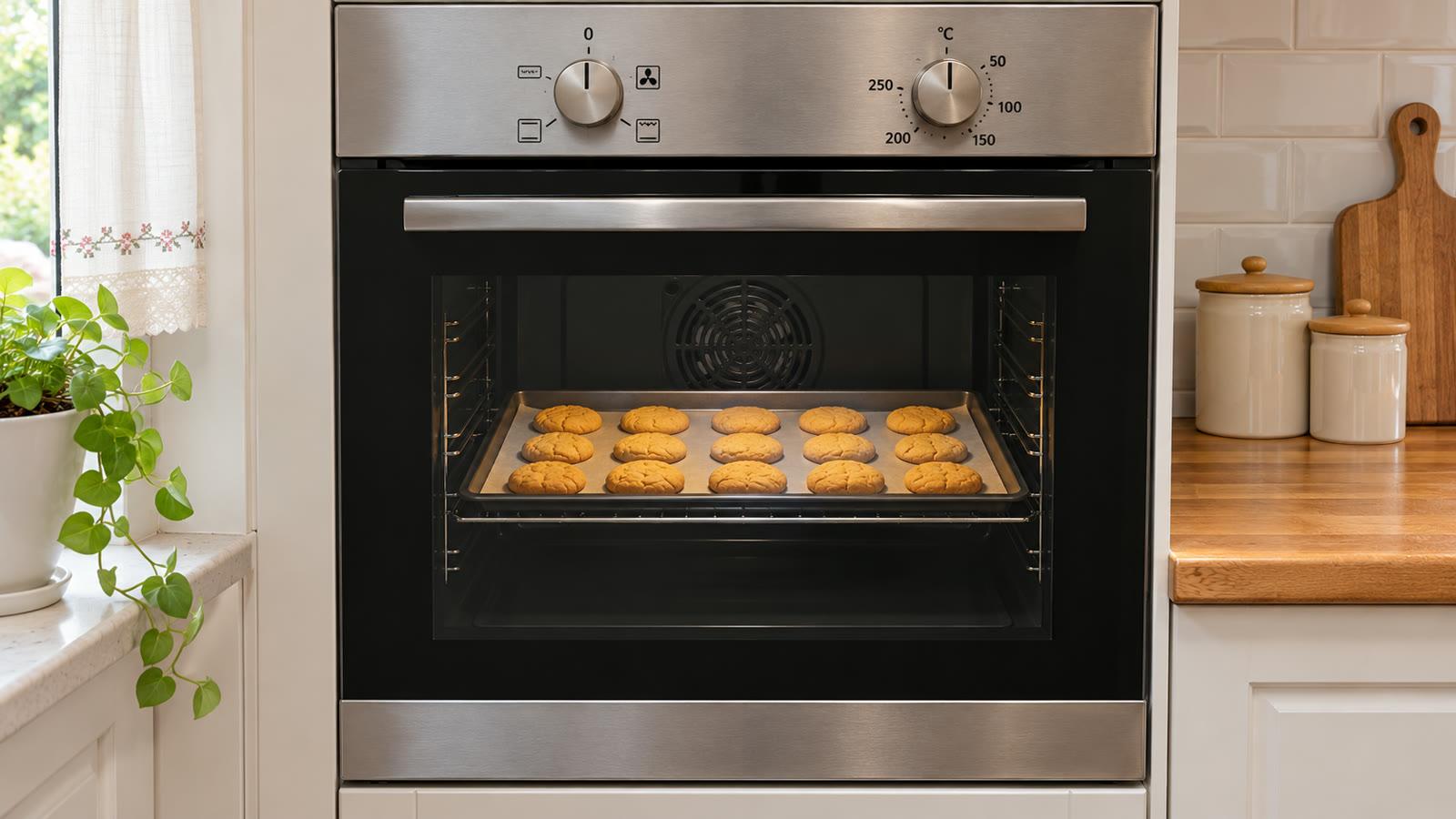
For a plain cake in one tin, start with conventional top-and-bottom heat if that is what the recipe specifies. For two trays of cookies, fan baking is a practical starting point if your oven supports baking on multiple levels. Try it for vegetables when you want browning over a broad surface. Choose the mode alongside the pan and the signs of doneness you expect. Two settings at the same displayed temperature can deliver heat to the surface differently.
Identify the mode and symbol
Conventional heat uses upper and lower heating elements. In fan baking, moving air changes how heat is distributed around the food. Some ovens have a separate element around the fan. Other settings pair a fan with different elements. The distinction matters for cooking on multiple levels. Look up the mode and supported number of shelves in your model’s cooking table.
Two horizontal lines inside a square usually indicate conventional heat. A fan icon indicates a fan function, but a grill line beside it can signify a different programme. Find the actual fan-bake row in the manual. If the recipe or manual calls for preheating, preheat in the selected mode. Put the racks in position before the oven heats up.
Set the racks for one tin or two trays
The middle rack is a reasonable starting point for one shallow tin or tray. If a tall cake tin sits too close to the upper element, use a lower level permitted by the manual. Centre the tin for a plain cake baked with conventional heat. Near the end, look for the centre to lose its sunken, wet appearance. Use a skewer test if the recipe calls for one.
For two cookie trays, use the rack pair specified for your model. One Bosch model calls for positions 1 and 3, while other models can use different positions. Choose similar shallow trays and leave space beside and between them for air to move. Assess both trays separately near the end. Remove the first one when it is ready and check the other at short intervals. Tray material also affects the comparison. The underside of a cookie can colour sooner on a dark metal tray than on a light one. Use similar trays when comparing two levels so you can observe the effect of rack position while keeping the material constant.
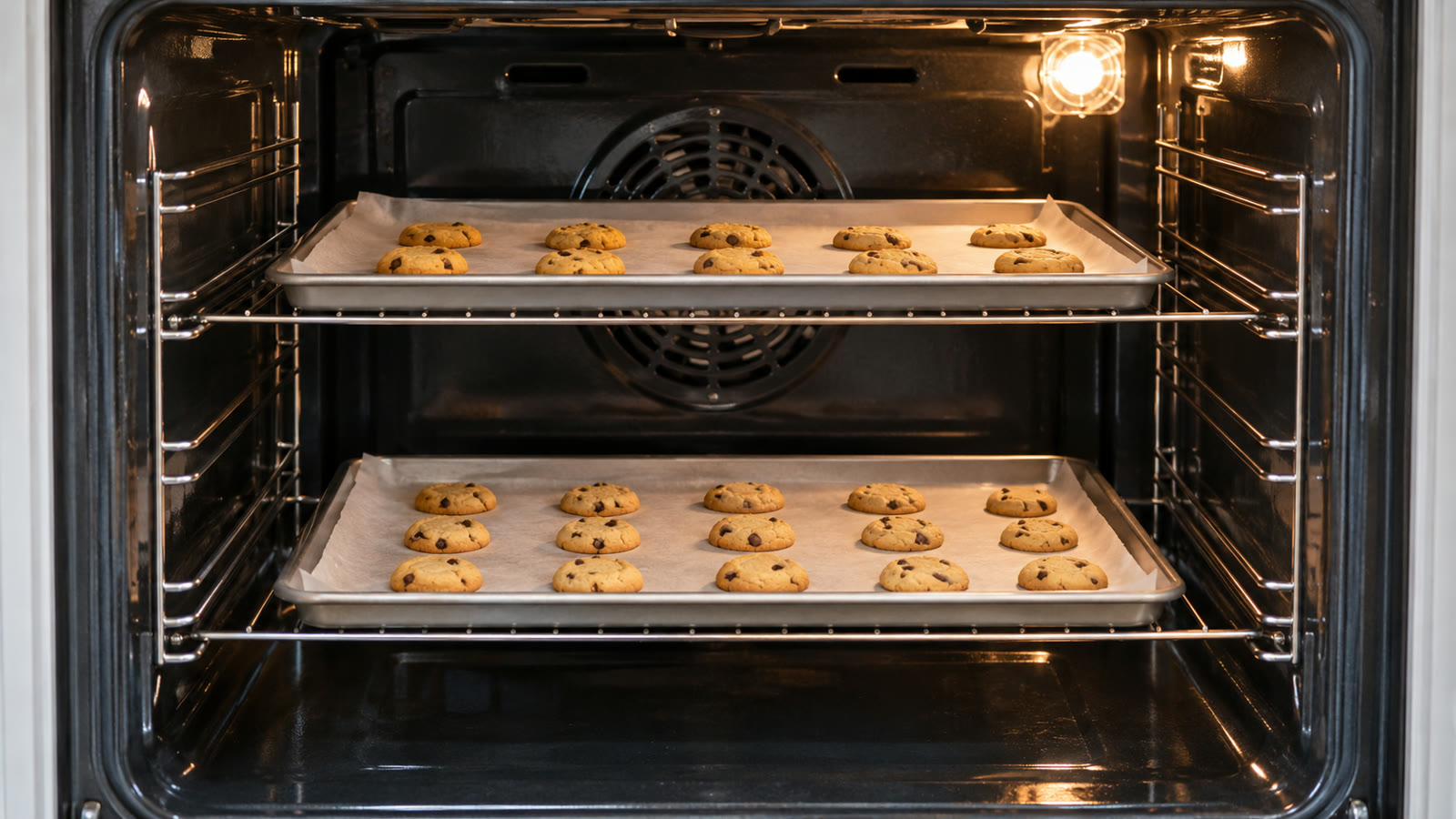
Bosch · 9001011473 · Whirlpool
Apply the temperature conversion once
If the recipe gives both fan and conventional temperatures, use the value for your chosen mode. If it gives one, first identify the intended mode. Some ovens calculate a fan temperature when you enter a conventional recipe setting. With others, you enter the converted value yourself. If using automatic conversion, check what the manual asks you to enter and avoid applying the reduction twice.
For example, if your manual recommends a reduction of about 15 °C and you are doing the conversion, 180 °C conventional becomes a trial setting of 165 °C fan. This is an example that depends on the appliance and recipe. On the first run, treat the stated time as a range. Look through the door a few minutes before its lower limit and note the displayed temperature for the next batch.
Judge doneness by colour and texture
Cookie edges may colour while the centres remain as soft as the recipe intends. Look at the edges on both racks. For roasted vegetables, cut pieces to a similar thickness and arrange them in one layer. Check the surface colour, then slip a thin knife into the thickest piece. If the outside has browned and the inside is still firm, a little longer at lower heat gives the centre time to soften. If the vegetable tray is crowded, start the comparison with a smaller batch. Pieces that overlap can stay pale underneath as moisture collects between them. Spreading the same vegetable in one layer may improve the result even with the same oven mode. With two trays, test a piece from the middle of each as well as looking at the edges.
If a cake darkens around the edge while the centre is liquid, check the distance to the upper element and verify the mode. Watch through the glass in place of opening the door early and often. Avoid moving a cake while it is still rising. Next time try moving down one level or adjusting the temperature according to the manual. Change one variable so you can see what helped.
Record a setting you can repeat
Write down the mode, displayed temperature, rack level, pan type and time of the first check. If the back of a cookie tray browns more, repeat with the same dough and tray. Try turning the tray half a turn once the cookies have set, or use a different rack recommended in your manual. Making both changes at once obscures which one helped.
If surfaces dry quickly on fan mode, check sooner and consult your model’s table for a lower setting. When the same setting and tray repeatedly give unexpected results, check the temperature at rack level with a separate oven thermometer. Let the recipe’s target texture guide your next choice. Correct the most obvious problem and keep the other settings steady.
İyi Bir Yemek
Food Researcher & Writer
Reader Comments & Contributions
Be the first to share your thoughts on this post