
How to Tell Dry Salt-Cured and Brined Black Olives Apart
Compare dry salt-cured and brined black olives by reading the processing description, checking the texture and comparing salt per 100 grams.

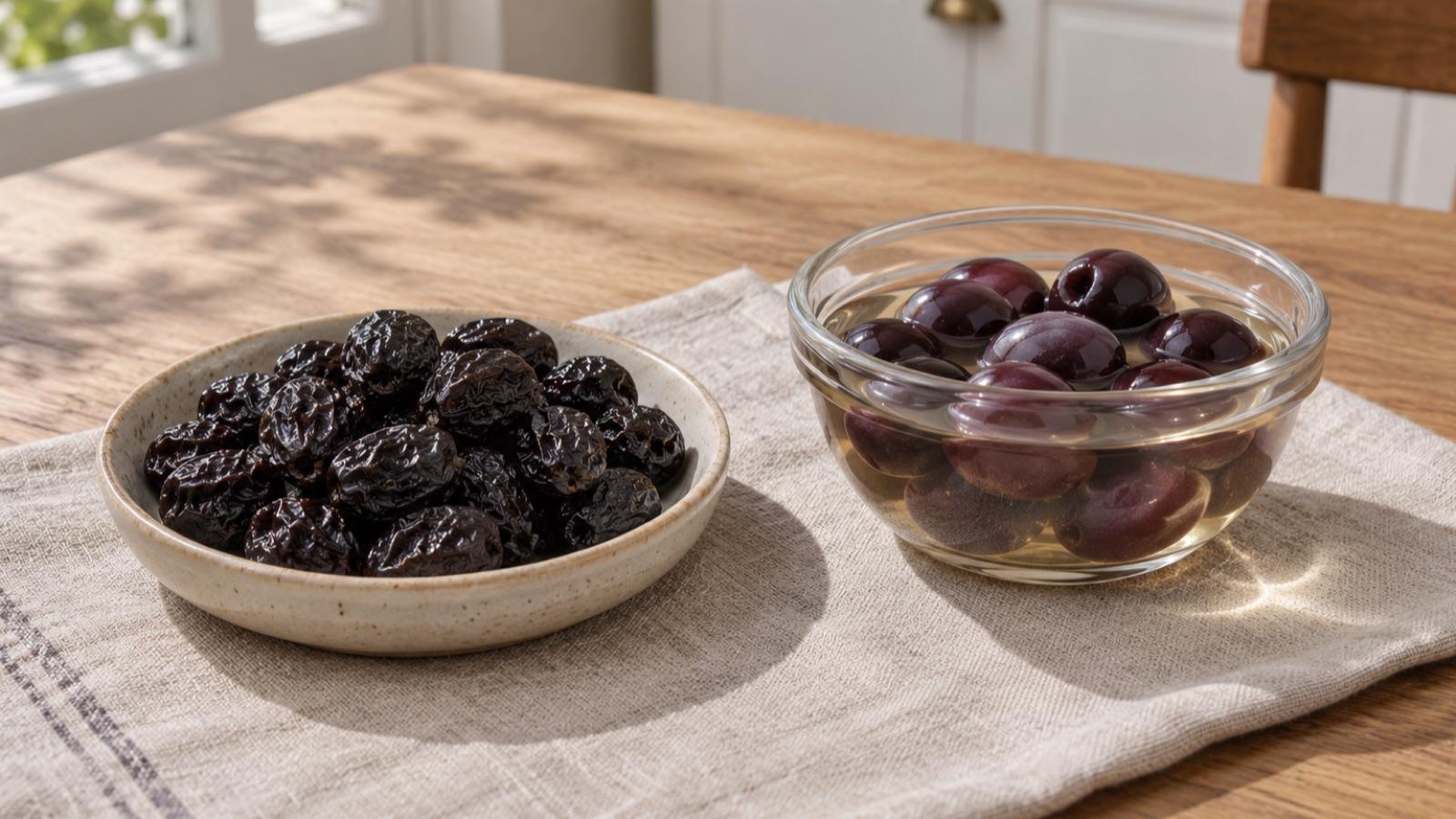
To tell dry salt-cured black olives from brined ones, look for the processing description next to the product name. Dry salt curing puts the olives in contact with dry salt, while brine curing uses salt water. Wrinkled skins and liquid in the jar offer clues. To work out which product contains more salt, turn to the nutrition panel and compare equivalent weights.
How dry salt and brine change the fruit
In dry salt curing the olives come into direct contact with salt. As the fruit loses water, its skin can wrinkle and the flesh can feel more concentrated. With brine-cured black olives, the fruit sits in salt water. In some preparations, fermentation helps reduce bitterness. These olives often look plumper. The International Olive Council describes the two as distinct preparation methods. International Olive Council table olive guide
Treat those differences as clues when shopping. Variety, ripeness at harvest and the producer’s method all affect texture. You may find a softer dry-cured olive or a brined olive with slight wrinkles. A pack with little visible liquid can still contain olives that were processed in brine and drained before packing. Read the preparation method and the packaging as separate pieces of information.
Which words to look for on the front
Find the full product name first. On Turkish table olive labels look just below it for processing terms such as “sele” or “salamura.” “Kuru sele” indicates dry salt curing, while “salamura” indicates brining. “Siyah” means black and describes colour. The Turkish Ministry of Agriculture and Forestry explains where the processing and presentation details appear on the label. Turkish Ministry of Agriculture and Forestry notice on table olives
Turn the jar around and check the ingredient list for oil, vinegar or seasonings as well as salt. When comparing thyme-seasoned and plain olives, for instance, allow for the effect of the herbs on flavour. If you see a place name or a geographical indication emblem, read the processing description as well. Use the related guide to verify a claim about origin. Guide to geographical indications on food labels
Compare wrinkled skins and plump flesh
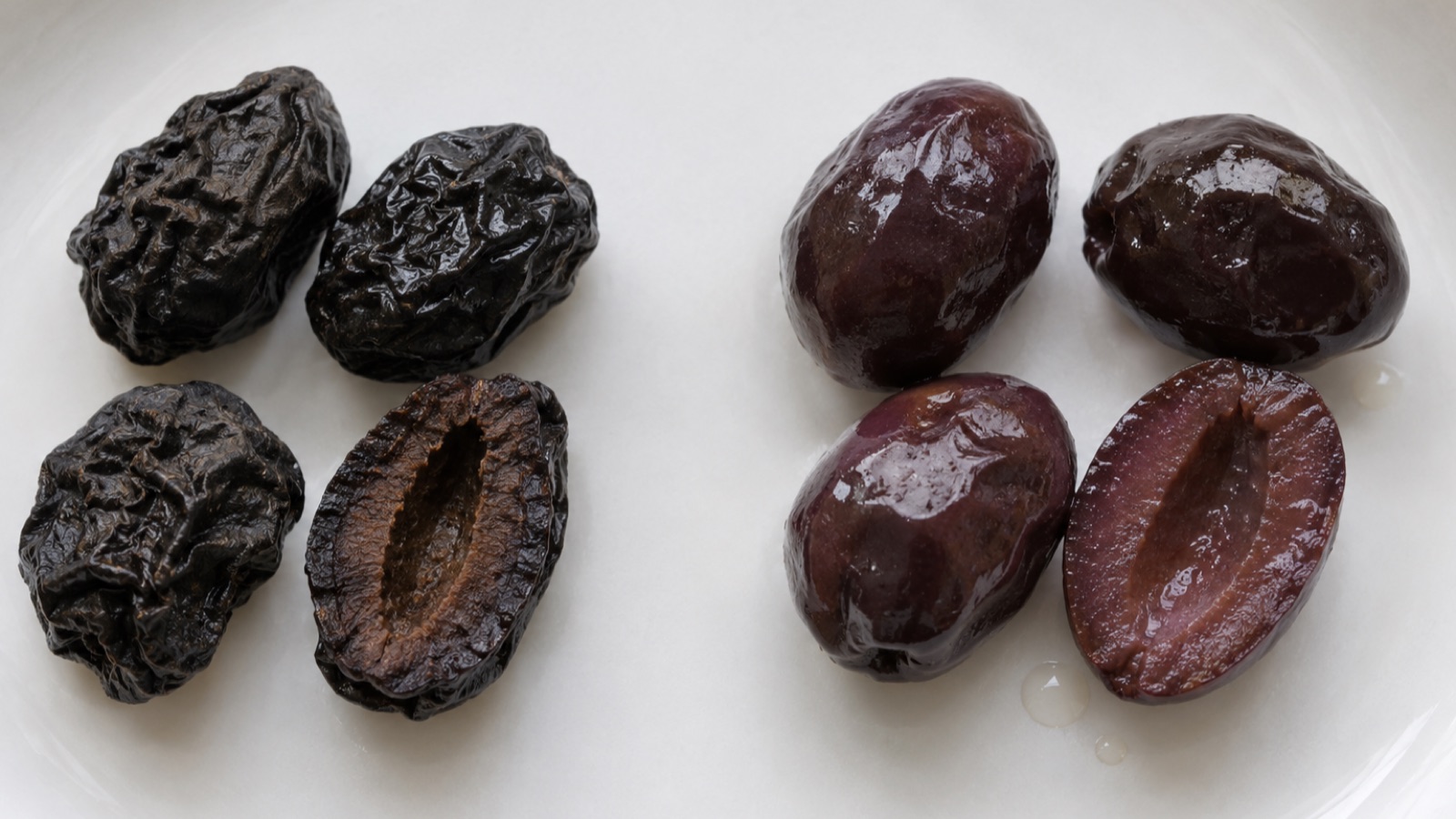
For a side-by-side tasting, take a few olives from each pack and put them on separate plates. Let the liquid drain from the brined sample. Taste both at the same temperature. Cut one of each lengthways and remove the stone. Compare the skin, the thickness of the flesh in cross-section and the feel when you bite. This gives you a chance to assess texture and saltiness separately.
The sample on the left in the photograph has a more wrinkled skin. The one on the right looks plumper and slightly moist. Check these clues against the labels. Texture is particularly noticeable when you eat olives on their own at breakfast. For a salad or sandwich, chop one olive and taste it with a small bite of the other ingredients. Even a modest amount can change how salty a dish tastes.
For a blind comparison, mark the plates A and B and taste without looking at the labels. Note how much resistance the skin offers and how full the flesh feels. Then turn the labels over to check the processing method and salt figure. This is especially useful when both products have a similar colour and you want to test your first impression. If you are buying for a particular dish, prepare both samples as you would use them. For a sandwich, slice both to the same thickness and keep the cheese the same. This makes the differences in each bite easier to pick out.
Put the two salt figures on the same basis
Find the salt line on the nutrition panel. Check that both figures are given per 100 g and refer to the same basis. If one refers to the drained product and the other uses a different basis, look for clarification from the producer. The net weight can include the packing liquid. Drained weight is useful when comparing how much solid product each jar contains.
Suppose both labels report the salt in 100 g of drained olives. The one listing 4.2 g salt contains more than the one listing 3.1 g. For 25 g of each product the figures are about 1.05 g and 0.78 g respectively. These are illustrative labels. Weigh the portion you normally serve if you want to apply the calculation. Counting olives gives a less reliable comparison across products with different fruit and stone sizes.
If a label lists only sodium, use the same weight basis, convert the sodium to grams and multiply by 2.5 to find the salt equivalent. For example, 1,240 mg sodium per 100 g equals 1.24 g sodium and 3.10 g salt equivalent. This conversion appears in the definition of salt in Annex I to Regulation 1169/2011. The position of salt in an ingredient list cannot supply the figures for this calculation. Salt definition for nutrition labelling, Regulation 1169/2011 Annex I
A short checklist for shopping and serving
Start with dry salt-cured olives if you want concentrated flesh and wrinkled skin. Look at brined options if you prefer a plumper, moister olive. Products made by different producers using the same method can still vary. Buy a small pack when trying a new product so you can taste it at breakfast and in a dish. Compare drained weights where provided and check whether the olives are whole with stones or pitted.
After opening, follow the storage directions on the label. For a salad, drain and chop the olives, add them and season the dressing at the end. For a tasting, read the label, compare several olives at the same temperature and make a note of which texture works best for each dish you make.
İyi Bir Yemek
Food Researcher & Writer
Reader Comments & Contributions
Be the first to share your thoughts on this post