
How to Read Turkish Geographical Indications on Food Labels
Compare Turkey’s designation of origin and geographical indication emblems, then verify Aydın figs and Antep baklava in the official register.

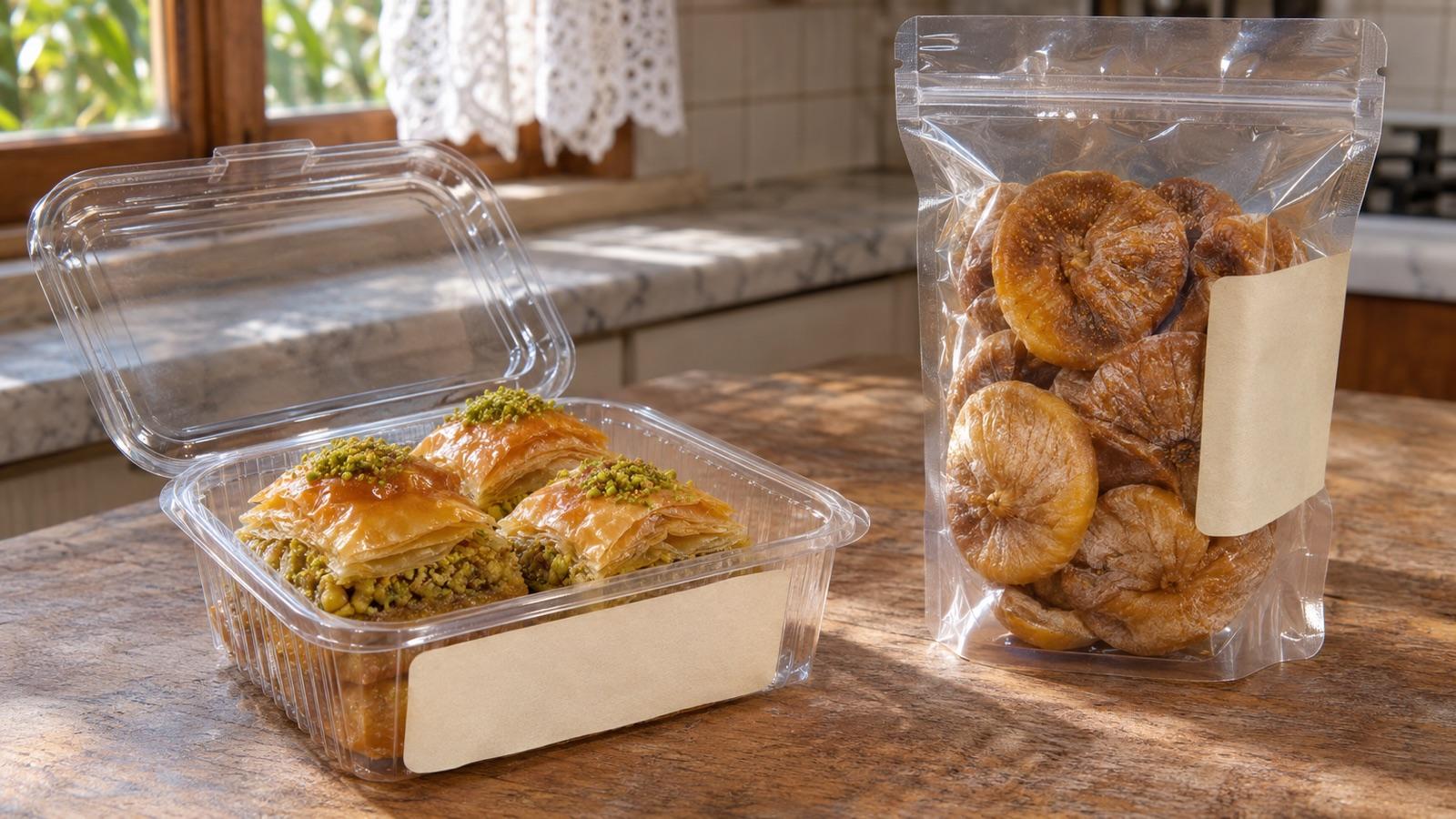
To check a geographical indication on a food package, read the full product name, find the corresponding official emblem on the same or another side of the pack, and compare both with the Turkish Patent and Trademark Office register. A registered geographical indication used in Türkiye must be accompanied by the corresponding emblem. A town name, map or brand logo on the front is only a starting point. This guide covers the two Turkish national marks. The example packages are illustrative.
How the two Turkish marks differ
A designation of origin, labelled menşe adı, means that production, processing and all other steps take place in the area specified in the registration. A geographical indication of the mahreç işareti type links the product to an area through a quality, reputation or other characteristic and requires at least one production, processing or other step there. Open the product’s specification to see which steps or ingredients are tied to the area. The exact requirements vary by product. Compare the definitions in the official definitions from TÜRKPATENT.
In the Turkish national system, the designation of origin emblem is red and yellow, and the mahreç işareti emblem is green and yellow. Use the colours to help you find the emblem and then read the words on it. A similar badge might be a company seal, a general quality claim or a mark issued under another country's scheme. If the print is small, compare the shape and wording with TÜRKPATENT’s official emblems. A side-by-side check is more informative than colour alone. If the rest of the package is printed only in black, white or both, the emblem may be black and white. In that case, use its wording and shape to identify it. See the office’s inspection guide.
Read the package before searching
Record the full product name exactly as printed. If the brand dominates the front, look for the product name on the side or back. Next, find the mark that goes with the name. If the front shows only a place name, turn the pack over to read the product description and business details. For an online purchase, ask for legible photos of both sides. One photo may capture the product name and another the producer or packer information. Keeping them together makes comparison easier.
Search for the name using the TÜRKPATENT register search. Check the status, exact name and type of registration in the result. If several names look similar, use the province and product group to narrow the search. Open the specification on the detail page to read the geographical boundaries, production conditions and rules for displaying the mark. A business address on the package may give a different piece of information from a production address. Likewise, the organisation that registered the name need not be the company that packed the food.
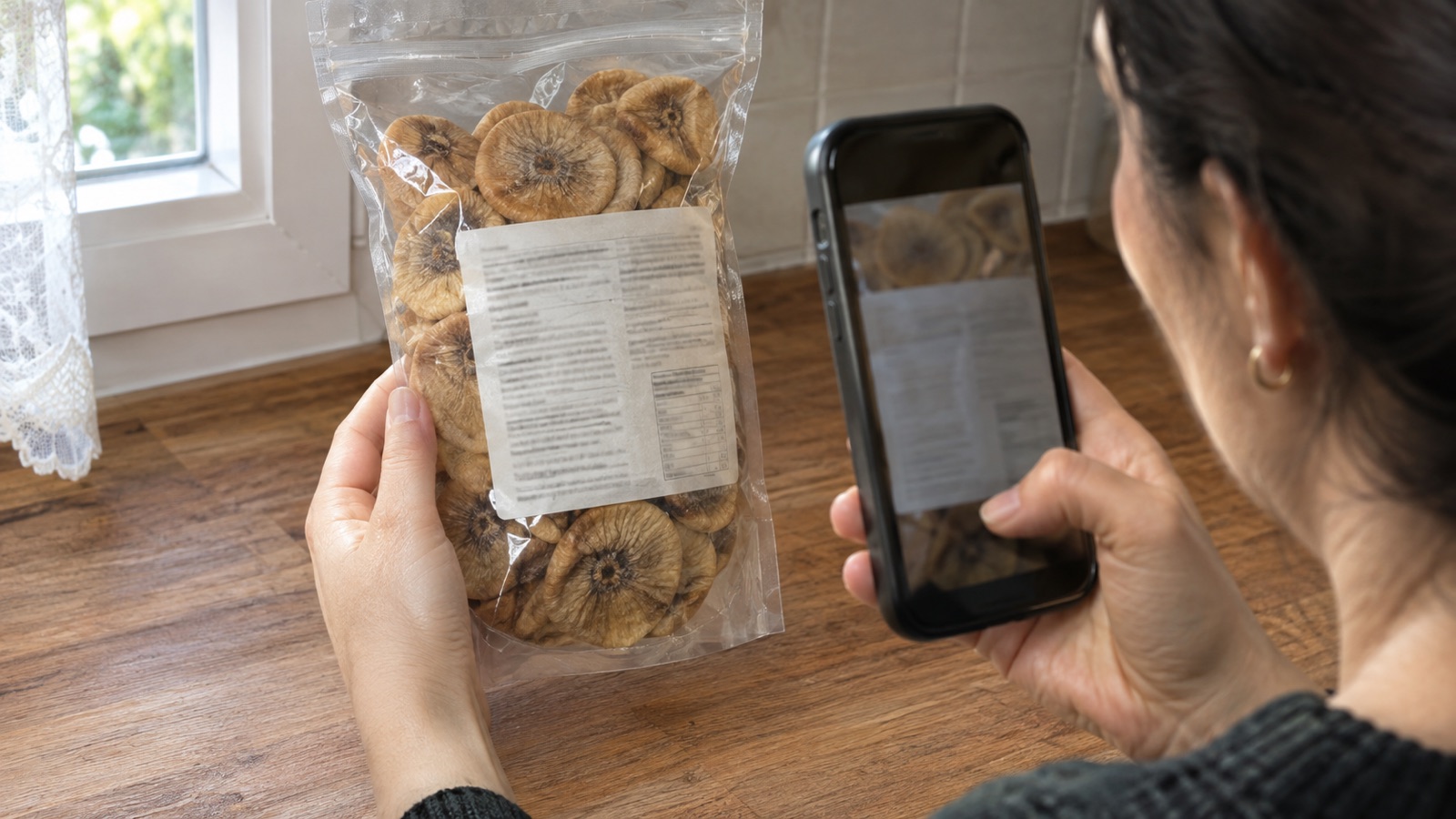
First example: a pack of Aydın figs
Imagine a dried fig pouch with “Aydın İnciri” printed on the front. Search for that exact wording. The Turkish record for Aydın İnciri lists it as designation of origin number 90. If the pouch uses that registered name, look for the red and yellow emblem. Then open the specification to check the area. If necessary, use the producer or packer details on the back when asking the seller where the figs came from. An Aydın business address on a pack labelled simply “dried figs” is insufficient to match it to that registration.
Starting the search with “Aydın İnciri” also helps you avoid pulling up a different fig product. Once you have checked the origin claim, compare net weight if you are choosing between two pack sizes. The cost per unit of weight and how you plan to use the figs are separate buying decisions. The register is there to help you check the geographical claim on the package.
Second example: a box of Antep baklava
Now look at a box marked “Antep Baklavası.” Its Turkish entry, Antep Baklavası, is mahreç işareti number 95. This time look for the green and yellow national emblem. Start with the registered name even if the brand or a picture of pistachios is more prominent. If the box just says “pistachio baklava,” that wording describes the type of pastry. To connect it with the Antep Baklavası entry, look for the exact registered name and the corresponding emblem.
Apply the difference to both packages in the shop. With the figs, the geographical boundaries and the requirement that all stages take place in the area matter. With the baklava, consult its own specification to see which production conditions apply. A distributor’s address does not tell you where the ingredients came from or where the pastry was made. Words such as “regional” and “traditional” are not, by themselves, register entries.
What to do if the package and register differ
If the exact name appears in the register but you cannot find the emblem, check the other sides of the package. Where the nature of a product makes it impractical to put the emblem on the product or packaging, it can be displayed elsewhere where it is easy to see. At a counter selling food loose, ask the seller where the relevant mark is displayed. The office explains how to display the emblem. If the name and emblem type differ, or an online seller shows only a promotional photo, ask for what you need to check the claim before deciding.
The register establishes the status and conditions for a name. Checking the particular package still involves reading its details and sometimes asking the seller a question. Keep other choices separate. With fresh fruit, for instance, it is still worth judging ripeness in addition to reading any origin claim. The stem-end check in our guide to choosing pears is one way to do that.
İyi Bir Yemek
Food Researcher & Writer
Reader Comments & Contributions
Be the first to share your thoughts on this post