
Baking Soda vs. Baking Powder: What’s the Difference?
Learn how to identify baking soda and baking powder on the label, use them in batter and check whether each one is still active with a simple test.

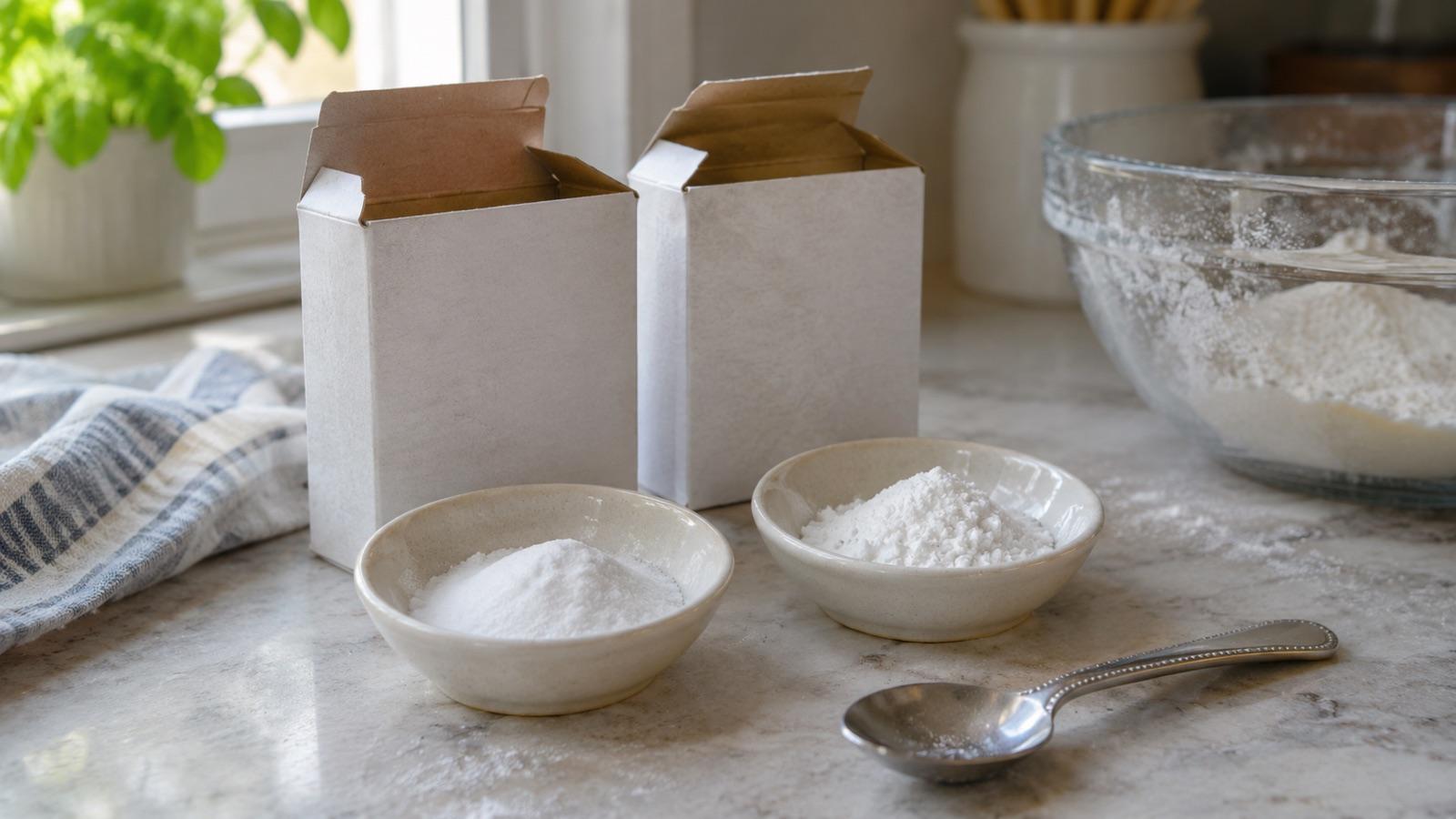
Baking soda produces bubbles when the batter provides enough acid. Baking powder already contains both baking soda and an acid. Both can lift a batter, but a spoonful of one does not replace a spoonful of the other. Match the label and ingredient list to your recipe at the shop. If you doubt the activity of the box at home, check a small sample before mixing the batter.
Choose the right pack at the shop
For baking soda, look for food-grade sodium bicarbonate. In Britain you may see bicarbonate of soda on the label. Baking powder is a separate product. Its ingredient list names a bicarbonate alongside one or more acid ingredients and usually a starch. If the front says only that the product is a raising agent, use the ingredient list on the back to decide. Keep products sold for cleaning out of the recipe.
Choose a size you will use. If you bake occasionally, a small sealed packet you can open for your next cake is practical. When a recipe gives the measure in packets, check the weight of each packet. If you switch to a tub, weigh out the same number of grams. Close the package tightly and keep it in a dry cupboard. Dry a washed measuring spoon before dipping it in. If you transfer the powder to a different container, copy the product name and date from the original packaging. If baking powder, baking soda and dried yeast sit on the same shelf, do not rely on the colour of the pack. Yeast leavens by fermentation and needs its own recipe timing. Copy the exact product name onto your shopping list and keep the labels visible in the cupboard.
How they behave in batter
When baking soda gets wet with an acid such as yoghurt or lemon juice, it releases carbon dioxide. A porous crumb forms when the batter holds on to the bubbles and sets in the oven. Since baking powder carries its own acid, a batter made with plain milk can rise without added lemon juice. Double-acting powder starts releasing gas when it gets wet and produces more as it heats in the oven. Formulas vary, so check whether the pack specifies double acting. King Arthur Baking’s comparison of baking soda and baking powder
Some recipes call for both. In a yoghurt muffin, baking soda can balance some of the yoghurt’s acidity and also help the batter rise. Baking powder adds leavening. In a cake made with plain milk, replacing the powder with the same amount of soda can change both rise and flavour. Excess baking soda can leave an alkaline, soapy taste. If the recipe calls for both, measure them separately and distribute them evenly through the dry ingredients.
Test each labelled product in its own bowl
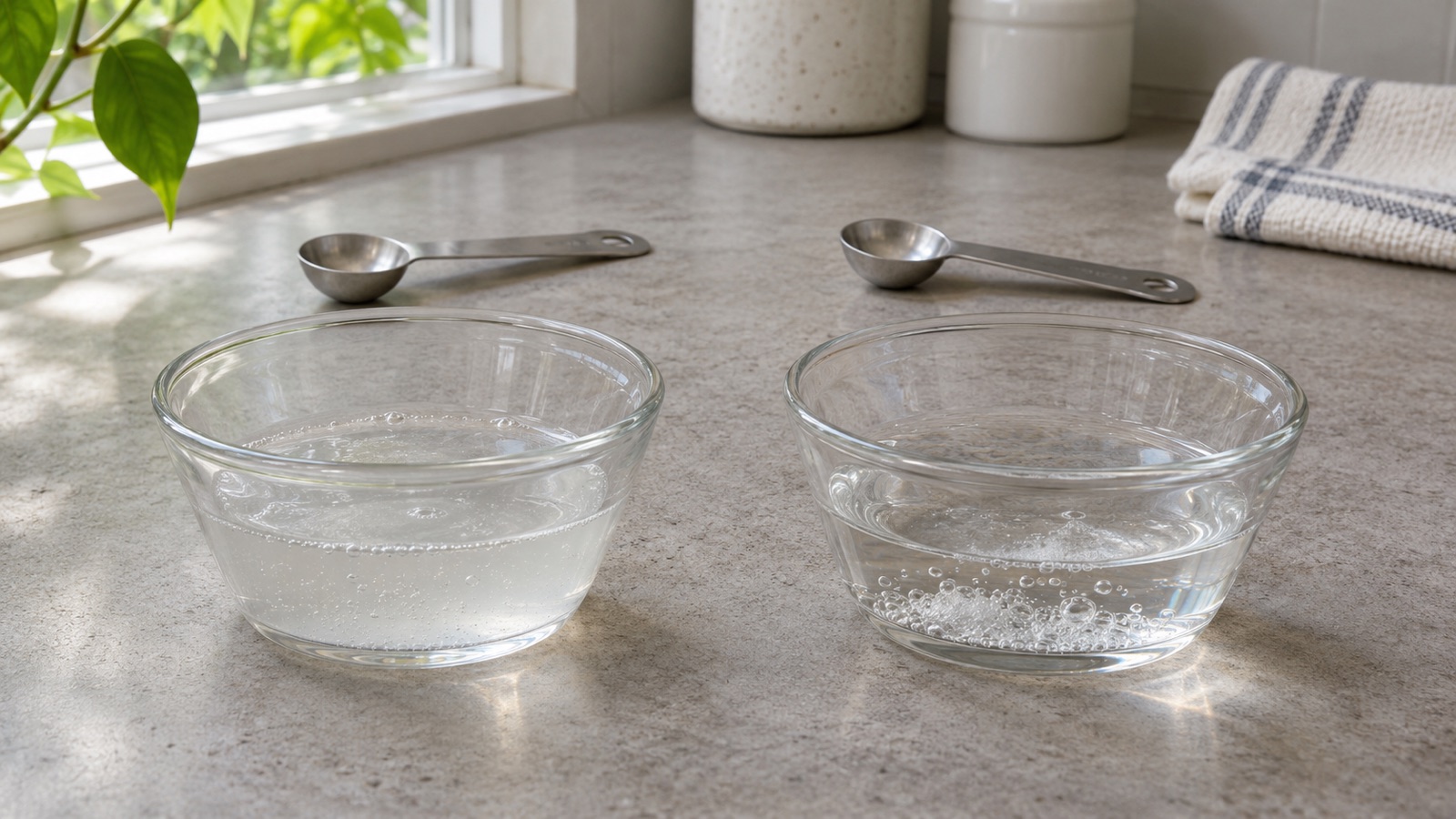
Stir ½ teaspoon of baking soda into 1 tablespoon of vinegar in a small bowl. Active soda fizzes immediately and noticeably. In a second bowl, stir ½ teaspoon of baking powder into 2 tablespoons of warm water. Expect bubbles here too, although the reaction need not be as vigorous as the vinegar test. Use separate, dry measuring spoons. Leave both samples out of the batter. King Arthur Baking’s freshness tests
If the reaction is weak, check the measure, the liquid and the label, then repeat once in a clean bowl. Open a fresh pack if the reaction stays weak. This checks whether a product you can identify still reacts. The amount of foam cannot tell you how high your cake will rise, and these tests are unsuitable for identifying the contents of an unmarked jar. Use a pack whose contents you can verify.
Troubleshoot a poor rise in order
If the crumb is dense and has few air pockets, start with the measure and the package. Did you buy powder in place of soda? Was the spoon heaped? Are there white clumps in the flour mixture? Level a spoon measure when the recipe calls for it and mix the dry ingredients separately before adding them to the wet ingredients. Uneven distribution can show up as muffins that rise unevenly across the same tray.
If the product passes the fizz test, look at the order of preparation. Have the pan and oven ready before you combine wet and dry ingredients. Bake batter leavened with baking soda promptly unless the recipe says otherwise. If the rise is still inconsistent, check the actual oven temperature. Our oven thermometer placement guide can help you separate an oven problem from a leavening problem. Change one thing on the next bake and use the same pan and portion size so you can interpret the result.
What if you run out of one?
Having only baking soda in the cupboard does not give you an equal-measure substitute for baking powder. Adding an acid to go with the soda also changes the liquid and flavour of the batter. Even in a yoghurt batter, tartness alone cannot tell you how much soda the recipe needs. Choose a recipe written for the product you have or buy the one it calls for.
If you are developing a variation of your own, bake a small batch first. Fill equal-size cups evenly and cut the cooled muffins to compare crumb, height and flavour together. The height of a muffin straight from the oven can hide later sinking or an uneven interior. Write the product name and the weight used next to the recipe for your next round.
İyi Bir Yemek
Food Researcher & Writer
Reader Comments & Contributions
Be the first to share your thoughts on this post