
Whole Black Pepper, Ground Black Pepper or White Pepper?
Choose whole black pepper, ground black pepper or white pepper for stocks, dressings and pale sauces. Compare grind, aroma and flecks in béchamel.

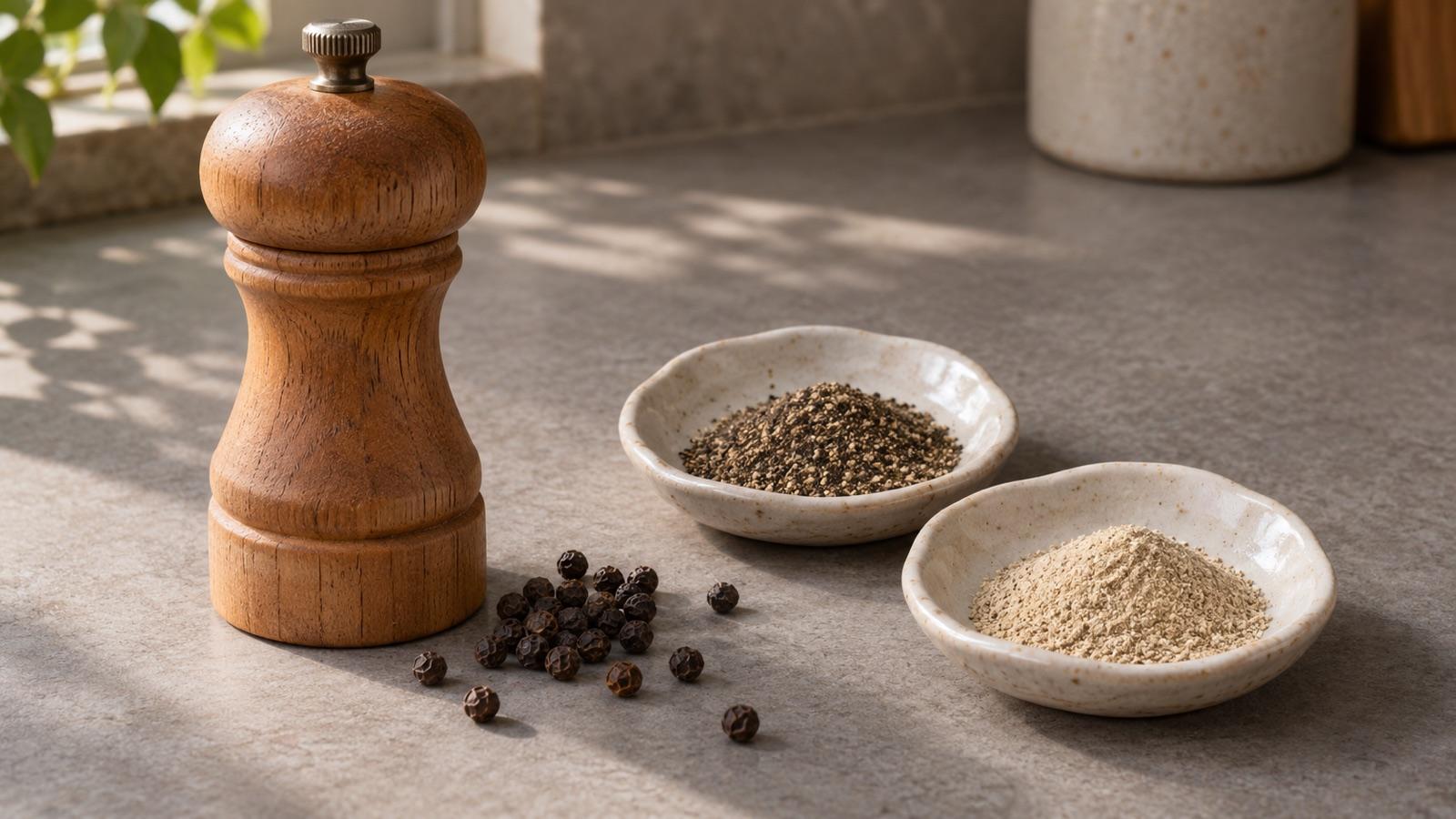
Use whole black peppercorns in a stock you plan to strain or when you want to choose the grind yourself. Ground black pepper works in mixtures such as meatballs and dressings, where you want the seasoning evenly distributed. White pepper leaves fewer dark specks in a pale sauce and brings a distinctive aroma. Judge the aroma, the heat on your tongue and the look of the particles separately.
How black and white pepper differ
Both come from the fruit of Piper nigrum. Black pepper retains its outer layer, which becomes dark and wrinkled as it dries. White pepper is made by removing that outer layer. Its aroma also depends on the processing method. A study comparing different peeling methods found that treatments produced different volatile profiles. Smell the pepper you bought before deciding how much it will suit a dish.
Another study of black and white pepper samples found volatile compounds in both and differences in their profiles. In the kitchen, smell the seasoning first, then taste it mixed into a small spoonful of food. Describe the smell and the heat that lingers on your tongue separately. Pale color offers little guidance about pungency. Start with a small pinch of white pepper in a pale sauce, stir and taste before adding more.
Study on peeling white pepper · Volatile compounds in black and white pepper
When to grind finely, crack coarsely or leave whole
Fine black pepper disperses in a meatball mixture or a well-whisked vinaigrette. Coarsely cracked pepper delivers a more distinct bite here and there in a salad or on roasted vegetables. Use peppercorns from the same packet to isolate grind size. A mortar works if you lack an adjustable mill. Crush a small batch, stop to collect the coarse pieces, then grind the rest finer.
Whole peppercorns can cook in a vegetable stock and come out when you strain it. If you crack them first, choose a fine sieve that will catch the pieces. Powder is harder to remove by straining. With purchased ground pepper, smell it first and add it gradually. A big spoonful of a dull-smelling pepper can make dinner hotter than intended while delivering little of the fragrance you were looking for.
Compare three samples in béchamel
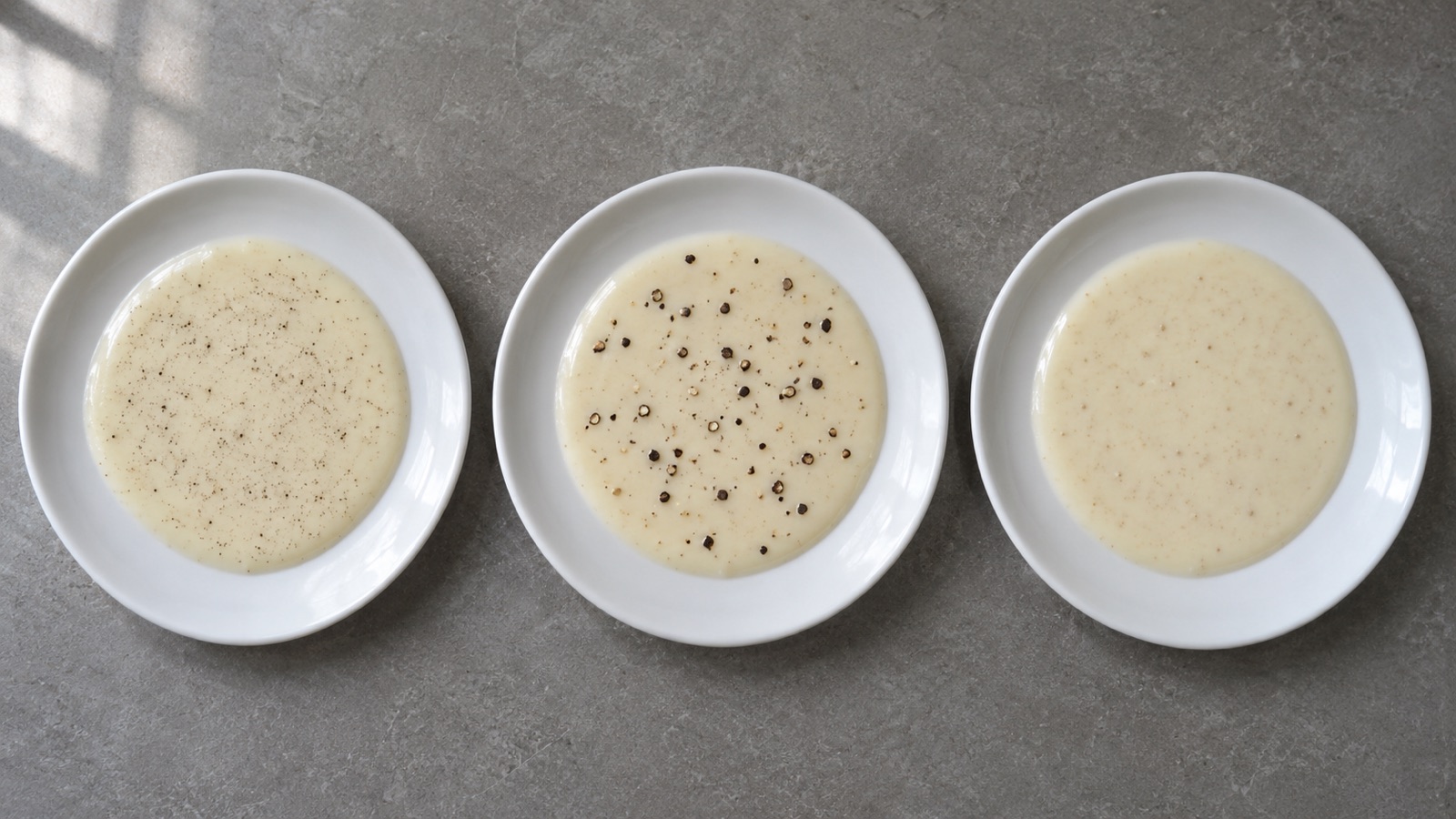
Set out three white saucers with 50 g of plain béchamel apiece at the same temperature. Add finely ground black pepper to the first, coarsely cracked pepper from the same batch to the second, and fine white pepper to the third. On a precision scale use 0.1 g per sample. Without one, try similar little pinches and treat the results as approximate. Equal spoon volumes can give different weights at different grinds.
Use a separate spoon for each sample and stir each the same way. Look at the specks before smelling the sauces and tasting a spoonful of each. Write down which one looks most speckled, which leaves noticeable particles in the mouth and which smell you prefer. Sip water between tastes. If the sauce is for a dish, taste it with a bite of that dish before deciding. Cheese in a gratin can make an aroma that stood out in plain sauce less noticeable.
Season early or at the end?
Whole peppercorns have time to infuse a stock if they go in while it cooks. When adding fine black pepper to a cold yogurt sauce, whisk it in and taste a small serving. Coarse pepper ground over the surface stays concentrated in some bites. That variation can be pleasant if you enjoy the texture of the larger pieces.
For a timing comparison, split a vegetable soup between two small pots. Grind pepper from the same batch to the same size, add it to one at the start of reheating and to the other off the heat. Taste them at the same temperature. If the late addition smells brighter to you, use it when serving. For food that will spend time against a very hot pan, save some cracked pepper for the plate to reduce the chance of a scorched flavor.
Fix too much heat, clumps or dark flecks
If the sauce is too hot, mix in a little unseasoned sauce of the same kind at a time. That dilutes the pepper while keeping the consistency. Water also dilutes it, but it makes béchamel thinner. Next time, season a small serving before committing the whole batch. If your ground pepper clumps, break it up with a clean dry spoon, scatter it over the surface and stir.
Choose fine white pepper at the outset if you want a white sauce with few dark dots. Straining fine black pepper out later is laborious and may cost you some sauce. If white pepper smells too strong, use less or season a separate spoonful with black pepper to see whether you prefer its taste even with the dots. If you keep a mill and small packets of ground black and white pepper, watch which you reach for in an ordinary week and keep that one handy.
İyi Bir Yemek
Food Researcher & Writer
Reader Comments & Contributions
Be the first to share your thoughts on this post