
When to Use Yellow, White or Red Onions
Choose onions for salads, quick sautés and long cooking. Compare yellow, white and red onions raw and in the pan using equally thick slices.

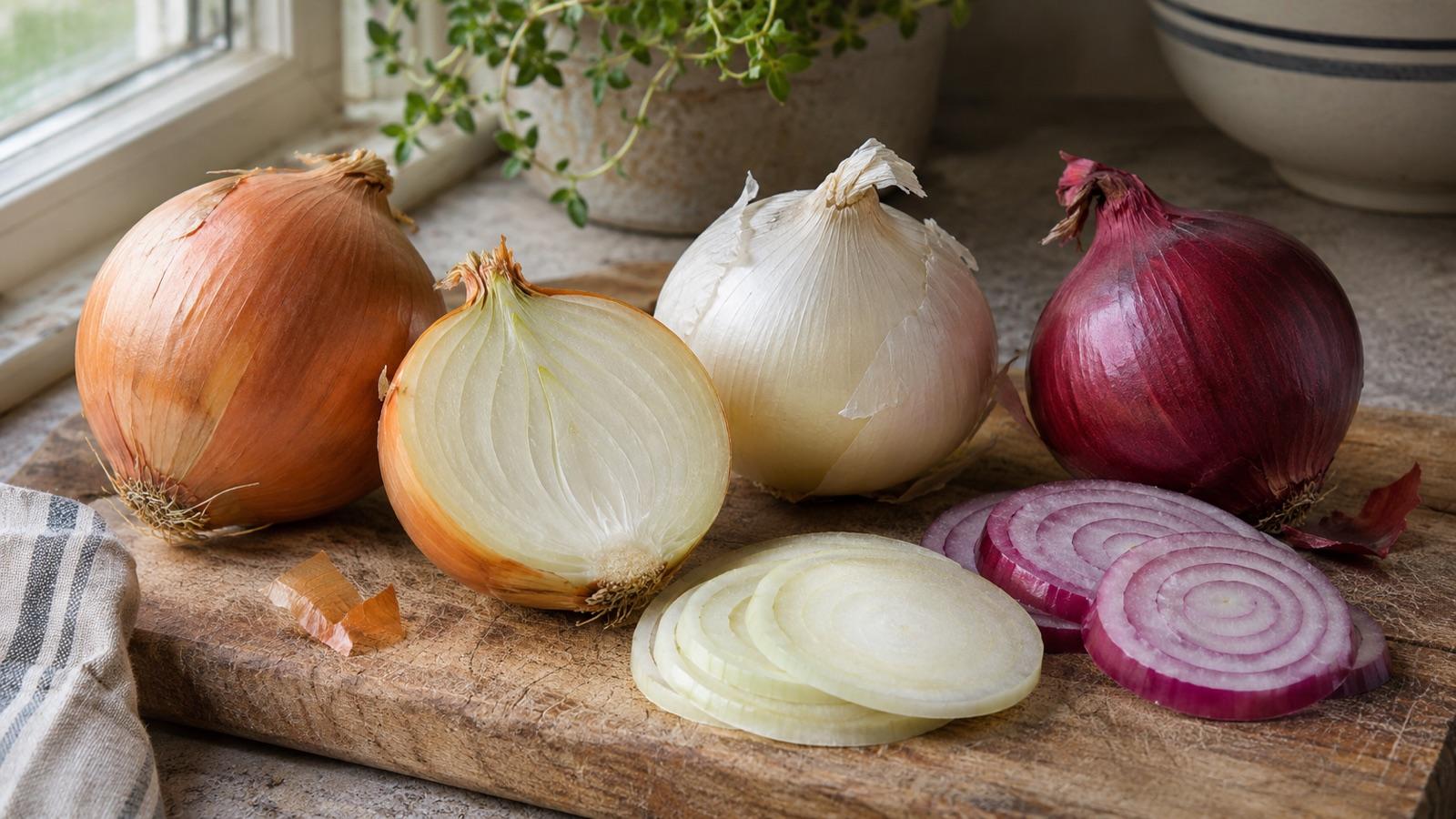
Start with yellow onions for long simmering, red for a salad where the slices should stand out, and white for a pale, crisp garnish. These are useful starting points. Skin colour cannot guarantee how sharp the onion will taste, so consider the bulb you have and the texture you want on the plate.
Choose by the job the onion has to do
Yellow onions are a good starting point for a lentil soup, vegetable stew or tomato sauce where the base cooks for a while. If you want the pieces to blend into the finished dish, dice them finely and let them soften before adding other ingredients. Red onions keep a visible purple edge in a bean salad. White onions work well finely chopped as a pale garnish for tacos or in tomato salsa.
Treat those suggestions as applications rather than a ranking by taste. A red onion can be unexpectedly sharp, and a yellow one can be mild enough to enjoy raw. Look for a firm, heavy bulb with dry skin. If the onion is going into a salad, taste a small bit before committing the whole amount. When substituting, decide what matters most: the colour on the plate, the crunch, or the flavour of a cooked base.
Compare sharpness at the same thickness
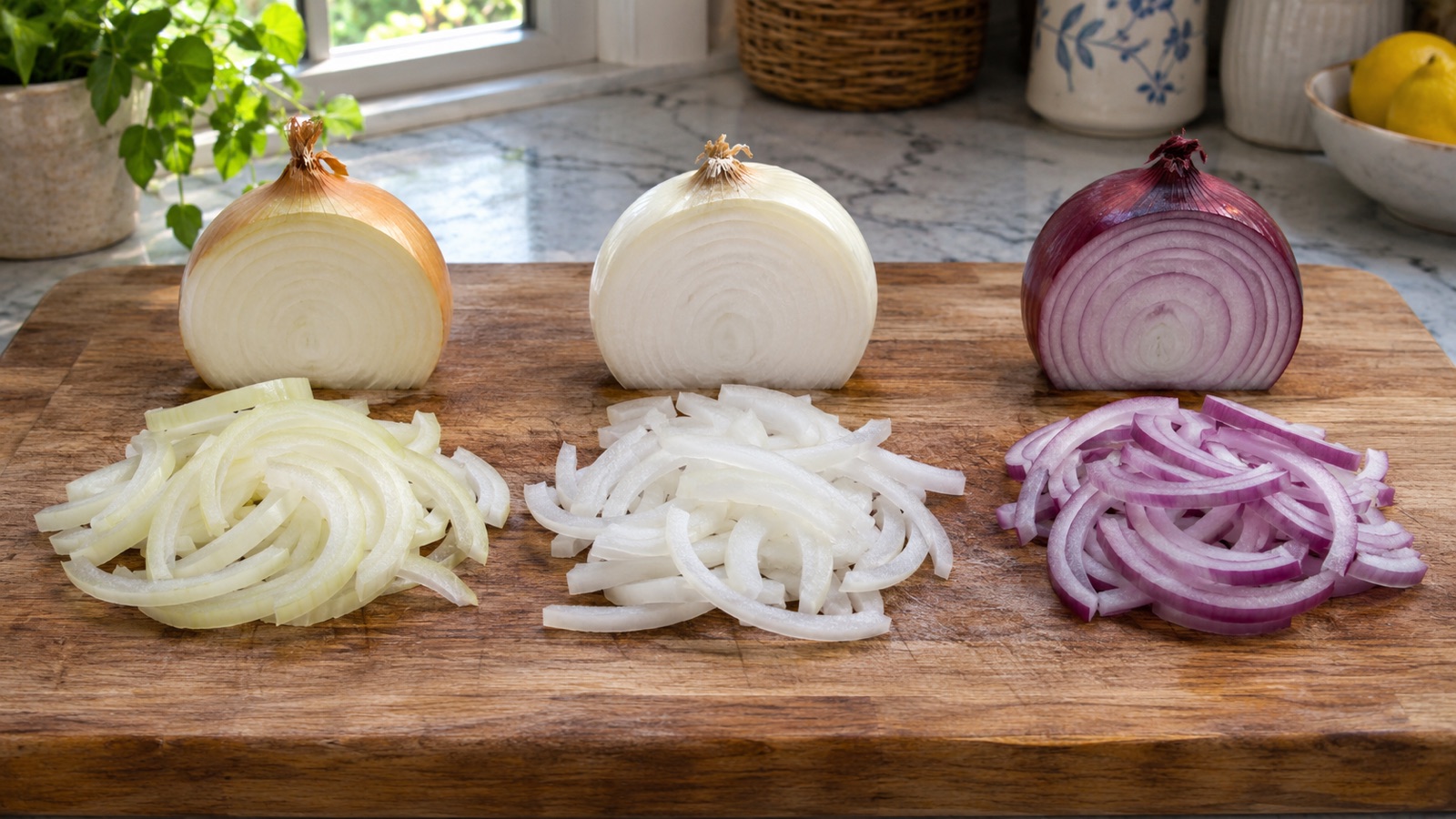
Cutting onion cells allows enzymes to form sulphur compounds, including a volatile one that makes eyes water. The colour of the skin does not measure that reaction. Cut yellow, white and red onions into half rings about 3 mm thick. Set aside 30 g of each for the comparison and leave them for the same interval. Taste a similarly sized piece from each pile plain, sipping water in between. Notice the snap, the initial bite and the aftertaste separately.
Then build the same salad bite three times: one onion slice, a little tomato and the same dressing. An onion that is strong on its own may be well balanced with an acidic, oily dressing. If it still overwhelms the salad, take some onion out, slice it thinner and add it back in small amounts. If you try rinsing it in water, drain it thoroughly before tossing with leaves, so the dressing does not pool diluted at the bottom.
Silvaroli et al., ACS Chemical Biology (2017)
Keep conditions equal for a quick sauté
Sauté the rest of the comparison slices in the same pan in separate batches, using 1 teaspoon of oil for each over medium heat for about 4 minutes. Wipe the pan between batches and bring it back to a similar heat. Spread slices in one layer. A crowded pan traps steam and reduces direct contact between the onion edges and the pan. Use the trial to see which onion gives the texture you want when the cut and heat are held steady.
Lift and bend a slice with a spatula. If it still springs back, it can add a little bite to a wrap or a plate of sautéed vegetables. If the middle is stiff and the tips are darkening, turn down the heat and stir. If a lot of liquid comes out at once, split the batch. White onion may suit a chicken wrap where you want a pale garnish, while red edges can stand out alongside peppers; judge by the cooked sample.
Manage colour and texture for longer cooking
For a simmered dish, cut a yellow onion into small, even dice and stir it in oil over medium-low heat. For a pale lentil soup, add the liquid once the dice turn translucent and yield under a spoon. If you want a deep brown base for onion soup, give thin slices much longer and keep stirring the pieces that catch around the edge of the pan.
The onion gives off water first. Turning up the heat right away does little to promote even colour while that moisture remains, and the thinnest bits may burn. If the bottom is browning while the slices are still stiff, add a splash of water, scrape with a spatula and turn down the heat. Use red onions for a dark sauce if that is what you have. For a pale sauce, white or yellow is more predictable. Watch the pan as well as the clock: colour and tenderness can arrive at different times.
How to adapt when you have just one colour
Taste a thin slice of yellow onion before adding it to a bean salad and use less if it is overpowering. For white onion in a bean stew, dice it evenly and soften it before adding the liquid. If red is your only option for a pale soup, try a spoonful of onion in a small portion first to see how it affects the colour. Substitute by peeled weight rather than by bulb count; onions that look the same size do not always yield the same amount.
A common mistake is to count on colour alone without adjusting the cut or the heat. For a salad with a clear crunch, slice thinly but stop short of paper thin. For a sauce with no distinct onion pieces, dice small and soften early. If you can buy just one colour and mostly cook your onions, yellow is a good starting point. For salad, let the raw taste and the look you want guide your choice. To use one bulb in both dishes, slice the salad portion thinly and finely dice the sauce portion from the start. One bulb can give you two distinct textures.
İyi Bir Yemek
Food Researcher & Writer
Reader Comments & Contributions
Be the first to share your thoughts on this post