
When Can You Swap Fresh and Dried Herbs?
Learn when to swap fresh and dried thyme, rosemary, dill and parsley, with spoon measures and practical examples for sauces, roast vegetables and dips.

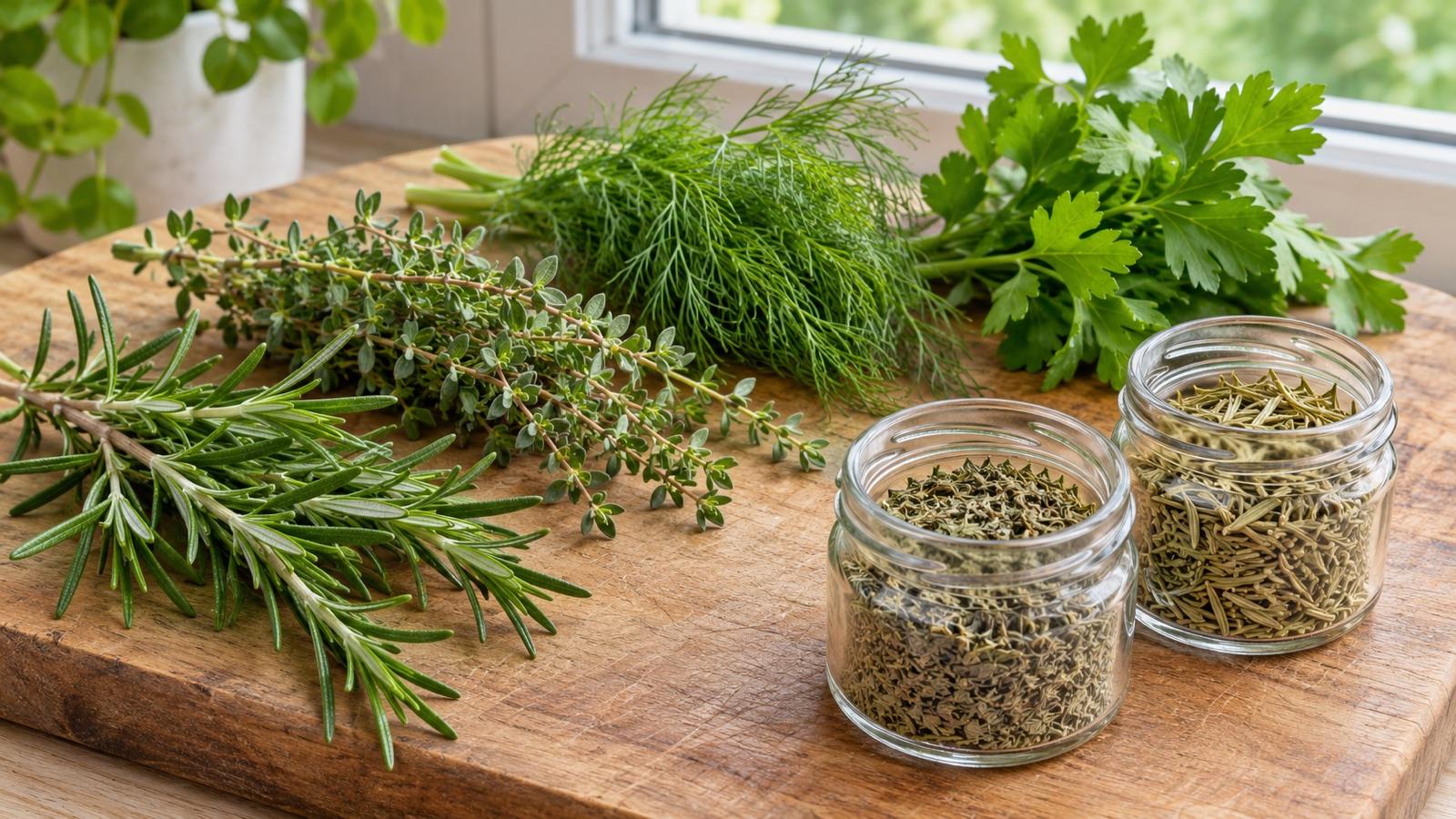
If an herb is mainly there for aroma, you can often replace it with a smaller amount of the same herb dried. Thyme and rosemary are good candidates in a cooked sauce. Choose fresh parsley and dill when the dish needs a fresh fragrance, green colour and leafy texture. First ask what the herb contributes, how long it will be heated and whether the dried herb comes as flakes or powder.
Work out what the herb does in the dish
Sturdy herbs such as rosemary and thyme can perfume water or oil as the dish cooks. A whole fresh sprig is handy when you want to infuse a liquid and fish it out before serving. Dried leaves stay in the sauce. Lightly crushing the long pieces of dried rosemary can reduce the number of stiff needles you bite into. For a smooth sauce, try a whole sprig you can remove or strain the sauce before serving.
Finely chopped dill and parsley are visible and noticeable when you serve the dish. A pinch of dried dill can flavour yogurt, while fresh leaves provide volume and a bright finish. If an herb is one of the main greens in a salad or forms the body of a sauce, skip its dried version. A different fresh herb can contribute leafy texture, with a flavour of its own.
Oregon State University Extension · Iowa State University Extension · University of California Agriculture and Natural Resources
Convert the amount by volume
For 1 level tablespoon (15 ml) of chopped fresh leaves, start with ¾–1 level teaspoon (about 3.75–5 ml) of crumbled dried leaves. This is a volume guideline. Sprigs vary in size and leaf count, so a sprig does not have a fixed equivalent. Strip woody stems, fill the spoon loosely with the fresh leaves and level the top. Check the label, since similarly named herbs can taste quite different.
Powder disperses more finely and packs more densely into a spoon. When a recipe calls for 1 tablespoon of fresh leaves and the same herb is available as powder, start with at most ¼ teaspoon. Use less if it smells particularly strong. Rub a little of the dried herb in your palm to check its aroma. A fragrant new jar and a barely scented older jar can season a dish quite differently. Taste a small amount of the cooked food before adding more.
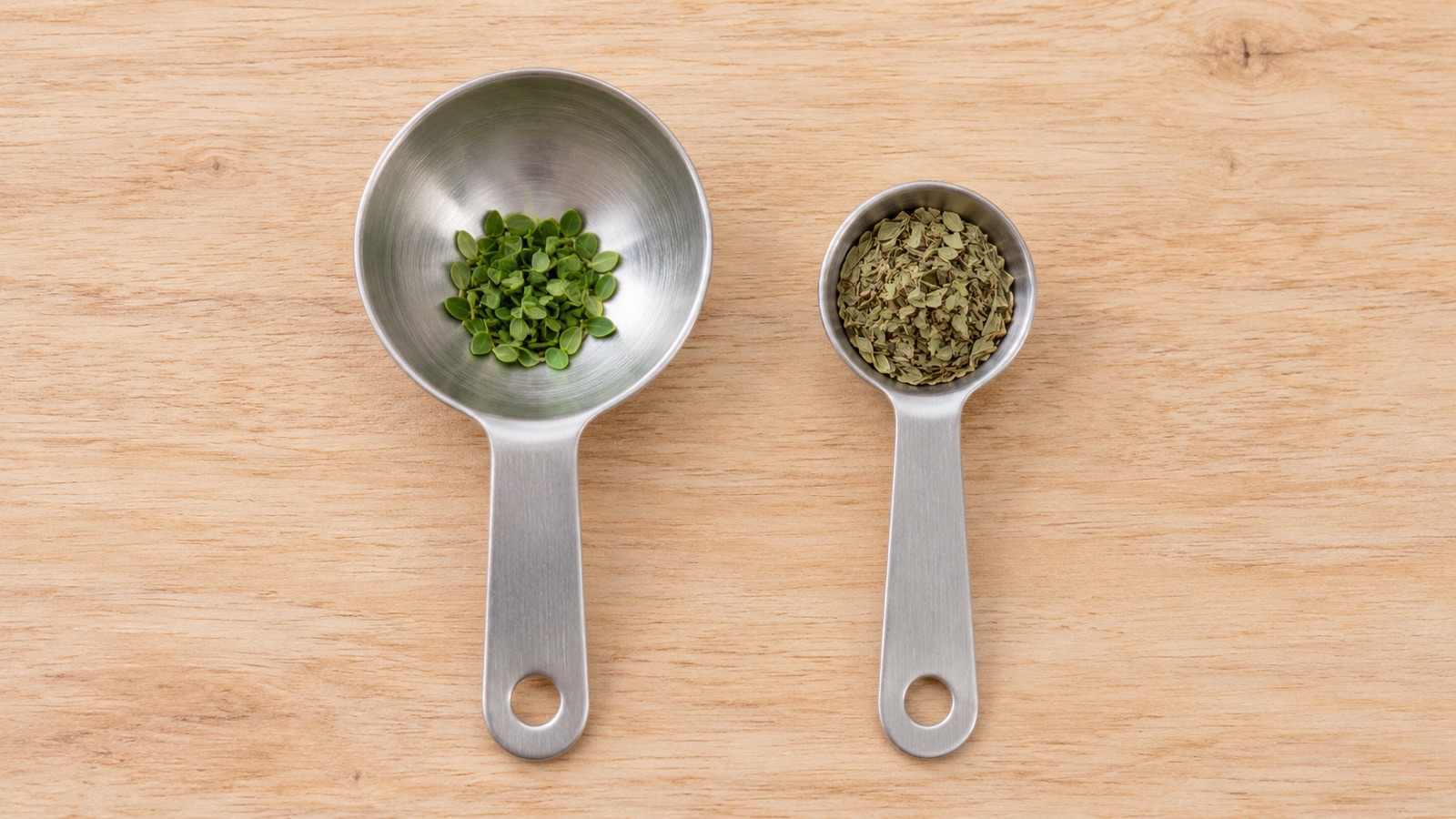
Illustration. Level off the spoon when measuring.
When to add herbs to warm sauces and roast vegetables
For 400 ml of plain tomato sauce, start with ¾ teaspoon dried thyme. Stir it in once the sauce comes to a gentle simmer. After about 10 minutes, put a spoonful on a plate, let it cool slightly and taste. If the thyme dominates, stop adding it and mix in a little plain sauce if needed. If the aroma is faint, add a small pinch and taste again. For fresh thyme, have 1 tablespoon of chopped leaves ready, add some near the end and hold back the rest until you taste.
For 500 g of chopped carrots to roast, mix ½ teaspoon of crushed dried rosemary into 1 tablespoon olive oil, then coat the pieces lightly. Sprinkling the stiff needles straight onto the tray can give a few bites a particularly strong flavour. Fresh rosemary works too. Strip and chop the needles, use a little on the first try and taste the cooked carrots before scattering any remaining fresh herb over them at the table.
Choosing herbs for chilled dishes and finishing
Stir 1 tablespoon chopped fresh dill or parsley into 200 g plain yogurt. Dill has a more distinctive aroma, while parsley gives a milder, green finish. Mix it in just before serving. Parsley chopped a little coarser gives a leafy texture that can be hard to match with dried flakes. Use a bowl wide enough to stir without spilling and a sharp knife for the leaves.
If you only have dried dill, begin with ¼ teaspoon, stir well and refrigerate for about 10 minutes before tasting. The wait lets the flakes moisten and gives you a chance to judge the flavour. If the pieces still feel stiff, hold off on adding more dried herb. A little fresh parsley or chives, added at the last moment, can give the dip some leafy texture. Add them gradually if you have already used dill.
Mistakes to avoid when adjusting the flavour
Measure from the jar into a separate spoon before adding herbs to the pan. If thyme has taken over, dilute the sauce or yogurt with more of the plain base. If you used a whole sprig, take it out once the aroma suits you. When the flavour seems faint, let a spoonful of the food cool a little and taste before adding more. The flavour can get stronger as the dish reduces, and scattered dry leaves are difficult to take out.
To compare the two forms of thyme, spoon equal amounts of the same sauce into 2 small bowls. Use sauce simmered with a little dried thyme in one bowl and sauce flavoured just before serving with a little fresh thyme in the other. Taste the samples at similar temperatures. Notice what you prefer in the first aroma and in the overall sauce. That helps you choose a starting amount next time. For flavouring a sauce with whole sprigs, see the bouquet garni method below.
İyi Bir Yemek
Food Researcher & Writer
Reader Comments & Contributions
Be the first to share your thoughts on this post