
Braising Guide: The French Technique That Turns Tough Meats into Turkish Delights
What is the braising technique and how is it applied? The ultimate guide to slow cooking with the Maillard reaction, deglazing, mirepoix vegetables, and the chemistry of collagen turning into gelatin.

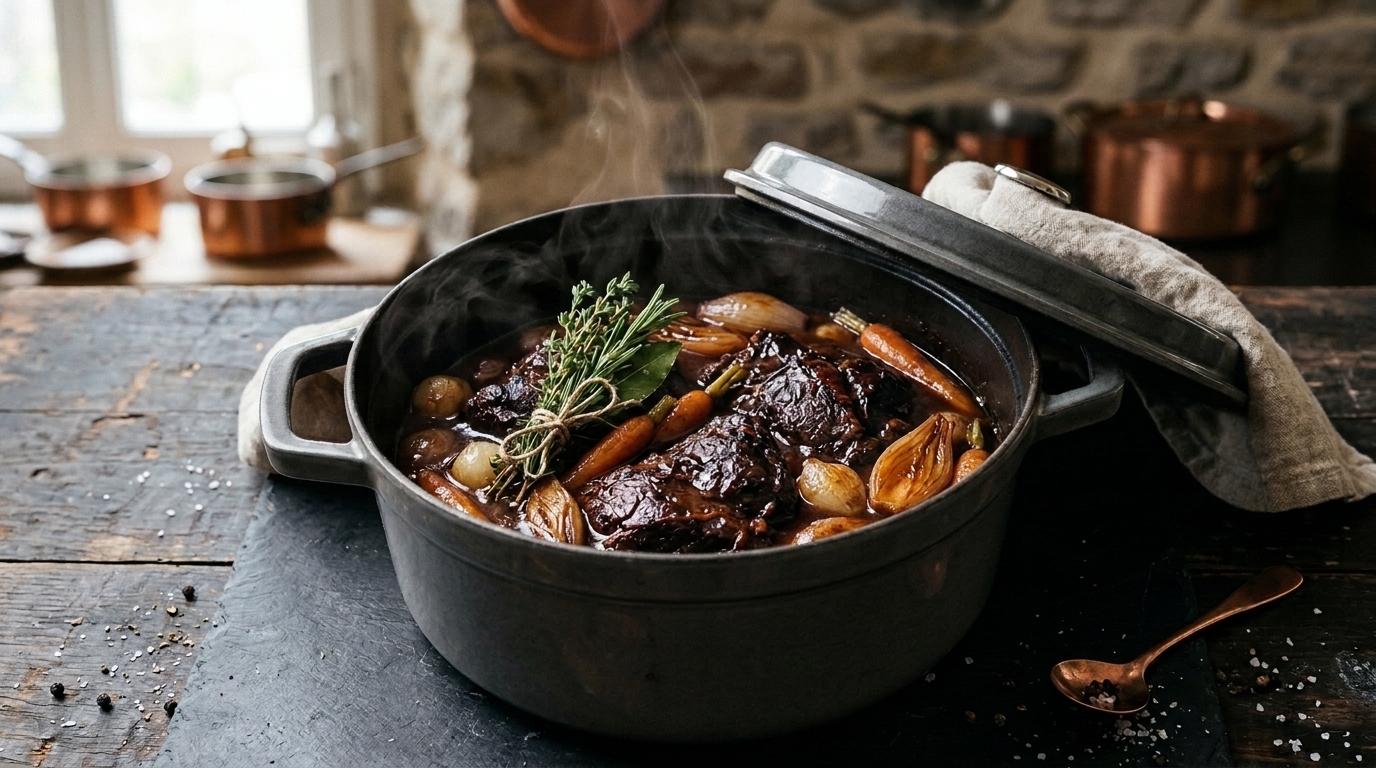
There are some techniques in the world of professional gastronomy that transform even the most modest and fibrous pieces of meat into the most prestigious signature plates of Michelin star restaurants. Here is the peak of these techniquesbraising(covered cooking over low heat). This method, which is one of the basic building blocks of the French culinary discipline; It brings together the caramelized power of dry heat and the compassionate patience of moist heat in perfect balance.
What is Braising? The Art of Two-Step Cooking
French originbraiserThis technique, which comes from the word, is completely different from cooking meat directly at high heat or by boiling it only in water. Braising consists of two basic stages.It is a combined cooking method.:
- Dry Heat Phase (Sealing):Caramelizing the outer surface of meat in a cast iron pot at high temperature (Maillard reaction).
- Moist Heat Phase (Heavy Baking):Deglaze the bottom of the pot and bake it for hours at low temperature (140°C - 150°C) with the lid tightly closed, accompanied by aromatic vegetables, fresh herbs and bone broth up to half of the meat.
The Chemistry of It All: Transformation of Collagen into Silky Gelatin
Muscle groups that work intensively, such as beef cheeks, shins, ribs or jowls, are highly concentrated.collagen(Contains connective tissue). If you try to quickly grill these meats in a pan, you will get a result that is tough, dry and impossible to chew.
However, when meat is kept in a humid environment between 60°C and 80°C for a long time, a chemical miracle occurs:Hard collagen fibers dissolve and turn into a rich and fluid gelatin.Gelatin fills the gaps between the meat fibers, giving the meat that unique juicy, soft and melt-in-your-mouth "delight" texture. It also mixes with the cooking liquid, allowing the sauce to gain a natural body and shine without the need for flour or starch.
Perfect Braising Methodology in 5 Steps
1. Drying and Maillard Sealing the Meat
The first rule of braising is to dry the surface of the meat completely with a paper towel. When wet meat enters the pan, it first evaporates and cannot caramelize. Heat a heavy Dutch oven thoroughly, add a small amount of high-temperature oil, and sear the meat on all sides until a deep golden-brown crust forms.
Chef's Note:Sealing does not lock in the juices of the meat; This is a common culinary myth. The main purpose of sealing is to create hundreds of new flavor molecules on the surface.Maillard reactionis to start and establish that priceless flavor base at the bottom of the pot.
2. Mirepoix Vegetables and Aromatic Balance
After setting the sealed meat aside, add butter to the heat of the pot and cook the classic French trio.mirepoixAdd the vegetables: 2 parts onion, 1 part carrot and 1 part celery stalk. Caramelize the vegetables by sweating them slightly over medium heat. A side dish consisting of crushed garlic, village tomato paste and fresh thyme, rosemary and bay leaves.Bouquet Garniadd.
3. The Art of Deglazing: Unraveling the Fond
In gastronomy, the dark brown caramelized residues that stick to the bottom of the pot during sealing are calledfundIt is called. The essence of taste is here. Pour into the pot a liquid with acidity or rich marrow beef bone broth balanced with some natural vinegar. Scrape the bottom of the pot thoroughly with a wooden spatula to ensure that the fondant mixes with the liquid.
4. Correct Liquid Level: Do Not Mix with Boiling!
The most common mistake in braising is to completely drown the meat in liquid. If you cover the meat completely with water, the food turns into boiling and the concentrated flavor of the meat disperses into the water. The rich bone broth you add is just the meat.half or at most two-thirdsIt should come up to . The upper part of the meat should cook with the aromatic steam cycle, while the lower part should absorb the depth of the liquid.
5. Low Heat and Patience: Slow Baking
Close the lid of the cast iron pot tightly so that it does not leak air. Previously140°C - 150°CLet it cook slowly in the heated oven for 3.5 to 4 hours, depending on the type and thickness of the meat. The liquid should never boil while cooking; it should only remain at a temperature that will form tiny, delicate pearls on its surface.
The Top of the Sauce: Glaze and a Silky "Jus"
The process is complete when the meat coming out of the oven reaches a consistency that will fall apart without resisting when inserted with a fork. However, there is one last step that makes chefs' plates legendary:
- Gently transfer the meat to a warm serving bowl, cover it with foil and let it rest.
- Smooth the vegetable and baking juice remaining in the pot by passing it through a fine-mesh strainer (chinois).
- Put it in a sauce pan and cook it over medium heat until it thickens.
- Remove from the heat and add a few cubes of very cold butter and beat in circular motions (monter au beurre). The sauce will shine like a mirror and reach a velvety consistency.
What Cuts of Meat Is It Suitable For?
Braising technique is not for expensive and tender steaks (tenderloin, entrecôte); Created for tough meats with dense connective tissue:
- Veal Cheek:It is the undisputed king of braising with its high collagen content.
- Veal Shank (Osso Buco):It offers tremendous depth when cooked with the rich marrow in the middle.
- Beef Short Ribs:A magnificent piece where fat and meat texture combine with bone.
- Lamb Neck and Shank:It is indispensable for oven dishes in traditional Anatolian and Mediterranean cuisine.
Experience This Technique in Your Kitchen
If you would like to try the braising technique with all its subtleties and give your guests an unforgettable fine dining experience, we have preparedStir-Oven Beef Cheek (On a Bed of Celery Puree)You can review our recipe and apply it step by step in your oven.
İyi Bir Yemek
Food Researcher & Writer
Reader Comments & Contributions
Be the first to share your thoughts on this post