
How Water Hardness Changes the Taste and Clarity of Black Tea
See how hard water can affect black tea’s colour, surface film and flavour, then compare two drinking waters with a controlled home brew.

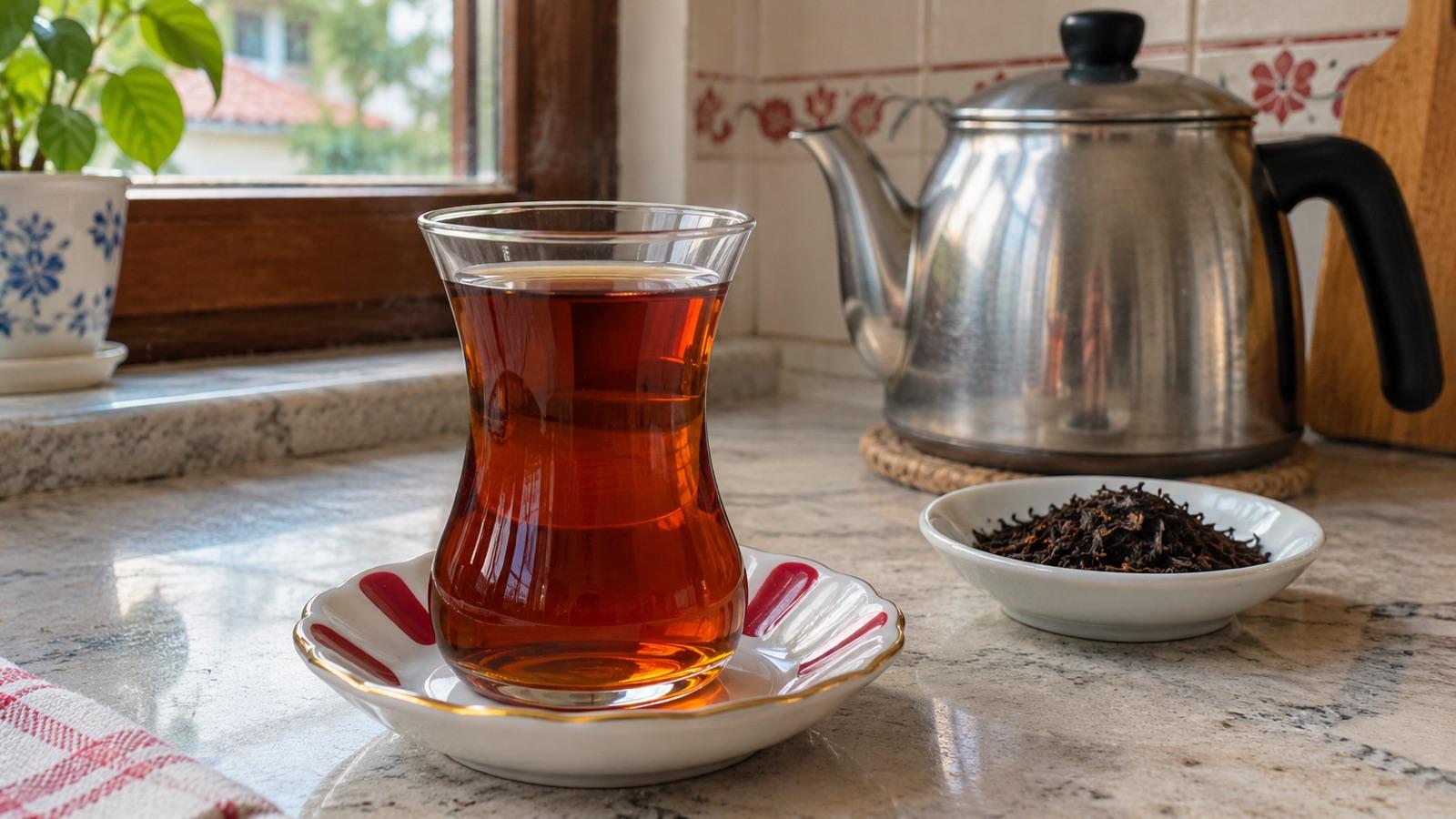
Black tea brewed with hard water can look darker or cloudier, and a thin film may form on top. The direction of any flavour change depends on the whole water composition and the tea. To see what matters in your kitchen, brew two equal portions from the same packet and change only the drinking water. Judge colour, clarity and flavour separately: a difference in one need not explain the others.
What does hardness tell you?
Hardness describes certain dissolved minerals, mainly calcium and magnesium. Water reports often state total hardness in mg/L as calcium carbonate equivalent. The calcium and magnesium figures on a bottle help you choose contrasting samples, but neither is a direct reading of total hardness. Total dissolved solids are a separate measurement. Waters with equal hardness can differ in bicarbonate, smell and overall mineral balance. If you cannot find hardness figures, label the samples A and B rather than guessing. You can still find out which water makes tea you prefer.
Bicarbonate is a separate clue to what you may see in the cup. In a controlled experiment with artificial tap water, calcium and bicarbonate both helped form the surface film. A calcium figure alone cannot tell you exactly what your tea will look like. Your kitchen comparison tests two complete waters; it cannot identify the effect of each individual mineral.
Experiment on tea surface films
Brew two cups under matching conditions
Choose two still waters that are safe to drink. Try your usual water and one that lists less calcium and magnesium. Set out two matching brewing vessels and two clear glasses. Into each vessel put 2 g of plain black tea from the same packet and 200 ml of water at 95 °C. Steep both for 4 minutes and strain through the same type of sieve. These are comparison settings, not an ideal brewing rule for every black tea.
Begin with vessels at the same temperature and start each timer as you pour. Leaving the leaves in one vessel changes more than the water. If you normally make a concentrate and dilute it in the cup, start with the direct brew to simplify the comparison. When you return to your usual method, match the proportions of concentrate and added water in both glasses.
Separate colour, cloudiness and surface film
Set the glasses in the same light against a white background. Look through the side first: a deeper copper colour can still let you see the background sharply. Cloudiness makes that view hazy. After a short wait, look down at the surface with the light coming from the side. Record a thin surface layer separately from haze throughout the tea. If leaf particles settle at the bottom, consider the strainer too. Photograph both glasses in one frame: automatic exposure can exaggerate or hide differences in separate shots. Keep your viewing angle the same.
After checking the warm tea, let both glasses cool for the same time. Tea that was clear when warm can turn cloudy on cooling. Caffeine and tea polyphenols play a role in this phenomenon, which differs from a film at the air–liquid surface. In a controlled water composition study, different waters changed the appearance of tea, but perceived flavour differences in black tea were smaller than in green tea. A darker brew need not taste stronger.
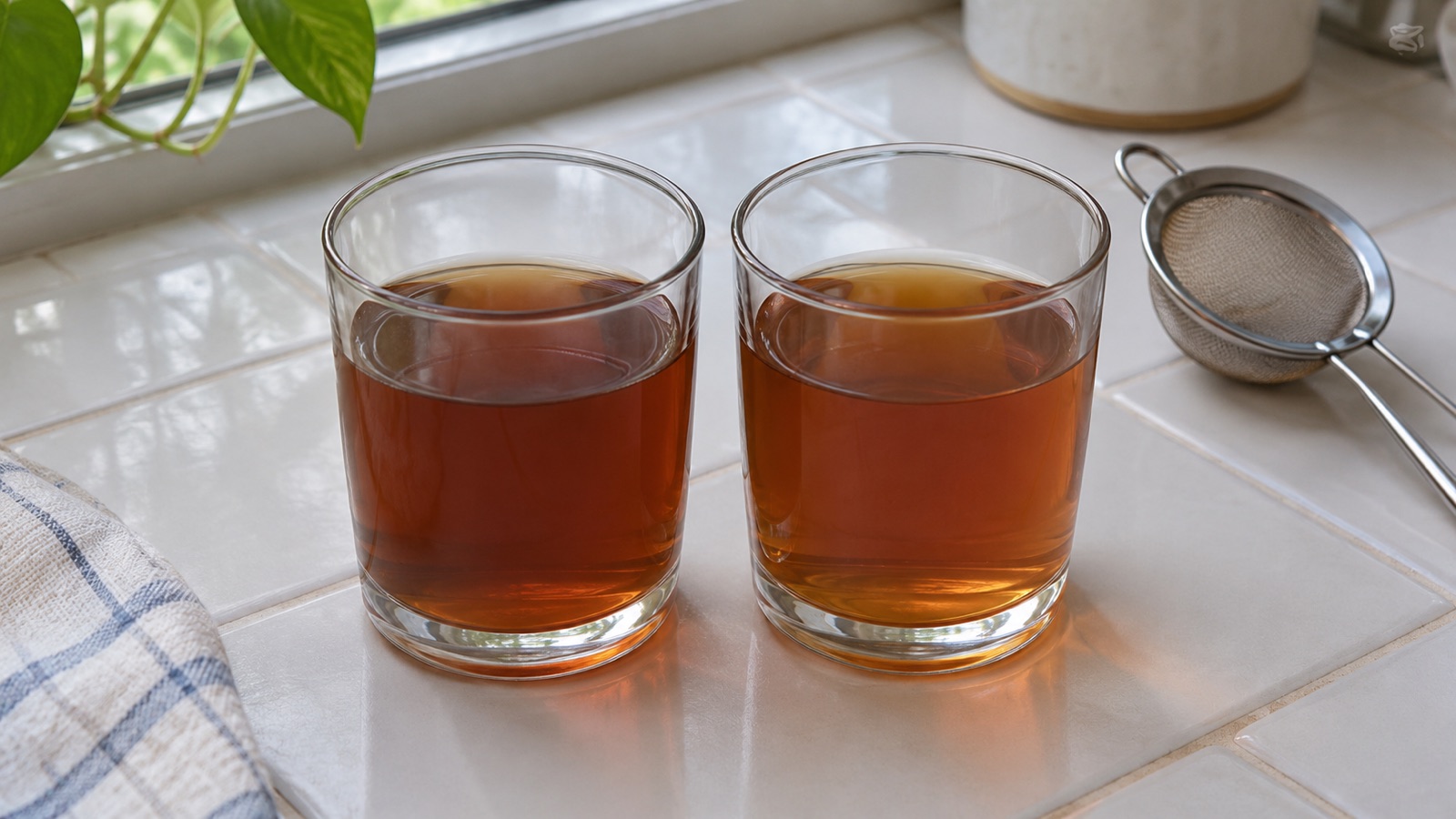
Water composition and tea tasting study
Score bitterness and astringency separately
Taste the tea plain once both cups reach the same drinking temperature. Bitterness is a taste; astringency is the dry, puckering sensation left in the mouth after a sip. Give aroma, bitterness and astringency separate lines in your notes. Knowing which glass is which can bias you. Have someone move the glasses without telling you which is which, and sip the other sample first the next time. If dryness lingers, take a sip of plain water and pause before the next sample. Note your first impression and the finish separately.
Finding no difference on the first pass is useful too. If you see a clarity difference but cannot taste it, you may not need to switch waters unless appearance matters to you. If both teas are too astringent, shorten the next steep by the same amount for both. Changing steep time on one side and water on the other makes it hard to explain what you notice.
Apply the result to your daily pot
If you prefer the clearer water, repeat the comparison the next day with the same leaves. Pick the water first, then tune time or leaf quantity one at a time. For filtered water, check what the filter is designed to do: a filter that reduces odours does not necessarily reduce hardness. Comparing water before and after filtration is more useful than assuming a particular outcome.
If both glasses are hazy, check the strainer and temperature first. If an oily sheen is visible on an empty glass, rinse the vessels and repeat. Leave lemon, milk and sugar out of the first round; for the last one, taste the tea the way you usually drink it. The same principle applies to coffee brewing: change just one thing, such as the water, vessel or preparation routine.
İyi Bir Yemek
Food Researcher & Writer
Reader Comments & Contributions
Be the first to share your thoughts on this post