
Why Does Yogurt Soup Curdle? Tempering and Heat Control
Keep yogurt soup smooth with gradual tempering, suitable binders and controlled final heating, plus practical fixes and egg safety checks.

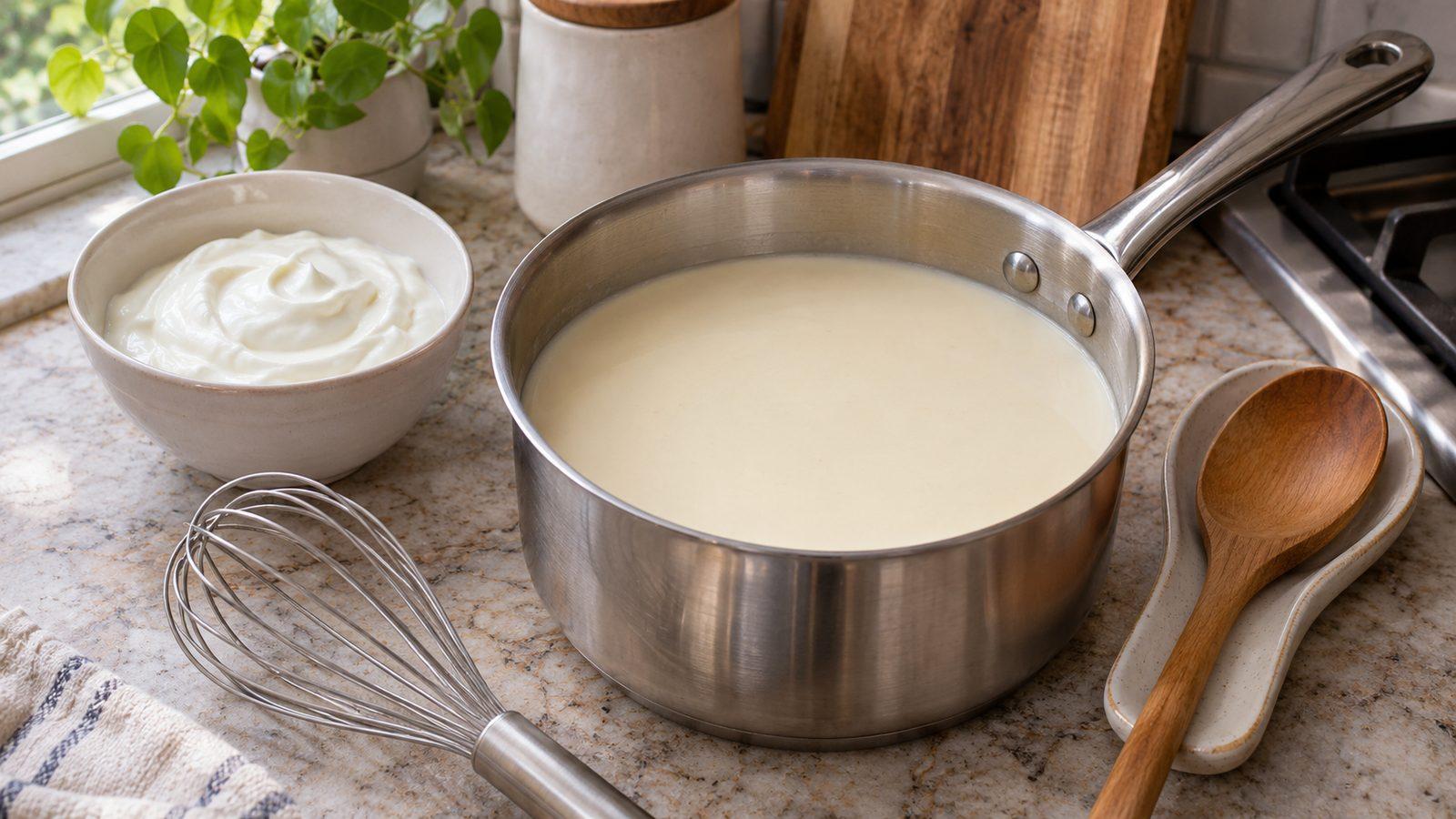
Whisk yogurt separately, gradually add hot broth, then stir it into a pot that is no longer boiling vigorously. Tempering reduces the abrupt temperature difference; aggressive heating afterwards can still spoil the texture. Yogurt thickness, flour and eggs change how a mixture behaves. This guide helps you apply your chosen recipe rather than replacing its quantities or cooking requirements.
Curdling, whey separation and spoilage are different
Look at the yogurt before cooking. A little liquid on its surface does not by itself mean it has curdled in your soup. Stir it smooth first, so you know whether the grains appeared during heating. In a split soup you may see pale flecks surrounded by thinner liquid. Comparing the starting mixture with the finished result is more informative than blaming every lump on temperature.
Texture is not a food safety test. A smooth mixture is not necessarily safe, and a damaged package or questionable storage history cannot be fixed with a whisk. Start with correctly stored ingredients and follow the manufacturer's instructions. The rescue methods below apply to food that was suitable to use but developed an unwanted texture during preparation; they cannot make spoiled food usable.
Prepare yogurt and binders for your chosen recipe
Full-fat yogurt is not permission to boil the finished soup hard. Strained yogurt is thicker and may resist dispersing if added as a lump. Whisk it with a little cool or lukewarm liquid reserved from the recipe until it pours evenly from a spoon. Reserve that liquid from the total quantity: adding unmeasured water at every stage can leave the soup unnecessarily thin.
A flour-and-yogurt mixture is different from a roux cooked in fat. If the recipe includes flour, disperse it thoroughly before adding hot liquid, checking for dry pockets. Starch changes the texture, so do not substitute it for flour in equal quantities without a suitable recipe. An egg-containing mixture also needs a different safety check from an egg-free one. Decide on the formula before cooking rather than adding extra binders without a plan.
Temper with small additions of hot liquid
Take the pot off a vigorous boil and reduce or briefly switch off the heat. Place the yogurt bowl on a nonslip cloth. For a pot containing about a litre of cooked vegetable soup, start by whisking a few tablespoons of its liquid into the yogurt. Let each addition disperse completely before adding more. Pouring a whole ladle into the bowl at once can create hot spots even before the mixture reaches the main pot.
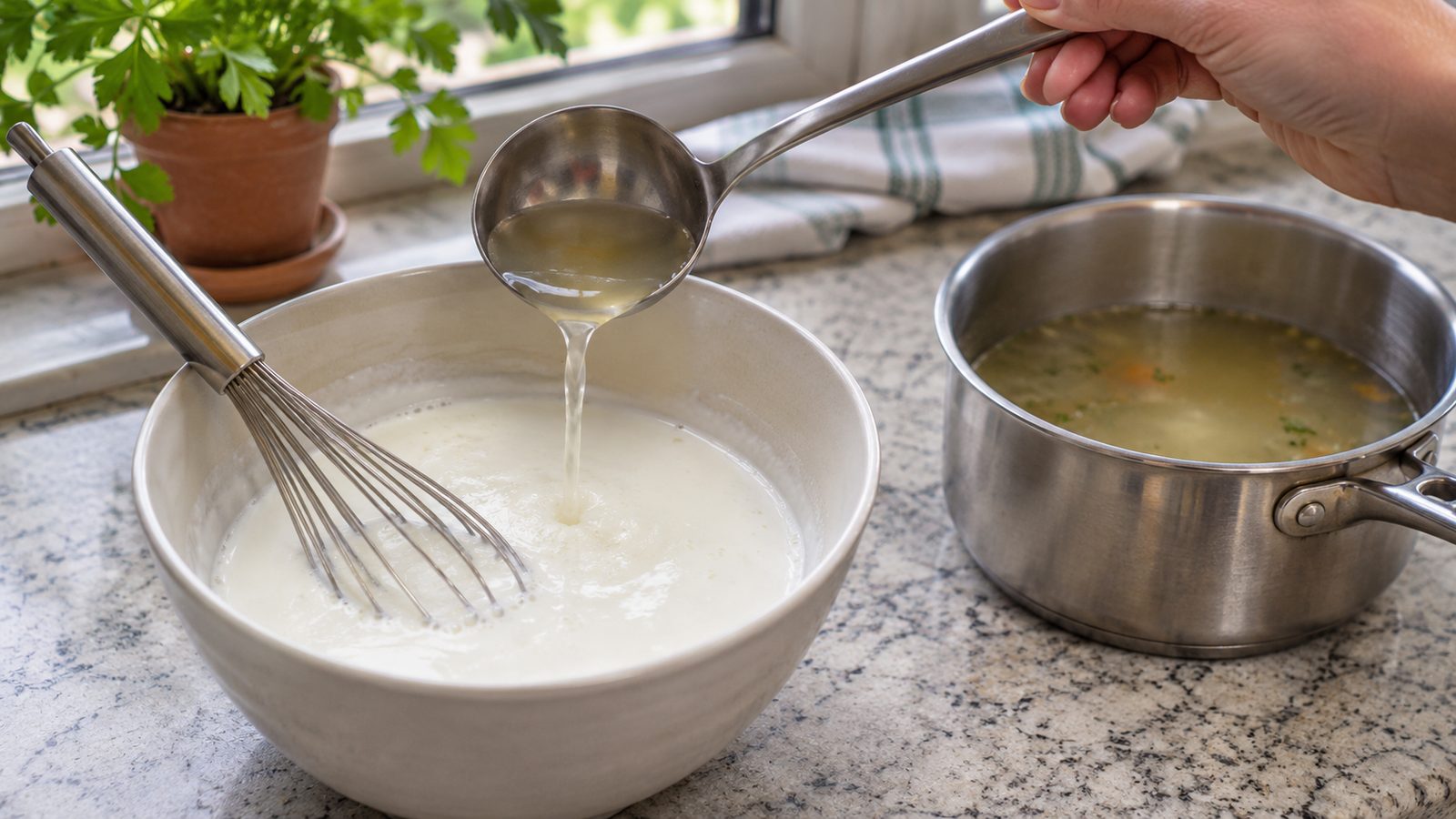
Continue until the mixture is warmer and more fluid, then add a little more broth. Pour it back in a thin stream while stirring the pot. With rice, chickpeas or vegetable pieces, use a spoon or spatula to move around the base instead of crushing everything with a whisk. The photograph shows this separate-bowl preparation, not cold yogurt being poured into a bubbling pan. Tempering alone does not finish cooking the mixture or prove that it has reached a safe temperature.
Control the final heating
Do not turn the heat straight up after adding the yogurt. Heat gently and stir around both the bottom and edges. Even a heavy pot can overheat locally when left unattended. A flour-containing recipe needs a cooking stage appropriate to that flour; visible steam does not establish that raw flour has cooked. For egg dishes, FDA advises 71°C measured with a food thermometer. Do not skip that measurement just to preserve a smooth appearance.
If you are adding only yogurt to an already cooked egg-free soup, complete the recipe's required heating and plan to serve; prolonged high heat adds no benefit. Trying a ladleful in a small separate pan is useful when changing yogurt brands. You need not return the test portion to the main pot. An acidic tomato or lemon base may behave differently from a plain broth, so avoid treating one successful trial as a universal guarantee.
What can be rescued?
At the first unwanted flecks, remove the pot from the heat. Check for a scorched base before stirring burnt material through the soup. In a soup without pieces, brief blending or straining may make the texture look smoother, but it does not rebuild the original yogurt structure. In a chunky dish the blender will also break up rice, vegetables or chickpeas; accepting slight graininess may be the better choice.
For the next attempt, record one variable: yogurt thickness, the liquid addition sequence or final heat level. Changing flour, eggs and yogurt amounts simultaneously makes the result hard to interpret. Sprinkling dry flour into the pot can add new lumps; another spoonful of yogurt does not automatically reverse splitting. The aim is to identify the stage that went wrong. The existing starch guide is useful when you need to choose a thickener deliberately.
İyi Bir Yemek
Food Researcher & Writer
Reader Comments & Contributions
Be the first to share your thoughts on this post