
Why Is Jam Runny? Balancing Pectin, Acid and Sugar
Understand runny jam through fruit, pectin, acid and sugar; learn a cold plate consistency check and what to review before attempting to remake a batch.

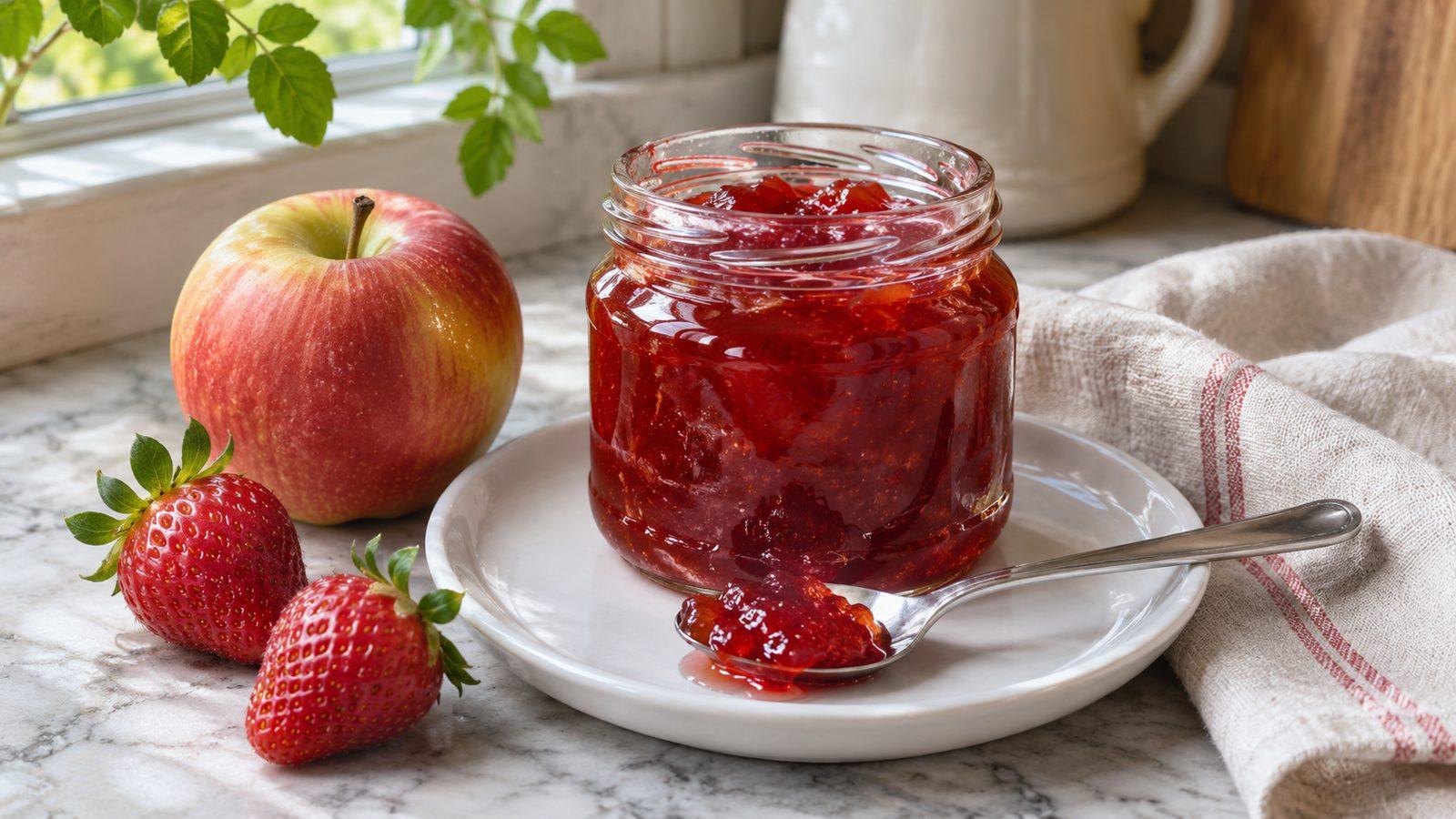
Jam can remain runny when fruit, pectin, acid and sugar are out of balance or cooking does not match the chosen method. Hot jam flowing freely does not by itself mean failure: judge the cooled texture. Adding more sugar or lemon to every pan is not a universal solution. Identify the recipe, fruit condition and pectin type, then decide using a small sample.
What pectin does and why fruit matters
Pectin occurs in fruit and helps form a gel under suitable conditions. Think of the spreadable structure rather than the fruit's aroma. NCHFP considers fruit, pectin, acid and sugar together. Equal weights of strawberries and apples therefore do not guarantee matching consistency. Apples and quinces behave differently from strawberries because their natural pectin differs, and ripeness also changes the result. Delicious, very ripe fruit does not necessarily thicken as readily in a recipe without added pectin.
Start by preparing and weighing the fruit exactly as the recipe specifies. Whole fruit weight is different from weight after removing stems, stones or peel. Record the fruit and its ripeness, prepared weight, pan and method. Changing one variable in a later batch makes the difference easier to interpret. Adding apple by eye to strawberry jam changes flavour as well as composition; it cannot replace a tested preservation method.
NCHFP · Jellied Product Ingredients
Why sugar and lemon should not be adjusted by eye
In conventional pectin recipes sugar contributes to gel formation as well as sweetness. Pectins designed for reduced-sugar spreads may use different instructions. Match the product on the packet to the one specified in your recipe. Liquid and powdered pectin cannot simply be exchanged in equal amounts or added in the same order. To reduce sweetness, choose a reliable recipe designed for that purpose; do not assume a sweetener behaves like sugar.
Acid needs the same care. Lemon is not an automatic repair, and excess acid can damage texture too. When bottled lemon juice is specified, do not substitute a guessed amount of fresh juice. For runny strawberry jam, first check whether all the sugar was measured and the pectin added in the correct sequence. For quince preserves, do not copy the strawberry recipe's sugar proportion just to imitate its spoon mark. Follow the chosen method rather than another jam's appearance.
NCHFP · Jellied Product Ingredients · NCHFP · Problems with Jellied Fruit Products
How to check a cooled sample on a plate
Chill a clean small plate before starting. Transfer a little boiling jam to it with a clean spoon; remove the pan from the heat during the check to prevent needless extra cooking. Once the sample cools, draw a short channel through it with the spoon's edge. Does it immediately run together like water, or hold a slight groove while moving softly? The photograph shows only the behaviour of a cooled sample; different preserves need not reach identical firmness.
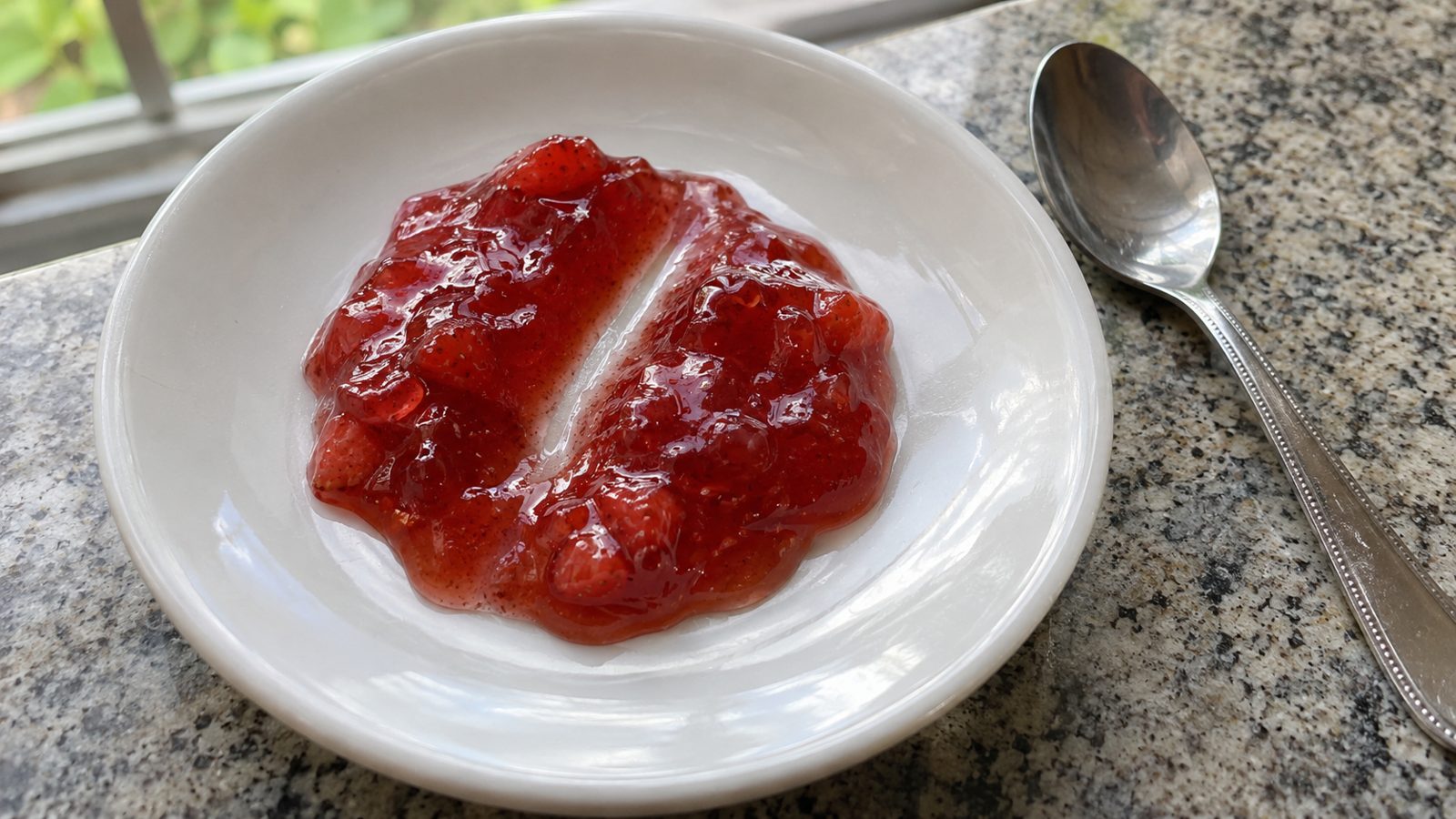
This observation can help assess cooking in a method without added pectin. With commercial pectin, do not extend the specified boil just to pass this test. Watching hot syrup on a spoon differs from judging a cooled sample. Endless boiling may weaken pectin, dull fresh fruit flavour or scorch the bottom. A set sample does not establish safe room-temperature storage: this is neither a food safety test nor a check of the jar seal.
NCHFP · Testing Jelly without Added Pectin
Decide before remaking runny jam
First evaluate the cooled result and the reliable recipe's advice on waiting. Do not immediately reboil a large batch. Compare fruit, sugar, added water, pectin and boiling technique against the original method. NCHFP has different remake instructions for liquid pectin, powdered pectin and products without added pectin; these are not interchangeable. Choose the applicable method and try a small batch before treating every jar the same way.
Soft texture alone does not require repair. A safely prepared and properly stored product may work as a yogurt sauce or a flowing fruit layer on dessert. Suspected mould, fermentation or spoilage is different: do not taste it or treat reboiling as a rescue. Shelf-stable home canning requires a validated process for the fruit, jar size and altitude. This guide is not a canning recipe that substitutes for those instructions.
Make the next batch more consistent
Measure fruit, sugar and pectin separately before cooking. A kitchen scale helps track prepared fruit weight. Record any change of pan: deep filling and enlarged batches can alter the boiling pattern expected by the recipe. Work at the recommended batch size rather than automatically multiplying it. Adding water or fruit during cooking while keeping the old time makes it difficult to track what changed.
At the end, ask whether the prepared fruit weight was correct, the pectin matched, the sequence was followed and the sample was cooled. These notes help distinguish recurring mistakes. Sugar crystals, an excessively firm spread and runny jam are different problems; adding lemon is not a shared solution. Small, recorded trials produce clearer lessons than unmeasured additions. Assessing fruit ripeness when shopping starts that record before the pan is heated.
NCHFP · Problems with Jellied Fruit Products
The guide to checking pear ripeness can also help when choosing fruit.
İyi Bir Yemek
Food Researcher & Writer
Reader Comments & Contributions
Be the first to share your thoughts on this post