
Why Do Cut Apples Turn Brown? Water, Lemon and a Fair Comparison
Understand enzymatic browning in cut apples, compare water and lemon treatments, and plan a simple observation without confusing colour with food safety.

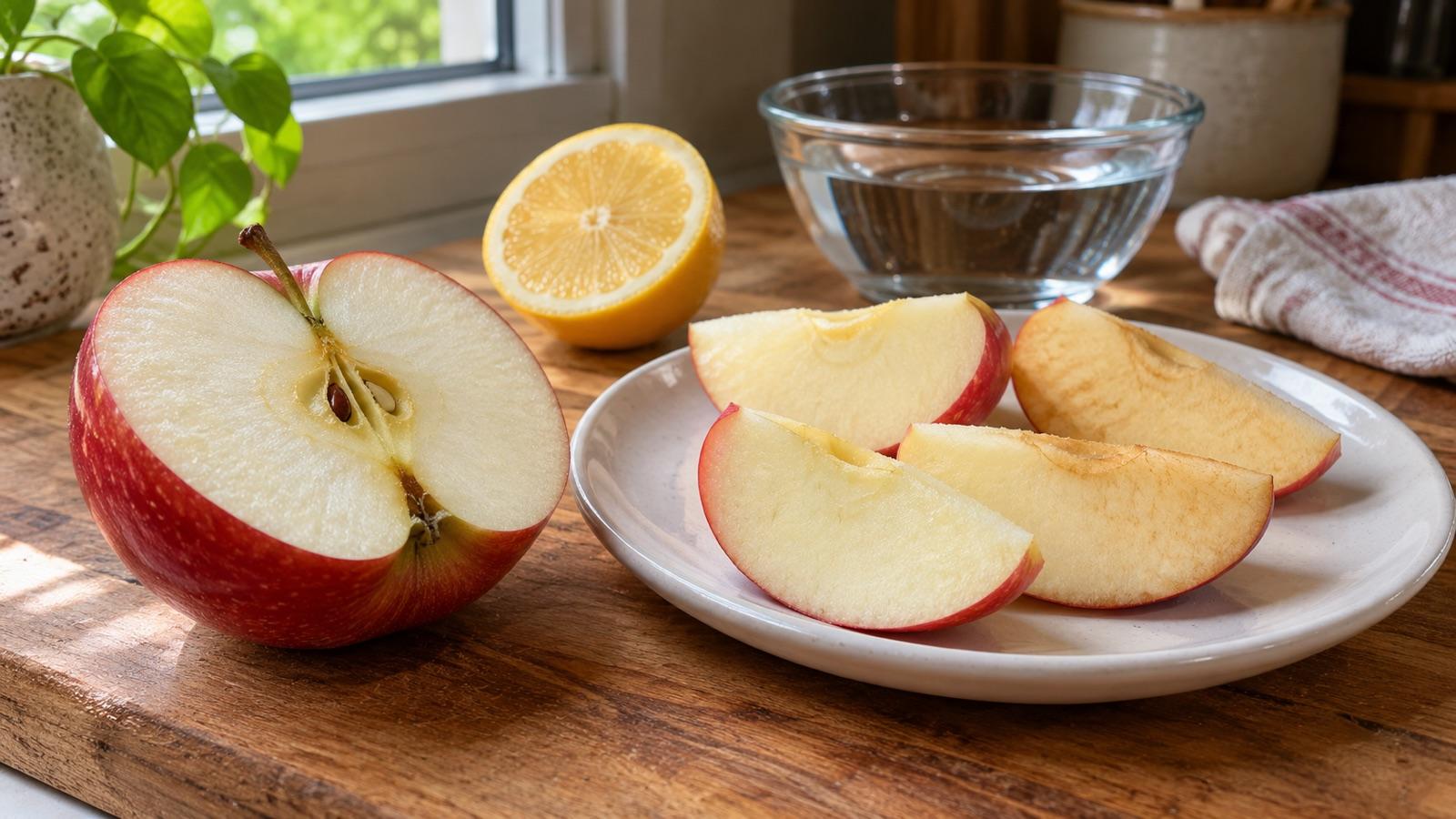
Cut apples turn brown because cutting disrupts their cells and allows enzymes, apple compounds and oxygen to interact. Lemon juice can slow this surface change; plain water mainly limits contact with air while slices stay submerged. Neither method sterilizes fruit. Choose a method for the intended serving time, flavour and texture, rather than expecting every apple to remain white for a fixed number of hours.
What changes when an apple is cut?
An intact skin helps protect the flesh. A knife exposes a new surface and damages cells, bringing naturally occurring polyphenols and the enzyme polyphenol oxidase, or PPO, into contact with oxygen. Subsequent reactions produce darker compounds. This is enzymatic browning, different from the browning caused by heat in an oven. USDA ARS identifies PPO as a principal contributor in fresh-cut apples. You do not need to remove the entire skin to see it: a bruise or a small cut can also expose damaged tissue.
The speed varies with the apple variety, ripeness, damage and preparation. A firm apple and an older bruised apple need not change at the same pace. Cutting thinner pieces also changes the exposed surface and makes comparison harder. Start with sound fruit, wash it before cutting, and use a sharp clean knife. Trim damaged areas; discard fruit that looks rotten. Pale flesh alone does not prove that fruit is safe to eat.
Set up a small observation without inventing results
For a practical comparison, use one apple and three identical food-safe bowls. Wash the apple under running water and dry it. Cut equal wedges, then distribute pieces from different parts of the apple between the groups. Leave one group untreated. Cover the second with plain drinking water. In the third, use 15 mL lemon juice mixed with 250 mL drinking water. These quantities define an observation mixture, not a validated storage treatment or a guarantee of a particular colour. Keep submerged pieces below the liquid surface.
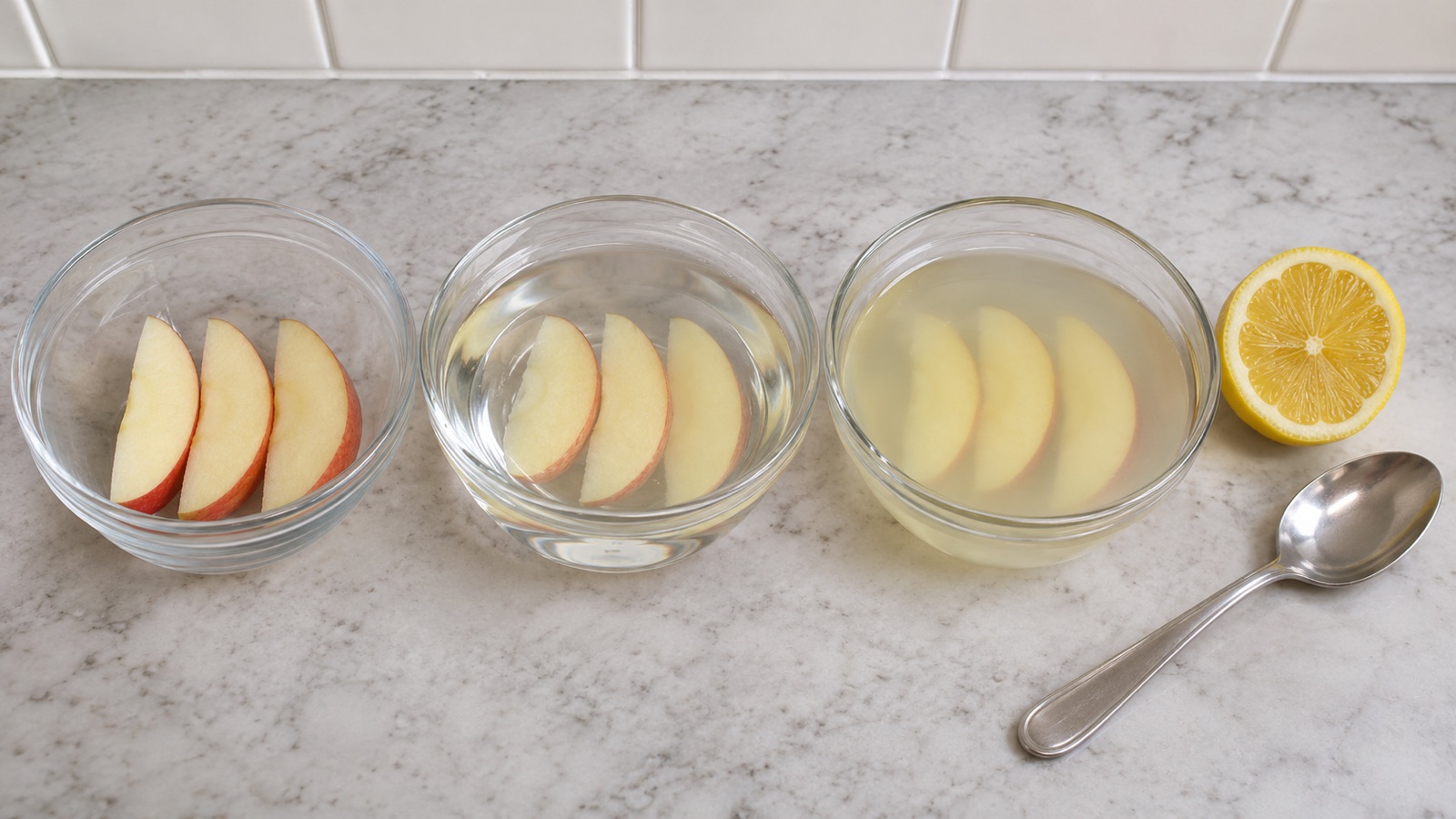
Record the starting time, apple variety, wedge thickness and liquid quantities. Photograph all groups in the same light at the start and after 15, 30 and 60 minutes, without exceeding safe handling limits. Compare colour on a white plate after briefly draining a sample; different liquids can distort its appearance through glass. Write down what you actually see, including no visible difference. The accompanying generated image illustrates the setup only. This editorial team has not performed the comparison and reports no winning treatment or measured result.
Choose between water, lemon and cutting later
Plain water is useful during a short preparation task because a submerged surface has less direct contact with air. Once drained and exposed again, browning can resume. Drain and blot slices before adding them to a salad so that the dressing is not diluted. A long soak may change the eating texture or wash flavour into the liquid; do not use indefinite soaking as a substitute for planning. If an apple can be cut just before serving, that is often the simplest way to reduce the exposed time.
UC Davis recommends citrus juice to reduce browning. Lemon changes acidity and contributes compounds that influence oxidation, but its strength and flavour vary. Use a small batch first: a sour coating that suits a fruit salad may be unwelcome on a cheese board. Commercial food-grade anti-browning products are another option when used exactly as labelled. Never improvise with laboratory chemicals or copy an industrial research treatment into a home kitchen. The sodium chlorite treatment in the cited ARS research is not a household recommendation.
Keep colour decisions separate from safe handling
A pale slice can still be contaminated, and a brown surface alone does not diagnose spoilage. A lemon dip is a colour-management step, not disinfection. FDA advises washing produce under running water without soap, starting with clean hands and keeping ready-to-eat fruit away from utensils used for raw meat or fish. Use clean bowls and fresh drinking water. Do not reuse an observation bath for another meal or return handled demonstration pieces to a shared serving dish.
Prepare the serving portion separately from the observation samples and refrigerate cut fruit promptly in a clean covered container at 4°C or below. Keep any room-temperature comparison short: do not exceed 2 hours outside refrigeration, or 1 hour when the surroundings exceed 32°C. Stop sooner if cleanliness or temperature control is uncertain. Do not taste observation samples as a safety test; discard them afterwards. For the separate serving batch, consider flavour and texture when preparing it, using clean utensils.
FDA · Safe food handling · FDA · Produce safety
Troubleshoot the next batch and record a useful decision
If the lemon-treated group still darkens, check whether every cut surface met the liquid, whether pieces floated, and whether the apple was already bruised. Do not conclude that more lemon will always solve the problem; it can make the fruit unpleasantly sour. If the water group looks attractive but tastes diluted in a separately prepared serving batch, shorten the soak and dry it better. If photos disagree with your eyes, repeat the photographs under the same light before changing the preparation.
Can browning be reversed? A dip is best used before extensive discolouration; do not promise that it restores the original fresh state. Is one variety always best? Compare the apples you actually buy and the dish you intend to serve. Your useful record is a decision such as “cut later for this cheese board” or “use a light lemon coating for this fruit salad”, with preparation conditions attached. One apple comparison cannot establish universal storage life, nutritional value or food safety.
İyi Bir Yemek
Food Researcher & Writer
Reader Comments & Contributions
Be the first to share your thoughts on this post