
Which Kitchen Spatula Should You Use? Scraping, Flipping and Lifting
Choose the right spatula for scraping a bowl, flipping pancakes and lifting delicate fish. Check pan compatibility and learn how to avoid common mistakes.

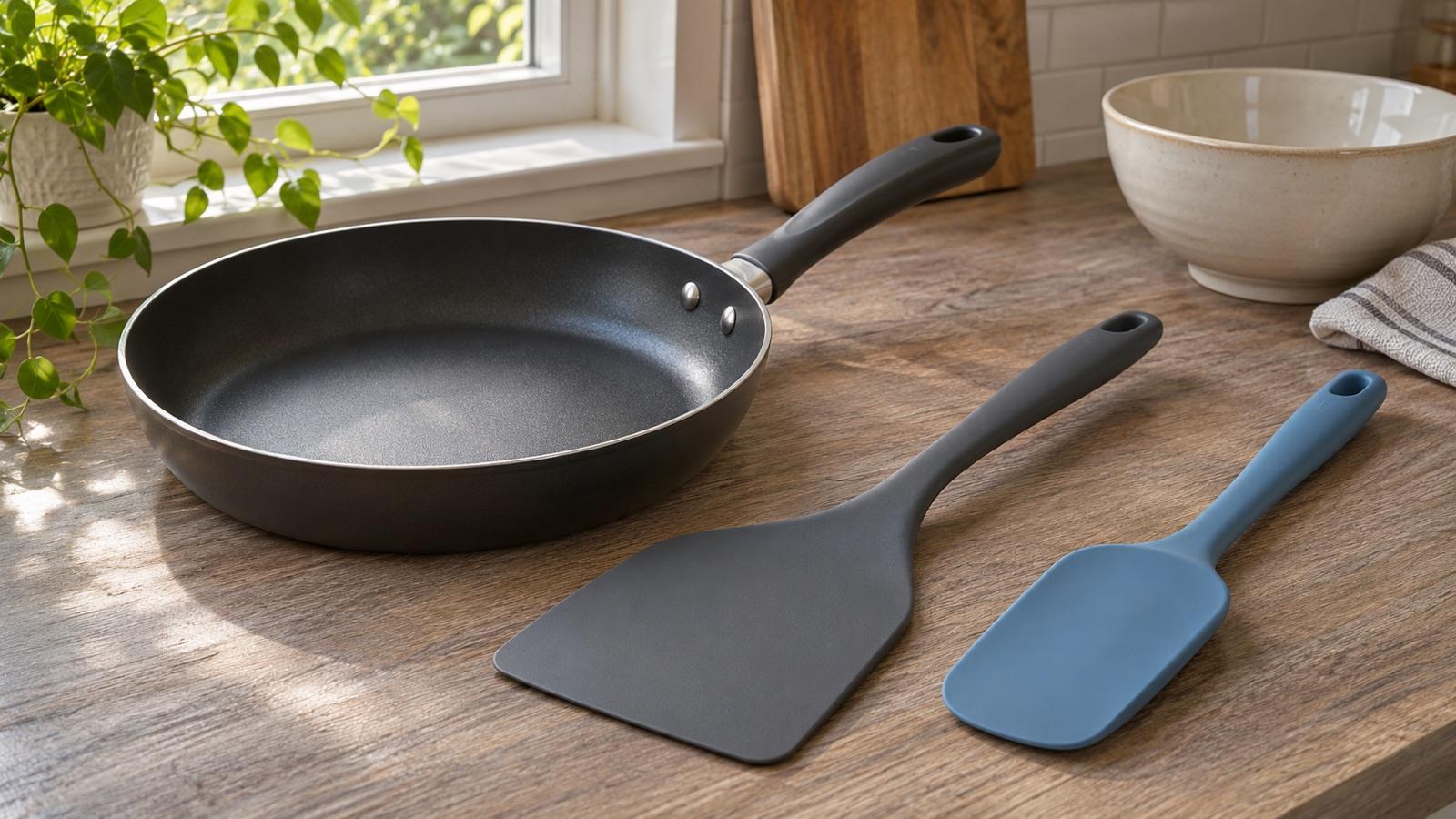
Use a flexible silicone scraper with a rounded corner to gather a mixture from a bowl. For flipping food in a pan, choose a flat turner with a thin edge. A long slotted fish spatula supports a delicate fillet from underneath, but use bare metal only on cookware that permits it. Start with the movement: are you cleaning the inside of a container, sliding under food, or carrying a piece intact?
How the blade shape changes the job
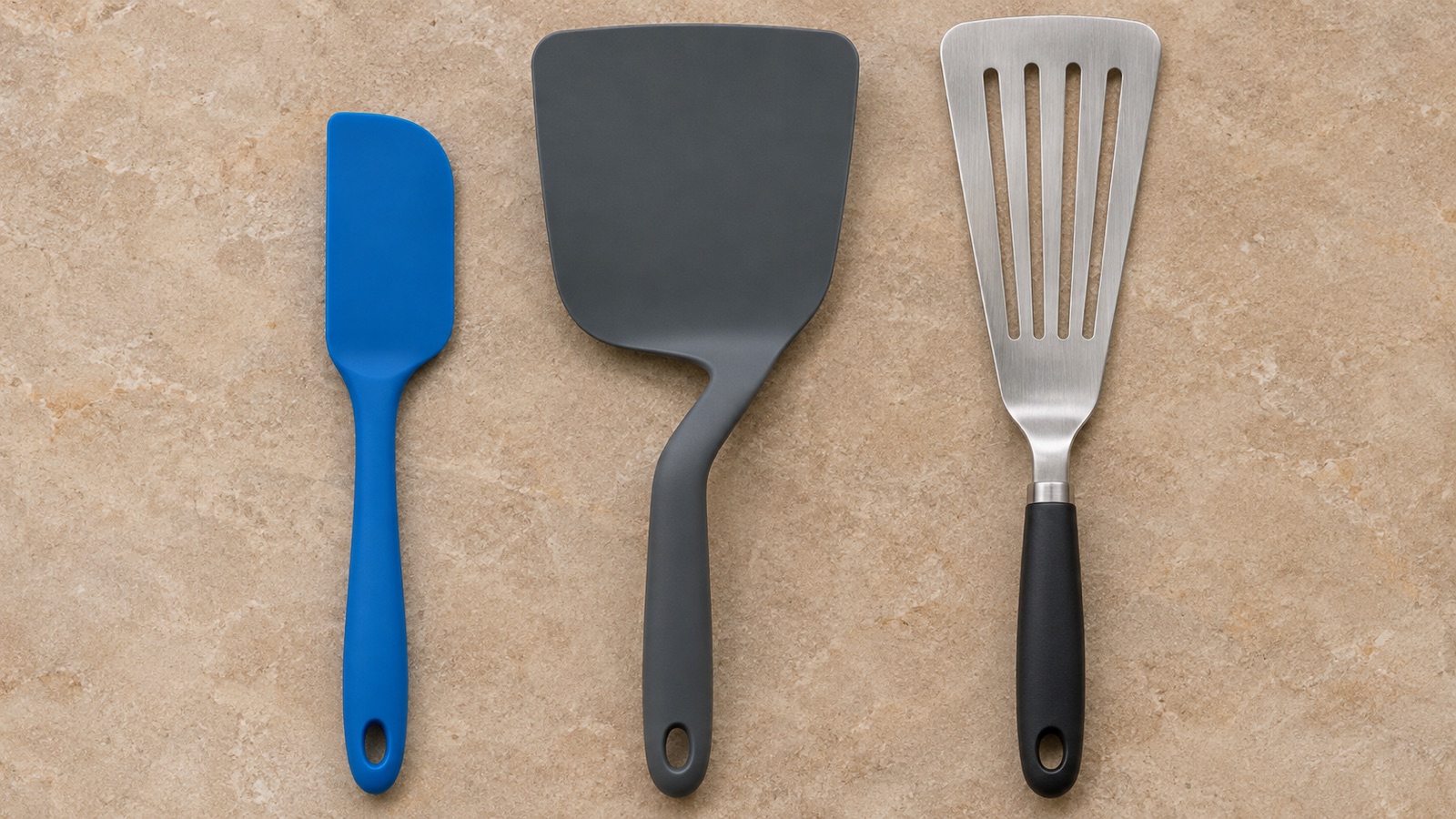
A scraper’s flexible lip follows the bowl’s curve under pressure and springs back when released. The square side works along a flat base; the rounded corner reaches up the wall. To gather thick sauce in a wide bowl, use the broad face. To reach below the shoulder of a narrow jar, choose a slim head. Silicone scraper examples shows a manufacturer’s examples for different container shapes.
A turner’s thin leading edge gets underneath food, while the stiffer body carries its weight. A broad solid blade limits the sag of something flat such as a pancake. A long slotted fish turner supports the length of a fillet and lets excess oil drain back into the pan; Slotted fish turner example shows that shape. Small pieces may fall through the slots. For finely chopped vegetables, a solid, slightly cupped blade is easier to use.
Check the cooking surface first
On nonstick cookware use silicone or another non-scratch head that the pan maker allows. A thin metal blade can slide easily and still be unsuitable for the coating. Check the manufacturer’s instructions for stainless steel or uncoated pans as well. A turner with a metal core covered in silicone is different from an exposed metal blade. Thin silicone-coated turner example illustrates how a thin edge and supporting core can sit inside silicone.
Read the heat limit on the utensil’s packaging; silicone tools do not all carry the same rating. Set the utensil on a spoon rest between uses instead of leaving it in the pan. If the silicone edge tears and exposes a hard core, keep that tool off coated cookware. When food clings, assess why it has stuck before pressing down to scrape it off.
Scrape a bowl and flip a pancake
To collect sauce, tip the bowl slightly. Lay the rounded corner against the side and draw it down. Rotate the bowl a little and repeat. On the last pass, lay the blade flat against the bottom and gather the sauce in one spot. Holding the tip upright leaves a narrow track and forces you to cover the same ground again. To remove seeds from a mixture, see Fine-mesh sieve and colander guide; a scraper only moves the mixture.
Before flipping a pancake, see whether the edge has set. Slide the thin blade almost parallel to the pan. When it reaches the middle, keep the pancake close to the surface and flip it with a short turn of the wrist. If the edge curls while the centre stays put, stop: the pancake may not have released, or the blade may need to reach farther. Wait a little and try from another edge.
Support delicate fish and heavy food
Slide the long blade lengthwise under a fillet so you do not lift it by the tip alone. Keep the leading edge close to the pan. For a long piece, support the far end with a second suitable utensil. Pause briefly to let oil drip through the slots back into the pan, then lower the fish close to the plate before letting go. For nonstick, use the same movement with a thin silicone-coated turner compatible with the pan.
An overly flexible blade can bend under a heavy vegetable patty and let it slip. Use a wider, stiffer turner or support it from both sides. If the pan is crowded, slide a piece onto a plate first and space the others apart. If a patty has begun to lose its shape, let the underside set before handling it again.
Think of two jobs before buying
Write down your two most frequent jobs. If transferring mixtures and flipping pancakes top the list, start with a medium scraper and a thin flat turner. In a small pan, the head should turn without hitting the sides; in a wide pan, the handle should keep your hand clear of the hot rim. If you rarely cook fillets, try supporting both ends with tools you already own before buying a fish turner.
In the shop or in a side-view product photo, inspect the leading edge. Look for gaps where food could collect at the handle joint and read the cleaning instructions. A stiff scraper misses the curve of a bowl; a floppy turner cannot carry a load. At home, try sliding the tool flat in a cold empty pan. This shows whether its handle angle catches on the rim before you have food to worry about. For a closer comparison, try both tools in the same empty pan. If the handle hits the rim before the blade lies flat, the thin edge will do you little good. Run the same tool around an empty bowl. If there is a gap, the corner does not fit that bowl. Those two checks tell you more than the material name alone.
İyi Bir Yemek
Food Researcher & Writer
Reader Comments & Contributions
Be the first to share your thoughts on this post