
Use By or Best Before? Reading Labels After Opening
Understand safety dates, quality dates and instructions after opening, with practical examples for milk, dry pasta, tins and home food planning.

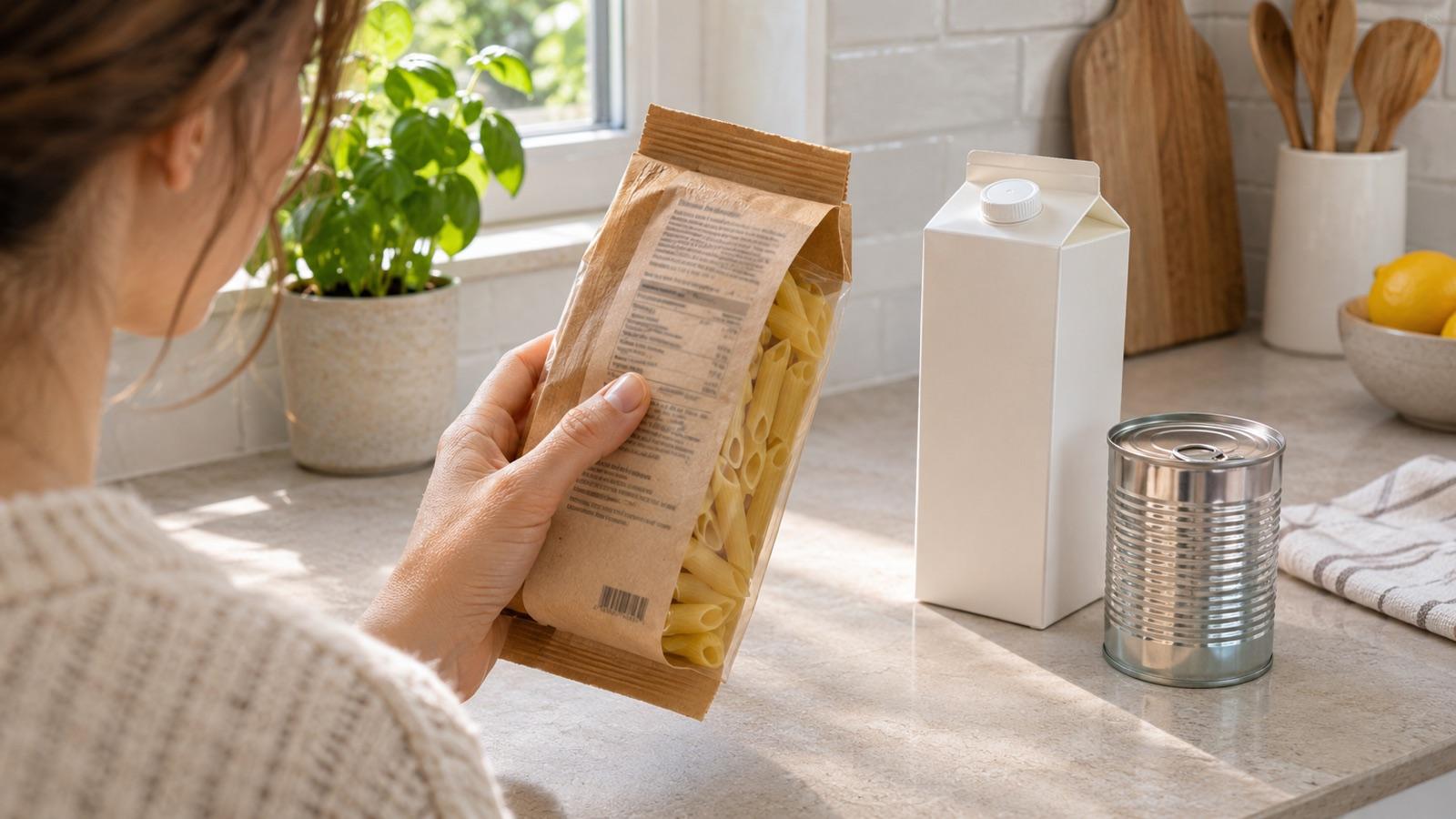
A use-by date concerns safety; a best-before date concerns quality under the stated storage conditions. Opening a pack introduces another instruction to follow. Read the date wording, storage conditions and package condition together. This guide explains Turkish STT and TETT labels; wording and legal meanings on products bought elsewhere should be checked with the relevant local authority.
Find the words before the date
Start by finding what the printed number means. A use-by date, a best-before date and a production date are different pieces of information. A production date does not establish the final safe consumption date, while a batch number supports traceability. The actual date may be stamped underneath or on a lid: follow any direction telling you where to look. If the print is rubbed away, choose another pack or ask the seller rather than guessing.
Read the day, month and year order as well. Imported products may use a different format. Similar-looking products on the same shelf can carry different date types. Do not classify a product by its name alone: milk processed in different ways can require different storage conditions. Reading the whole label prevents a rule learned from one package being wrongly transferred to another.
Tarım ve Orman Bakanlığı · STT / TETT
Do not smell-test food past its use-by date
Turkey’s Ministry of Agriculture associates STT with the safety of microbiologically perishable food. Do not consume food past this date or taste it to decide. Normal appearance and smell cannot rule out a hazard. For refrigerated pasteurised milk, “it smells fine” is therefore insufficient. Even before the date, the stated cold-storage conditions must have been followed. A printed date cannot compensate for incorrect storage.
Plan purchases around the quantity you can actually use. A larger pack is useful only when you can finish it under its instructions. At home, place nearer-dated products where they are visible rather than automatically moving the newest purchase to the front. If the storage history is unknown, do not declare food safe from the date alone. This guide does not calculate extra time for products whose cold chain has been broken.
Tarım ve Orman Bakanlığı · STT / TETT · EFSA · Food date labelling
Best before concerns quality: inspect the package too
TETT describes how long a properly stored food retains its characteristic qualities. Passing that date does not automatically make every product unsafe. With dry pasta, first consider whether the pack is intact, has remained dry and shows deterioration. Do not use damp, insect-infested or mouldy food merely because its label says best before. Appearance and smell cannot guarantee safety or exclude all risks when storage history is unknown.
With a tin, assess its condition alongside the date. Do not taste the contents of a swollen, leaking or clearly damaged tin; do not use it. An intact tin and a damaged one cannot be evaluated from the same date alone. Avoid universal claims that all food lasts a fixed extra period after best before. Composition, packaging and storage differ. If uncertain, seek product-specific advice from the manufacturer rather than inventing a new deadline from an unsourced internet chart.
Tarım ve Orman Bakanlığı · STT / TETT · USDA · Damaged cans
Opening creates a separate checkpoint
Opening changes the conditions that applied to a sealed pack. Read instructions to refrigerate after opening or consume within the stated period as carefully as the printed date. A distant use-by date does not give an opened product unlimited time. Instructions after opening do not extend a use-by date; respect both limits. Where instructions are absent, do not assign the same number of days to every milk, sauce or tin. Contact the manufacturer instead of deriving a deadline from this guide for food with an unknown history.
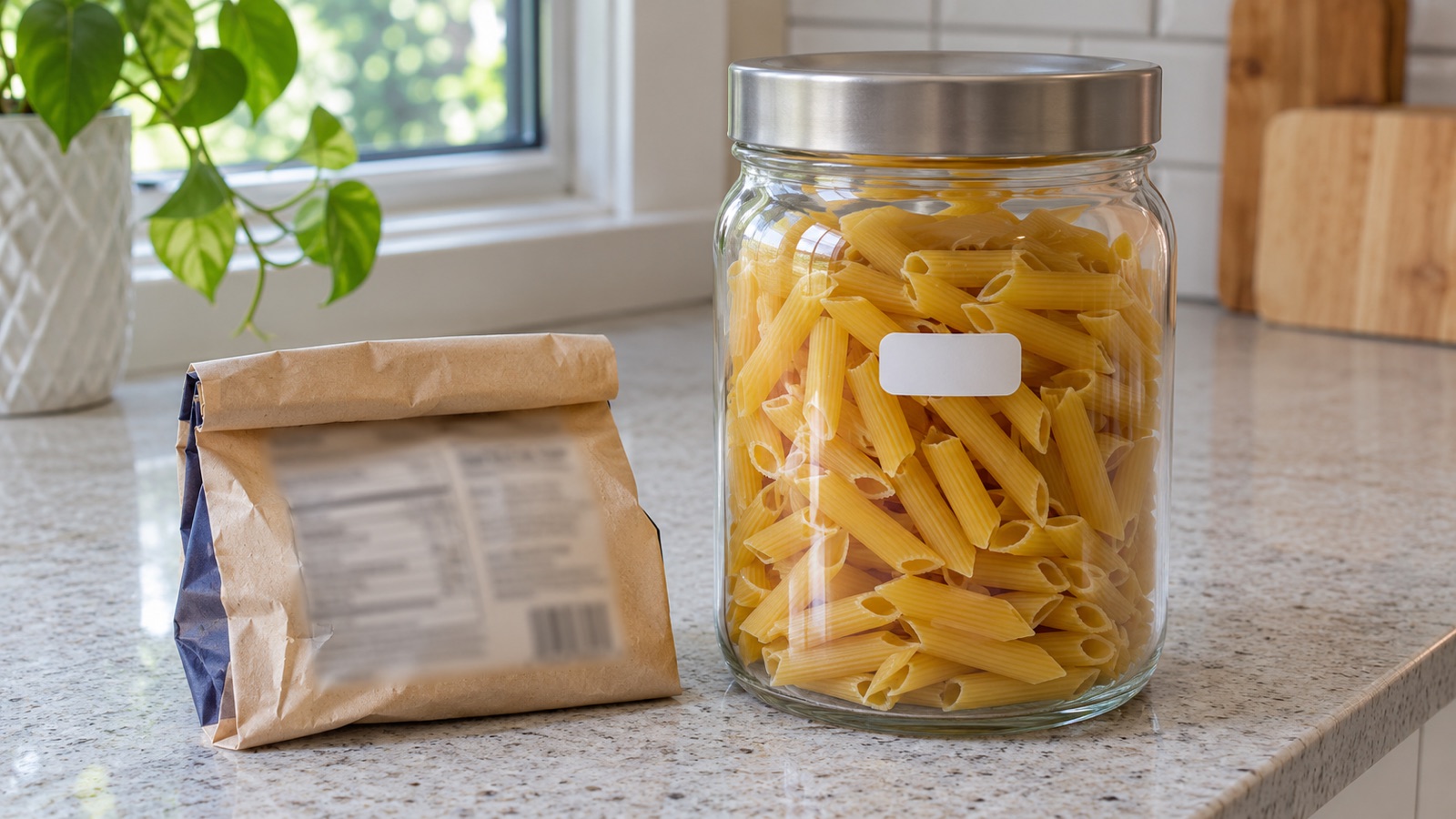
When transferring dry pasta into a jar, retain the part of the original pack showing the product name, date, batch and storage instructions. You may note the transfer date, but this does not reset the manufacturer’s date. Mixing remnants from different packets makes tracking harder. Finishing the older pack before topping up helps keep the information matched to the correct food. The photograph illustrates organisation, not a real storage period to copy from the sticker.
A practical decision sequence at home
Identify the date wording, find the date, read storage conditions, then check whether the packaging is opened and intact. Do not consume food past use by. For food past best before, assess its conditions and integrity without granting an automatic extension. For an opened pack, additionally follow the manufacturer’s instructions after opening. This sequence helps avoid judging pantry pasta and refrigerated milk by the same criterion.
List opened and nearer-dated products before adding purchases to your weekly plan. Missing dates or storage information should remain a question to resolve, not become a guess. “Can I eat it if it smells normal?” has no blanket answer: smell is unreliable past use by, and sensory checks alone cannot guarantee safety for best-before foods either. Keeping the label and following product-specific conditions can reduce waste without creating false reassurance.
Tarım ve Orman Bakanlığı · STT / TETT · EFSA · Food date labelling
İyi Bir Yemek
Food Researcher & Writer
Reader Comments & Contributions
Be the first to share your thoughts on this post