
How to Refrigerate Eggs: Cartons, Shelves and Dates
Keep eggs in their carton on an inside fridge shelf. A practical guide to washing, date tracking and cooked eggs, with official food-safety sources.

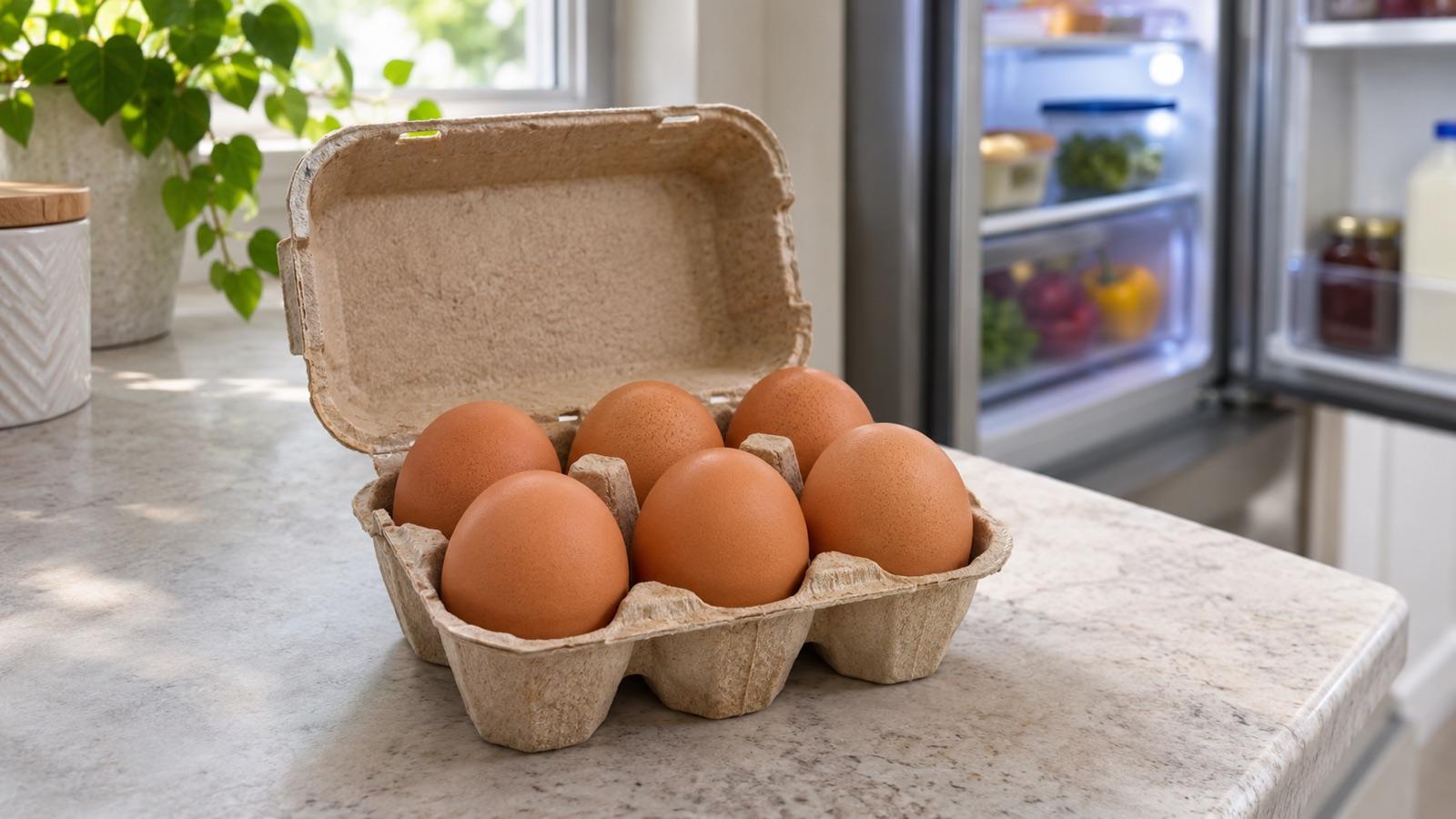
Refrigerate purchased shell chicken eggs promptly, unwashed and in their original carton on an inside shelf rather than the door. Aim for 4°C or below at home and follow the package date and storage instructions. Liquid egg products have separate rules after opening; this guide concerns shell eggs.
Keep the carton and make shelf space
The carton keeps eggs together and preserves the label, making it easier to identify which batch to use first. Put it flat on a stable inside shelf. The door meets warm room air whenever it opens; FDA recommends keeping eggs inside the refrigerator rather than in the door. Check with a refrigerator thermometer instead of guessing from the control dial. Leave space rather than wedging the carton against the back wall or blocking an air outlet.
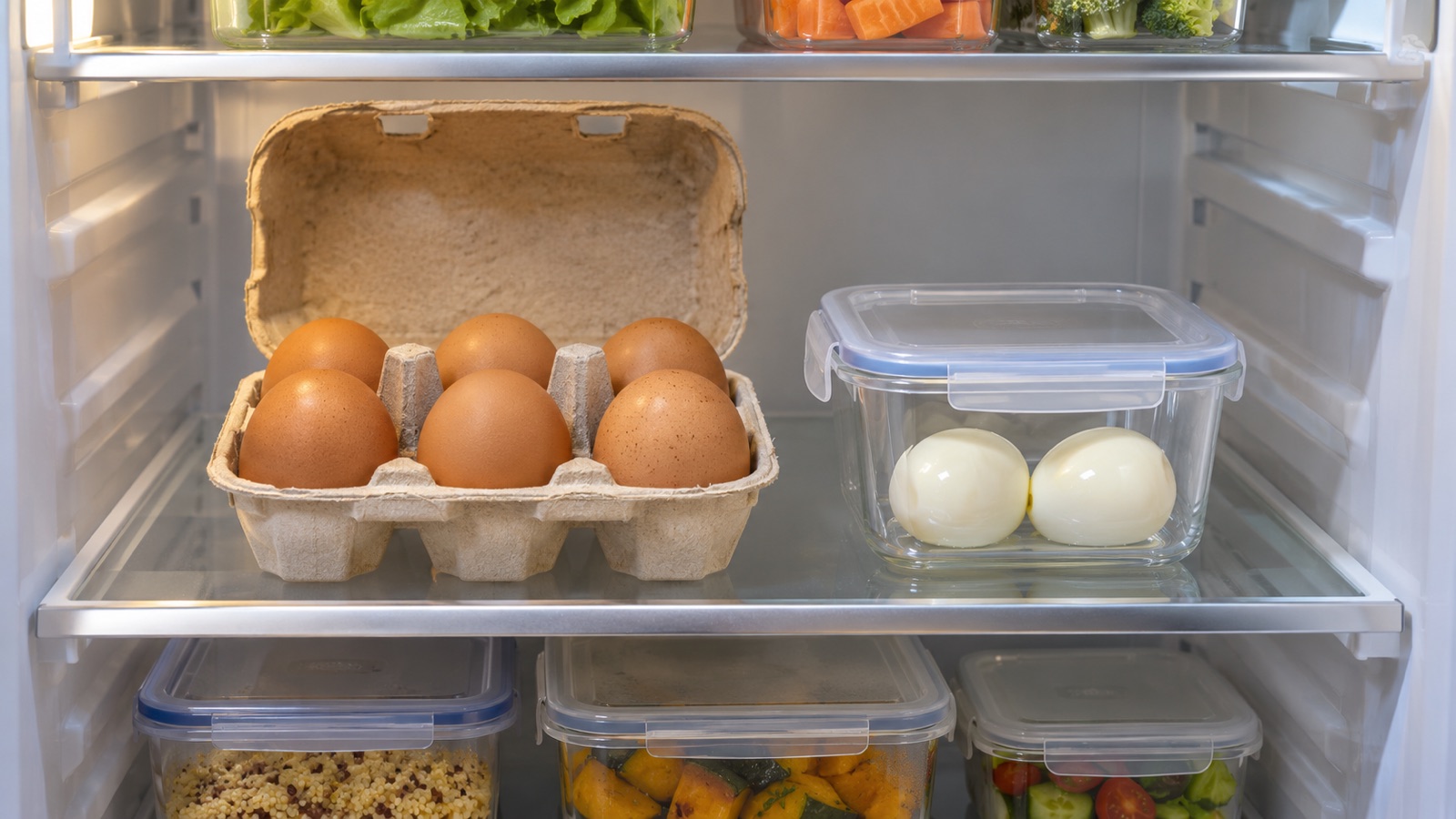
Unpack chilled groceries first. Put a newer carton behind an older one whose date is still suitable. Combining purchases in an unlabelled tray loses their history. If you prefer a reusable holder, choose a covered food-contact-safe container and retain the original label. Keep shells away from salad, cheese and ready-to-eat food; an egg carton is not a serving container.
Do not wash before storing
Turkey's Ministry of Agriculture and Forestry advises storing eggs unwashed in their packaging in the refrigerator. Home washing does not improve the shell's protective layer. Soaking a whole purchase, drying it and returning it to the carton is therefore not a useful preparation step. Avoid buying visibly dirty or cracked eggs and inspect the carton in the shop instead of planning to correct defects at home.
Keep shell handling separate from ready-to-eat preparation. Clean your hands, bowl and work surface after cracking eggs. For a cake, organise dry ingredients and measuring equipment first, then crack each egg into a small separate bowl before adding it. This can prevent a visible problem affecting the whole mixture, but an ordinary appearance does not prove microbiological safety. Do not leave shells inside the mixing bowl.
Tarım ve Orman Bakanlığı · Yumurta
Read dates without adding allowances
Start with the date and storage instructions on the carton. FDA's 3-week recommendation for refrigerated shell eggs concerns best quality; it is not an extension of the printed date. A purchase-date note can help, but keep the original information. Knowing only when you bought an egg does not establish its earlier storage history. Production, packing and use-by information describe different events.
With an older and a newer carton, use the date-appropriate older batch first; moving eggs into a new carton does not renew their age. Plan quantities for omelettes or cakes to avoid unnecessary purchases. Do not rely on placing an egg in water: USDA explains that floating relates to an enlarged air cell and does not by itself establish safety. Consider history, label and shell condition together.
FDA · Egg safety · USDA · Floating eggs
Track hard-cooked eggs separately
Raw and hard-cooked eggs have different storage clocks. FDA recommends using hard-cooked eggs within 1 week after cooking, whether peeled or still in the shell. Put them in a clean covered container labelled with the cooking date. Keep them out of the raw-egg carton so breakfast does not begin with handling every egg to identify it.
For eggs cooked on Sunday, label the container with that date; the raw carton's date no longer governs this batch. Do not leave cooked eggs or egg dishes at room temperature beyond 2 hours, reduced to 1 hour above 32°C. These are upper limits, not countertop targets. For work lunches use an insulated bag with an ice pack; sitting on a desk until noon is not refrigeration.
Take out only what you need
Remove only the eggs required. If a recipe requests room-temperature eggs, set aside that portion during preparation rather than warming the entire carton. Do not trust the appearance of cracked, leaking or questionably stored eggs. Refrigeration does not make every raw application safe; recipes served raw or undercooked need separate consideration of pasteurised products.
A daily check can be brief: is the right carton on the shelf, is its label readable, and are cooked eggs separate? Correct the actual problem first; buying another container is not always the answer. Organisation should make dates and quantities visible while keeping eggs cold. This guide cannot certify an individual egg remotely; package instructions and actual storage history must both inform the decision.
For organising frozen-food packaging see the freezer-burn guide.
İyi Bir Yemek
Food Researcher & Writer
Reader Comments & Contributions
Be the first to share your thoughts on this post