
How to Store Onions: Whole, Peeled and Cut
Keep whole onions cool, dry and ventilated; refrigerate cut onions in a covered container. Learn about dates, temperature and spoilage checks.

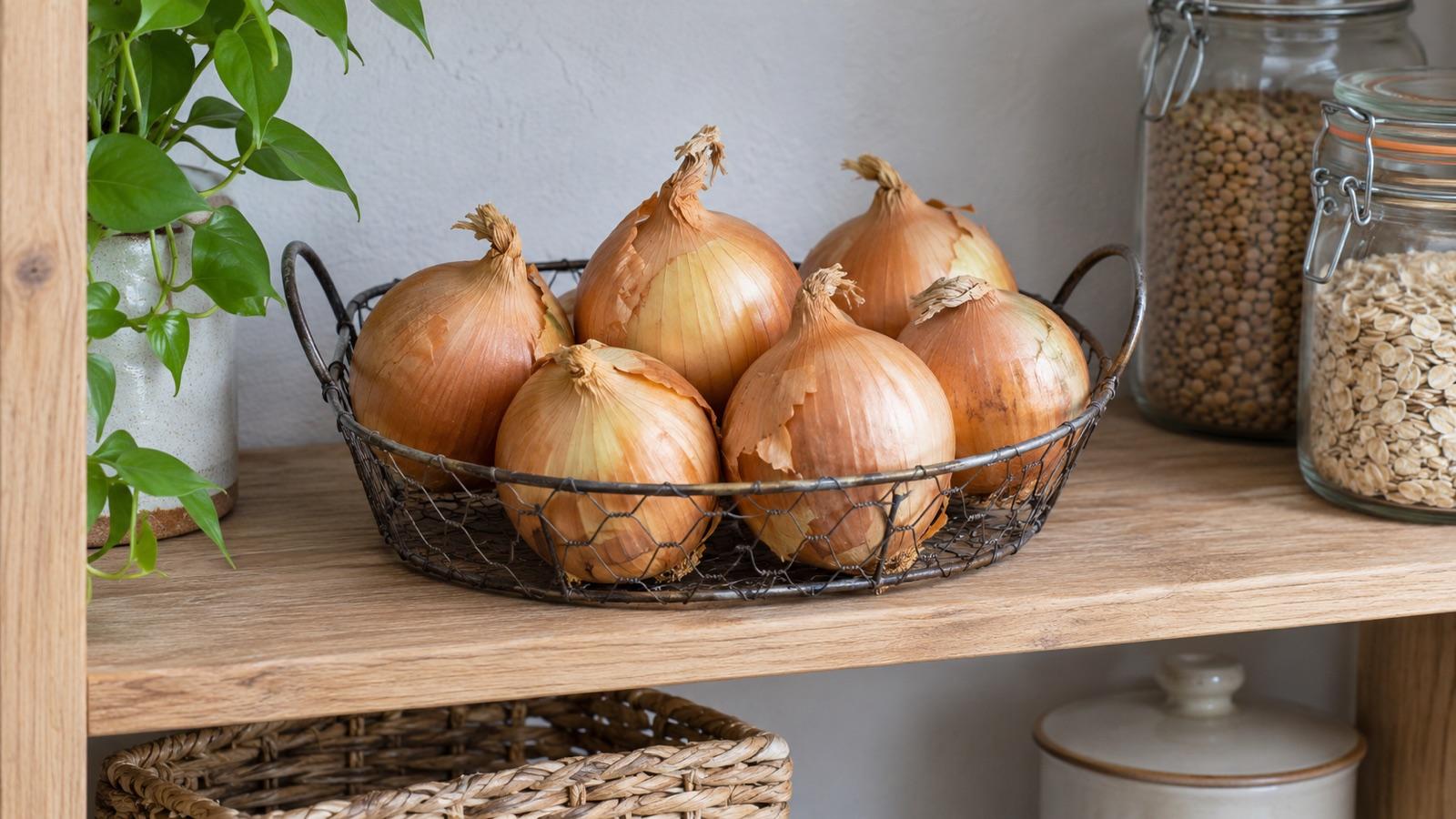
Keep whole onions with dry, intact skins in a cool, dry, ventilated place. Refrigerate peeled or cut onions in a covered container at 4 °C or below. These need different arrangements: a dry outer skin and an exposed, moist cut surface do not call for the same conditions. This guide covers bulb onions, rather than spring onions or cooked dishes containing onion.
Sort the onions by condition first
After shopping, inspect the onions on a dry surface before putting the bag away. Set aside firm bulbs with dry, papery outer skins and closed necks for storage. Keep damaged, leaking, mouldy or noticeably soft bulbs out of the sound batch. A little loose outer skin does not by itself mean an onion has spoiled; look at the integrity of the bulb and signs of wet decay. Colour alone cannot predict storage life: sweet, juicier varieties may behave differently from well-cured storage varieties.
Make three small groups: sound whole bulbs for storage, sound bulbs to prepare soon, and spoiled onions to discard. For example, an otherwise sound onion whose protective skin has rubbed away is better allocated to an upcoming meal than forgotten in the basket for weeks. For purchased peeled or chopped onions, follow the package instructions for refrigeration and use after opening. Those instructions should not be stretched to justify keeping a chilled product on the counter.
Colorado State University · Onions
Give whole onions air, dry conditions and a suitable location
Place dry bulbs loosely in a mesh bag, wire basket or ventilated crate. Choose a cool, dry location away from the floor and splashes. A leaking sink cupboard, dishwasher heat or steam from the stove can make an otherwise convenient place unsuitable. Avoid a closed plastic bag that traps moisture. Do not wash onions before storage; clean them when preparing them. Arrange the bulbs so you can inspect them and air can circulate, rather than creating a tightly packed pile.
Low temperatures and controlled humidity in university recommendations for long-term storage are different from the conditions in a warm apartment kitchen. Do not assume that storage periods of several months in a suitable cellar or commercial store apply to your counter. If you have no cool storage space, buy smaller quantities. A winter balcony also needs protection from rain, condensation and freezing; being outdoors does not guarantee suitable conditions. Keep the basket accessible as part of your weekly shopping routine.
Colorado State University · Onions · Iowa State University · Winter storage
Refrigerate peeled and cut onions
Prepare onions with clean hands, a clean knife and a clean cutting board. Put the remaining half or chopped portion in a clean, food-safe container, close the lid and refrigerate. The open-basket arrangement for intact bulbs no longer applies. A covered container protects the food and reduces the spread of odour in the refrigerator. FDA recommends a refrigerator temperature of 4 °C or below; check with a refrigerator thermometer rather than relying only on the control setting.
Refrigerate cut onions promptly, instead of leaving them out until hours after cooking. The general maximum is 2 hours at room temperature, or 1 hour when the temperature is above 32 °C; these are limits, not waiting targets. Iowa State recommends using refrigerated cut onions in a sealed container within 7 days. Count from cutting: adding freshly chopped onion to an older batch does not restart the clock. Follow any shorter instruction on a prepared product. Smell alone cannot establish the safety of an onion with an uncertain refrigeration history.
Iowa State University · Cut onions · FDA · Food storage
Create two separate storage arrangements
A practical setup is a small basket of intact onions in a dry cupboard, plus one dated container of leftover onion in the refrigerator. Put new purchases behind older ones and use the older sound bulbs first. Write the cutting date on the covered container. For example, do not label onion chopped on Monday evening as though it was prepared on Tuesday. If you need only half an onion, decide where the other half will go before you start, so it is less likely to be forgotten on the worktop.
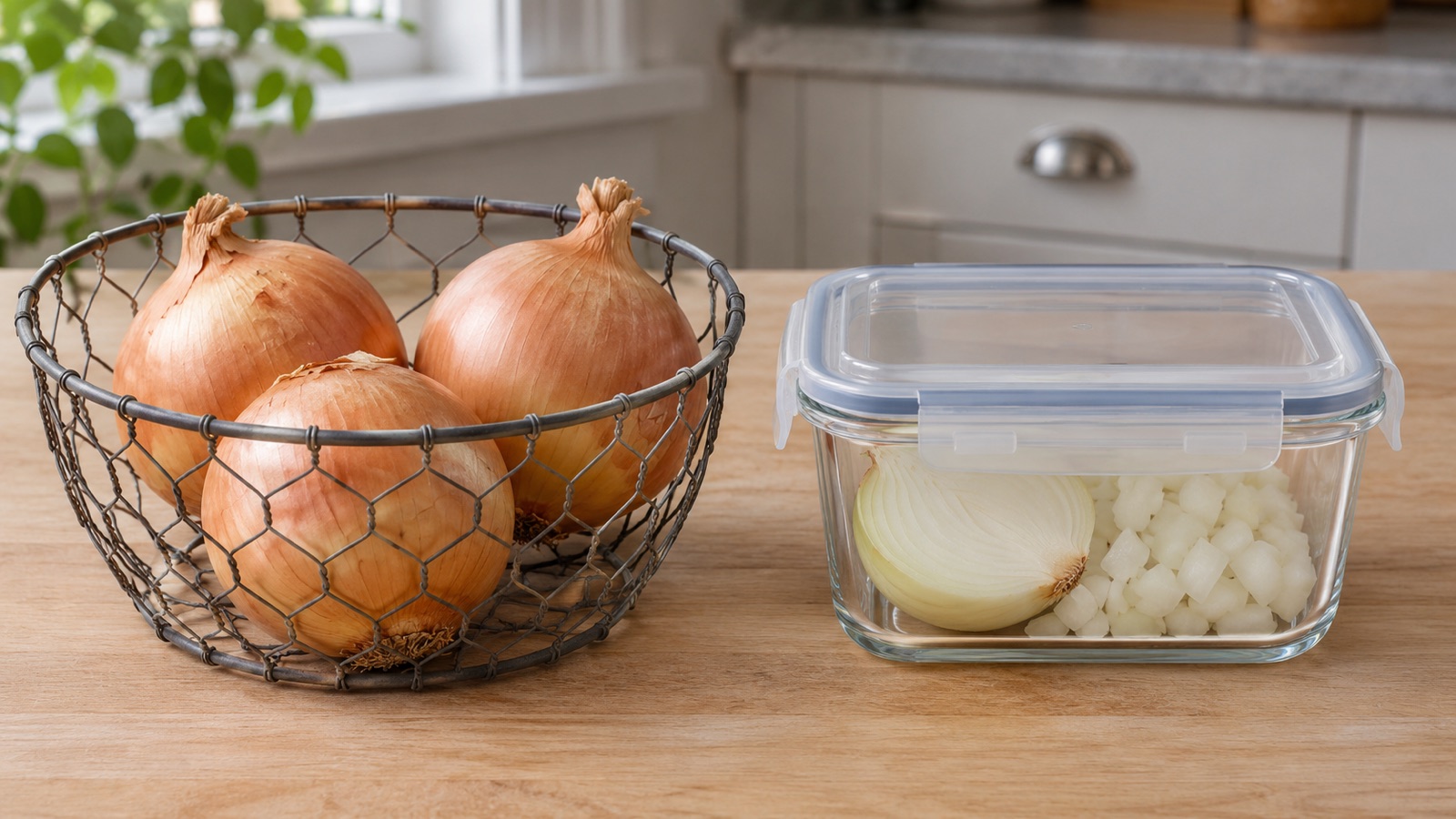
Choose a container that fits the leftover amount and closes properly, rather than a tall jar whose lid will not fit. A sealed jar for whole bulbs and an open basket for cut onion reverse the two needs. The photograph demonstrates the two container types; after this brief demonstration, the cut onion belongs in the refrigerator. Clean and dry the container completely before adding a new batch. No particular brand is needed: a sound lid, a clean surface and a known preparation history are more useful than decoration.
Correct recurring problems
If the bottom of the basket is wet, inspecting only the top bulbs is not enough. Take everything out, discard spoiled bulbs, and clean and dry the basket. If the problem returns, the location may be too damp or the basket too full. Discard onions with mould, leaking liquid or widespread softening. A cut onion can look normal without being safe; do not taste food to assess it after its time or temperature limits have been exceeded.
Base the amount you buy on actual use. Notice how many sound bulbs remain at each shopping trip and reduce the next purchase accordingly. A notebook or phone note is enough to record shopping and cutting dates. One universal number of storage days for whole onions would hide differences in variety, curing and household conditions. Keep the checklist simple: whole or cut, dry or damp, in a ventilated basket or covered refrigerator container, and when was it prepared? Let each answer lead to a practical action.
İyi Bir Yemek
Food Researcher & Writer
Reader Comments & Contributions
Be the first to share your thoughts on this post