
Net Weight vs Drained Weight: Compare Canned Food Prices
Learn which number to use on cans of chickpeas and jars of pickles, calculate the price per 100 g drained, and work out how many packages a recipe needs.

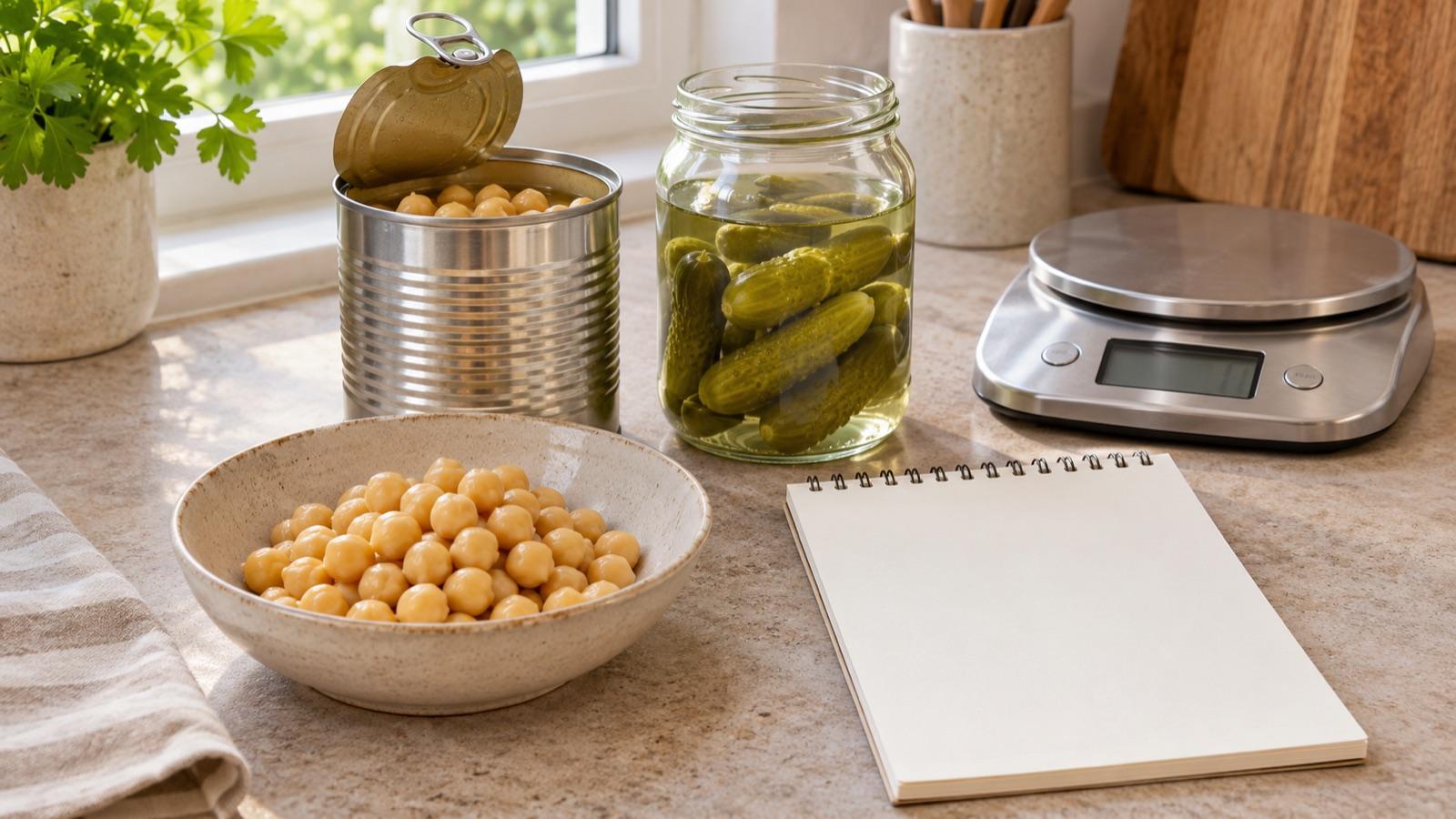
If you discard the liquid, compare prices using the drained weight: divide the package price by the drained grams and multiply by 100. Net weight excludes the package, but for a solid food sold in water or brine it generally covers both food and liquid. To choose the right figure, ask what part of the package is actually going into your recipe.
Find both figures on the package
The large number of grams on the front is often the net weight. Look on the side or back for “drained weight.” If a can says 400 g net and 240 g drained, the 400 g does not include the metal can. The 240 g is the declared amount of solid food after separating the liquid. Treat the 160 g difference as something other than chickpeas when planning your meal.
The Turkish food labelling rules distinguish solids from the water, brine or vinegar in which they are sold. That distinction does not automatically apply to something like chopped tomatoes, where you may tip the juice into the pan as well. If you use the liquid, check what your recipe specifies and compare products you would use in the same way. If there is no second figure, do not assume every can contains the same proportion of liquid. When shopping online, do not take the grams in the product name to mean drained weight. If you cannot see the back of the package, check the product description or the manufacturer’s listing. If it is still missing, compare only products with known drained weights; do not borrow another brand’s ratio. Put the amount you need on your shopping list so that you can recalculate when package sizes change.
Tarım ve Orman Bakanlığı — Etiketleme Kılavuzu · Türk Gıda Kodeksi — Resmî Gazete
Drain chickpeas to see the difference
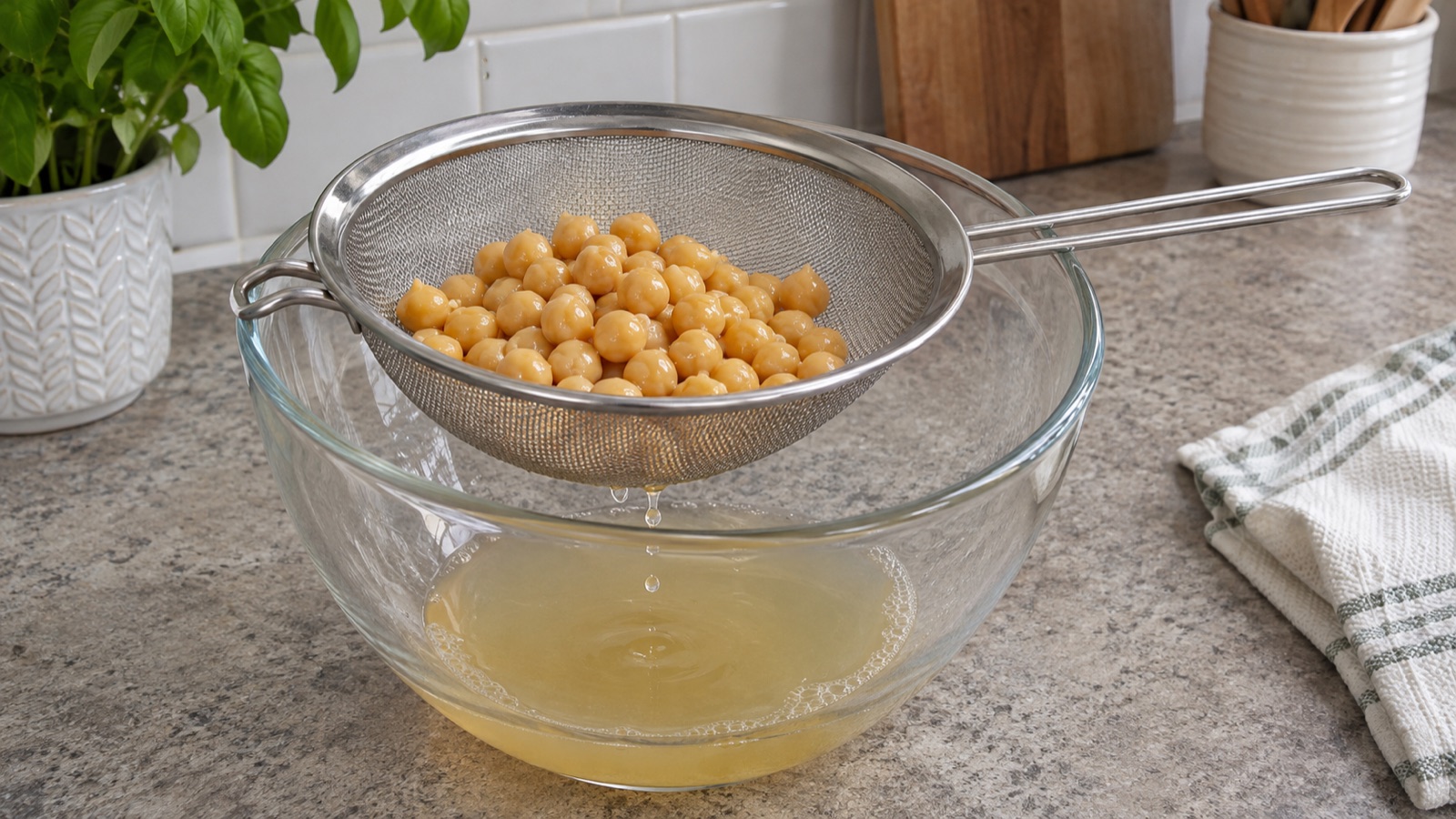
Set a metal sieve over a bowl and empty the can into it. Liquid collects below, while chickpeas stay in the sieve. Tare an empty plate on the scale, then weigh the drained chickpeas. If you plan to rinse them, take this first reading before rinsing; drain them again to portion them for the recipe. Do not count the wet plate or the sieve as part of the food.
This measurement tells you what is available from the particular can in your kitchen. The size of the mesh, the time you wait and drops clinging to the chickpeas can all affect the reading. One home measurement is not an official check of the label. Compare the same declared weight on unopened packages in the shop; use your actual drained portion in the kitchen.
Put both prices on a 100 g basis
Consider two hypothetical cans in a Turkish shop. A is 400 g net and 240 g drained and costs 54 TL. B is also 400 g net but has 280 g drained and costs 60 TL. When containers look almost the same size, a shelf unit price can mislead if you do not know what weight it uses.
For A, 54 ÷ 240 × 100 gives 22.50 TL. For B, 60 ÷ 280 × 100 gives about 21.43 TL. B costs more at checkout but gives you cheaper chickpeas per 100 g if you discard the liquid. Enter the price you will actually pay after a discount. If the deal requires two packages, use the combined price and combined drained weight. Round only at the end when the numbers are close.
Separate pickle weight from pickle count
Suppose a jar is 680 g net, 360 g drained and costs 90 TL. For the pickles you put in a sandwich, 90 ÷ 360 × 100 gives 25 TL. Using 680 g gives about 13.24 TL, including brine in the comparison. Even if you use some brine in a dressing, those figures answer different questions. Make a note of which one you are comparing.
Drained weight does not tell you how many pieces the jar holds. Whole little gherkins and chunky slices can weigh the same and cover different numbers of sandwiches. If you use 30 g of drained pickles per serving, 360 g gives 12 portions in theory. Trimming the ends or choosing only the crunchiest slices can reduce what you use. Look for a separate piece count if the number matters.
Plan how many packages to buy
If the recipe calls for 500 g of drained chickpeas, 2 cans of A give 480 g and fall short; you need 3. With B, 2 cans give 560 g. At the example prices the totals are 162 TL for A or 120 TL for B. Whole packages and what remains after cooking matter alongside the price per 100 g.
The decision can go the other way. If you need only 200 g and will not use the extra, a single can of A costs less even though B is cheaper per 100 g. First check whether the recipe specifies drained weight, then write down the grams required and the total you would pay. For products such as olives, read how they were cured as well; the same weight does not make dry salt cured and brined olives interchangeable.
İyi Bir Yemek
Food Researcher & Writer
Reader Comments & Contributions
Be the first to share your thoughts on this post