
How to Tell Fine and Coarse Semolina Apart
Read semolina labels, compare equal weights in water and choose the right grind for a creamy pudding or a crisp zucchini coating.

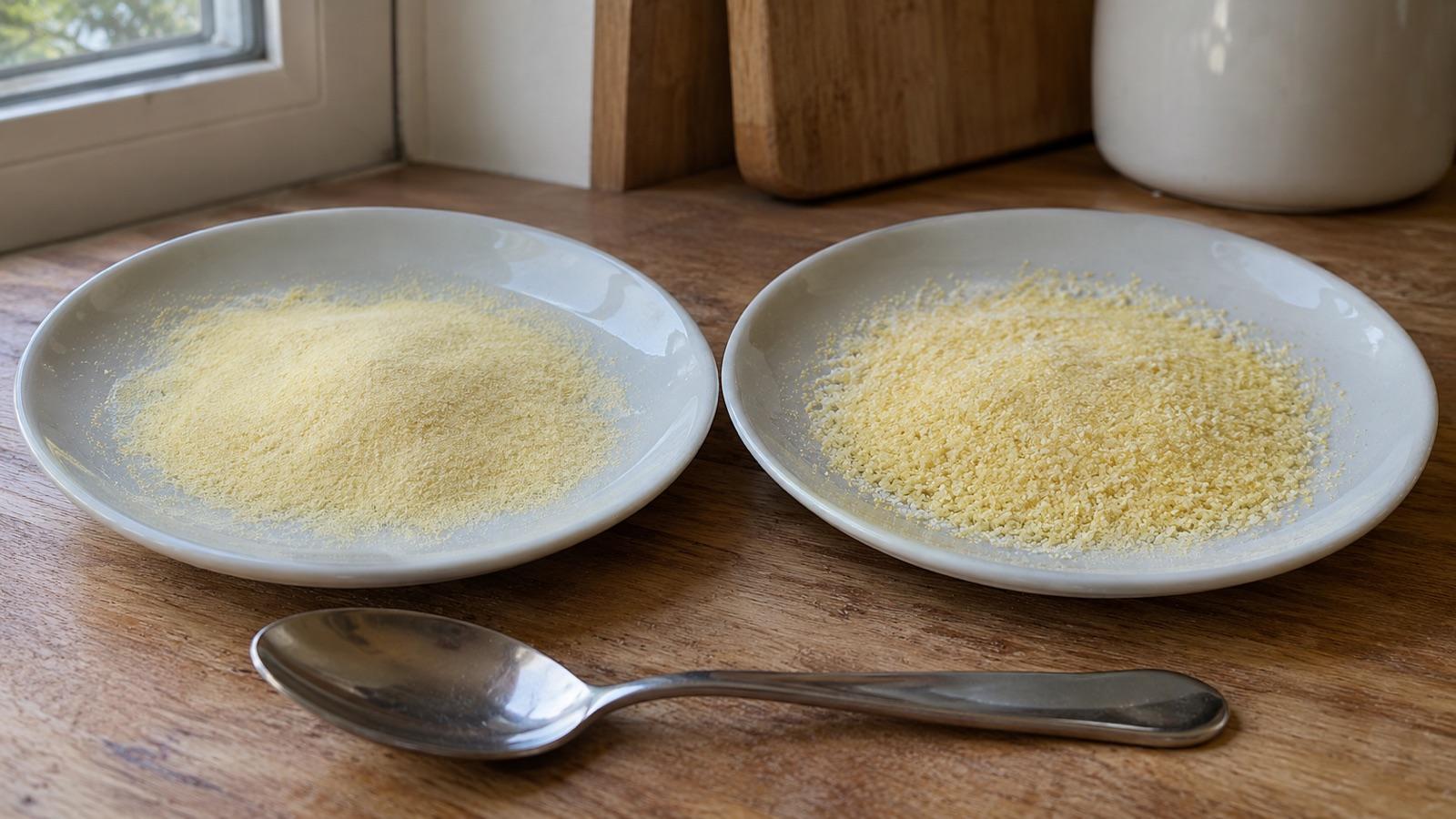
Fine semolina has smaller grains and generally gives a more even texture. Coarse semolina is easier to distinguish when dry and its grains may remain more noticeable after cooking. Start with fine semolina for a smooth milk pudding and coarse for a more textured zucchini coating. If the package omits the grind, spread a little on a dark plate and compare small samples under the same conditions.
Read the product name and grind on the packet
Look for durum wheat in the ingredients and for fine, medium or coarse in the product name. The French producer Le Renard sells extra-fine, fine, medium and coarse semolina made from the same type of wheat. Those terms are useful within a product range. Two brands that label a product fine may sell different distributions of grain sizes. If the packet is clear, examine the particles in the middle where you can see them well. Dust collecting along a seam gives a less representative view. Check the producer’s suggested uses on illustrated packs too.
Rub a few dry grains between your fingertips. Fine semolina feels like fine sand. With coarse semolina it is easier to pick out individual pieces by eye and feel them against your fingers. Colour can vary without telling you much about the grind. The Italian name semola rimacinata indicates remilled durum wheat. On packages marked semoule de blé dur in French, look for fine or grosse. Couscous packets may contain formed grains. Match the full product name to the recipe when choosing.
Groupe Panzani — Le Renard · Semolificio Loiudice — Semolina
Compare equal weights dry and in water
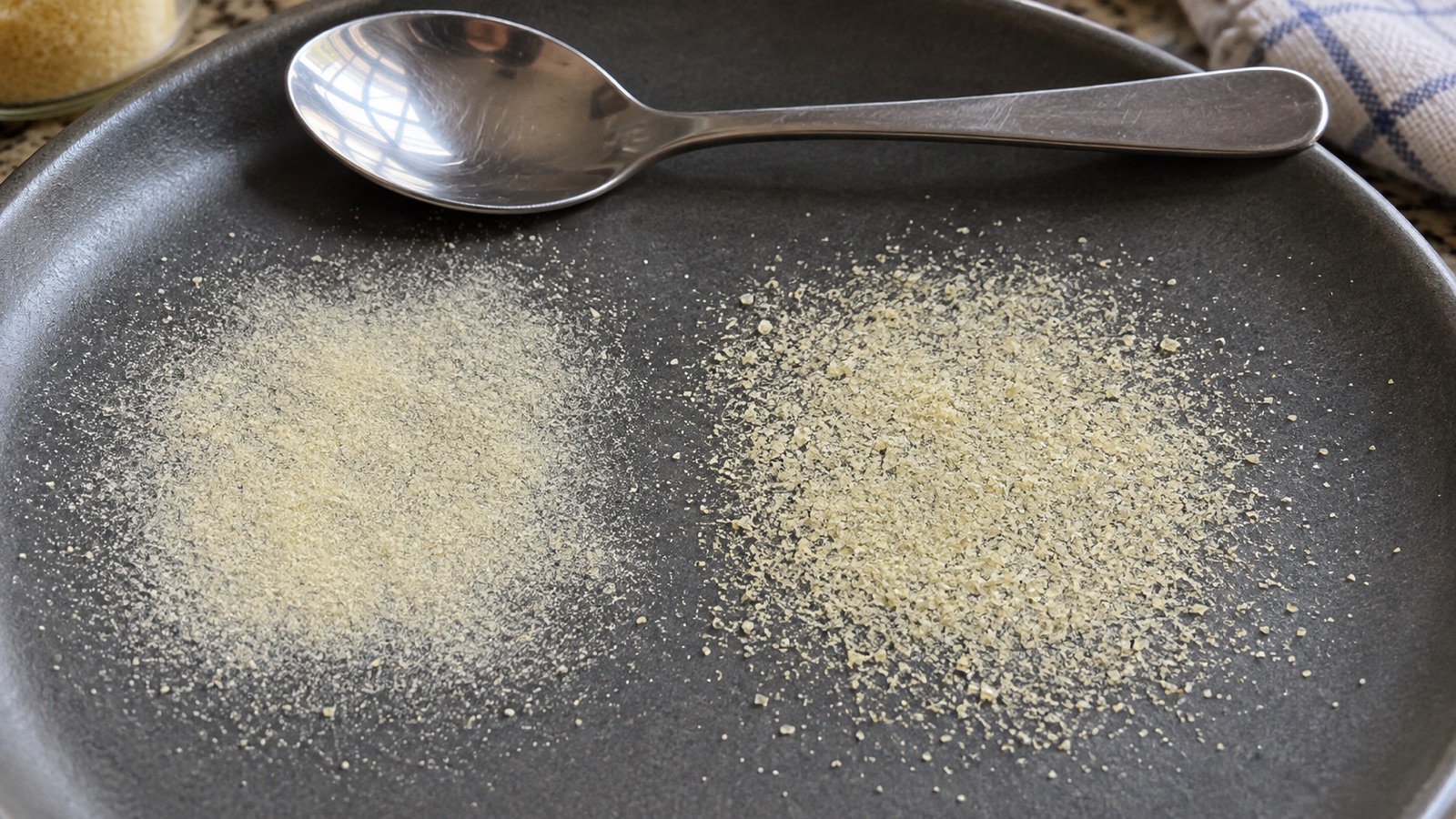
Spread a pinch from each package on a dark plate and keep the two samples apart. The fine sample has a denser-looking margin. Individual grains stand out more clearly around the edge of the coarse sample. Weigh 20 g semolina into each of two identical clear containers and add 40 g room-temperature water to each. Stir each for 10 seconds. Look at the surface and the grains on the bottom after 2 minutes and again after 10 minutes. Warmer water in one container or extra stirring will make it harder to compare the results.
Draw a spoon along the bottom and look at the texture on the back of the spoon. Note any free water, clumps and how easily you can still see the individual grains. The observations apply to those two products under those conditions. A study on pasta found higher measured water absorption in the finer fractions. The laboratory measure gives no cooking time for a milk pudding. Starch damage during milling and the temperature can also affect behaviour. Discard the raw samples after observing them.
Sissons et al. — Influence of Some Spaghetti Processing Variables · ETH Zürich — Water and Water Vapor Uptake of Semolina · FDA — Flour Is a Raw Food
Use a fine grind in milk pudding
For a small batch, sprinkle 25 g fine semolina into 250 g cold milk while whisking. Follow the cooking instructions on the packet. Stir over medium-low heat and reach into the corners of the pan. When the mixture begins to coat the back of a spoon evenly, put a small amount on a plate. Check which grains are visible in the warm sample and how quickly a line drawn with a spoon closes. Add sweetener and flavouring as called for in your recipe.
If coarse is the only grind you have, make a small batch with the same weights and assess the texture before taking the pan off the heat. If it thickens early while the grains are still firm, stir in a spoonful of hot milk and continue over low heat. Reduce the heat if the mixture starts catching on the bottom. The pudding can thicken as it cools, so check a sample near the temperature you plan to serve it at. Adding dry semolina as soon as the mixture thickens can leave clumps that still need time to soften.
Try both grinds in a savoury coating
Slice one zucchini into pieces of equal thickness and pat them dry. Put 15 g semolina on each of two plates, fine on one and coarse on the other. Apply the same light coating of oil to the slices and press them lightly into the semolina. Shake off the excess. Cook in the same pan at the same heat until both batches reach a similar colour and the zucchini is tender. Inspect the coating while hot. Fine semolina may form a closer layer, while coarse can leave more distinct bumps.
If coarse grains collect in thick patches, shake them off before cooking. Light finger pressure gives a more even coating than burying the slices in semolina. A fine grind is a good starting point for a light coat on thin slices. Here the semolina stays at the surface with little liquid available, so it behaves differently from grains cooked in milk. Use the same amount of oil and the same slice thickness for both batches.
Adjust weight and texture when substituting
If you cannot find the specified grind, weigh the semolina for the first batch. The same spoonful of fine and coarse grains can differ in weight. Start with the liquid quantity specified in the recipe. If the texture needs adjusting, add a small amount of liquid at a time and stir thoroughly before adding more. Keep a note of the weight, cooking time and texture after cooling when you switch products.
Remilled semolina is an option where the recipe calls for a fine grind. Try it in a small batch the first time. Flour, semolina and starch each give a different mouthfeel. Semolina grains can show up in a pan sauce where you want a glossy, smooth finish. Choose the package with the intended dish in mind. A spoonable pudding, a dry coating and a dough use different textures.
İyi Bir Yemek
Food Researcher & Writer
Reader Comments & Contributions
Be the first to share your thoughts on this post