
How to Read a Pomegranate Molasses Label in Türkiye
Check the name and ingredients on Turkish pomegranate molasses, verify a Hatay claim and measure a first batch of salad dressing.

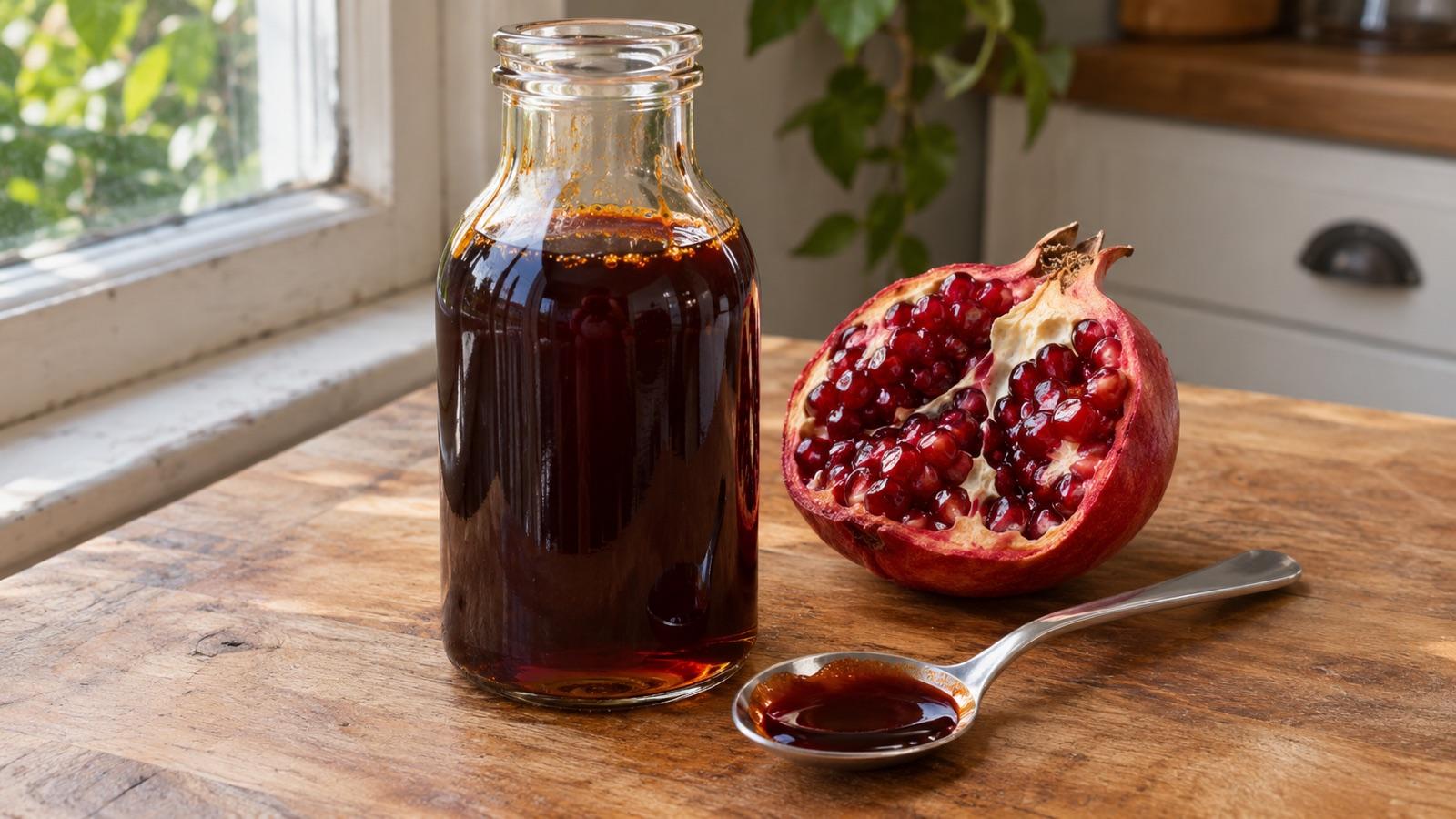
When buying nar ekşisi in Türkiye, find the name of the food first and then read any ingredients list. The Turkish Food Codex allows pomegranate, pomegranate juice, pomegranate juice concentrate and water. The dark colour, thick pour and fruit picture tell you little about what is in the bottle. Check the label in the shop and adjust the amount to taste at home.
Find the actual name of the food
Look below the brand or near the net quantity. The food name may be in smaller type than the branding. Read words such as “traditional”, illustrations and serving suggestions separately from that name. On a multilingual package, look for the Turkish food name for domestic sale. The rule described here applies in Türkiye. Elsewhere, check the local label of any product called pomegranate molasses or pomegranate sauce.
The Turkish rule also covers similar products marketed domestically in a way that makes them look like nar ekşisi. The ministry gives examples including pomegranate molasses-style sauces and pomegranate-flavoured syrups. Domestic marketing of those imitations is prohibited. A fruit picture alone does not establish that a product falls within the rule. Read the name and list together and consider how the whole pack presents the product.
Ministry announcement on nar ekşisi
Compare two example ingredient lists
Imagine two fictional labels. The first says “Nar ekşisi” and lists “pomegranate juice concentrate, water”. Both are permitted ingredients. The second uses the same name but lists “glucose syrup, pomegranate juice concentrate, flavouring”. The glucose syrup and flavouring fall outside the permitted ingredients. The concentrate itself is allowed. These examples illustrate how to read the list and do not represent a laboratory test or an official compliance decision.
Ingredients are generally listed in descending order by weight as used in production. Their order does not tell you how tart the finished product tastes. A single-ingredient food may not need a separate list when its name clearly identifies the ingredient. “Sugars” belongs to the nutrition declaration and can include the fruit’s own sugars. Go back to the ingredients to check for added sugar.
Food Labelling Regulation, articles 20–22
Look up a claim about Hatay
If the pack says “Hatay Nar Ekşisi”, search for the exact name on the Turkish Patent and Trademark Office’s geographical indications portal. Registration 1361 gives the registered name, the geographical area and production requirements. The specification describes eligible pomegranates, pressing and thickening the juice by boiling or under vacuum. Compare the name on the pack and any emblem with the registered name.
A place name, landscape or producer address on its own does not establish that the bottle bears the registered name. A plausible ingredients list also cannot establish that the producer followed local production requirements. The register tells you what to check. It cannot tell you whether the particular bottle in your hand passed an inspection.
Hatay Nar Ekşisi on the TÜRKPATENT register
Try a new bottle in a small salad
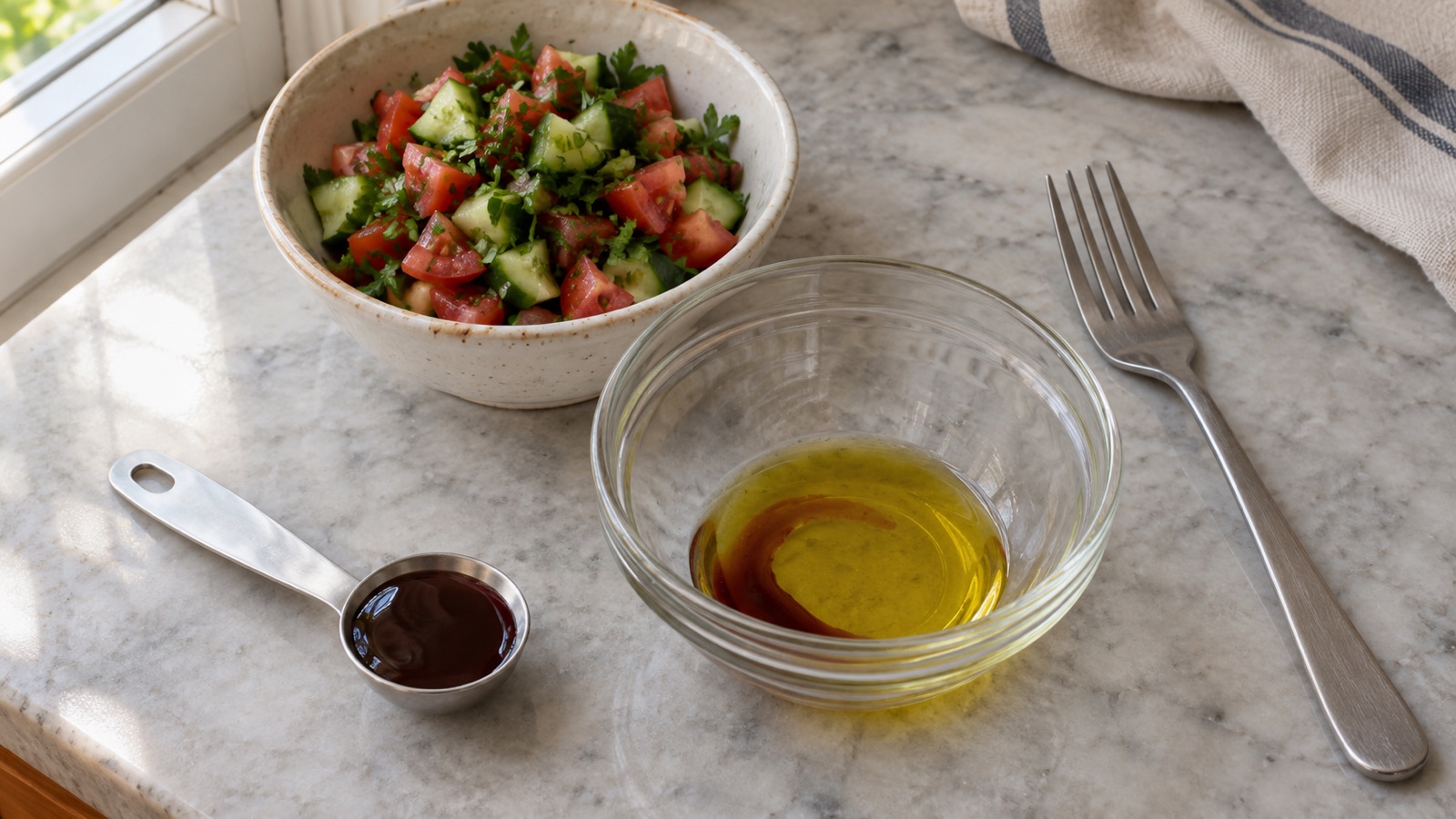
For a tomato, cucumber and parsley salad for two, stir 1 teaspoon (5 ml) of molasses into 1 tablespoon (15 ml) of olive oil with a fork. Try it on a little of the salad first. If the tomatoes are already tart, use less dressing. If the flavour is too mild, add half a teaspoon of molasses and taste again. This lets you adjust the balance before dressing the whole bowl.
To compare two bottles, split a batch of chopped vegetables into two small samples. Use the same quantities of oil and molasses in each. Notice tartness first and then the fruit flavour and sweetness that linger. A slower pour does not predict a sharper taste. The measuring spoon and mixing bowl in the photo show how to portion the dressing separately.
Make the final shelf checks
Compare net quantity and unit price on the same basis. Do not treat grams and millilitres as interchangeable. If you use molasses only occasionally, a small bottle makes an unfamiliar product easier to try. Check the seal, date and any instructions for storage after opening. If you cannot read the bottle, the shelf card gives you only part of the information. If both bottles list grams, divide each price by the net weight. A bigger bottle can cost more overall and still be cheaper per gram. For a first trial, mix only what you need and keep the rest in its original bottle as directed. Note the product and ratio if you want to repeat the salad.
Do dark colour and thickness prove quality? They can tell you how the dressing might look or coat food. They cannot establish the fruit used, the ingredients or compliance with a geographical indication. Read the name and ingredients first, look up the origin claim if it matters to you, then decide what suits your food by tasting a small portion. The same label-reading habit helps when choosing cocoa for a recipe.
İyi Bir Yemek
Food Researcher & Writer
Reader Comments & Contributions
Be the first to share your thoughts on this post