
How to Make a Sauce from Browned Bits in a Pan
Deglaze with water or unsalted stock, distinguish browning from burning, and adjust the finished sauce. Try the method with chicken or mushrooms.

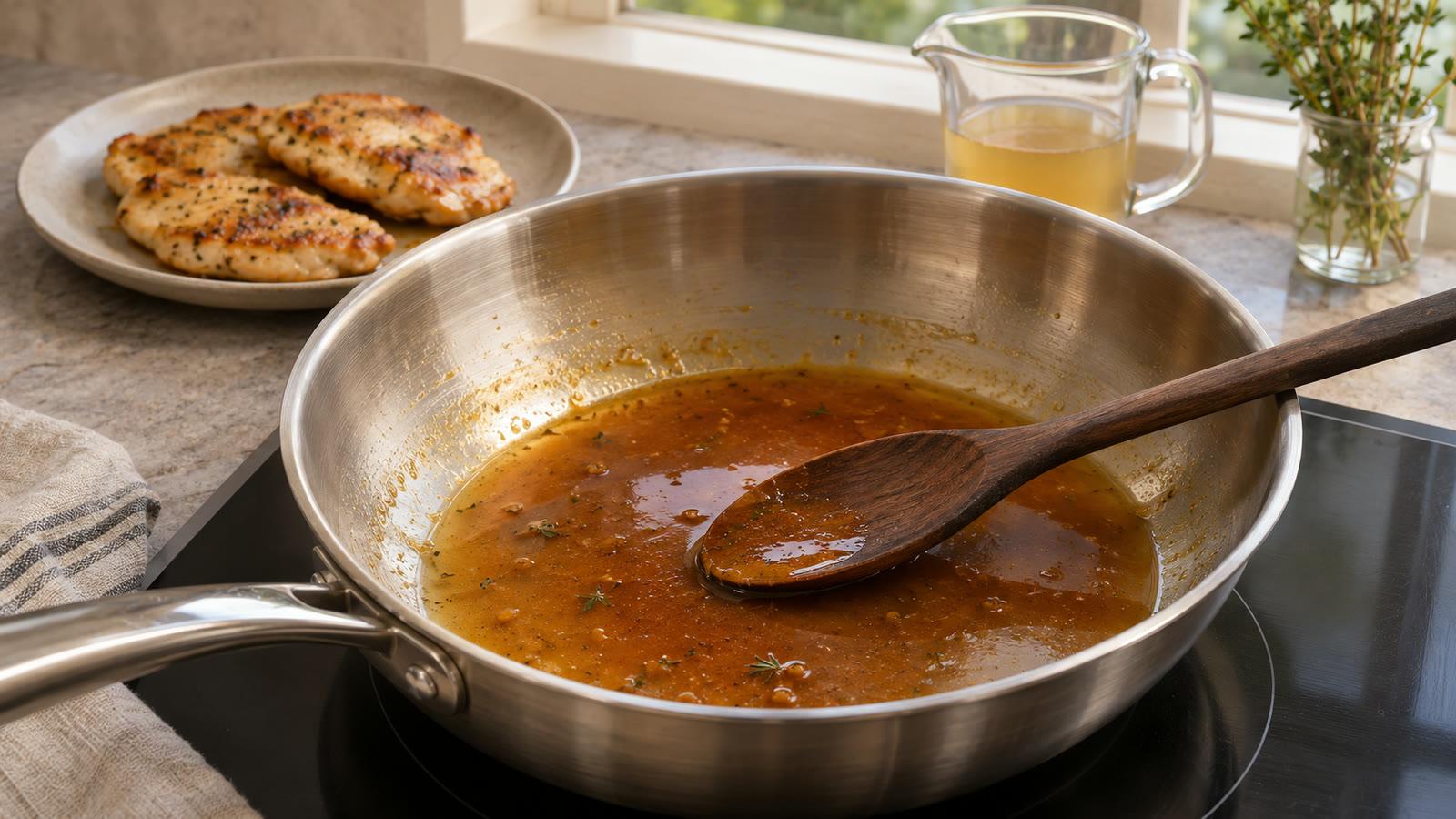
When savory brown bits cling to the bottom of a pan, transfer the cooked food to a plate and add just enough water or unsalted stock to wet the base. Loosen the bits with a wooden spatula, then simmer the liquid and taste it at the end. The first step, called deglazing in professional kitchens, carries the roasted flavor into the liquid. The next step, reduction, evaporates water so you can control how concentrated the sauce tastes and how well it coats a spoon.
Read the bottom of the pan
Where the food sat, look for patches the color of hazelnut shells and small, pleasantly aromatic brown pieces. These are the parts to save. If the pan smells sharply smoky and has broad black patches, clean it and make a separate sauce. Liquid also carries burnt flavor into the sauce. Color alone can mislead you. A marinade containing sugar can leave a dark residue that burns quickly as it sits on the heat. Check the smell and reassess the base before adding a second batch.
In stainless steel, both the color of the residue and the trail of a spatula are easy to see. Less residue usually sticks to nonstick cookware, so the choice of liquid will have a bigger effect on the sauce. Before wetting the base, spoon excess fat into a heatproof container. Leave the brown bits in the pan. If tilting the pan sends a thick layer of fat sliding from one side to the other, removing some now helps prevent oil pooling on the finished sauce.
The Culinary Institute of America — Mushroom Ragoût
For care instructions on different cast iron surfaces, see Choosing and caring for cast iron skillets.
Add liquid and lift the fond
For a skillet about 24 cm across, start with 90 ml of unsalted stock. Measure it and put it within reach before you begin. Transfer the food to a clean plate. If the pan is smoking, take it off the burner and let the smoke subside. Avoid pouring liquid over a pool of very hot fat, which can spatter. With the pan over medium heat, pour the stock toward the far side. Tilt gently so the liquid reaches any dry patches at the base.
When bubbles appear, run the flat edge of a wooden spatula across the base. The loosened bits color the liquid and leave a brief clear trail of steel behind the spatula. If the first splash evaporates before the bits soften, lower the heat and add a little more water. Work across the whole pan while you still have plenty of liquid. Rewet stubborn dry patches instead of forcing the spatula over them. Once the bits have dissolved, let the liquid simmer gently.
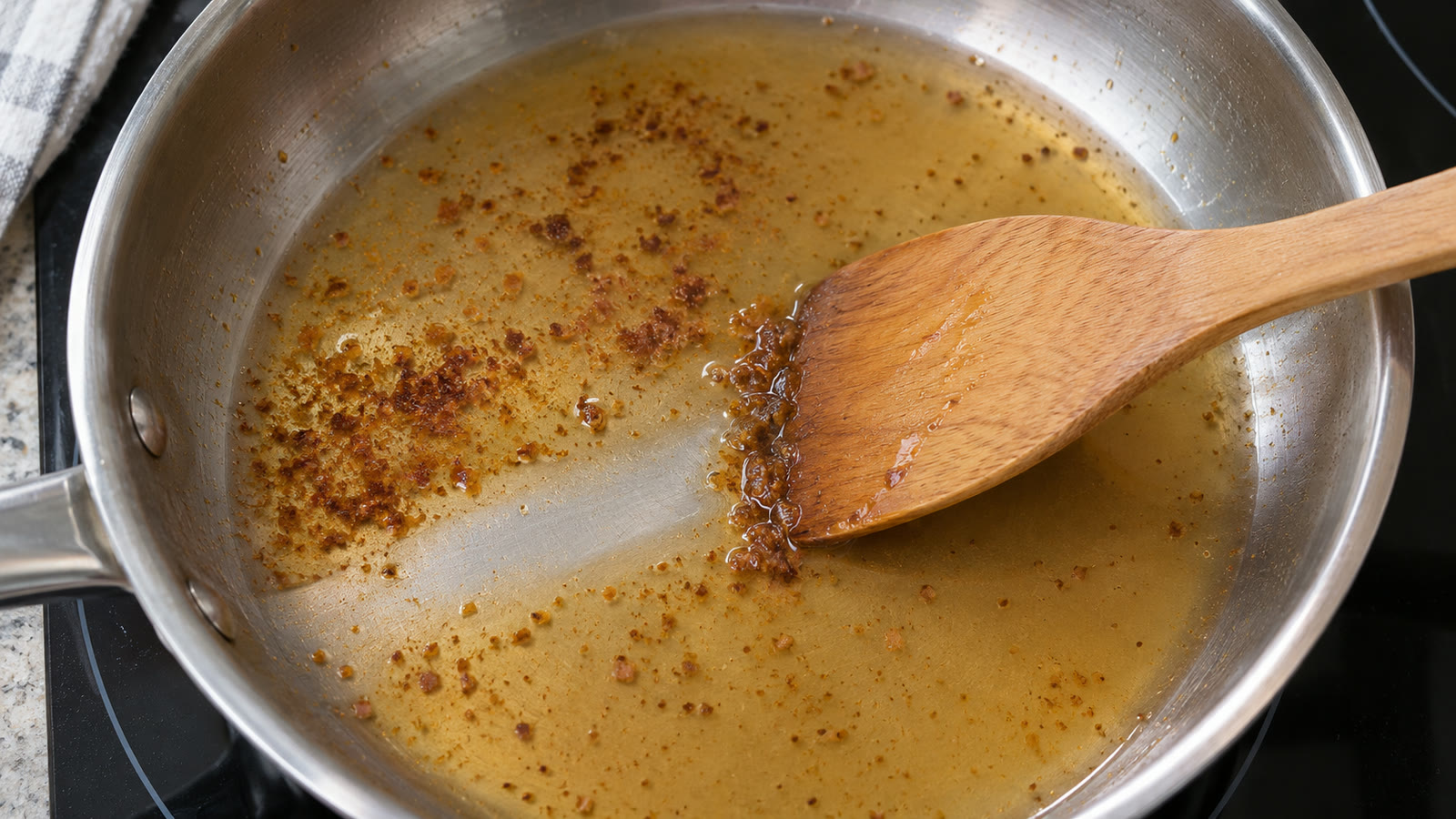
Illustration. The stock collects softened bits as the spatula passes. The light trail shows where the spatula touched the base.
What water, stock and acid each bring
Water lets the flavor of the browned bits come through directly. If there is little residue, unsalted chicken or vegetable stock can give you a fuller starting point. Dilute salty prepared stock with water first. As water evaporates during reduction, salt stays in the pan. If the food is seasoned too, taste a small bite of it with the sauce. A sauce that seems balanced when tasted alone can turn out too salty alongside the food.
Lemon juice or vinegar can brighten the finish. Add it a few drops at a time after reducing the sauce for more control. Using lemon juice as the entire starting liquid can concentrate the acidity too far. For a creamy sauce, loosen the bits with water or stock first, then add the cream and keep it below a hard boil. You can check that the base has released before the cream obscures the pan. Aim for enough acidity or cream to complement the roasted taste.
Two examples with chicken and mushrooms
Cook chicken cutlets until the thickest part reaches 74 °C on a thermometer and transfer them to a clean plate. Add 90 ml unsalted chicken stock to the same pan, loosen the browned bits and reduce the liquid by about half. Remove from the heat, add 10 g cold butter and swirl the pan to incorporate it. Spoon the sauce under the cutlets if you want to preserve the browned surface. If serving plain potatoes alongside, save a little for them too.
For mushrooms, brown 200 g of slices without crowding the bottom. Work in batches if the pan is small and set cooked mushrooms aside. When you see aromatic brown patches, add 60 ml water and loosen them with the spatula. Once the liquid has reduced enough to coat a spoon lightly, return the mushrooms and toss. A few drops of lemon juice are an option at the end. Serve on toast or toss with cooked pasta.
Adjust texture and flavor before serving
Tilt the pan slightly. When the sauce leaves a thin, glossy coat on the back of a spoon, stop reducing it. If it is watery and tastes weak, keep it simmering uncovered a little longer. If it is too salty or thick, add unsalted water in small splashes. If the fat has separated, take the pan off the heat, spoon off the oil that has pooled at the surface and stir in a little warm water. Use a clean spoon to check the texture again.
If the sauce tastes burnt, discard it and start with stock in a clean pan. Next time, measure your liquid in advance and add it before the browned bits dry out. Returning the main ingredient to a dry pan can also scorch the bits. Finish the sauce first, then briefly toss the food in it if needed. A note of the pan you used, the liquid and the final texture makes a good result easier to repeat.
You can also use the technique in a soup. For example, if the liquid you used after browning mushrooms is going straight into soup, take it off the heat while it is still thin. Adjust salt once you have tasted it in the soup.
İyi Bir Yemek
Food Researcher & Writer
Reader Comments & Contributions
Be the first to share your thoughts on this post