
How to Choose and Use a Pastry Brush
Compare silicone and fine-bristled pastry brushes, learn to apply a thin egg wash and cake syrup, and clean a brush after raw egg.

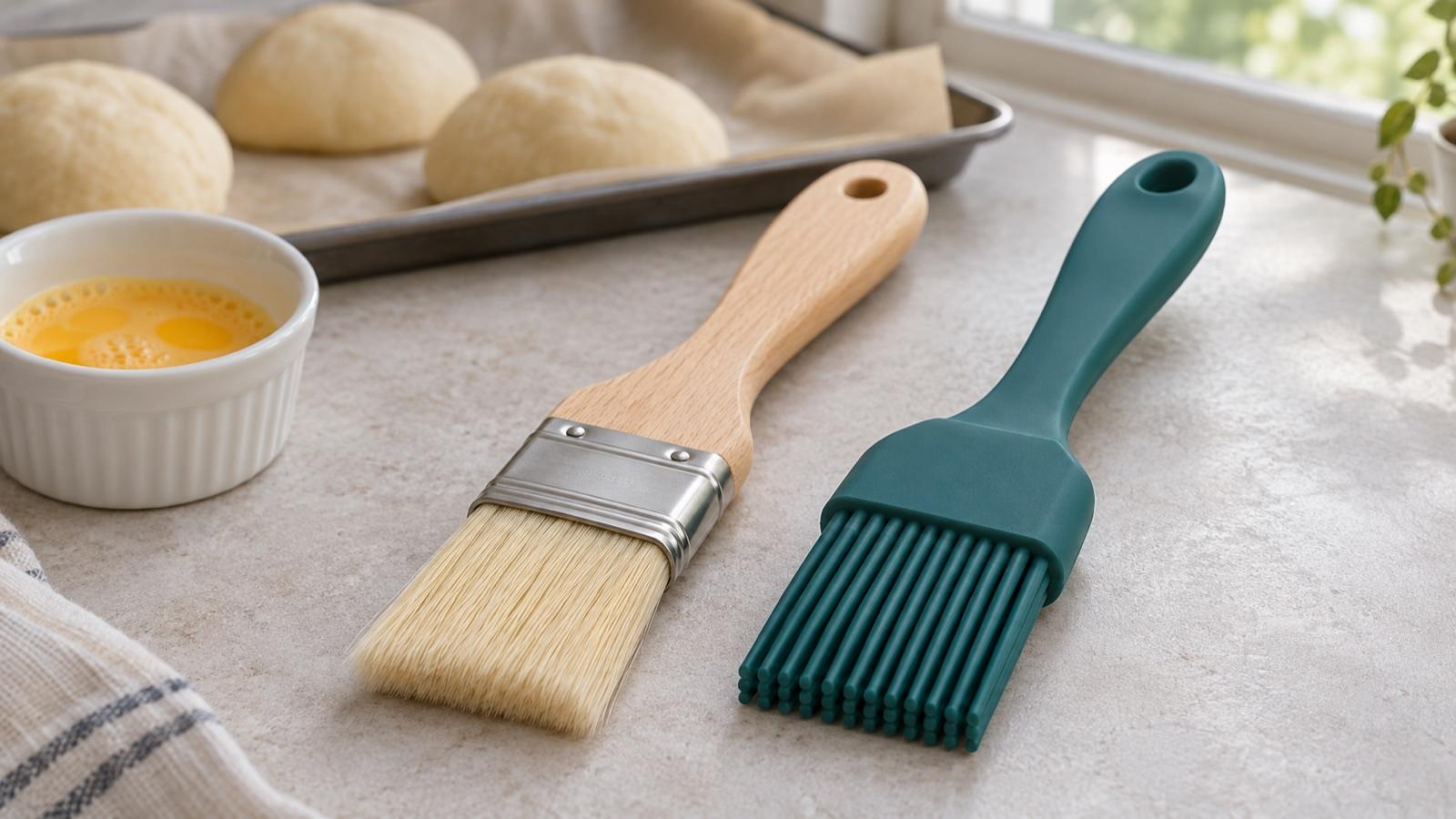
A soft, fine-bristled brush is a good starting point for delicate dough or cake. A flexible food-grade silicone brush works well for everyday egg wash on bread rolls and is often easy to clean. The result also depends on how much liquid you load and how hard you press.
Match the head to the job
Liquid sits between closely packed, fine bristles, so you can deposit syrup on a crumbly cake edge with little pressure. Widely spaced, stiff silicone tines may leave tracks. A soft, closely spaced head reduces this effect; some silicone designs have a central row that holds liquid. Flex the tips gently to see how easily they bend.
A broad head covers a large area quickly but can be awkward near the base of a small roll. A narrow head offers better control. If you are buying only one brush, pick narrow, flexible silicone for small rolls and routine cleaning, or soft, dense bristles for frequent use on thin pastry or cake layers. Check the maker’s care and use instructions before touching coated cookware. Try a new brush on a clean plate with the same liquid before touching the dough. Large drops call for a lighter load; broken tracks are a cue to change the handle angle.
Brush a thin layer of egg on rolls
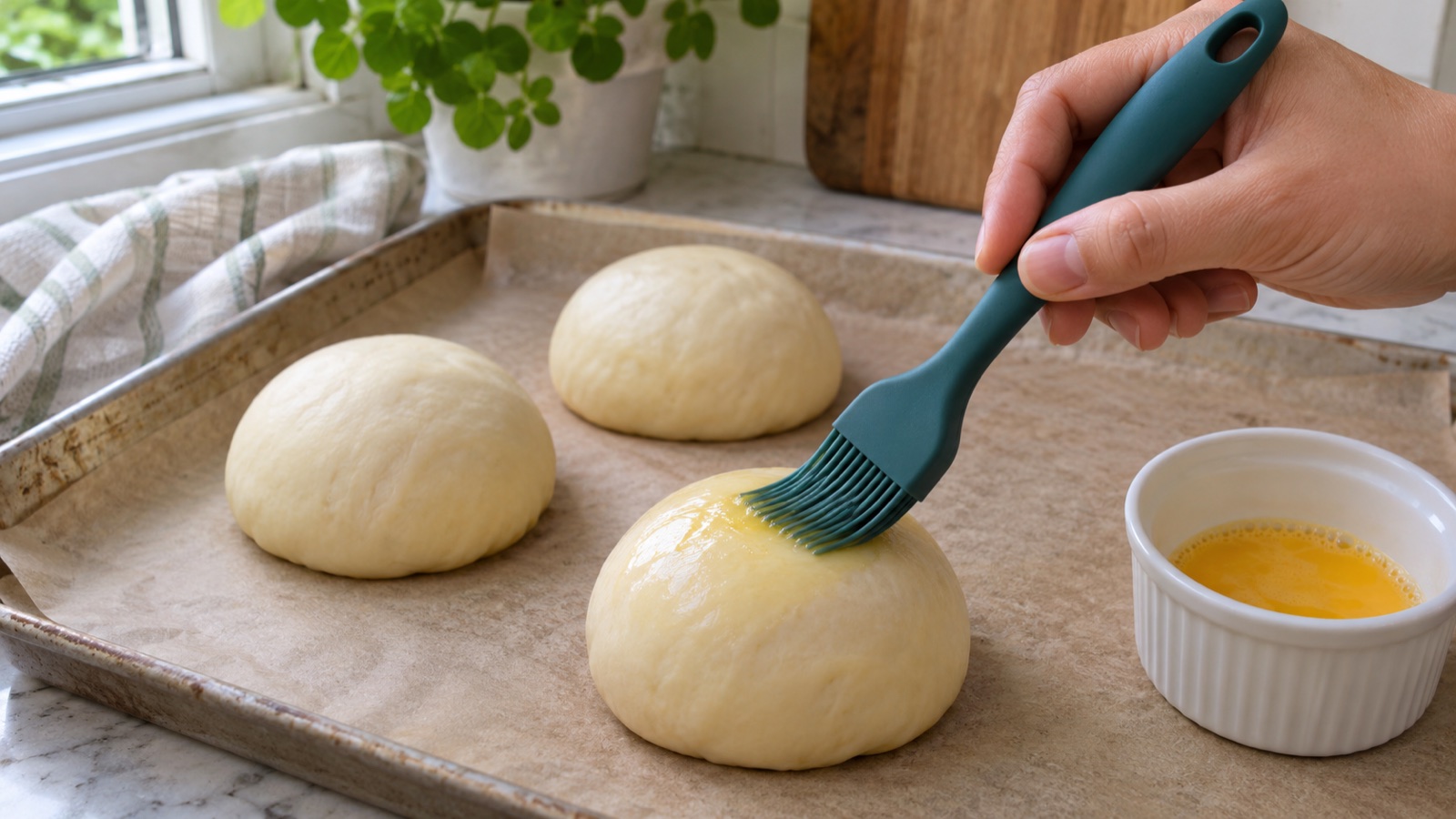
Beat 1 egg in a small bowl until white and yolk are blended. Set the proofed rolls on a parchment-lined tray. Dip just the ends of the bristles and touch them to the inner rim to remove excess. Start with one roll: you want an even, faint shine. If drops run down, use what is still on the brush before dipping it again.
Work from the crown to the shoulders with short strokes and a light hand, so the risen dough keeps its shape. Lift any puddle from the tray with the corner of clean paper towel. On laminated pastry, cover the top without letting wash drip onto cut edges, where it can stick layers together. For a comparison, leave one roll on the tray unbrushed and look at the colour and sheen side by side after baking.
Distribute cake syrup without tearing crumbs
Place a cooled, cut cake layer on a flat plate. If the recipe allocates 1 tablespoon of syrup, measure it into a small bowl first. Rather than dragging a full brush back and forth, touch the tips to the cake and lift. Move from one edge in evenly spaced dabs to avoid soaking the centre while leaving the rim dry.
Let the first pass absorb before revisiting a dry-looking patch. If syrup is still pooling, move on to an untouched area rather than adding more there. If fine crumbs catch on the brush, stop dragging it and drip from the tip of a spoon instead. Keep to the same measured allowance; changing tools does not change how much syrup the cake needs.
Read the marks and adjust
If the egg wash looks striped, check the load and the stiffness first. Load less on the next roll and overlap short strokes slightly. If tracks persist, tilt the handle so only the ends of the bristles touch. That spreads the wash without bearing down. Beat it again if strings of egg white are stretching from the brush.
If the wash runs under the roll, a second coat will add to the puddle. Wipe off excess more thoroughly and stop strokes just above the base on the next roll. Let cake cool completely before applying syrup; switch to a softer brush or drip if crumbs come away. If the brush sheds, remove the loose bristle from the food and replace the brush.
Clean after using raw egg
Keep a brush that touched raw egg away from cooked bread and ready-to-eat cake until it has been washed. Do not save leftover raw wash to brush on baked food. Wash the brush and bowl with hot soapy water and wash your hands. Pour or spoon out a small working portion with clean utensils instead of dipping into a larger batch.
Separate the bristles gently to release residue near the base. Remove a detachable silicone head as directed, and put only dishwasher-safe parts in the machine. Do not leave a wooden-handled brush soaking. Rinse and air-dry fully before storing. If you glaze raw dough and finish cooked items in the same session, two separate brushes let you keep the tasks apart without waiting.
İyi Bir Yemek
Food Researcher & Writer
Reader Comments & Contributions
Be the first to share your thoughts on this post