
How Do Glass and Metal Pans Bake the Same Batter?
Compare glass, light metal and dark metal for cakes and brownies. Measure inside dimensions and judge edges, bottoms and centers separately.

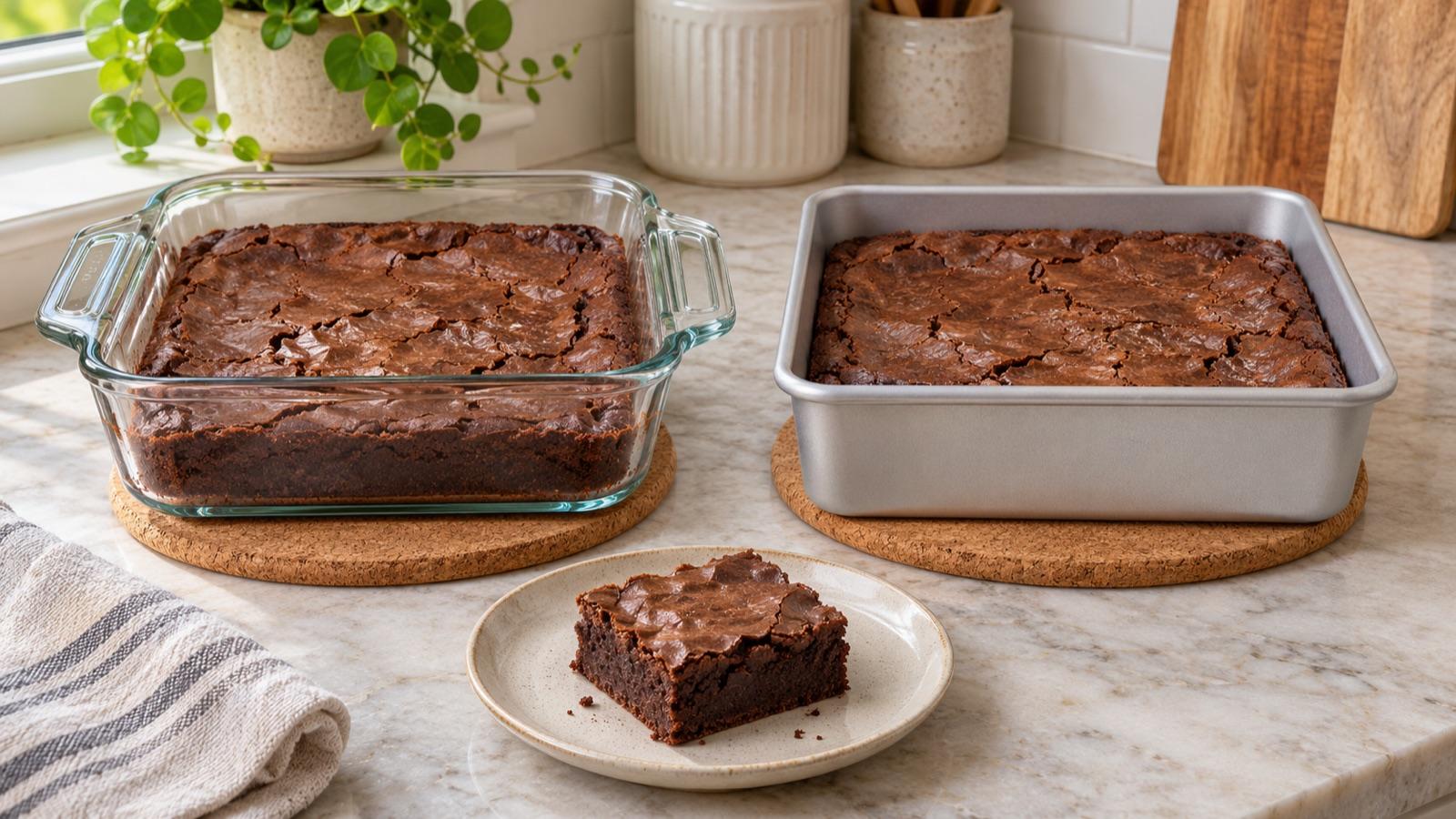
When a cake recipe does not specify a pan material, light-colored metal in the stated size is usually a useful starting point. Dark metal can brown the edge sooner; thick oven-safe glass may warm more slowly and hold heat longer out of the oven. But if your replacement pan also spreads the batter thinner, you cannot tell what the material alone did. Measure the inside base first, then check the edge and center separately.
Light metal, dark metal and glass
Light aluminum is a common pan material that transfers heat to batter readily. For a plain cake whose edges should stay tender, try a light metal pan in the size stated in the recipe. Dark surfaces can absorb more radiant heat, so the edge and bottom may color sooner. The surface is only part of the story, though: thin steel, thick cast metal and different coatings do not pass on heat at the same rate.
The thick walls of oven-safe glass can transfer heat more slowly at the start than a typical thin metal pan. Once the glass is hot, it can keep transferring heat to the batter after you take it out. The edges may firm up while the center is still soft. In King Arthur Baking’s published brownie comparison, the glass-pan brownie had a harder edge, but the pans also differed in shape and inside dimensions. Treat that as one possible result rather than a universal baking-time adjustment.
King Arthur Baking — Glass or Metal or Stoneware · King Arthur Baking — Your Complete Guide to Baking Pans
Measure the inside base, not the handles
Lay a ruler inside a cool empty pan and measure from wall to wall at the base. If the sides slope, note the width at the top and the depth too. Leave glass handles out of the measurement. Imagine two square pans with straight sides: a 20 cm pan has a base area of 400 cm², while a 23 cm pan has 529 cm². The same batter spreads about a quarter thinner in the second pan. If its center sets sooner, the change in material may explain only part of the difference.
If you do not have the listed pan, think first about batter depth. Pouring the full batch into a smaller base gives you a thicker center; to keep the depth closer, put part of the batter into a separate oven-safe pan. Allow room for the batter to rise and respect the recipe’s fill guidance. Matching volume alone does not make pans equivalent either: in a long narrow pan, the center is a different distance from the sides than in a wide shallow one.
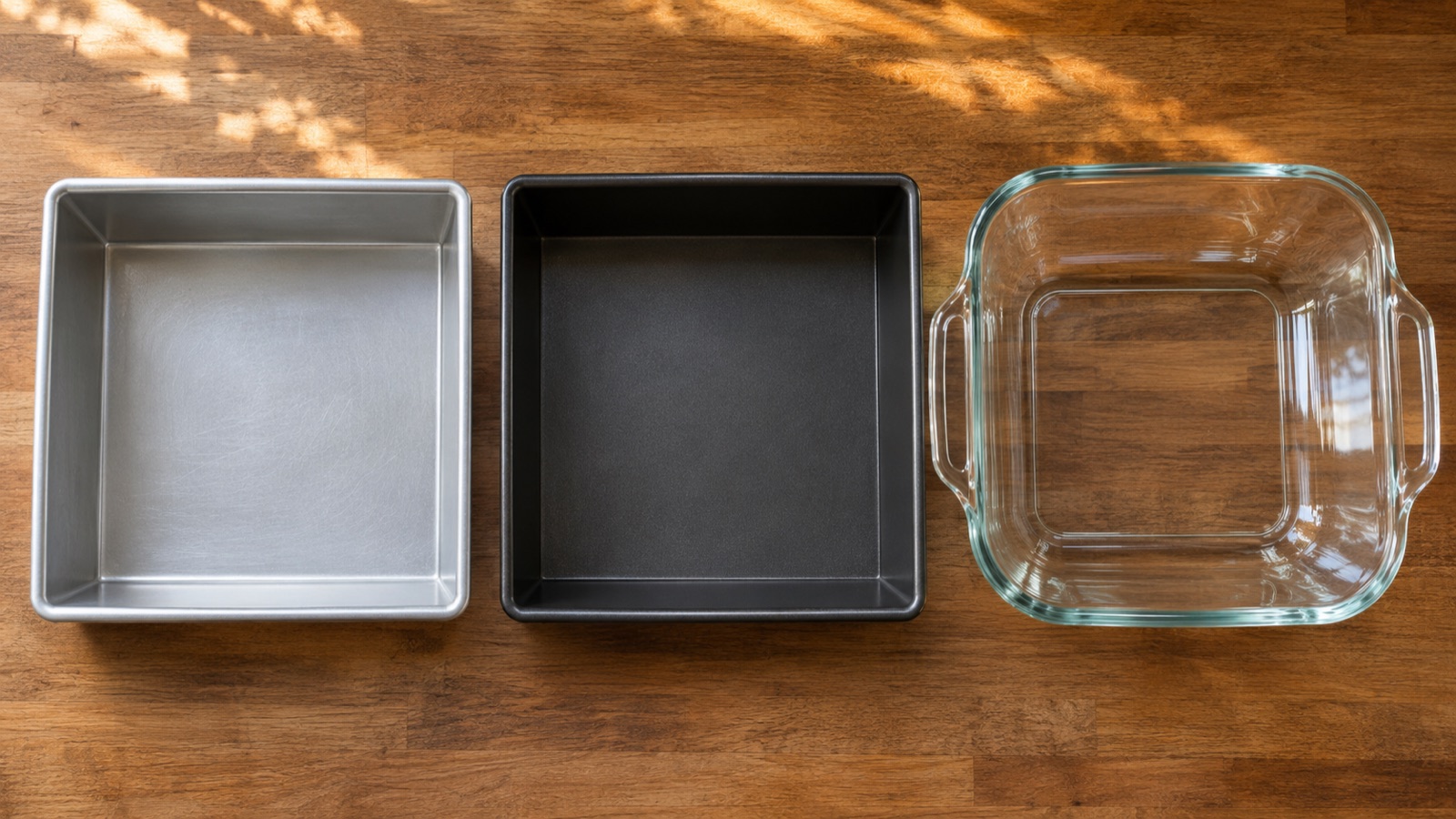
Illustration: Outer rims and handles do not count toward the inside base dimensions.
Run a fair brownie comparison at home
Choose light metal, dark metal and glass pans with as similar an inside size and slope as possible. If your brownie recipe makes enough, weigh, for example, 400 g of batter into each. Equal amounts and similar depths matter more than the number itself. Grease or line the pans the same way where the recipe and pans allow it. Preheat to the same temperature every time and keep the oven mode and rack fixed. If you bake one pan at a time, make a fresh equal batch each round so that later batches have not been sitting while the first bakes.
As the recipe’s stated time approaches, watch the top and edge, then check the middle against the recipe’s cues. If a fudgy brownie should leave moist crumbs on a tester, distinguish those from wet batter. Record the time out of the oven and edge color, then compare the bottom and middle slices after the same cooling period. Compare edge with edge and middle with middle. This is a plan for a home comparison; it does not give a measured result or predict the baking time.
What to look for when switching pans
If you are moving a plain cake from light metal to dark metal, do not miss the early end of the recipe’s checking window. A browned edge is not a reason to pull out a cake whose center is still liable to sink. Where those cues suit the recipe, look for a center that springs back lightly and a tester with no flowing batter. On the next bake, trying light metal in the same size gives you clearer information than changing the pan, rack and temperature together.
Brownie edges and centers may look ready at different times in glass. When the center is still liquid, a dark edge alone does not mean it is done. Once the middle reaches the recipe’s target, cool as directed. Let the brownie set before slicing so you do not return it to the oven just because the warm interior is soft. For timing or temperature, start with the pan instructions, the recipe and your own notes rather than a universal adjustment. If using parchment, apply it consistently to the pans you compare.
Use glass safely and keep notes
Check that the dish is rated for oven use and read the instructions for that model. Pyrex’s published guidance for its glassware calls for a preheated conventional oven, avoidance of direct heat, and setting the hot pan on a dry trivet or cooling rack. Do not pour liquid into hot glass, set it on a wet surface, or use a chipped or cracked dish. Follow your own manufacturer’s guidance if you have a different model.
For the next bake, note the inside dimensions, material, pan color, rack, oven mode and time you removed it. If the bottom keeps getting too dark, first check the recommended rack or repeat with a same-size light pan. Turn on the fan and switch pans together and you will have a harder time identifying the cause. The guide below can help you choose a rack and understand how the oven mode affects the bake.
Pyrex — Safety and Usage · Guide to oven modes, racks and trays
İyi Bir Yemek
Food Researcher & Writer
Reader Comments & Contributions
Be the first to share your thoughts on this post