
The Science of Gnocchi: 5 Rules for a Light Texture
Why do gnocchi fall apart or turn tough? Learn to manage moisture, flour and eggs, test one dumpling and finish with a smooth, balanced brown butter sauce.

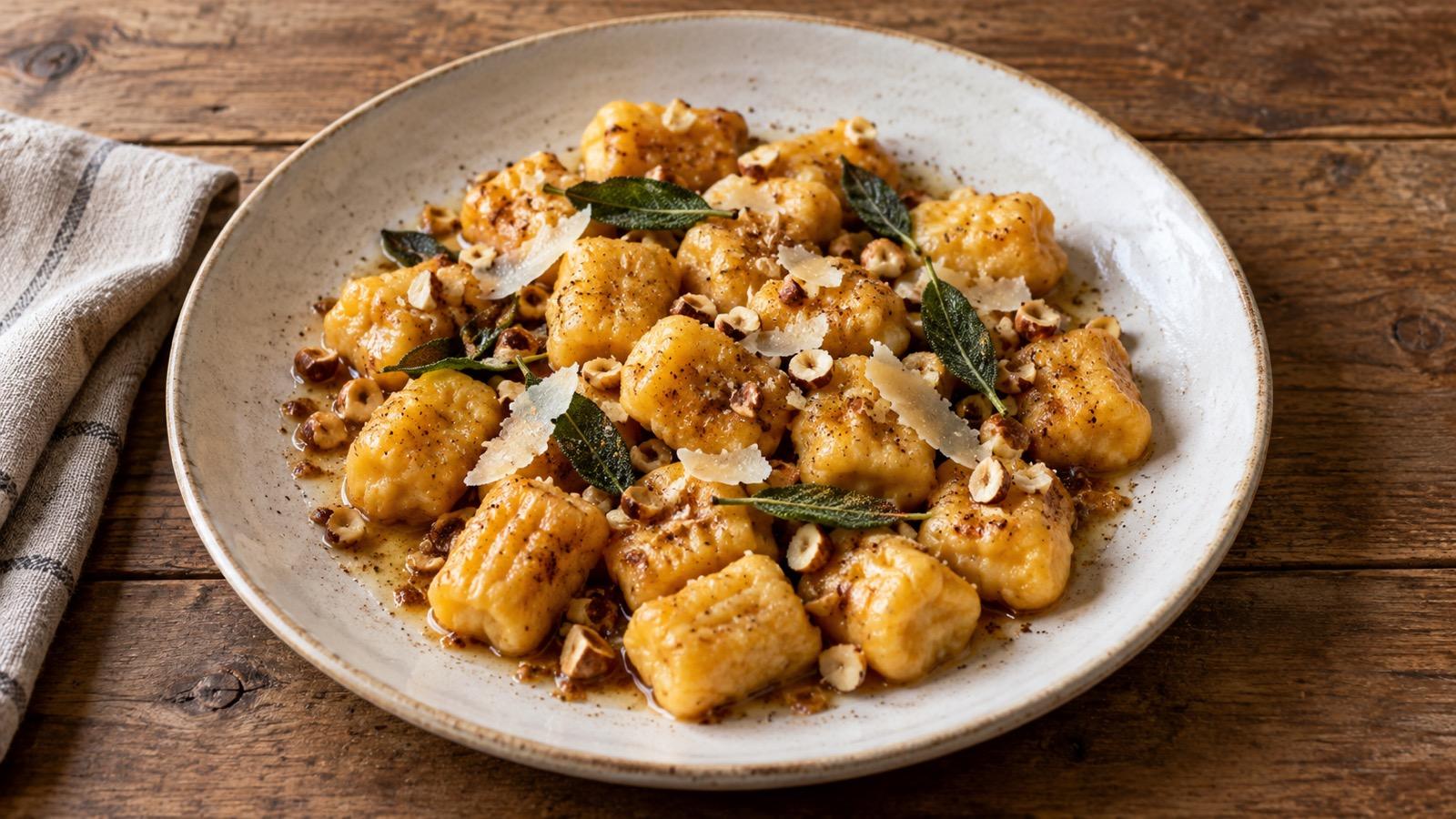
Light gnocchi do not depend on one special flour or a universal cooking time. Vegetable moisture, flour quantity and handling all affect the result. Potato and pumpkin doughs behave differently, so following a recipe and cooking one test piece are equally valuable.
1. Manage moisture; choose the method for the vegetable
Roasting pumpkin helps remove excess water and concentrate flavor. If the purée remains runny, briefly evaporate moisture in a pan. Cool and weigh it before mixing: raw pumpkin weight and cooked purée weight are not interchangeable. Draining the ricotta is equally important.
It is incorrect to say potatoes must never be boiled. Successful gnocchi recipes use whole, unpeeled boiled potatoes. Choose suitable potatoes, drain them well, mash while hot and let steam escape. Baking is an option, not a requirement; use a masher rather than a blender.
2. Use enough flour and handle the dough gently
Wheat proteins develop a gluten network when hydrated and worked. This network is not entirely undesirable: it helps the gnocchi hold together. Too much flour and prolonged kneading can make the texture tough. Mix only until the dough comes together.
The goal is not a perfectly dry, non-sticky dough. Slight tackiness can be normal. Check the moisture in the purée before adding more flour; hold back part of the measured flour and use it only if needed. If a test piece falls apart, correct the remaining dough before cooking the batch.
3. Flour, egg and ricotta: balancing the binders
A “Tipo 00” label alone does not guarantee low protein or soft gnocchi. Different 00 flours are designed for different uses. Start with the flour specified in the recipe; all-purpose wheat flour can also work in a suitable formula.
| Ingredient | Role in the texture | Practical approach |
|---|---|---|
| Flour | Starch and proteins support the structure. | Judge the quantity alongside moisture; test one piece in water. |
| Egg | Proteins set during cooking and help bind the dough; the yolk also supplies fat and lecithin. | Recipes may use yolks, whole eggs or no eggs; do not substitute them without adjusting the formula. |
| Ricotta | It contributes milk proteins, fat and water; moisture varies between products. | Drain excess liquid and weigh the drained cheese. |
4. Shape gently and keep the pieces similar in size
Roll the dough into ropes on a lightly floured surface and cut similar-sized pieces. Fork or board ridges and a slight hollow can help sauce cling. Smooth gnocchi are also valid; ridges are optional. Small, evenly sized pieces cook more predictably, but no pattern alone guarantees a fully cooked center.
5. Test cooking and the butter sauce
Cook gnocchi in batches in gently simmering water rather than a vigorous boil. Floating is a useful cue, not a universal finishing point. In our pumpkin recipe, cook for another 30–60 seconds after floating, depending on size, and cut one open to check for a raw floury center. Smaller pieces and different doughs need different timings.
Beurre noisette is browned butter, not burnt butter: the milk solids turn hazelnut brown. Toasted aromas develop largely through Maillard reactions. Remove the pan from the heat when the solids are light brown; if the color deepens rapidly, transfer the butter to a heatproof container. Black solids and a bitter burnt smell are not the goal.
A little starchy cooking water, butter and gentle pan movement help form the sauce. Starch helps stabilize the fat-water mixture; the result depends on proportions and temperature. Do not pour water suddenly into very hot fat. Take the pan off the heat, add the water carefully and coat the gnocchi without crushing them. Lemon juice can be added at this stage.
Quick troubleshooting
- Falls apart in water: check purée moisture and binder proportions; reduce vigorous boiling. Add a little flour to the remaining dough and test one piece again.
- Tough or rubbery: excess flour, prolonged kneading or an unsuitable formula may contribute. Next time, dry the purée better and handle it less.
- Bland: assess salt, the saltiness of the cheese and the amount of sauce together. Boiling the vegetable alone does not explain blandness.
Put these principles into practice with our pumpkin and ricotta gnocchi recipe, which uses weighed purée, controlled flour additions and a single test piece.
View the Pumpkin and Ricotta Gnocchi Recipe
Technical sources
GialloZafferano: potato gnocchi, with and without eggs
İyi Bir Yemek
Food Researcher & Writer
Reader Comments & Contributions
Be the first to share your thoughts on this post