
How to Use and Clean a Garlic Press
Use a garlic press without forcing it: chamber loading, limits of unpeeled cloves, texture choices and practical cleaning of the holes.

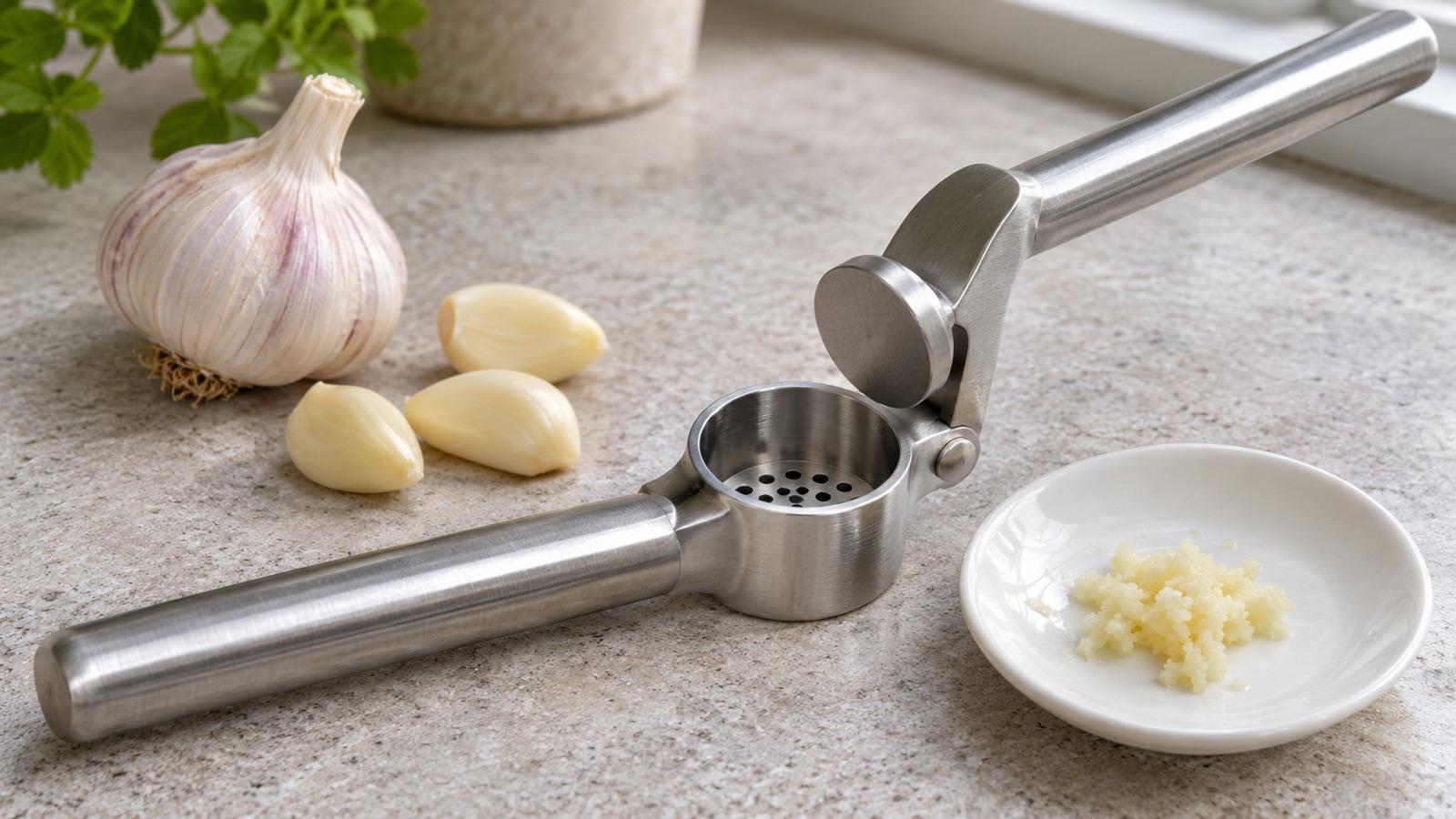
A garlic press works best when you load it sensibly, squeeze steadily and remove the pulp before it dries. Unpeeled use and dishwasher cleaning depend on the model. This guide starts with a conventional hinged press; follow the manufacturer for other mechanisms.
Choose the texture and the tool first
A press pushes garlic through holes to make a moist mass of small pieces. A knife leaves pieces whose size you can control. Pressed garlic may suit a smooth yogurt dressing; it will not replace visible slices on a finished dish. Scrape the pieces from the outside plate into the food too. This is a texture decision, not a health advantage or a promise of better flavour in every recipe.
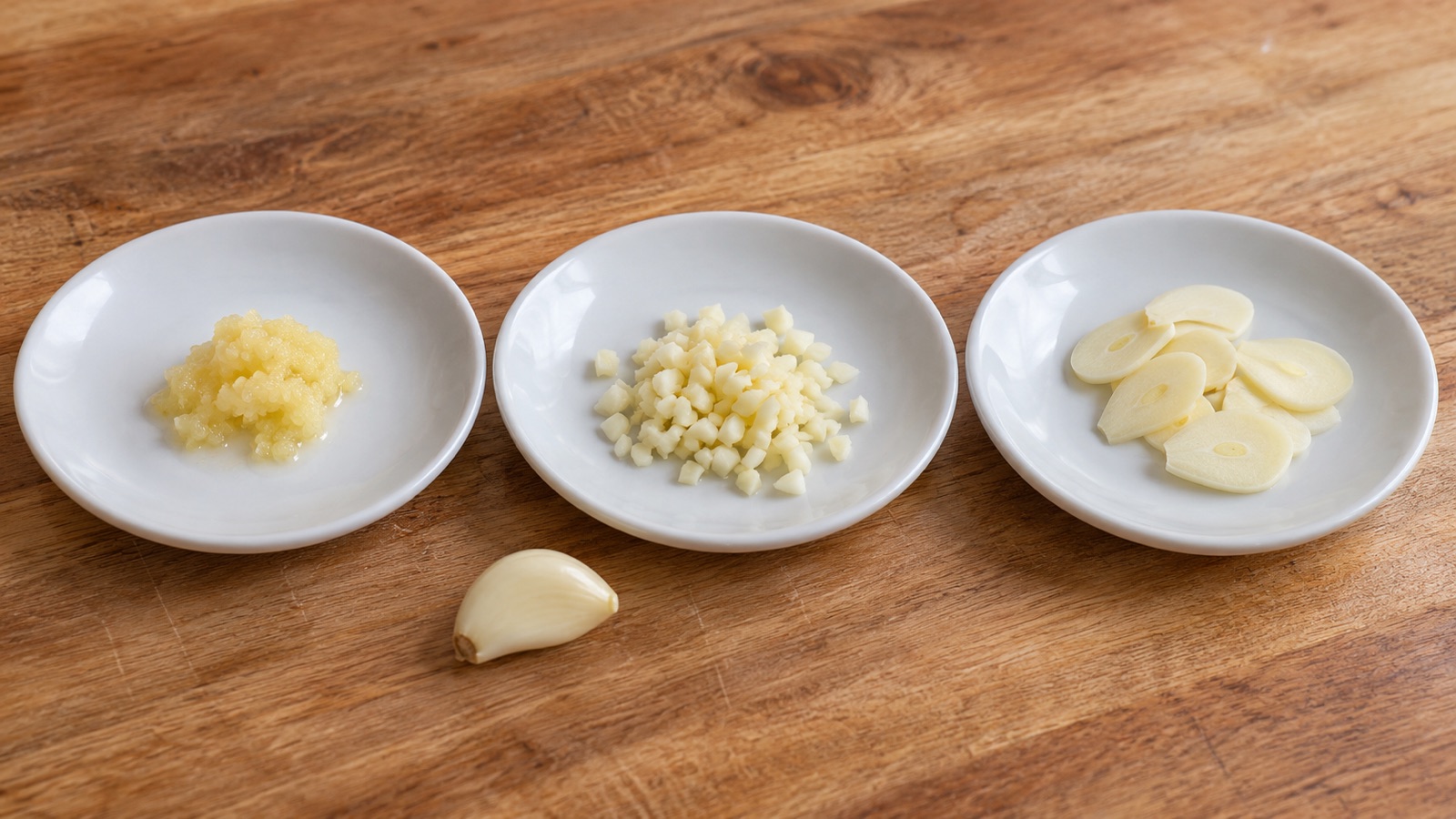
A hinged press has a chamber and an opposing plunger. A rocker crushes a clove against a board with a rocking motion. They require different handling. When choosing equipment, check whether the chamber opens fully, whether a brush can reach behind the holes and whether the handles feel comfortable. A metallic appearance does not establish dishwasher suitability. If care instructions are unclear, wash by hand; capacity alone is not a sufficient buying criterion.
Use a hinged press step by step
Open it and check for old fibres. Peel the dry outer skin, remove the hard root end and place the clove in the chamber. Start with a small clove to judge the effort. Cut an oversized clove and process the pieces separately. With dry hands, grip the handles and close slowly, keeping fingers away from the chamber and hinge. Release pressure before reopening. Scrape the garlic from the perforated face with a small spatula.
For a sauce, pressing into a small dish gives better control than working directly above a full hot pan. You can see the amount and spot a stray skin without hovering over heat. Remove the fibrous layer before loading another clove. If the handles will not close, open the tool instead of squeezing harder: the chamber may be overloaded, the clove too large or the holes blocked. Do not bang the press on the counter or extend its handles with another tool.
Understand unpeeled use
Some models explicitly accept unpeeled cloves: the specified OXO model with its built-in cleaner is one example. This does not apply automatically to every press. Even with permission, remove the retained skin after each squeeze, since accumulated skins obstruct contact with the holes. If the model is unknown, peeling first makes the process easier to inspect. Retaining skins does not mean the tool cleans itself.
Hard, dry or fibrous cloves can behave differently. Do not use a tool to disguise visible spoilage. If replacing the press with a knife, do not automatically increase the number of cloves; prepare the recipe amount and consider the desired presentation. A dressing may need fine pieces while a tray of vegetables may call for visible slices. These examples concern equipment selection, not garlic storage life or the safety of eating it raw.
Clean the holes before pulp dries
Open the chamber, remove thick pulp and rinse under running water. Use washing-up liquid and a soft brush on both sides of the perforated part, around the plunger and near the hinge, then rinse thoroughly. Removing visible pieces is only a preliminary rinse, not a substitute for washing. Picking each hole with a knife tip can scratch the tool and cause a slip. Check the instructions before using an integrated cleaning attachment.
Mechanisms differ: the relevant OXO cleaner works by reversing the handle; the Kuhn Rikon Epicurean sieve swings out. Neither instruction means every press should be dismantled. Do not force a fixed component apart. Even a dishwasher-compatible tool needs thick residue removed first and correct loading. After hand washing, leave the chamber open to dry completely. Re-brushing a blocked hole immediately is easier than putting a dirty tool away.
OXO · Cleaning preparation tools · Kuhn Rikon · Epicurean 2315
Solve common problems with small checks
A thin fibrous residue is not necessarily a fault. If most of the clove remains inside, reduce the load and inspect the holes. Garlic resting on the outer plate needs scraping; repeated squeezing will not necessarily drop it into the bowl. Stop using a tool with loose handles, a misaligned plunger or cracked metal and consult its manufacturer. Store it clean and dry without pressure on the handles in a cramped drawer.
Must every clove be peeled? Follow the model instructions. Will the dishwasher remove all pulp? Do not assume so; empty the chamber first. Is a press essential? A knife or suitable grater can work in many home recipes, though the texture changes. Checking the intended texture before starting and inspecting the clean chamber afterwards are useful habits before buying additional equipment. Before the first use, inspect how the empty tool opens. This avoids figuring out moving parts with a full chamber or forcing fixed parts during cleaning.
İyi Bir Yemek
Food Researcher & Writer
Reader Comments & Contributions
Be the first to share your thoughts on this post