
How to Read Sulfites and Added Sugar on Dried Fruit Labels
Read dried apricot and raisin labels with confidence: sulfite declarations, ingredients, total sugars, three sample lists and practical kitchen choices.

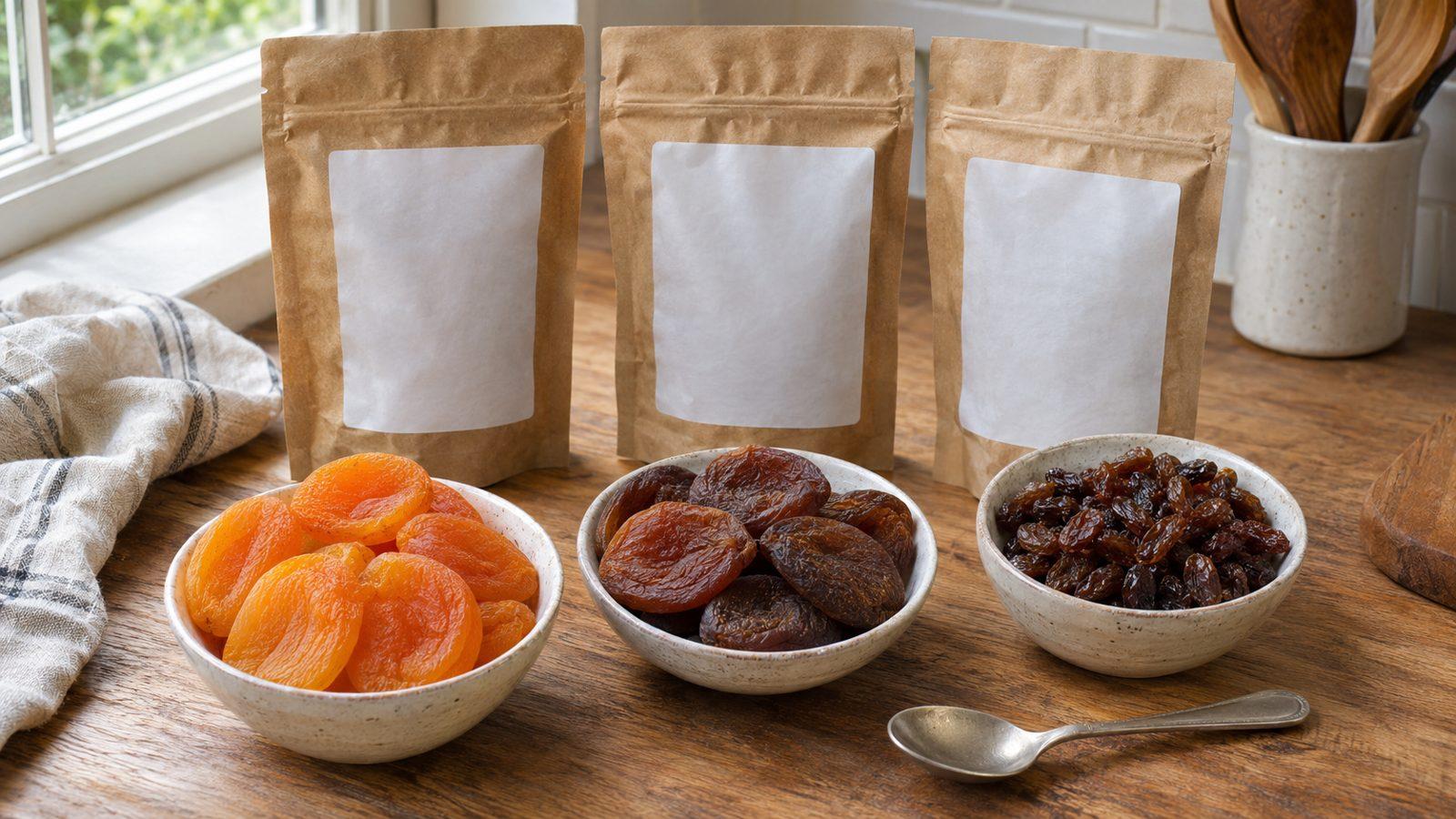
Colour cannot establish whether dried fruit contains sulfites. Read the ingredients and allergen declaration. The sugars line alone cannot establish added sugar either: look for sugar, syrups and ingredients used to sweeten. This guide concerns packaged products sold in Türkiye; other countries use different label formats. The sample lists are teaching examples, not brand labels or laboratory findings.
Start with the ingredients, not the front
Words such as natural, traditional or soft do not describe the complete composition. Find the product name, ingredients and highlighted allergen information. Consider three invented lists: A, dried apricots; B, dried apricots and preservative sulfur dioxide; C, raisins, sugar and sunflower oil. A does not list added sugar, B declares a sulfiting ingredient, and C contains both fruit and added sugar. Oil alone does not mean sugar was added. These are reading exercises rather than complete legally compliant package designs.
Turn both packs over together and photograph the lists for comparison. If transferring fruit to a jar, retain the name, dates and ingredient information. For mixed dried fruit, check every component and the additions to the mixture. Ask the seller for missing information on loose products; an unanswered question does not establish absence. Recheck a familiar pack because formulations and packaging can change.
T.C. Tarım ve Orman Bakanlığı · Etiketleme Yönetmeliği
What a sulfite declaration establishes
Sulfur dioxide and sulfites may appear by name, with an additive function and in some presentations an E number. Read names and allergen information together rather than searching for a single code. Türkiye’s labelling regulation includes sulfur dioxide and sulfites at concentrations above 10 mg/kg or 10 mg/L, expressed as total SO2, within the allergy or intolerance declaration rules. That figure is neither a home testing method nor a personal consumption target or safety limit. A missing declaration is not a laboratory measurement of absolute zero.
If you need to avoid sulfites, ask the producer for clear information instead of guessing; discuss individual health decisions with your healthcare professional. Do not treat rinsing, soaking or cooking as a guarantee of complete sulfite removal. Recipe preparation and allergen management are different decisions. Rinsing apricots for compote is preparation; it does not cancel the declaration or establish suitability for everyone.
T.C. Tarım ve Orman Bakanlığı · Etiketleme Yönetmeliği
Compare orange and brown apricots carefully
The USDA dried apricot standard explains that fruit may be sulfured to retain its characteristic colour. A bright orange apricot therefore warrants careful label reading, but a photograph cannot reveal sulfite concentration. Brown fruit is not automatically certified additive-free, organic or safe. Variety, drying and storage can affect appearance. The illustration here shows a colour comparison, not a chemical analysis.
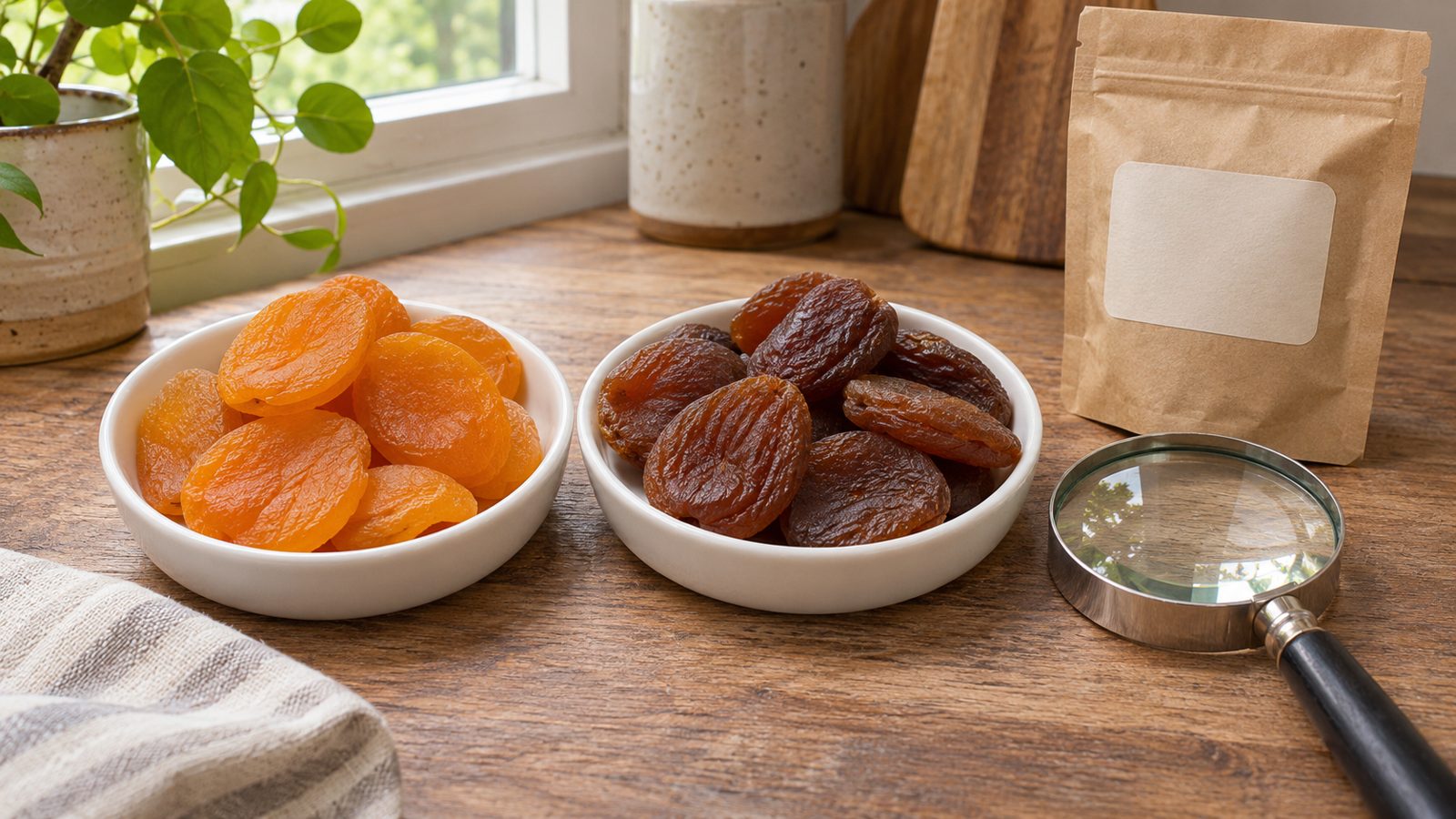
Compare whole versus chopped fruit, softness and intended use as well. Wanting a lighter colour in compote is a presentation preference and should not override your ingredient requirements. Do not assume a darker fruit has less sugar. Sticky raisins do not prove added sugar either: the ingredients supply that answer. Use the picture to judge expected shape and texture, not composition.
Separate total sugars from added sugar
The sugars figure includes the fruit’s natural sugars and any added sugars. Sweet dried fruit does not necessarily have sugar added from outside. Look for sugar, glucose syrup, honey or fruit juice concentrate used for sweetening. The Turkish ministry explains the conditions for a no-added-sugar claim and its accompanying naturally occurring sugars statement. Do not assume the Turkish nutrition table has the same separate added-sugars line used on US labels.
For arithmetic only, imagine a pack declaring 60 g sugars per 100 g. A weighed 25 g amount gives 60 × 25 / 100 = 15 g total sugars. This is not a real apricot nutrition value and cannot tell you how much of that 15 g was added. Compare packs on the same weight basis before converting to your cooking amount. Directly comparing different serving sizes is a common mistake.
FDA · Total and Added Sugars · T.C. Tarım ve Orman Bakanlığı · Şeker İlavesiz Beyanı
Put the information to work
For compote, consider the chosen fruit’s sweetness before adding sugar; sweetened and plain fruit are different starting points. For raisins in rice, check coating oil and sweeteners beforehand. Note any recipe adjustment separately. These are ways to manage flavour and composition, not claims of nutritional or health superiority. Different products from the same brand may have different lists.
A short shopping note needs the product name, ingredients, sulfite declaration, comparison weight and intended dish. Follow the package’s storage and after-opening instructions; this guide assigns no universal shelf life. Avoid inferring additives from colour, added sugar from sweetness or suitability from washing. Ask the producer about missing information or consider another product with clear information for the same use.
For another label-reading example see our pomegranate molasses guide.
İyi Bir Yemek
Food Researcher & Writer
Reader Comments & Contributions
Be the first to share your thoughts on this post