
How to Read Dairy Cream Fat Labels for Whipping and Cooking
Compare 18% and 35% dairy cream labels. Learn when to whip cold cream, how to finish a mushroom sauce and when to add lemon.

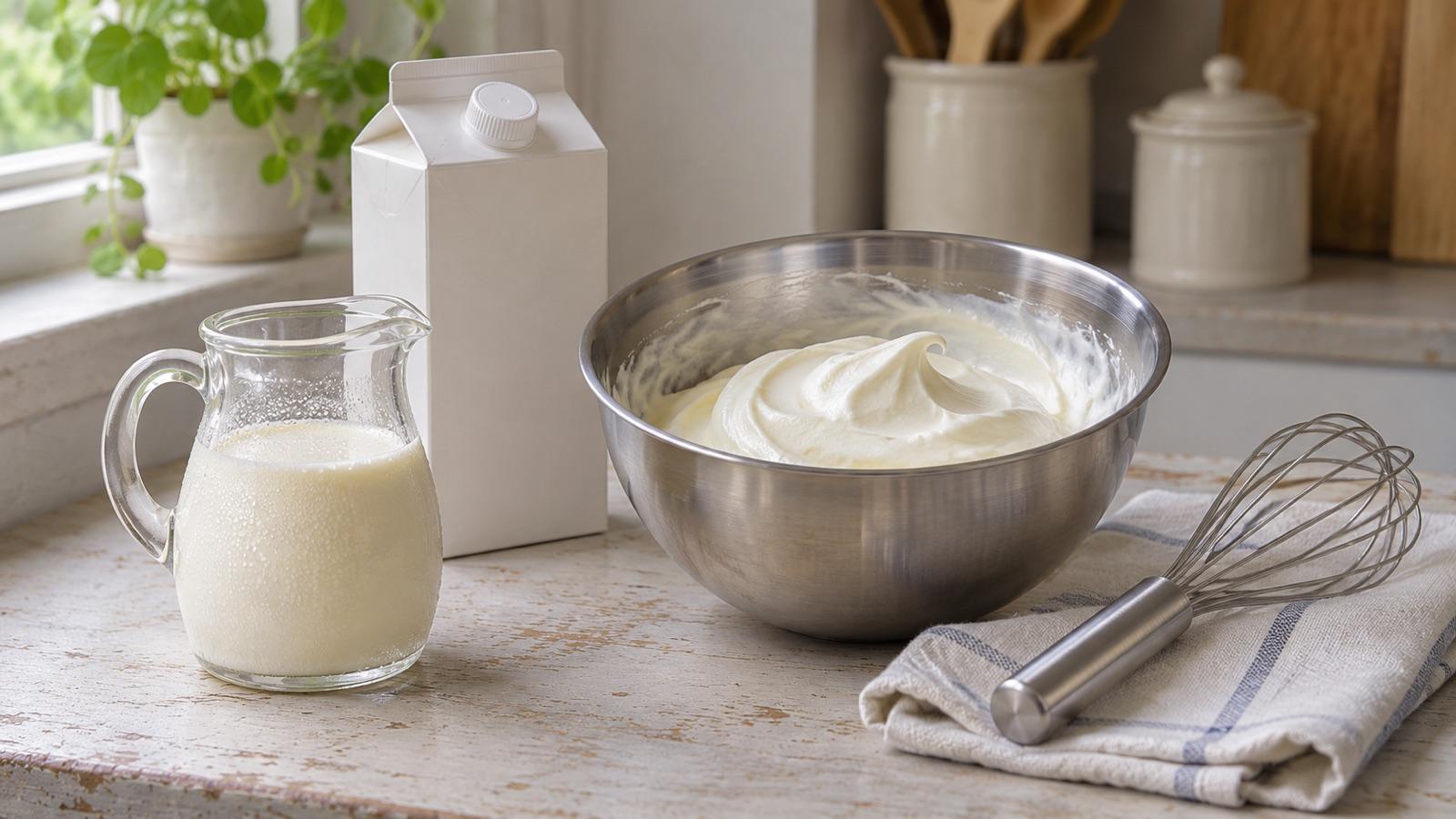
For a topping that must hold its shape on fruit or a cake, buy a higher-fat liquid dairy cream labeled for whipping. For a hot soup or mushroom sauce, look for cream intended for cooking. Read the total fat, its reference unit, and the suggested use together. Products with equal fat can still behave differently because of formulation and processing.
Compare fat on the same basis
Start with a name such as cooking cream or whipping cream, then check the product name for dairy cream and look at the total fat row. Two Pınar dairy cream labels in Türkiye give 18 g and 35 g of fat per 100 mL respectively. At equal volume the second has 17 g more fat. That figure comes from the manufacturer's own examples. When reading your carton, keep the milk-fat percentage, the serving size and the nutrition table's reference unit distinct.
When one label gives values per 100 g and another per 100 mL, avoid subtracting the printed numbers directly. Grams measure mass and millilitres measure volume. Compare them on a common basis or turn to the marked milk-fat percentage and the instructions. Starch or thickeners can account for some of the thickness when you pour a cream. That pour is a poor test of whether the cream will hold air after whipping.
Watch the peak as you whip
Take 150 mL of cold 35% cream labeled for whipping and pour it into a chilled metal bowl. Use a bowl narrow enough that the beaters can reach the cream. Whip at medium speed, then pause and lift the whisk frequently once it begins leaving tracks. A soft peak with a drooping tip will sit on fruit. For piping onto a cake, continue until the peaks are more upright and the surface still looks smooth. Use short bursts as that point approaches.
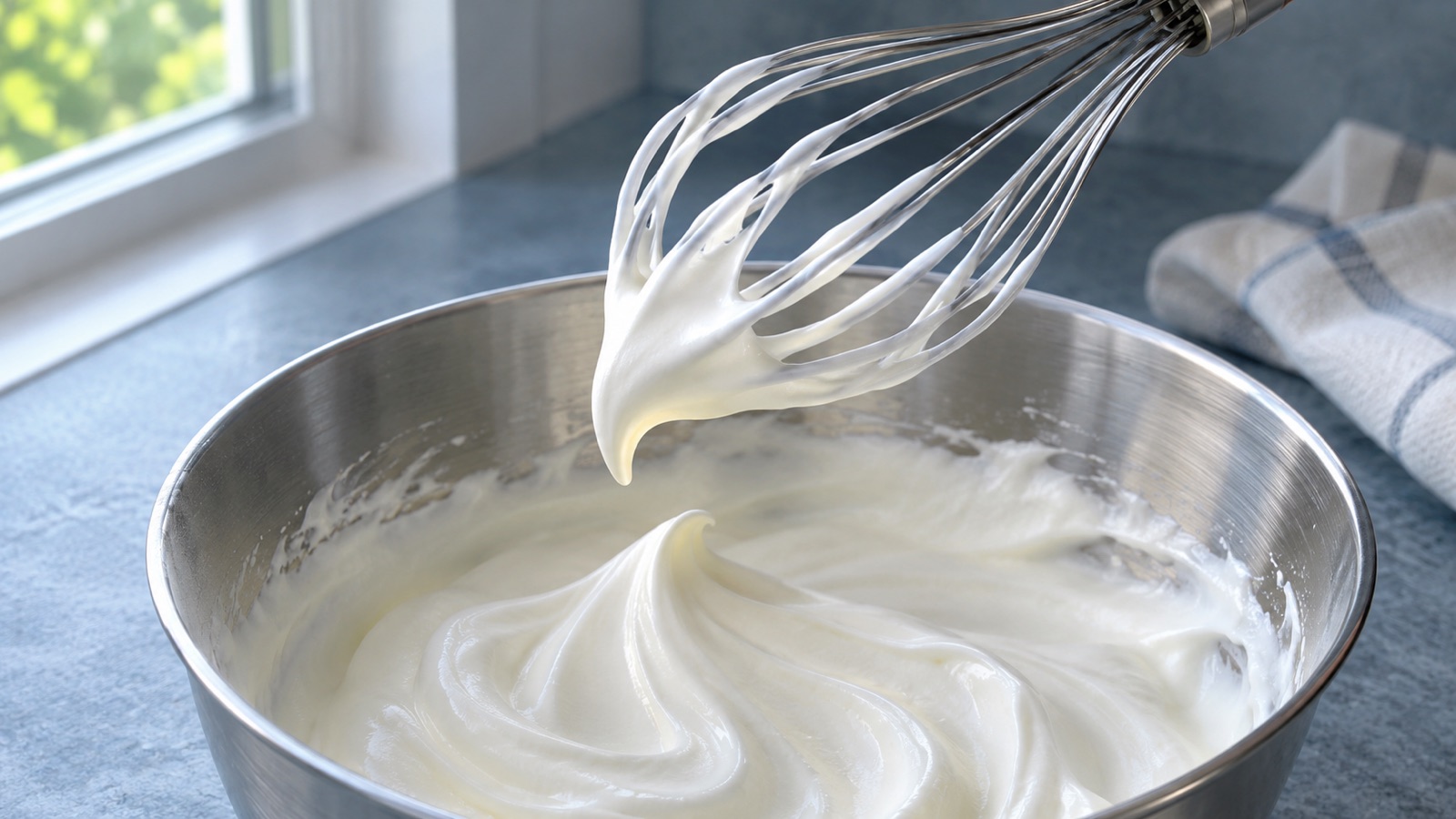
The whisk incorporates air. In cold cream some of the milk fat is solid, and the fat globules partially join as you whisk and help support the air bubbles. Warm cream or a low-fat product formulated for cooking may flatten rapidly when the beaters stop. Check the temperature and intended use before running the mixer longer. For a sweet topping, add sugar once the cream starts to leave a faint trail so you can see how the plain cream is developing first.
University of Guelph — Dairy Science and Technology
Set the texture of mushroom sauce over low heat
For two portions, sauté sliced mushrooms in a wide skillet until they release their moisture and the edges begin to brown. Turn the heat down and stir in 100 mL of cream intended for cooking. Heat gently and check the back of the spoon. When it has a light, even coating, the sauce is ready to toss with pasta. Different formulations thicken at different speeds, so start checking as soon as a thick cooking cream goes into the pan.
Higher-fat whipping cream also works straight from the carton. If the sauce tastes rich or feels thick, loosen it with a spoonful of warm pasta water and skip further reduction. When a lighter product leaves the sauce thin, check how much mushroom liquid and extra water are in the pan. Next time reduce the base before adding cream. Taste for salt at the end because the pasta water may already supply some.
Finish a lemon sauce off the heat
Acid and strong heat can make milk proteins clump. Prepare the cream sauce first. When it is at the right consistency, take the pan off the heat, let the bubbling subside and stir in 1 teaspoon lemon juice. Taste and add more in small amounts if needed. Trying a few drops in a spoonful of sauce in a separate bowl lets you check the sharpness before seasoning the whole pan.
For a sauce with shiny spots of fat, remove the pan from the heat and stir in a little warm water at a time. Serve if it smooths out again. A sandy texture that remains can mean the proteins have clumped. Straining may improve the look and the texture may still differ. A cooking cream, gradual addition of acid and gentle heat give you more control before this happens.
California Milk Advisory Board — Cream
What to do if cream stays thin or turns grainy
If a whipped batch stays liquid, read the carton first. A product labeled for whipping may respond to another short attempt in a chilled bowl. Save a liquid cooking cream for soup or pasta. When beaten cream starts to look matte and slightly rough, switch off the mixer. Gently fold a spoonful of cold liquid cream into a small portion by hand to see whether it becomes smooth again.
Distinct yellowish grains of fat and a separate liquid mean the cream is on its way to butter. Make a fresh batch for decorating a cake. Follow the carton for storing and using cream after opening. When shopping again, match the product to the texture required. A soup needs liquid cream suited to heat, fruit needs a soft mound and a piped topping needs a foam that holds. For a plant-based option, check its intended use separately.
King Arthur Baking — How to Fix Whipped Cream · Canadian Dairy Commission — Cream
For more on plant-based options, see our guide to coconut milk, cream and drink.
İyi Bir Yemek
Food Researcher & Writer
Reader Comments & Contributions
Be the first to share your thoughts on this post