
Changing Cake Pan Size: Ingredient Ratios, Area and Batter Depth
When changing the cake pan, take the inner measurement, calculate the base area ratio and ingredients; Consider batter height, overflow and cooking control together.

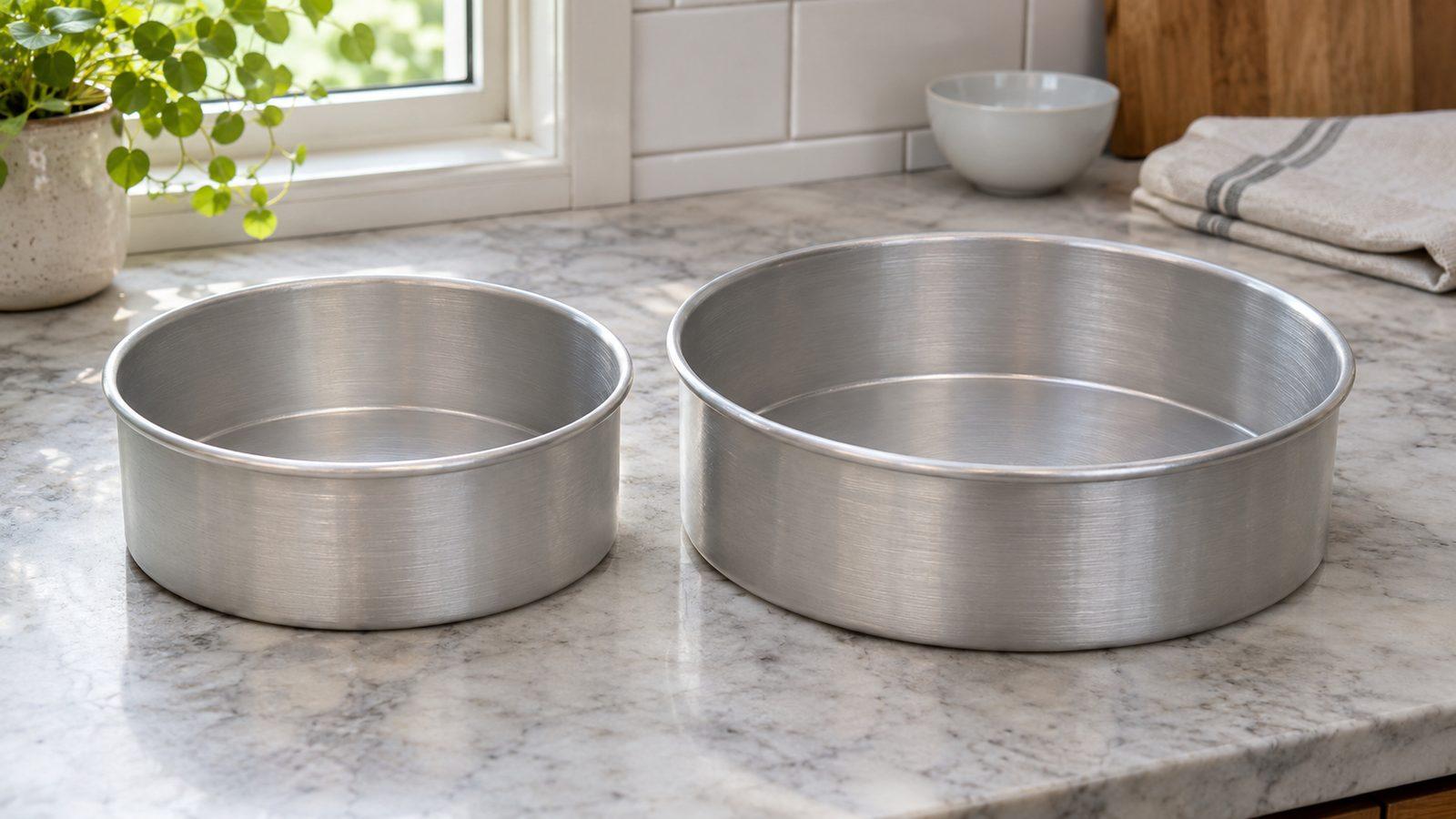
Multiply the ingredients by the ratio of the base area of the new pan to the floor area of the old pan to maintain the same batter height. The transition coefficient from 20 cm to 24 cm in a round pan is 24²/20² = 1.44. This calculation determines the amount; It does not determine the cooking time. First check the inner size and usable depth of the pans, then weigh the batter and divide it. The method is a beginner's plan for flat-bottomed cake and brownie pans; It does not alone explain the rising behavior of every batter or every pan shape.
First measure the inside of the pan: diameter, base and depth
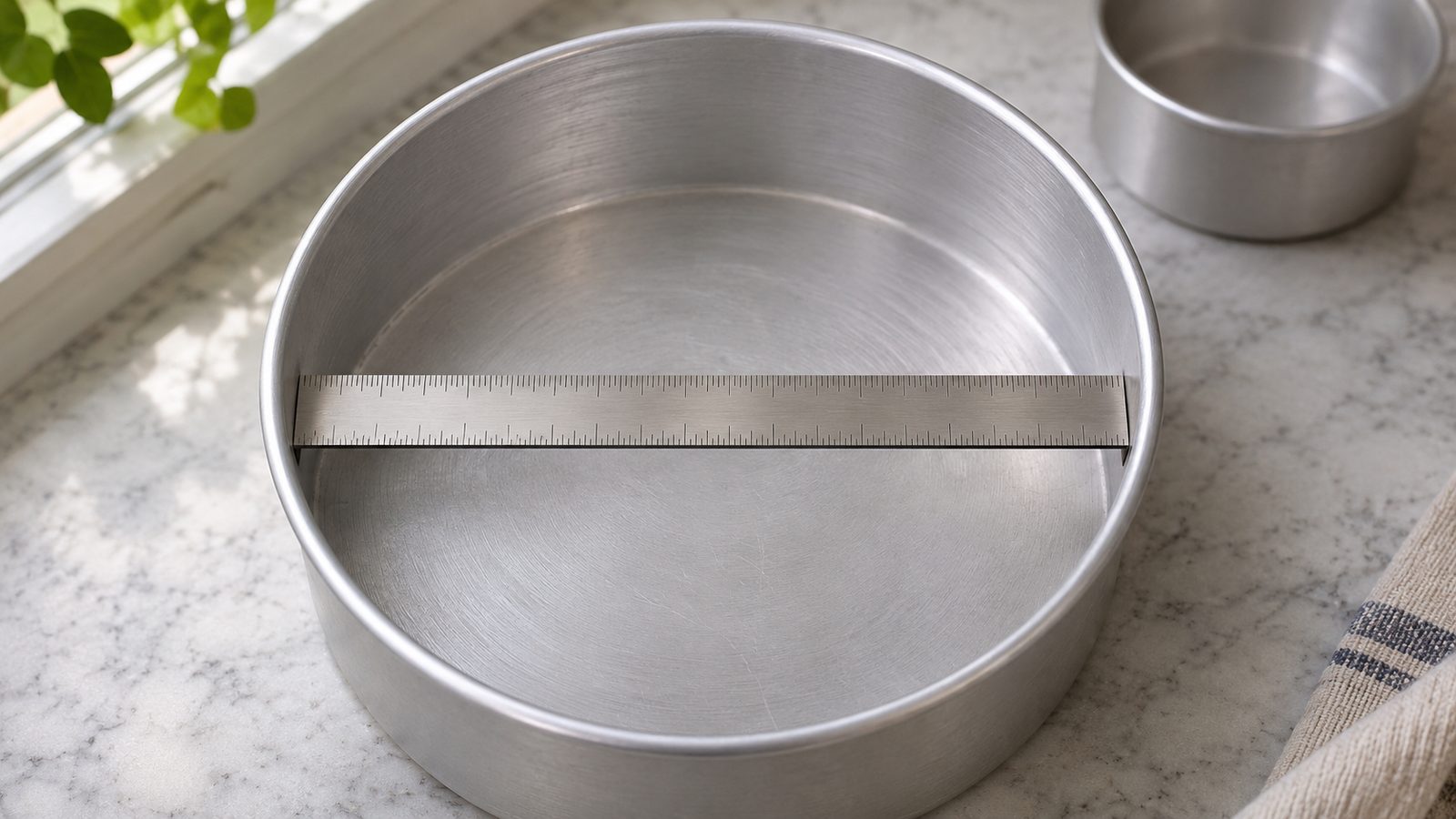
The measurement on the pan box may also include the outer edge. Place the ruler from the interior wall to the opposite interior wall, passing through the center of the circle. Check if the pan is truly round by measuring the diameter in two directions. Write the length and width inside the rectangle separately. In containers with curved sides, the top opening and the bottom are not the same; Measuring and calculating just the wide opening may overestimate the area the batter will occupy in the bowl. The simple examples of this guide are for pans with straight and vertical sides.
Record the depth separately. Two pans of the same diameter may be one shallow and the other high; Even though their bases are equal, the space they provide for the rising batter is not the same. Do not count the total volume up to the mouth of the pan as usable batter volume. Maintain the filling level specified in the recipe; If you do not have such information, do not choose filling it to the brim as a solution. Especially for a very fluffy cake, using a pan close to the recipe in terms of shape and depth is more predictable than making excessive calculations.
Calculate area ratio and apply to all ingredients
In a round pan, the area is π × radius². Since the common factors in the transition to π and radius in the ratio of two round pans simplify, you can directly use the new diameter² / old diameter² calculation. When going from 20 cm to 24 cm, 576 / 400 = 1.44. For example, 200 g of flour is 288 g, 150 g of sugar is 216 g, 100 g of shellless eggs is 144 g. These are not a cake recipe, but calculation examples showing the application of the same coefficient to different ingredients.
Use length × width in the rectangle. When switching from a 20 × 20 cm square to a 20 × 30 cm rectangle, the ratio becomes 600 / 400 = 1.50. When transitioning from round to rectangular, first calculate both areas: The area of a 20 cm circle is approximately 314 cm². Simply multiplying the quantity by the ratio of the diameters, for example 24 / 20 = 1.20, will not maintain the same height. Use the same length unit in the calculation; Do not mix centimeters and inches in the same process.
Divide the batter by weighing the egg and small amounts
Apply the coefficient to the entire formula, including flour, liquid, fat, sugar and leavening agent; simply increasing the flour changes the balance of the mixture. Weighing the egg without the shell solves the fractional quantity problem: gently mix the yolk and white in a clean bowl and separate the required grams. However, if the recipe calls for yolks and whites separately, weigh and measure them separately. Respect your scale’s resolution when weighing small amounts of salt or leavening. A scale displaying increments of 1 g cannot reliably measure fractions of a gram.
Before preparing the batter, consider the amount the target pan and mixer bowl can hold. If you are going to divide the same batter into two pans, add up the areas, then weigh and distribute the batter according to areas. Putting equal grams into two identical pans keeps the starting height consistent. Do not force excess batter into the pan; If there is an option to cook in a separate small bowl suitable for the recipe, use it and watch separately. If you will need to keep the risen batter for a long time, consider preparing separate batches according to the recipe instead of a single large batch.
The coefficient is not time: what signs to follow in the oven?
Increasing the amount by 1.44 times does not mean that the time will also increase by 1.44 times. The height of the batter, the material and color of the pan, the oven shelf and the containers baking at the same time affect the heat transfer. A wider cake of the same height and the same amount being thicker in a smaller pan are not the same change. For the first try, keep the pan material, oven setting and rack in the recipe as much as possible; This reduces the number of variables you change at the same time.
Follow the signs of doneness described in the recipe. In a normal cake, it is important to ensure that there is no liquid batter left in the center, that the surface springs back appropriately, and that if the recipe is suitable, check with a toothpick. Having to use a clean toothpick for a brownie or moist filled cake can overcook the product; Look at the target texture for that recipe. Start checking earlier, in a shallower layer, but do not constantly open the oven. If the edges are dry and the center batter remains, re-evaluate the batter height and pan selection in the next attempt instead of just extending the time.
Make your decision by pan type and save the result
If you are aiming for the same height in two pans with straight edges and similar depth, you can start with the area ratio. If the new pan is shallower, first make sure there is enough room for the batter to rise. Do not risk overflowing by increasing the amount. In pans with a hole in the middle or a pattern, the square of the outer diameter is not sufficient: the inner space, surface shape and area open to heat change. The manufacturer's available capacity and the recipe developed for that pan are more meaningful starting points. Don't guarantee the same look in a very different pan.
In your own note, write the old and new internal measurements, coefficient, grams of batter poured, approximate starting height, oven setting and actual baking observations. This is the record that works for next time. Frequently asked question: Can I pour the same batter into a large pan? You can pour it, but you will get a thinner layer; If you want the same height you need to increase the quantity. Would the portion be exactly 1.44 times? If you choose to keep the same slice size, it increases by approx. The final cut determines the number of servings. The numbers in this guide are calculation examples and are not the result of a kitchen experiment.
Glass and metal baking pans: how the material affects baking
İyi Bir Yemek
Food Researcher & Writer
Reader Comments & Contributions
Be the first to share your thoughts on this post