
Nevşehir Ağpakla: Bone-In Beef and White Beans, Home Oven Adaptation
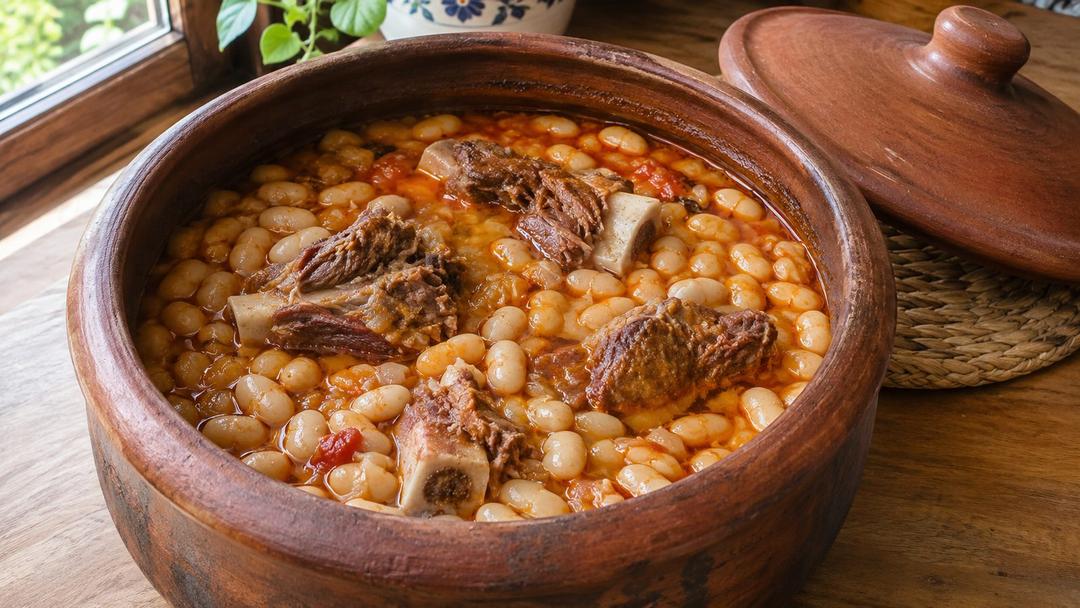
Ağpakla is associated with Nevşehir and combines white beans, meat and butter. GoTürkiye documents these ingredients; the university symposium describes earthenware and tandır cooking. This version adapts that identity to a home oven, with onion and tomato paste as explicit additions, not a claim to a fixed traditional formula. Makes 6 portions. Preparation 30 minutes; cooking approximately 240 minutes including bean boiling; soaking 8–12 hours and resting 15 minutes are additional. Total planning time approximately 12 hours 45 minutes–16 hours 45 minutes, longer if beans or meat need more time. This recipe has not been physically kitchen-tested. How do you know the casserole is ready?Beans should crush easily without a chalky centre and meat should separate from the bone with a fork. Time is a planning range, not proof of doneness. If either remains firm, continue covered in 30-minute stages with liquid checks. Serve boneless portions and remove all loose bone fragments. Use only a food-safe lidded casserole approved by its manufacturer for a cold-oven start and 160°C cooking; decorative pottery is unsuitable. Follow its conditioning instructions. Avoid thermal shock: no cold water into a hot pot, no hot pot on a cold wet surface. Nutrition catalogue links describe raw edible inputs, not a laboratory analysis of the finished dish; bones, discarded soaking water and evaporation prevent a reliable finished-weight estimate. Compare with stovetop beef and white beans GoTürkiye · Nevşehir · EFSA · Lectins in beans · Nevşehir Üniversitesi · Symposium

Ingredients
Ingredients
Step-by-Step Method
Soak and boil the beans
Sort and rinse 400 g dry white beans. Soak covered with plenty of water in the refrigerator for 8–12 hours. Drain, discard soaking water and rinse. Cover generously with fresh water in a separate saucepan, bring to a full rolling boil and boil vigorously for 30 minutes; replenish boiling water if needed. Drain. This preliminary water is discarded and is not the 1200 g casserole water. Do not substitute raw kidney beans or a slow cooker for this procedure.
Prepare the covered pot
Weigh 150 g peeled chopped onion, 30 g butter, 30 g tomato paste and 8 g salt. Ask the butcher for about 900 g bone-in beef shank with approximately 600 g edible raw meat; actual bone yield varies. Trim loose bone fragments without washing raw meat. Place beans, onion, butter, paste, salt and meat in a 4-litre casserole rated for cold-start oven use. Pour in 1000 g of the measured 1200 g water at room temperature, mix gently and keep the remaining 200 g for adjustments. Leave ample headroom and close the fitted lid.
Bake slowly and watch the liquid
Put the lid on the casserole. Place it in a cold oven and set conventional heat to 160°C. Cooking will take approximately 3–3½ hours from switching on the oven. Follow the casserole manufacturer’s heating instructions. After 2 hours, lift the lid carefully to avoid steam burns. Check that there is still liquid around the beans. If the beans are drying out, heat some of the reserved 200 g water in a separate saucepan and add small amounts of this hot water. Do not add cold water. Put the lid back on. Do not seal the pot with dough or foil. Do not put the earthenware pot on a stove burner.
Check, rest and portion
Check several beans and the thickest meat. Beans must be creamy throughout and meat fork-tender. As a conservative check for this slow-cooked mixed dish, verify at least 74°C in the thickest meat away from bone with a food thermometer; tenderness still determines whether more cooking is needed. Continue covered in 30-minute stages if necessary, allowing more hot water beyond the reserved amount only if needed and recording it. Rest covered 15 minutes on a dry trivet. Remove bones and fragments, divide the edible meat and beans into 6 portions and spoon over the broth. Do not report the 900 g purchase weight as edible meat.
Chef's Tips & Tricks
Use only a food-safe lidded casserole approved by its manufacturer for a cold-oven start and 160°C cooking; decorative pottery is unsuitable. Follow its conditioning instructions. Avoid thermal shock: no cold water into a hot pot, no hot pot on a cold wet surface. Nutrition catalogue links describe raw edible inputs, not a laboratory analysis of the finished dish; bones, discarded soaking water and evaporation prevent a reliable finished-weight estimate.