
Isparta Style Kabune: Layered Rice with Meat and Chickpeas
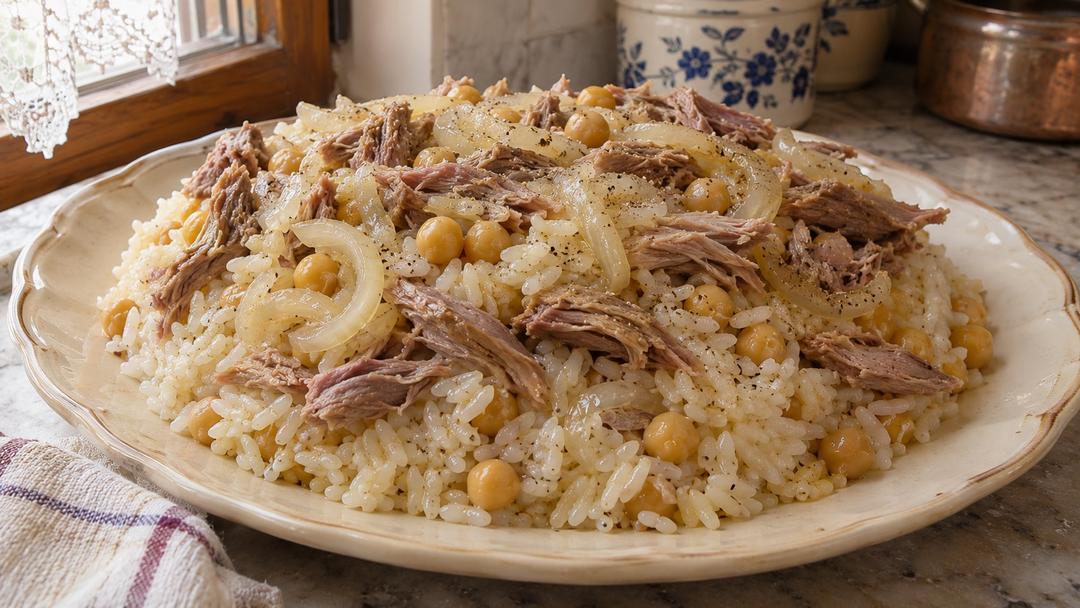
Kabune is an Isparta pilaf made by layering onions, chickpeas, cooked shredded lamb and rice. This home adaptation serves 6 and follows the layering order documented by Türkiye’s Culture Portal. Use a heavy-bottomed pot with a lid, 22–24 cm in diameter, in place of the traditional copper cauldron. Rice and liquid quantities are adapted to a domestic kitchen. This recipe has not been physically tested. Cooking times are estimates; allow longer if the meat or chickpeas remain firm. What to do if the rice remains hard?If no liquid remains but the rice is firm in the centre, add 30 ml hot water around the edge and cook gently for another 3–5 minutes. Take this from the reserved water in the ingredient list. Avoid adding a large quantity at once and do not stir the layers. Once tender, remove from the heat and rest. Allow about 10 hours 40 minutes overall: 8 hours for soaking chickpeas, 25 minutes of active preparation, about 115 minutes on the stove and 20 minutes of resting. Cook the meat and chickpeas simultaneously in separate pots. Soak the rice for 20 minutes while the meat cooks. The 450 ml liquid for the pilaf comes from the lamb cooking liquid; do not add a second 450 ml of water. Check the rice near the end rather than repeatedly lifting the lid. Also check out the different preparation order in vermicelli rice pilaf. Kültür Portalı · Isparta Kabune NDSU Extension · Pulses: The Perfect Food

Ingredients
Ingredients
Step-by-Step Method
Prepare the chickpeas and lamb
Soak 100 g dried chickpeas in 600 ml water in the refrigerator for 8 hours, then discard the soaking water. Cover with 700 ml fresh water, bring to a boil and simmer for 60–90 minutes until easily mashed in the centre; drain. At the same time, place 500 g boneless lamb shoulder in another pot with 1000 ml water. Bring to a boil, skim, then simmer partially covered for 75–90 minutes until the meat separates into fibres with a fork. Continue longer if needed. Lift out and shred the meat. Strain and KEEP the lamb cooking liquid. Reserve the remaining 200 ml of the listed 2500 ml water to replace evaporation during cooking or to adjust the rice if needed.
Prepare the rice and layers
While the lamb finishes cooking, rinse 300 g rice, soak it in a separate bowl of lukewarm tap water for 20 minutes, then drain thoroughly. This rinsing water is not an ingredient retained in the dish. Thinly slice 200 g onion into rings and rub gently with 6 g salt and 1 g freshly ground black pepper. Spread over the base of a heavy-bottomed pot, 22–24 cm in diameter. Add the drained chickpeas, then shredded lamb, then rice in even layers.
Cook the layers in measured broth
Measure exactly 450 ml hot, strained lamb cooking liquid; if necessary, make up the amount with reserved water. Pour it around the edge of the pot without stirring the layers. Bring to a boil over medium heat, cover and reduce to the lowest heat. Cook for about 20–25 minutes, until no free liquid is visible and the rice on top is tender in the centre. If it remains firm, follow the small water adjustment described in the tip. The rice is not fried in this version.
Add butter and rest
Melt 35 g butter in a small pan. When it begins to foam, pour over the hot pilaf without letting the butter burn. Turn off the heat and rest with the lid closed for 20 minutes. If the pot can be handled safely, cover it with a wide rimmed serving platter, hold both handles securely and invert together. If it is too heavy or hot, spoon out portions while preserving the layers. Divide into six equal main-course portions.
Chef's Tips & Tricks
Allow about 10 hours 40 minutes overall: 8 hours for soaking chickpeas, 25 minutes of active preparation, about 115 minutes on the stove and 20 minutes of resting. Cook the meat and chickpeas simultaneously in separate pots. Soak the rice for 20 minutes while the meat cooks. The 450 ml liquid for the pilaf comes from the lamb cooking liquid; do not add a second 450 ml of water. Check the rice near the end rather than repeatedly lifting the lid.