
What is Roux and How is it Made?
What is roux? Learn about the preparation, types and use of roux, one of the basic cooking techniques of French cuisine. Discover the characteristics of white, yellow and brown roux varieties and their roles in dishes.

What is Roux?
Roux in French, pronounced ru, is a culinary technique that we, who cook at home in our daily lives, often use roux from time to time in professional kitchens.
It is important for most dishes we want to create. These are just a few examples of many recipes that require making roux for soups, sauces and stews.
The purpose of the product, which gains structure by combining oil (usually butter) and flour in a certain ratio in your roux dishes, is to give us a more consistent meal.
Roux (roux) Types What are they?
Just like food, there is no single way to make roux. How long you cook the roux before adding liquid (water, milk, broth, etc.) determines its color, flavor and thickening power. The thicker the roux, the thicker our sauce will become. So how many types of roux are there and where are they used?
There are basically 3 types of roux.
White Roux (Roux): Roux is mixed on the stove until the mixture bubbles. The flour-oil mixture is cooked without coloring. White roux is used in white sauces (such as béchamel) or to thicken soups.
Yellow Roux (Roux): This roux is cooked longer than white roux or until the mixture reaches a pale golden color. It adds a deeper flavor to the soup or sauce.
Brown Roux: This roux is cooked for a longer time, such as 6-8 minutes, to give color, giving us a brown roux used for brown sauces.
Use of Oils in Roux and What is its Importance, How to Use It?
Usage of Roux and Oil
You can thicken the sauce by adding flour directly into the liquid product, without oil. This will often cause lumps, but the use of oil acts as a buffer against this common dilemma. The fat in the roux adds richness to the dish and gives the starch a vehicle to cook, thus cooking off some of the flavor of the raw flour. As a result, we get a more sophisticated sauce in our meals.
So what kind of oils are used when making roux?
When making roux;
Butter: Most roux for sauces (such as béchamel, also known as cream sauce) are butter-based. While restaurants generally use plain butter because milk does not contain additives and therefore has a higher smoke point, unsalted butter is preferred for those cooking at home.
Vegetable Oil: If you prefer a more neutral flavor instead of butter, vegetable oils such as grape seed or canola are a good choice. Roux made with vegetable oil can be cooked longer because it has a higher smoke point than butter. This way, you can make brown roux (roux) more easily with vegetable oil.
Animal Fats: Lamb, beef, goose or melted fat obtained from pan-roasted meats will add a much deeper, meatier taste to the sauce. The most common way to use animal fats is to prepare sauce for roast beef, roast chicken or turkey.
What is the Ratio of Flour and Fat in Roux?
The ratio of oil to flour by volume is one to one; For example, you can use one tablespoon of butter or another oil to one tablespoon of flour. More flour in the ratio means the roux will become pasty and a little harder to handle. More fat means a looser roux that mixes more easily with liquid. Thus, the roux retention we make plays an important role in thickening dishes or sauces depending on the flour or fat content.
How to Make Roux?
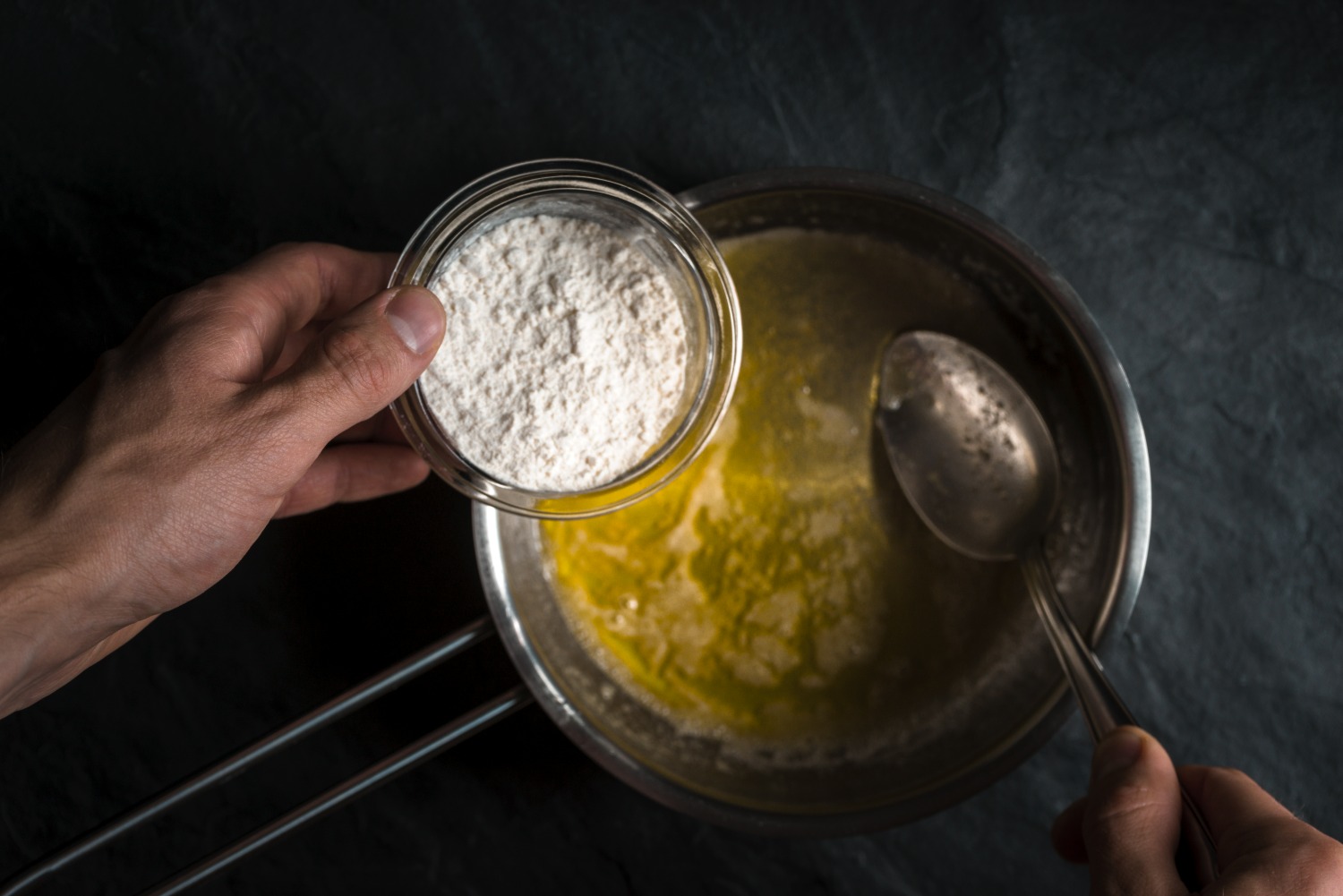
Add 1 tablespoon of butter (or any type of oil) into your pot or pan.
Then put it on the stove and whisk until it melts over low heat. Let it melt with the help of a wire whisk.
Add 1 tablespoon of flour into your melted butter and continue whisking.
If you do not continue whisking while making roux, your flour may burn, do not stop whisking to prevent this. Continue whisking for at least 2-3 minutes to obtain a roux.
Our roux mixture, which changes color and smells of flour, is ready.
That's all.
After the roux is ready, add flavorings such as milk, water, delicious meat broths, fish broth, vegetable broth and adjust the consistency and color of your food as you wish.
Some Tips When Making Roux
Although Roux making is not complicated, you still need to pay attention to a few details.
1- If you are using butter, cut it into cubes before adding it to the pot and melt it over medium-low heat to prevent it from burning.
2- Whisk the flour and cook for at least 2 minutes after the mixture starts to foam. This step prevents the sauce from having a floury taste. Watch carefully to prevent the butter solids from burning. If necessary, turn the heat of your stove to a lower setting.
3- After the roux is cooked, slowly add the liquid to the pan or pot. Whisk the sauce vigorously and run the whisk around the bottom corners of the pan to prevent lumps. Once the liquid has been properly added, bring the sauce to a boil, stirring with a whisk or plastic spatula. Then cook for about 5 minutes, stirring occasionally.
Don't worry if there are a few lumps in your sauce. The worst scenario is to pass your sauce through a fine-mesh strainer.
4- For a thick sauce, start with less liquid or cook the sauce until it reaches the desired consistency. Conversely, if you want to thin it out, add more liquid to the sauce. You can choose and adjust the roux for thick or liquid form according to both the size of your meals and the consistency you want.
İyi Bir Yemek
Food Researcher & Writer
Reader Comments & Contributions
Be the first to share your thoughts on this post