
How to Store Coffee Beans and Ground Coffee at Home
Choose suitable bags and containers for coffee, plan daily portions and understand the limits of refrigerator and freezer storage in a real home kitchen.

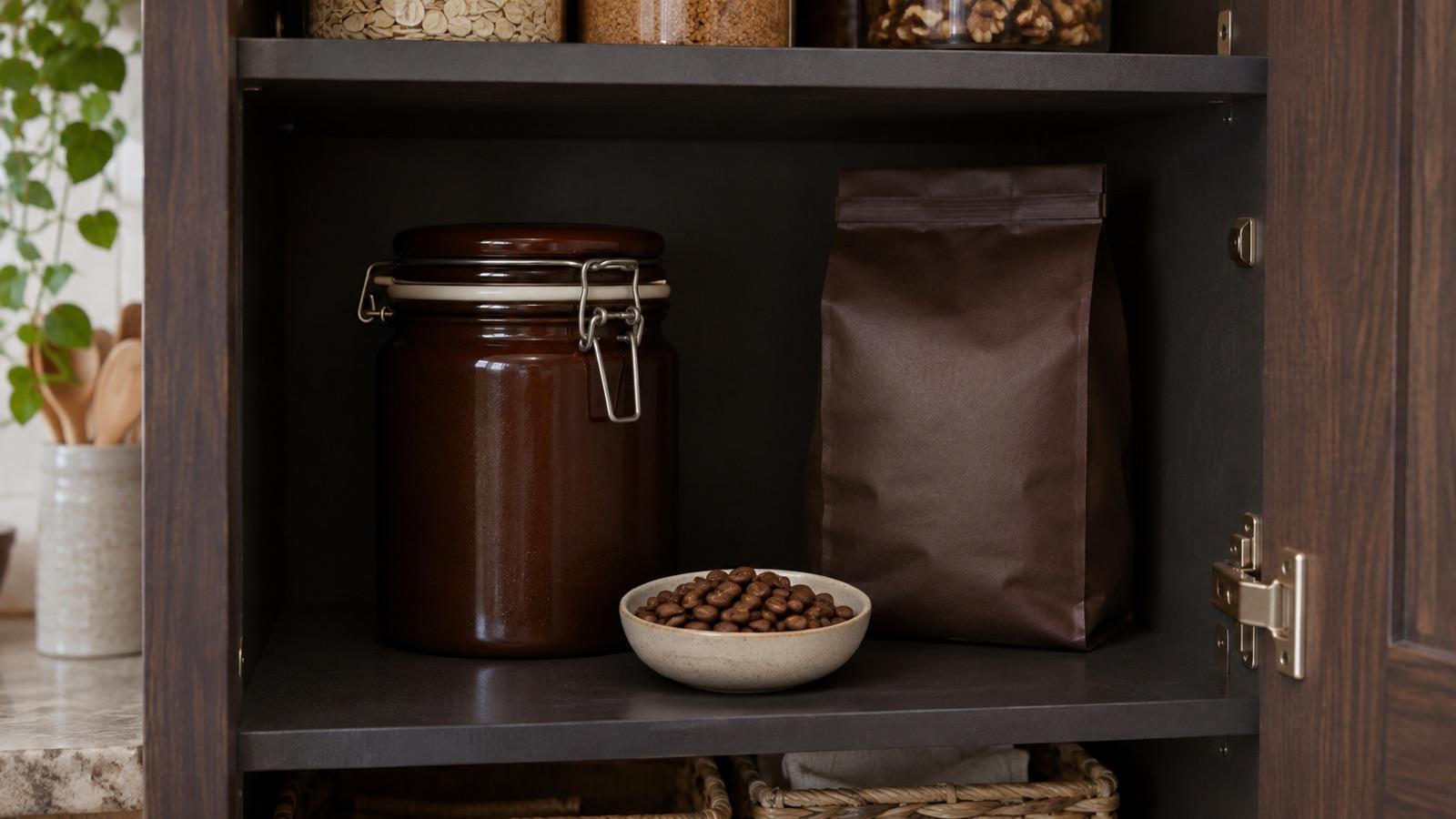
Keep everyday coffee in a well-sealed bag or airtight container in a cool, dry, dark cupboard. Buy ground coffee in small quantities or grind beans just before brewing. The fridge is not a useful default for a bag opened daily. This guide covers roasted beans and plain ground coffee, not brewed drinks, milk mixes or green coffee.
Choose the location before buying a container
Look around the storage spot: a cupboard beside the cooker, above a dishwasher or in afternoon sun can become warm. NCA recommends protection from air, moisture, heat and light. An attractive clear jar on the counter may therefore be less practical than a properly closed bag in a dark cupboard. Moving the coffee can be a more useful first improvement than purchasing expensive equipment. Fill containers away from steam from boiling kettles.
Watch the shelf during ordinary cooking; a spot that is cool in the morning may warm up when the oven runs. If opening the cupboard releases steam or heat, choose another shelf. There is no single temperature or guaranteed freshness deadline for every roast, grind, package and home. Follow the pack dates and the producer’s instructions after opening. A date on a pack and your preferred aroma are different kinds of information.
Keep the bag or transfer it?
Blue Bottle allows original packaging or an airtight container. If an opaque bag has a sound resealable closure, transferring solely for appearance is unnecessary. A torn bag or one that only folds over deserves a suitable opaque container with a proper lid. A one-way valve does not close an opened bag mouth: the valve and the closure are different parts. Follow the packaging instructions and close the bag after each use.
Check the gasket, cleaning instructions and whether the container can dry completely. Do not continually top up old beans with new ones. Empty and clean the container appropriately, then dry it fully before refilling. A wet container defeats the purpose regardless of its material. Keep a clear jar in a dark cupboard if that is what you have. Matching container size to your purchase and avoiding unnecessary opening also makes the routine easier.
Match purchases to actual consumption
At 18 g daily, a 250 g pack represents roughly 14 days of coffee; 1000 g represents about 56 days. This is shopping arithmetic, not a safe storage duration or freshness guarantee. Weigh your actual dose a few times. A household brewing only at weekends will use the same pack much more slowly. Compare the discount on a large bag with the effort of dividing it and your real usage, rather than choosing on unit price alone.
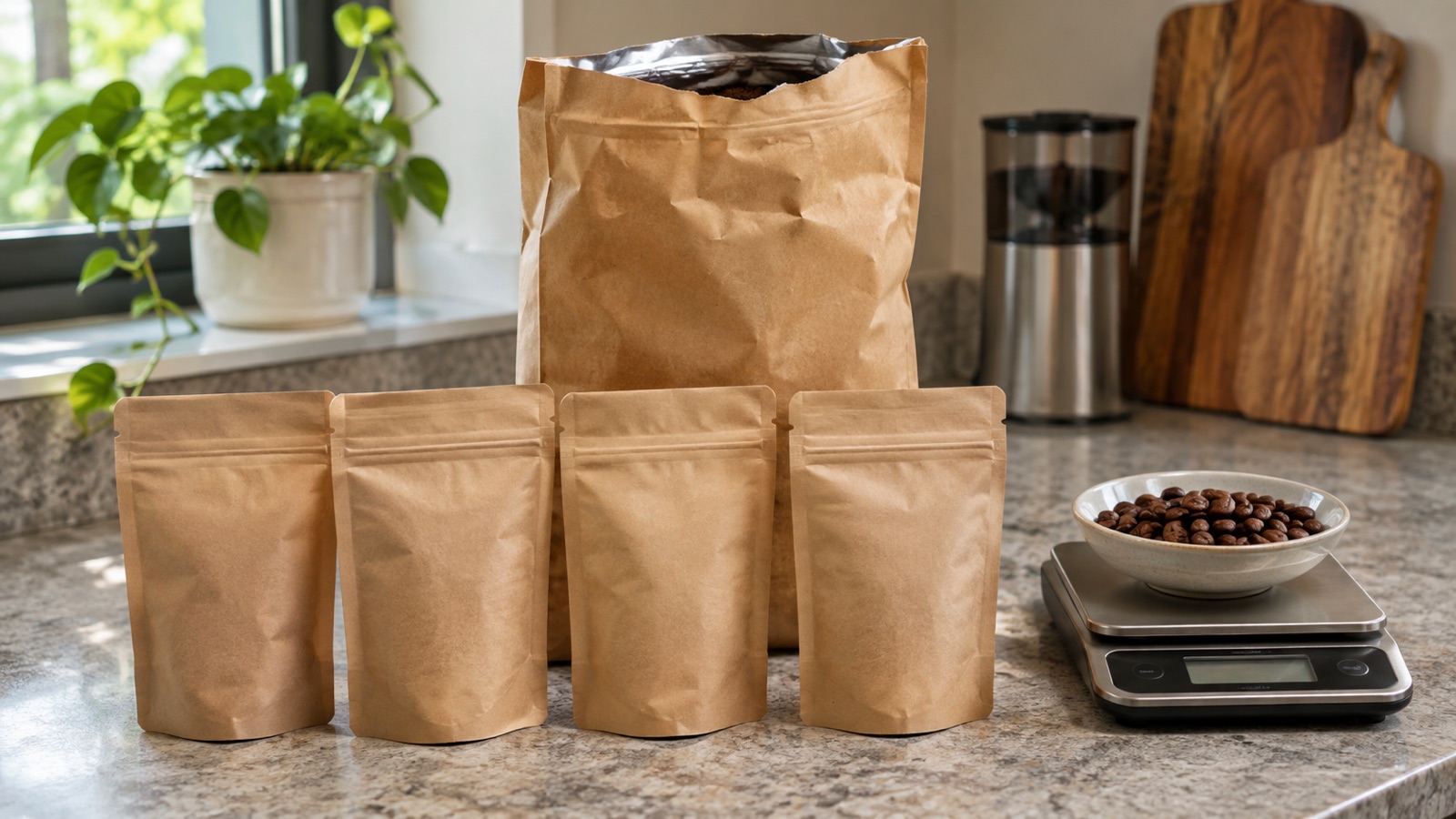
With a grinder, grind only what the current brew needs. Without one, buy smaller packs ground for your brewing method; Turkish and filter grinds are not interchangeable by default. Divide a larger purchase on a clean, dry surface, keep the everyday portion separate and seal and date the reserves. Opening every reserve each morning undermines that plan. The photograph illustrates portioning; it cannot establish that a particular pouch is airtight.
Why fridge and freezer advice differs
Blue Bottle and Stumptown favour cool, dark everyday storage and advise against the fridge or freezer. NCA treats freezing as conditional, stressing moisture, odours and genuinely airtight packaging. Saying every coffee should be frozen, or none ever can be, loses that distinction. For a daily bag, an appropriate cupboard is the simpler starting point. Being cold does not itself prove that coffee is well stored.
For surplus beans you cannot use soon, ask the roaster first. If freezing is recommended, use dry, tightly sealed small reserves and avoid moving the same large bag repeatedly between cold and room conditions. Letting a multi-dose frozen portion reach room conditions while still sealed is a way to limit moisture exposure; Capresso also advises thawing before grinding. Do not open a wet or still unsuitable package. No universal number of months or safety guarantee is supplied here.
NCA · Storage and shelf life · Blue Bottle · Coffee storage · Stumptown · Coffee storage · Capresso · Storing Coffee
Diagnose faded flavour systematically
If coffee seems dull, review storage, then compare brewing variables separately. Use the same coffee, 18 g dose, water and grind; changing beans and grind together hides the cause. Date the next small bag when opened and keep brief aroma notes. This is a personal observation to improve buying quantities, not a laboratory shelf-life test.
Grinding more coffee or keeping it warmer will not reverse a poor storage history. Smaller purchases and proper closure help the next bag. Smell alone cannot certify safety; do not taste-test coffee that became wet or visibly mouldy. Ask the producer about unusual packaging or product conditions. This quality guide complements the product instructions; use a separate guide for the brewing process itself.
İyi Bir Yemek
Food Researcher & Writer
Reader Comments & Contributions
Be the first to share your thoughts on this post